Bourgogne’s record-early 2026 harvest began 8 August
Bourgogne recorded its earliest vintage in 2026: Crémant de Bourgogne picking began in Mâconnais on 8 August. Heat and drought reduced yields; early tastings indicated aromatic purity, flavour and balance.
Initial assessments
The source called 2026 Bourgogne’s hottest vintage, with around 60 days above 30°C. Winter water sustained vines and weather limited disease. Ripeness came before the customary 90–100 days after flowering, but juice yields disappointed. Tastings showed aromatic purity, flavour and balance. Whites were rounded and supple, with pear, peach and sometimes tropical fruit; fruit and balance preserved freshness. Reds had deep colour, dark rather than cooked fruit, lively acidity and ripe tannins. Crémant de Bourgogne base wines were expressive and structured, with acidity retaining freshness; expertise was needed to balance richness, while 2024 and 2025 reserves could support future blends.1
Winter to flowering
A mild winter near or above normal and wet October–February replenished soil water. Growth resumed in mid-March; 50% budburst came on 28 March, close to 2020. Frost struck Côte d’Or on 22–23 March and the rest of Bourgogne on 26–29 March. Northern lows reached -5°C; damage approached 80% in some Chablisien, Grand Auxerrois and Châtillonnais plots. April was almost summer-like and dry: vines added 1 or 2 leaves weekly and wind limited disease. By late April they averaged 6 unfolded leaves, nearly 20 days ahead of the previous 2-decade average. Early-May coolness slowed growth. Hail on 6 May hit southern Mâconnais, Côte and Hautes-Côtes de Beaune, mainly leaves, with limited cluster damage. Warming resumed 19 May; first flowers appeared 22 May and 50% flowering came 27 May, as in 2020 and 2022. Météo-France called 25 May France’s hottest May day since 1947: mean above 24°C, peaks near 35°C.1
Fruit set, storms and heat
By early June, early berries measured 2–3 mm while late plots finished flowering; fruit set suggested good potential. A 2 June storm hit Côte d’Or and northern Côte Chalonnaise: up to 80% of clusters locally, Côte de Beaune hardest hit. Later June–July storms brought the total above 6; over 90% of clusters were affected in places. Coulure, especially in whites, and dryness threatened yields. From 17 June, weekly averages rose around 8°C and maximums almost 10°C from the prior week. Highs exceeded 35°C and neared 39°C in shade; lows were 17–22°C. Almost no rain and 13 hours 30 minutes of daily sun increased evaporation. After 4 dry months—deficits of 17% in March, 50% April, 15% May and 39% June—sunburn and water stress appeared, especially in shallow soils, grassed plots, young vines and exposed sites. Colour change began in late June.1
July drought
July stayed hot and dry. Water shortage slowed véraison and sometimes stopped berry growth; by mid-July some plots showed no colour change. Uneven storm rain restarted development widely, but sunburn and water stress persisted in vulnerable plots. Vineyards remained healthy and disease-free as growers awaited rain to swell berries and prevent stalled ripening.1
Harvest from 8 August
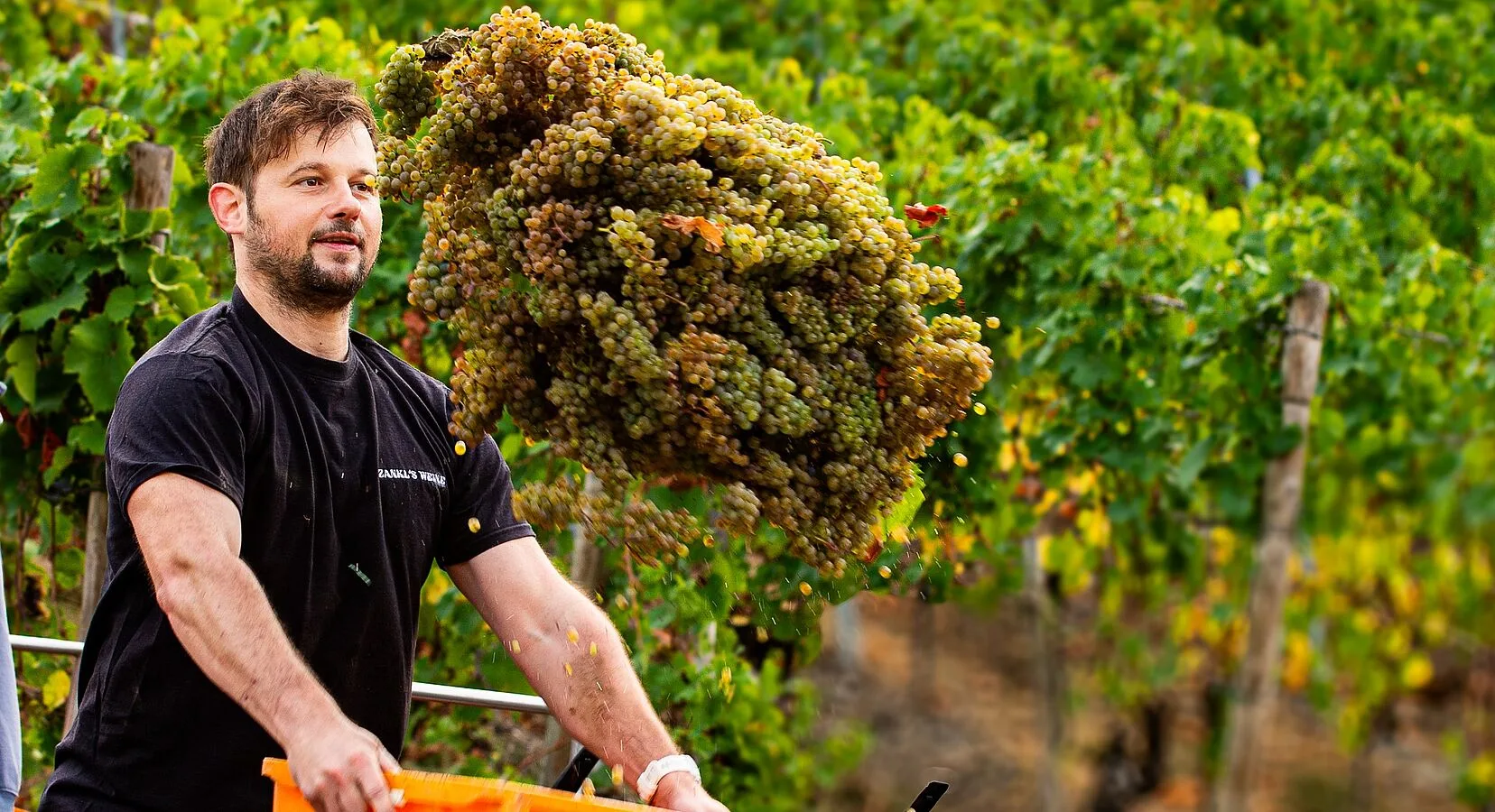
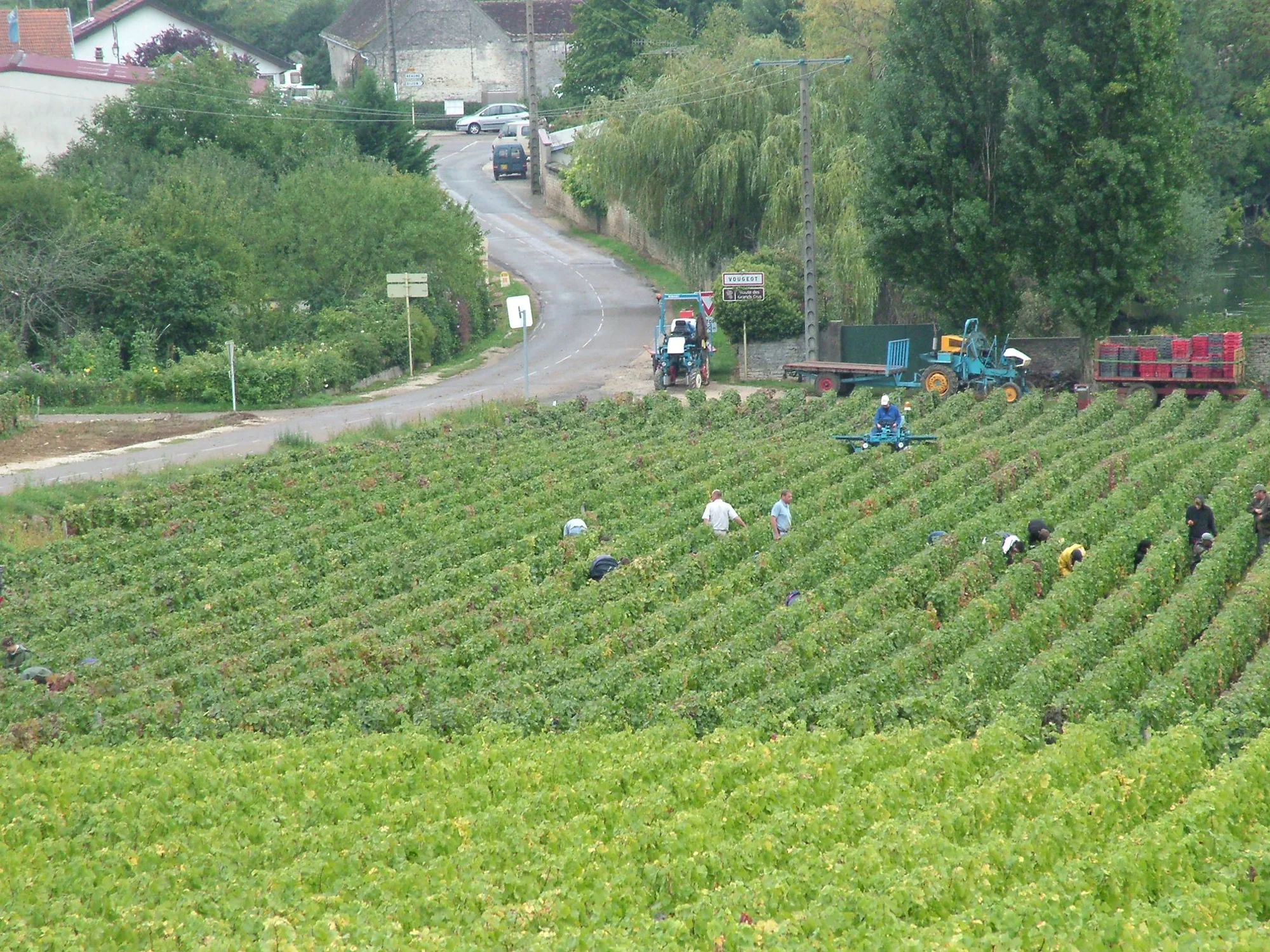
Rain failed and heatwaves continued. Rising early-August sugar triggered Crémant de Bourgogne picking in Mâconnais on 8 August, Côte Chalonnaise 11 August, Côte de Beaune 12 August and Chablisien 13 August; still-wine harvest began after 15 August. Plot differences required ripeness checks, berry tasting and juice-sugar measurements. Strategies varied; last estates harvested well into mid-September. Above 35°C, growers favoured night machine harvesting and very early hand picking.1
Crop and fermentation
Berries were small and perfectly healthy; few were shrivelled and were removed before the winery. Poor juice yields despite many clusters explain the below-average crop. Warmth and unusually high sugar started fermentation quickly. Ripe, healthy grapes allowed whole-cluster fermentation, adding freshness; some fermentations were lengthy and carefully monitored. On the eve of the Hospices de Beaune Wine Auction, malolactic fermentations continued and first tastings were highly encouraging.1
Sources
Written by the Dionysus editors from the sources above.