Mosel’s 2026 harvest estimated at 610,000 hectoliters after hot, dry season
Moselwein e.V. expects production across the Mosel, Saar and Ruwer to reach about 610,000 hectoliters in 2026, 18% below the ten-year average and down from 743,000 hectoliters in 2025. Despite the smaller crop, the association reports healthy, aromatic grapes and expects full-bodied, balanced wines.
Output below the recent average
Moselwein e.V., the regional wine association, estimated after its autumn press briefing in Detzem that the Mosel, Saar and Ruwer would produce about 610,000 hectoliters in 2026. That would be approximately 18% below the preceding ten-year average and a decline from 743,000 hectoliters in 2025. Recent average production is around 700,000 hectoliters, while the notably smaller 2024 harvest yielded 450,000 hectoliters.1
The estimate remains provisional. A final total is expected in spring, once wineries and growers have filed their official harvest declarations.1
The earliest picking on record
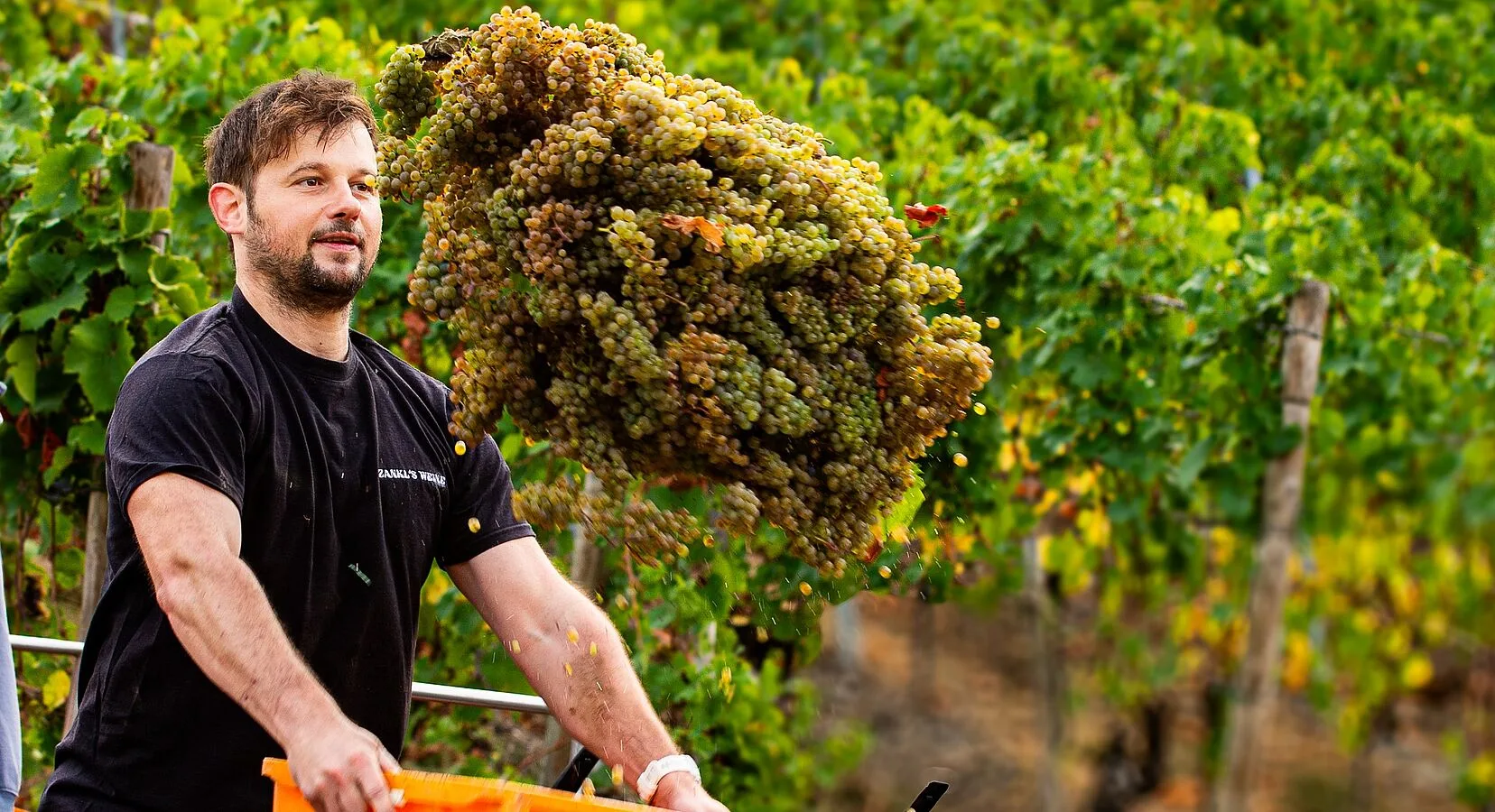
The region recorded its earliest start to grape picking. By the end of August, growers were already collecting fruit for Federweisser—the partially fermented young wine released early in the season—as well as for sparkling and still wines. Most grapes had been brought in by early October.1
Growers characterized the harvest as manageable and, in some cases, relaxed. A September without rain restrained disease pressure and reduced the extensive vineyard sorting that would otherwise have increased the workload.1
Drought reduced yields but protected fruit
Low rainfall and high temperatures during spring and summer were the principal causes of the smaller crop. Young vines suffered most, and irrigation was required in some vineyards. Older vines coped better and generally produced small berries with pronounced aromas, according to the association.1
The dry conditions also limited fungal disease, helping grapes remain healthy and lowering labor requirements during the harvest. Henning Seibert, chairman of Moselwein e.V., said earlier concerns that exceptional summer heat and drought would impair quality had not been borne out. He expects 2026 to be remembered as a high-quality vintage producing full-bodied, balanced wines.1
Yields by grape variety
Riesling remains the Mosel’s leading grape, representing 62% of plantings. Moselwein e.V. estimated its average 2026 yield at about 75 hectoliters per hectare. Pinot varieties were expected to yield 60–70 hectoliters per hectare, compared with about 90 for Mueller-Thurgau and 100 for Elbling.1
Vineyard area and market implications
The productive vineyard area totaled approximately 8,136 hectares in 2026, excluding new plantings and young vineyards, and the average yield across that area was 75 hectoliters per hectare. At the end of 2025, the total planted area, including young vines, was 8,283 hectares.1
Because the Mosel is internationally prominent for Riesling, the reduced crop could constrain supplies for some still- and sparkling-wine programs. It may also influence inventory planning and price negotiations in the coming months, even as the vintage’s quality is assessed favorably.1
Sources
Written by the Dionysus editors from the sources above.