Occitanie’s 2026 wine harvest rebounds as cooperatives reject price cuts
Wine production in Occitanie is expected to approach 13 million hectoliters after three exceptionally small harvests, but regional cooperatives say the recovery represents normalization rather than oversupply and should not be used to reduce grape or bulk-wine prices.
Production returns toward normal levels
In a statement published on November 10, the Vignerons Coopérateurs d’Occitanie forecast about 11 million hectoliters from Languedoc-Roussillon and 2 million from the former Midi-Pyrénées area. The organization said the recovery follows three exceptionally weak vintages and should be understood as a return toward normal production, not as excess supply.1
The Languedoc-Roussillon forecast is close to the November 6 estimate from Agreste, the statistical service of France’s Agriculture Ministry. Its figures as of November 1 put production there at 11.068 million hectoliters, 25% above 2025. French output as a whole was estimated at 36.659 million hectoliters, up 3% year on year but still 10% below the 2021–2025 average.1
Combining Agreste’s Languedoc-Roussillon figure with the cooperatives’ estimate for the former Midi-Pyrénées places Occitanie at slightly more than one-third of estimated French wine production. The region’s position is commercially important because much of its output is sold in bulk or as protected geographical indication wine, making its pricing negotiations relevant to merchants, bottlers and other beverage businesses across the supply chain.1
Cooperatives resist pressure on producer prices
Fabien Castelbou, president of the Vignerons Coopérateurs d’Occitanie, said growers were finally returning to production levels closer to normal after several very small harvests. He argued that the larger crop must not be used as grounds for price reductions, saying the sector has little capacity to withstand further pressure.1
The organization cited continuing high expenditure on energy, packaging, agricultural inputs, labor, financing, and environmental and regulatory compliance. It also said vine removals and vineyard restructuring had already reduced some of Occitanie’s production capacity, countering the view that fuller cellars in 2026 indicate structural overproduction.1
The dispute concerns prices paid to growers at the start of the new commercial campaign, rather than immediate consumer prices. The production figures do not establish that retail bottle prices will fall: those will also depend on contracts, inventories, conditions in other regions, and negotiations among producers, cooperatives, merchants and retailers.1
A divided French harvest
Agreste recorded the strongest year-on-year increase among France’s principal wine regions in Languedoc-Roussillon. Production also rose by 15% in the Southwest, 10% in Bordeaux and 7% in the Southeast, while Champagne declined by 38%. Growth in southern regions therefore helped compensate for weaker northern output.1
The national composition of production also shifted. Agreste estimated French IGP wine output at 12.01 million hectoliters, an increase of 18%, while appellation wine production fell by 4% to 15.042 million hectoliters. This is particularly relevant to Occitanie, where IGP and varietal wines are important and are frequently traded through bulk channels before reaching retailers.1
Dry conditions, healthy grapes
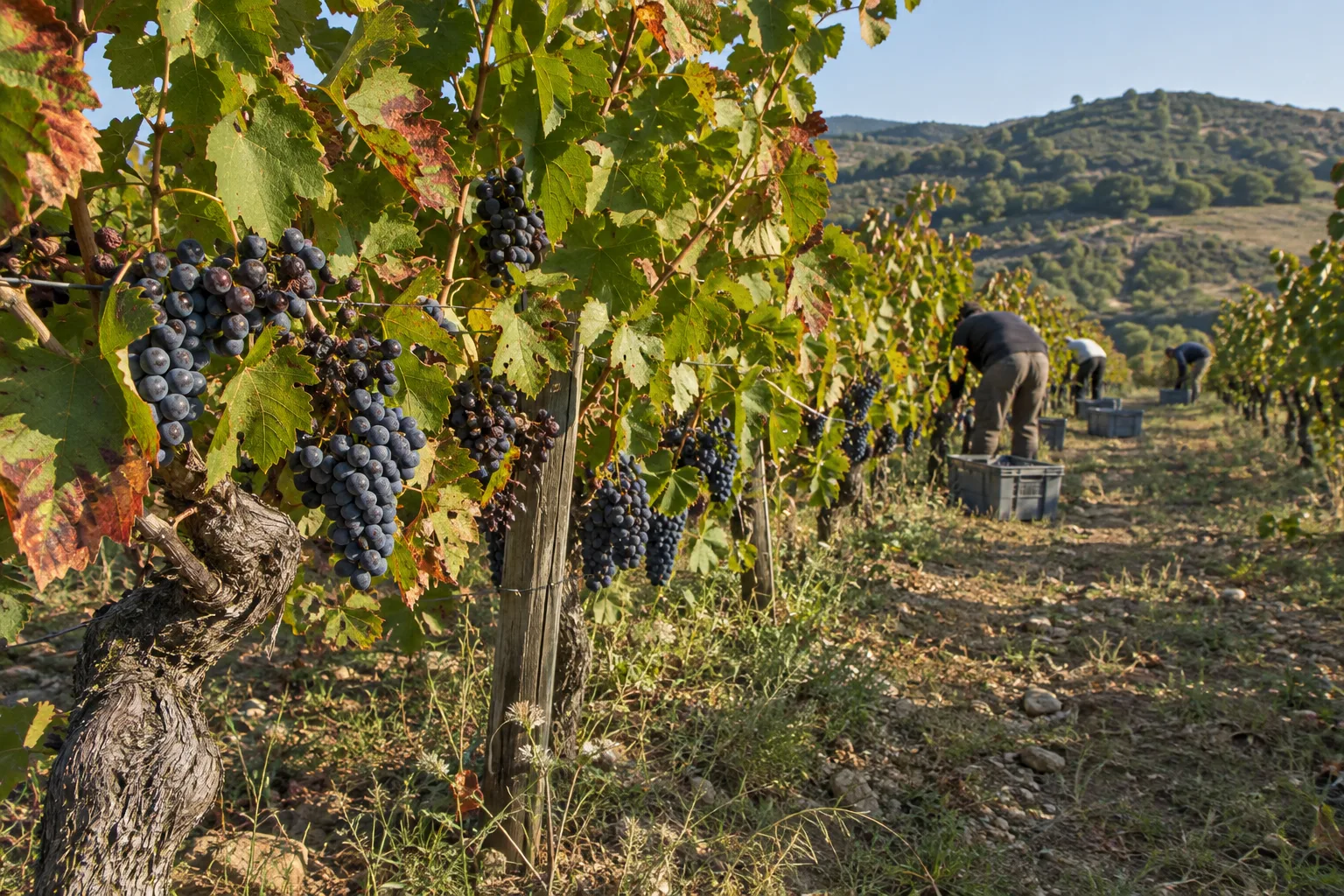
The cooperatives characterized the 2026 season as early and dry, with harvesting extending over a long period. Winter rainfall in 2025–2026 was close to normal and helped soils and vines replenish some reserves after earlier stress, but drought and high temperatures returned in spring and summer.1
According to the organization, grapes arrived in good sanitary condition with balanced ripeness, supporting its assessment of a high-quality vintage. Broader judgments about quality will, however, depend on subsequent tastings and market performance.1
Financial strain persists
The volume recovery has not removed the industry’s financial pressures. Vinabox reported that Roussillon had four fewer cooperative wineries in September than a year earlier, indicating continued strain in parts of the regional sector even as production rebounds.1
Sources
Written by the Dionysus editors from the sources above.