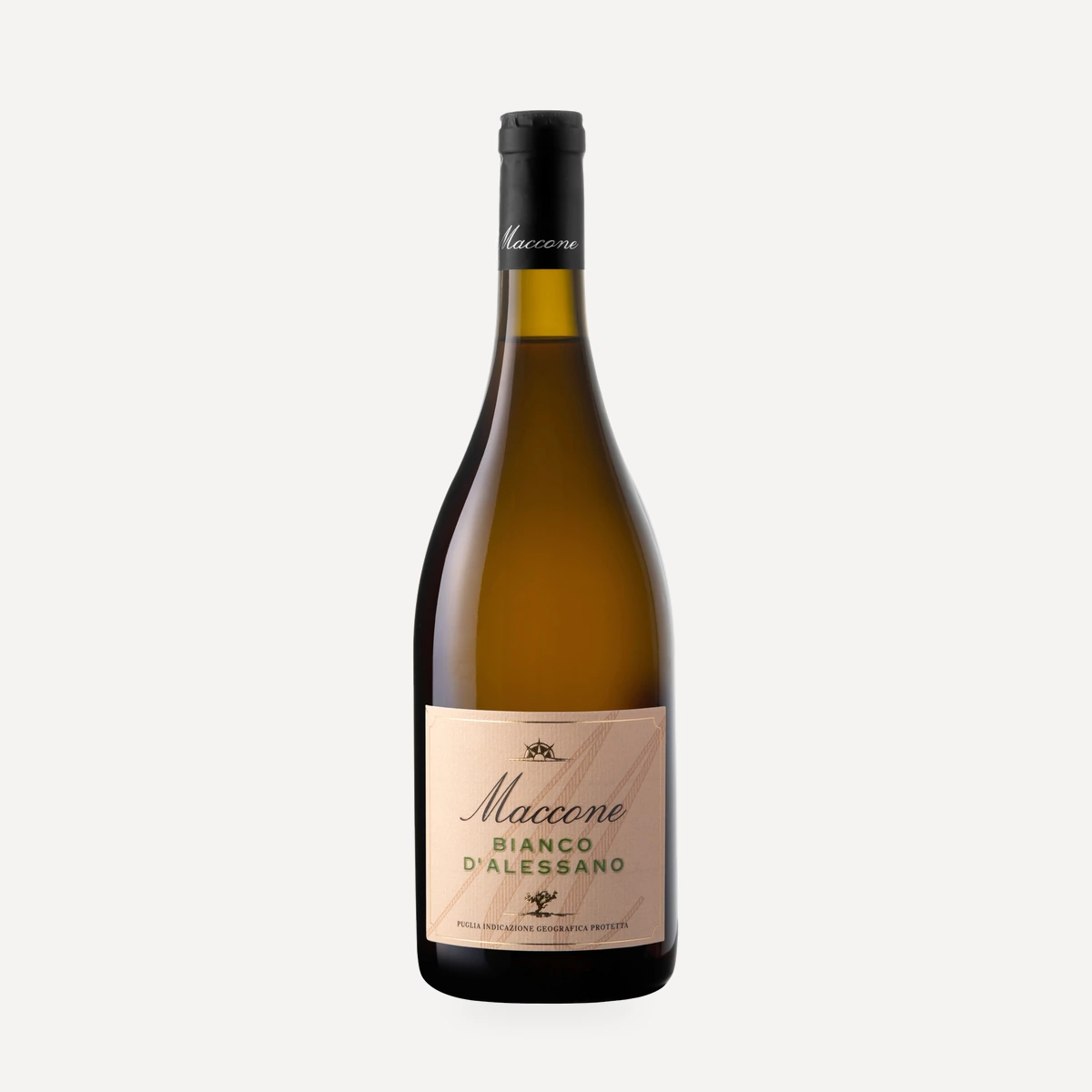
About this wine
Vineyard and terroir
Bianco d’Alessano is grown in Valle d’Itria on clay-limestone soil, with low-trained espalier vines. The precise municipality is variously identified as Alberobello and Martina Franca. Harvest takes place early in the morning and is strictly manual, allowing selection of the best bunches. Picking occurs in October and follows the grapes’ ripeness curves.
Grapes
Bianco d’Alessano.
Vinification
The grapes undergo cryomaceration before crushing and destemming. Only the free-run must is fermented, at a controlled 10°C. Vinification takes place under inert conditions to preserve the aromatic profile.
Ageing
The wine combines two different harvests and is matured in medium-toast American oak. The wine page specifies 500-litre barrels. Bâtonnage is performed on the lees after the second racking for two months.
Technical data
Puglia IGP. Alcohol is reported as 13% vol. on the wine page and 13.5% vol. in the technical sheet. The format is a 75 cl Burgundy-shaped UVAG bottle sealed with natural cork. A medium tulip glass with a narrowing rim is recommended.
Tasting profile
Yellow with green reflections. Complex citrus aromas are complemented by toasted nuances. The palate has good structure and a pleasing natural freshness.
Serving and pairing
Serve at 10–12°C. Pair with starters, fish dishes, Asian fusion cuisine, or white meats including rabbit, lamb and chicken.
Vintage notes
The cuvée blends the 2020 and 2021 harvests, assembled in February 2022. The 2020 component is described as more tannic. The 2021 component has greater net dry extract and fewer tannins and was matured for five months in medium-toast American oak after fermentation. Both components received two months of bâtonnage on the lees after the second racking.