About this wine
Vineyard and terroir
The wine comes from a low, unsupported bush-trained vineyard in the Acquaviva delle Fonti countryside, at approximately 280 m above sea level. Planted in 1945, the vineyard has 3,500 vines per hectare and yields approximately 40–50 q/ha.
Two soil descriptions are provided: the product page identifies clay, whereas the technical sheet describes deep, fertile sandy soils of volcanic origin, with a sub-acidic or neutral reaction and abundant minerals.
Grapes
100% Primitivo.
Vinification
The grapes are harvested by hand into small crates and carefully selected in the vineyard. A further selection takes place at the winery before crushing. Fermentation proceeds at controlled temperature in small stainless-steel fermenters, with frequent manual punch-downs and more than 20 days of skin maceration.
Ageing
The wine matures in stainless steel for 12 months before release. Coarse pre-filtration follows the first racking in spring. Before bottling, it undergoes low-pressure membrane depth filtration at 0.3 bar and sterile filtration.
Technical data
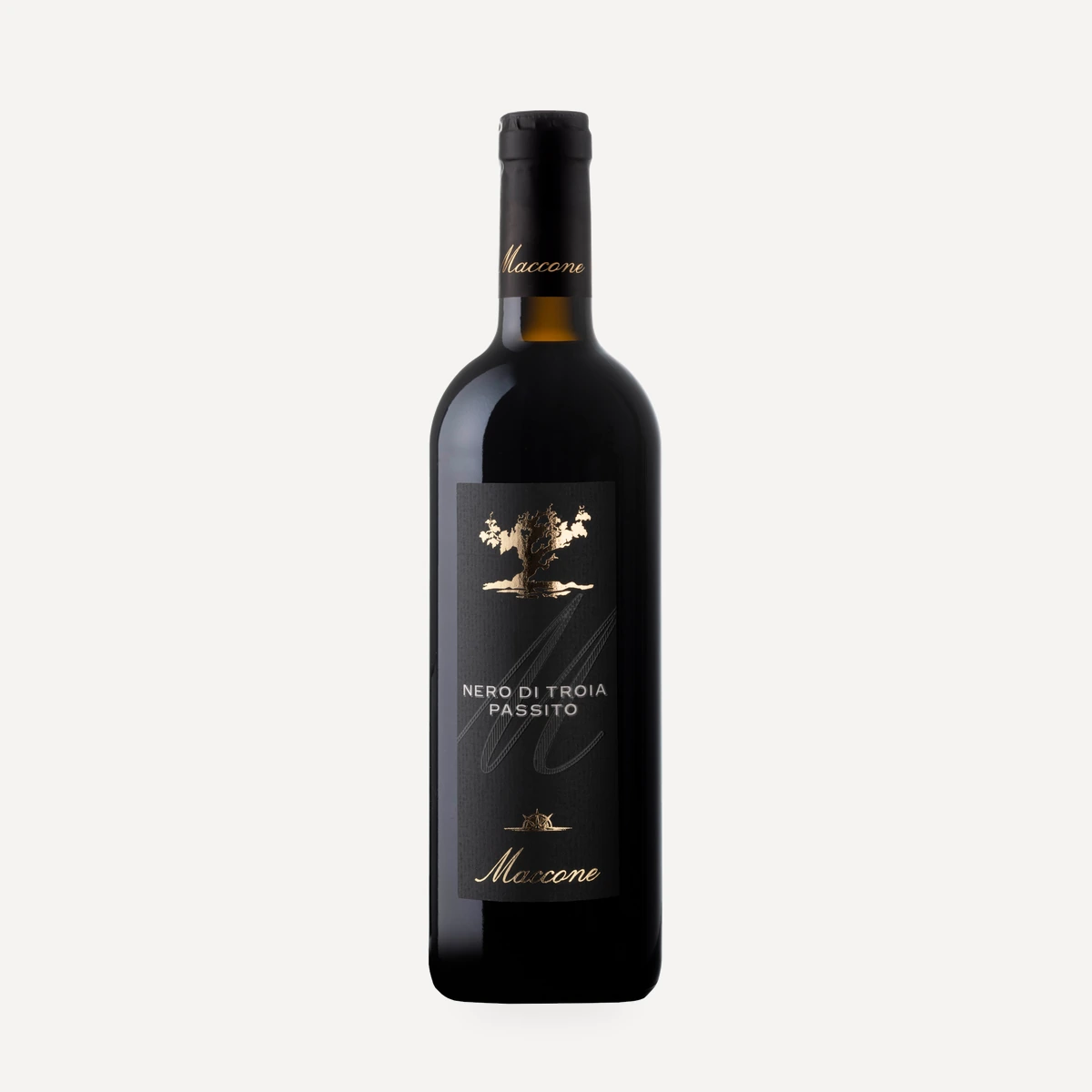
Puglia IGT Primitivo Passito. Actual alcohol: 13.5% vol.; total alcohol: 20% vol. Total acidity: 7.8 g/L. pH: 3.50. Residual sugar: 110 g/L. Net dry extract: 58 g/L.
Tasting profile
Intense violet colour, substantial structure and balance, with a concentrated aroma of ripe, partially dried grapes characteristic of distinguished Primitivo harvests.
Serving and pairing
Serve at 16–18°C in a small glass. Pair with dark chocolate, almond-based desserts or dry pastries.
Vintage notes
For 2019, harvesting for the passito began on 4 October. The growing season is described as regular, with 501 mm of rainfall compared with a stated average of 485 mm; grape quantity and quality met the estate’s objectives.
Label / history
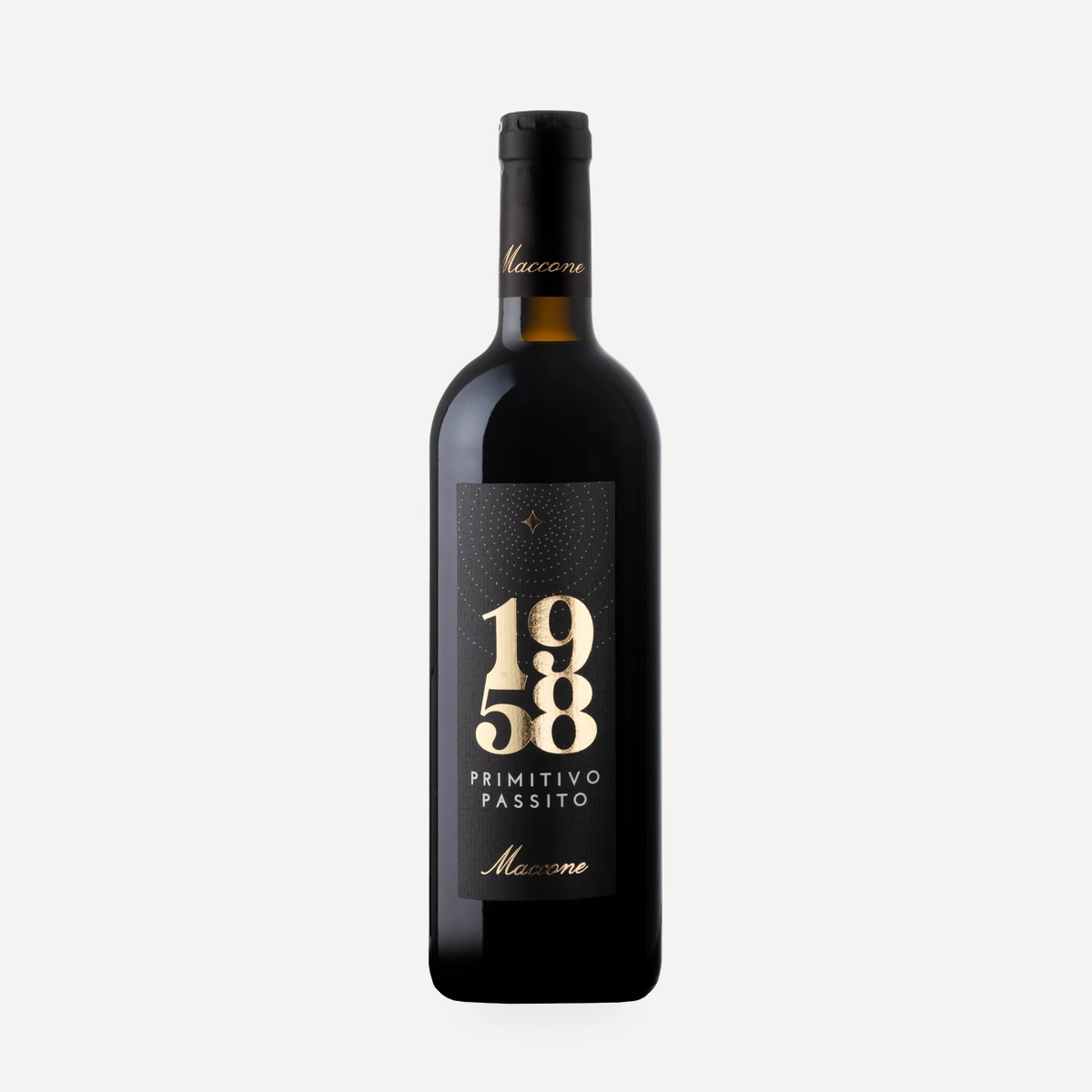
The wine recalls a Primitivo passito made by the family in 1958 from grapes grown on stony, low-fertility land near the boundary between Acquaviva delle Fonti and Adelfia. The grapes dried naturally on the vine and were picked in the first ten days of October. A surviving analysis records 58 g/L net dry extract and 20% vol. total alcohol. The 2019 edition was made after 61 harvests as a connection to that family memory, using pruning and canopy practices passed down through generations.