About this wine
Vineyard and terroir
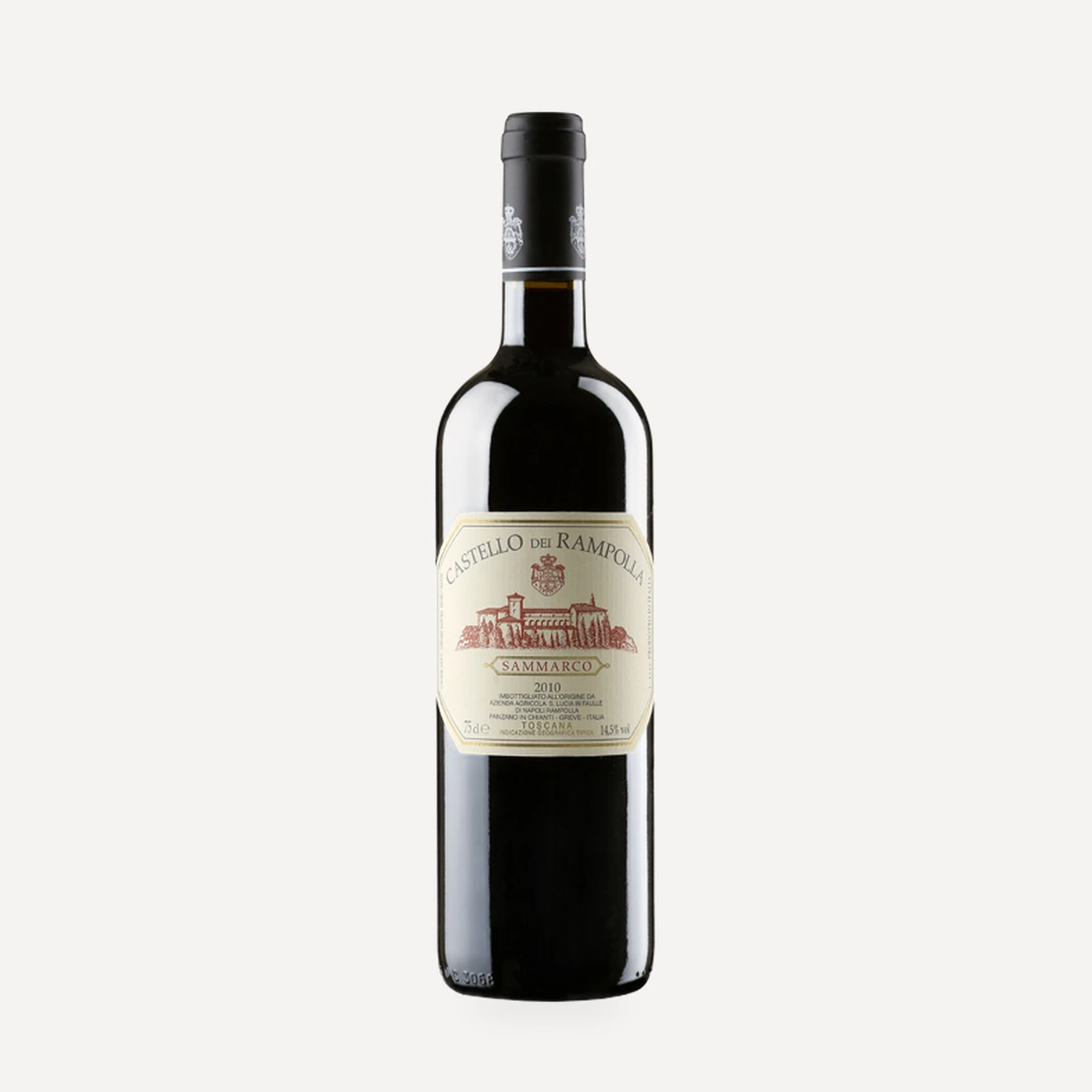
Sammarco is produced from the estate’s vines at Santa Lucia in Faulle in Panzano in Chianti.
Grapes
Cabernet Sauvignon is blended with variable proportions of Sangiovese and Merlot. Exact percentages for the latest published vintage are not provided.
Vinification
The wine spends 3 months in concrete tanks.
Ageing
Maturation lasts 12–15 months in tonneaux and 12 hL oak barrels with either no toast or medium toast. This is followed by 18–24 months in bottle.
Technical data
Production depends on weather conditions and ranges from 8,000 to 25,000 bottles.
Tasting profile
Sammarco has a deep, intense colour and a fresh profile marked by woodland undergrowth and ripe-fruit aromas. It is concentrated and structured around powerful tannins while retaining elegance and refinement. The published note for 2018 emphasizes purity, linear drive and freshness, with blue and purple fruit, lavender, sage, mint and blood orange. The 2017 is characterized by balance, refinement, creamy tannins and a persistent, complete finish.
Vintage notes
Cabernet Sauvignon reached 80% of the blend in 2018. Historical blend percentages are otherwise not enumerated because proportions vary between vintages. The 2017 combines early accessibility and creamy tannins with the capacity to mature in the cellar.