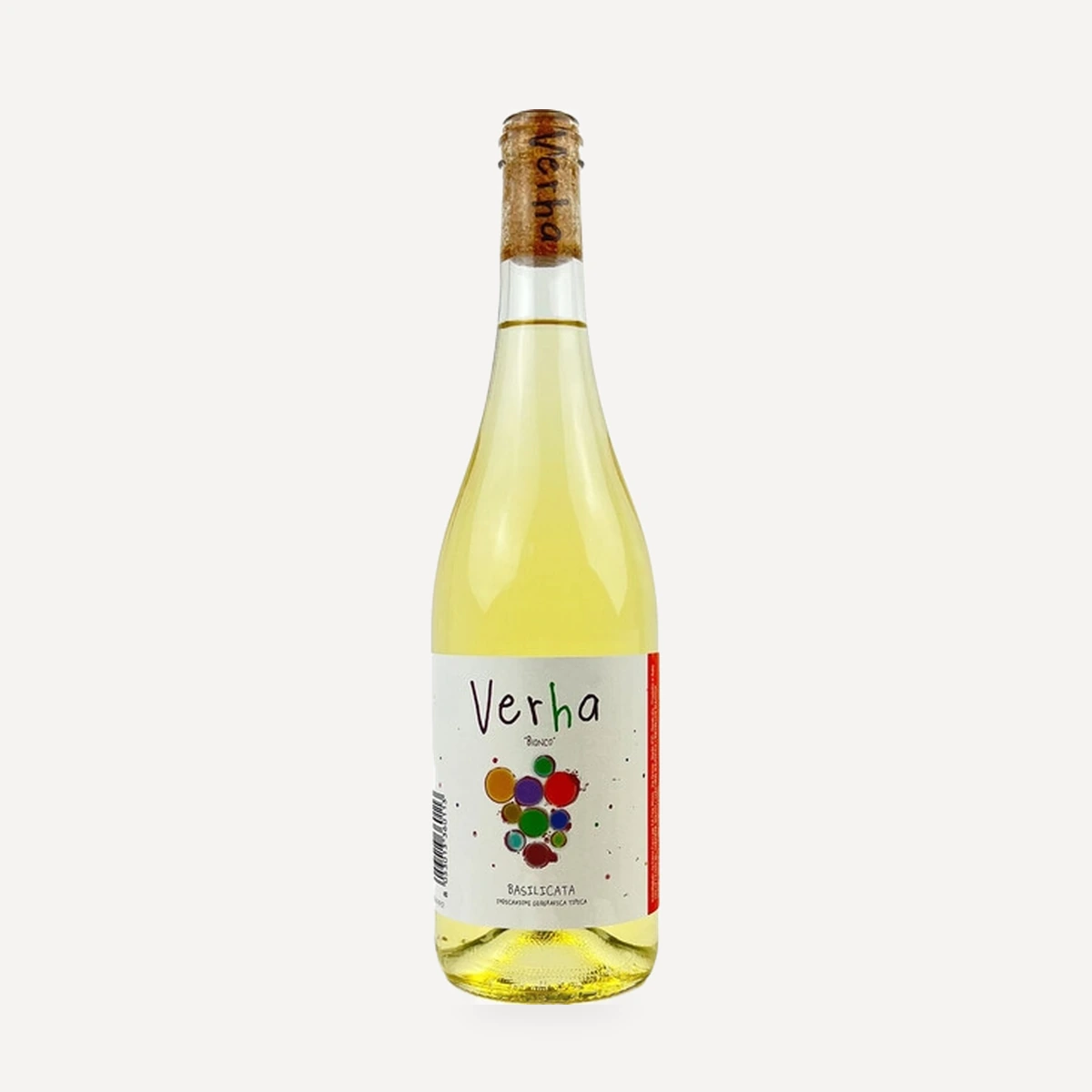
About this wine
Vineyard and terroir
The Sauvignon Blanc comes from plots in the municipality of Barile, at the foot of the extinct Monte Vulture volcano, at 650 m above sea level. The vineyards have a southern exposure and volcanic soils with pockets of clay. Significant differences between daytime and nighttime temperatures help preserve the grapes’ lively acidity, while the soils and exposure contribute concentrated aromas and a marked mineral character.
The plots belong to neighbouring farmers rather than the winery.
Grapes
The wine is made exclusively from Sauvignon Blanc.
Vinification
The grapes are harvested by hand in mid-September. They undergo cold cryomaceration for about six hours, followed by gentle pressing. Fermentation takes place in stainless-steel tanks. The wine is then naturally cold-stabilised at 5 °C for one month.
Ageing
Ageing takes place in stainless-steel tanks.
Tasting profile
Bright, lively and refreshing, with concentrated yet delicate aromas, crisp texture and marked minerality. The acidity is lively, and the wine is expressive and well balanced.
Serving and pairing
Suitable with appetisers or a light dinner, particularly in spring and summer.
Label / history
Elena Fucci launched the Verha project in 2022 to produce fresh, easy-drinking everyday wines that retain the character of the local terroir. The project also aimed to support local winegrowing and prevent vineyards from being abandoned.
Before the COVID pandemic, the neighbouring farmers who owned these vineyards sold their grapes to private buyers, mainly from Campania, who made wine in a garagiste style. During and after the pandemic, those buyers ceased operating, leaving the farmers without a secure outlet for their grapes. A decision was subsequently made to buy the vineyards and develop a project centred on wine quality and care for the terroir.
“Verha” means “wine” in the Arbëresh dialect spoken by descendants of the Albanian community that settled in Barile in the XV century. The name connects the project with the area’s culture, history and winemaking traditions, as well as Elena Fucci’s roots.