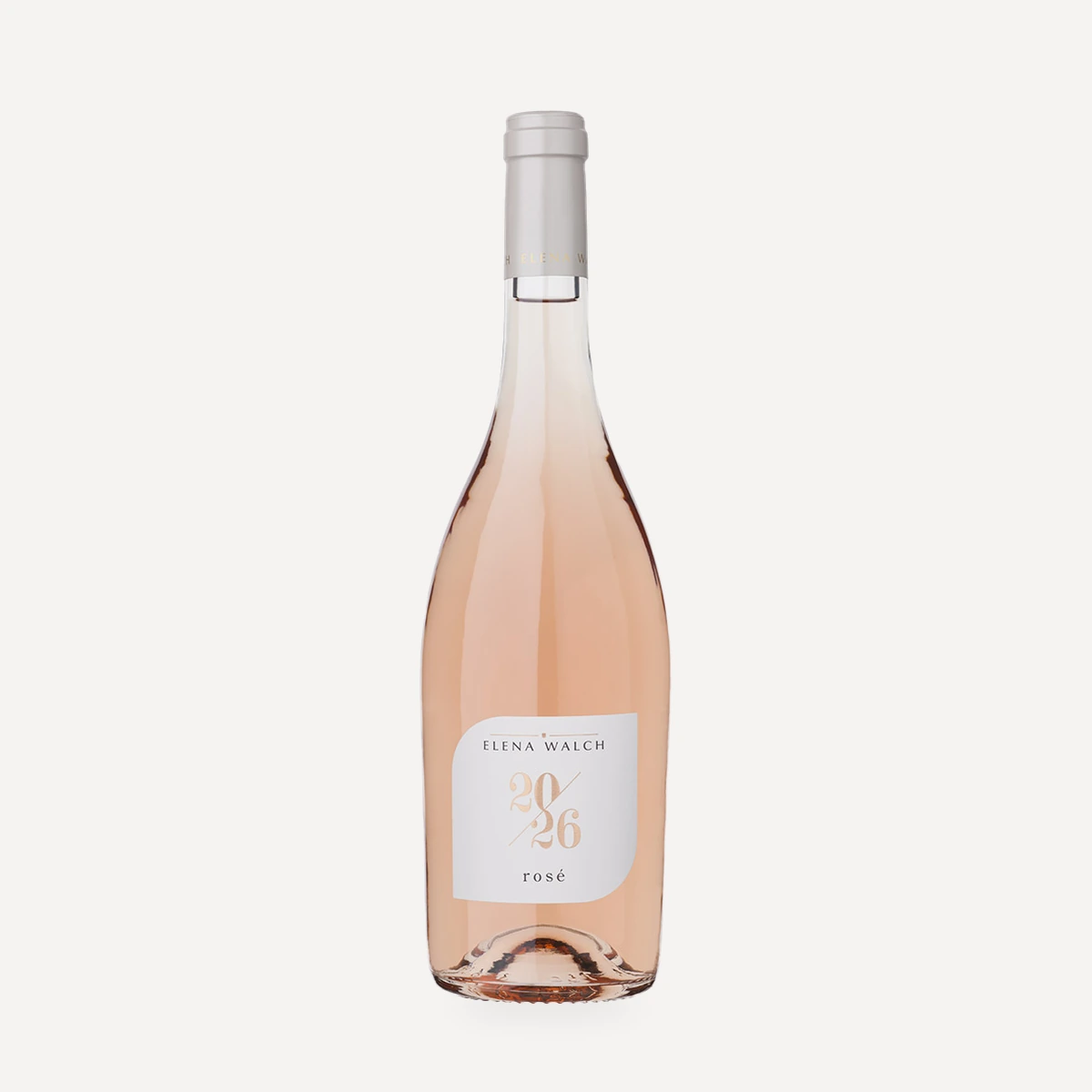
About this wine
Vineyard and terroir
The grapes grow in medium-altitude vineyards exposed to warm daytime temperatures and cooling mountain air in the evening. Mediterranean warmth and cool winds from the surrounding mountains bring tension and freshness to the fruit.
Grapes
Pinot Nero, Lagrein and Merlot; percentages are not specified.
Vinification
The wine is made by the classical saignée method. After a short period of skin contact, the clear, rosé-colored must is drawn off at 20° Babo without pressing. Fermentation takes place in stainless-steel tanks at a controlled 26°C. The figures for must sugar at drawing-off and fermentation temperature give the wine its name: 20/26.
Technical data
The 2025 wine has 12.50% alcohol, 5.7 g/L total acidity and 0.2 g/L residual sugar. It is available in 0.75 L and 1.5 L formats and has an estimated ageing potential of 2–4 years.
Tasting profile
Salmon-colored, lively, fresh and juicy. Pronounced raspberry, strawberry and bright citrus aromas frame the blend’s fruit. The palate shows fine texture, clear structure and finesse. A published 2023 Falstaff note highlights taut acidity, bright juiciness, mineral drive and a crisp finish.
Serving and pairing
Serve at 12–14°C. Suitable as an aperitif and with first courses or light main courses.
Vintage notes
The 2025 harvest started on 27 August and finished just over a month later. Early flowering preceded a warm, dry June. A notably cooler July helped retain natural freshness and acidity, while August brought favorable ripening conditions. September alternated between sunshine and occasional rain toward the close of harvest, and the grapes arrived healthy and balanced.
Label / history
The name records two defining production measurements: must drawn off at 20° Babo and fermentation at 26°C.