About this wine
Vineyard and terroir
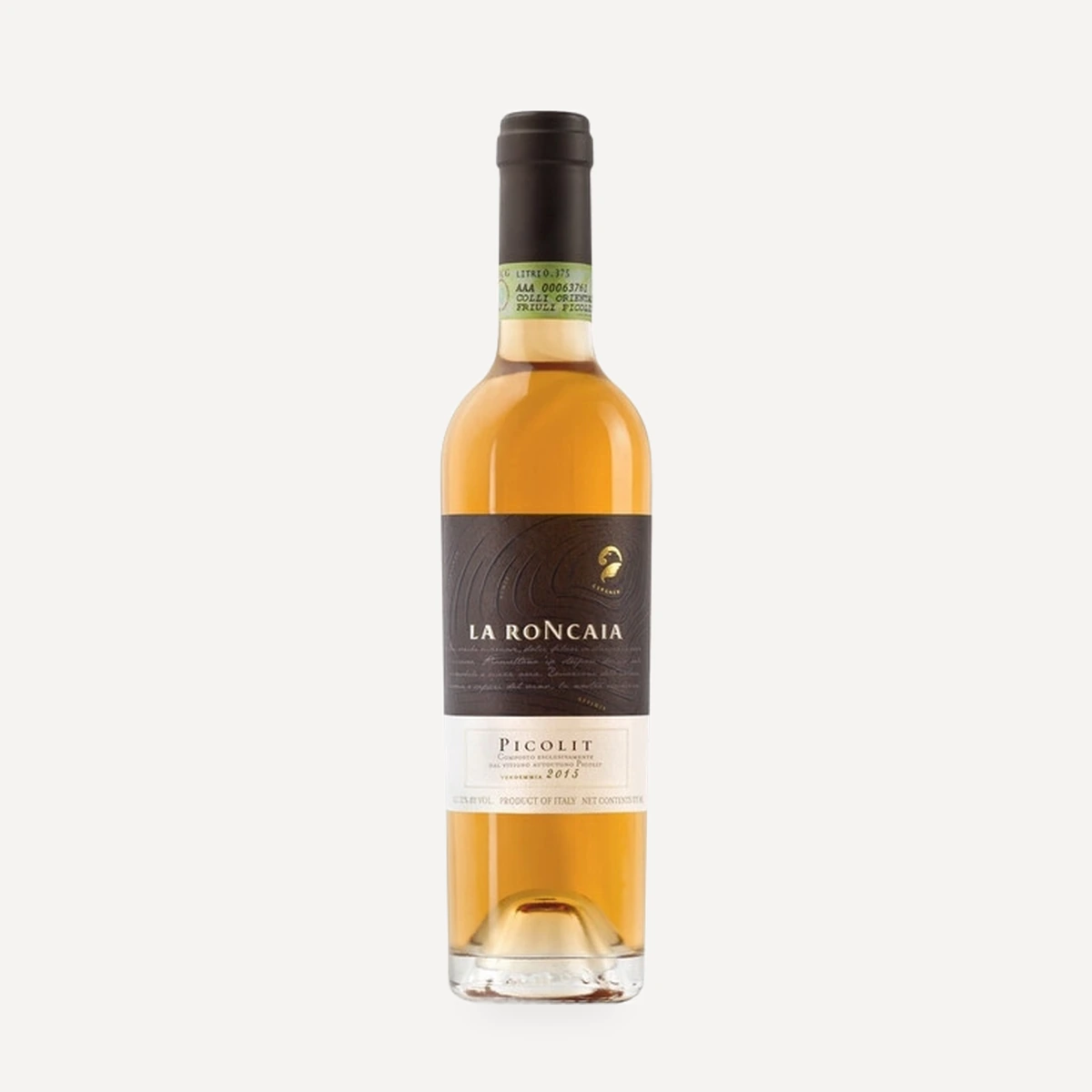
The Picolit comes from 6.5 ha of estate vineyards in the municipality of Attimis. The terraced vineyards lie on gently sloping hills at 400 m above sea level, on Eocene marl soils, with a planting density of 4,600 vines per hectare and Guyot training. Each vine yields no more than 100 g of fruit: two or three bunches bearing six to eight berries each.
The Alps protect the area from harsh, cold winds, while the Adriatic Sea moderates summer heat and abrupt changes in winter conditions. Sea breezes move north towards the hills at dawn and return south towards the coast in the evening, helping to limit fungal diseases. Rainfall is generally heavy but brief, and the climate is bright and sunny.
Vinification
The grapes are harvested by hand at the end of October. The bunches are destemmed manually and dried in dedicated rooms for six weeks to concentrate their floral aromas. The must ferments partly in new Allier French oak barriques and partly in temperature-controlled stainless-steel tanks. The two lots are blended at the end of spring.
Ageing
The blended wine matures in barriques for 12 months, followed by a further six months in bottle.
Label / history
Picolit has a long ripening period and is prone to flowering problems and the loss of developing fruit. Its low yields once made cultivation uneconomical and brought the variety close to extinction.
Sweet Picolit wines from the area were historically enjoyed by princes and bishops. They became widely known during the 18th century through Count Asquini di Fagagna, who sold them in green, hand-blown glass bottles in London, Paris, Amsterdam and Russia. His customers included the Holy Roman Emperor. During the 19th century, Picolit also found favour among European royal families, including the Habsburgs.
The vineyard accounts for 28% of the region’s Picolit crop and produces approximately 6,000 bottles.