About this wine
Vineyard and terroir
The La Gemella project began in 2004 with the planting of 11 hectares of Barbera in two distinct areas. Côte de Vergne lies at 430 m, faces south and has compact, relatively less sandy soils, with 4,800 vines per hectare. Cascina Nuova, opposite the Vergne cemetery, lies at 380 m on looser soils and is planted at more than 8,000 vines per hectare. The dense plantings were intended to reduce production per vine while encouraging concentration and intensity.
Grapes
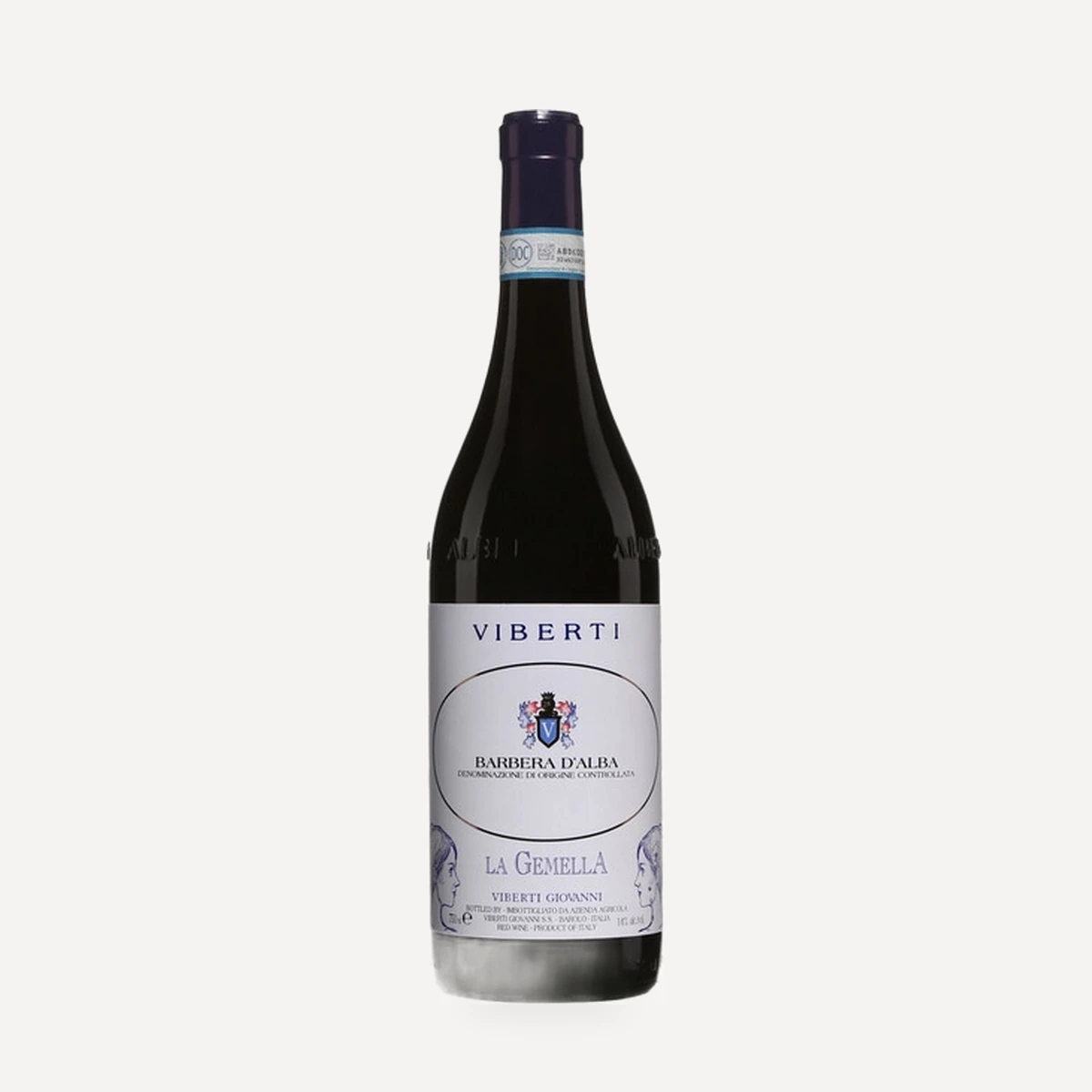
100% Barbera. Barbera d’Alba DOC.
Vinification
For the 2024 vintage, harvesting began on 1 October. The high-density vineyards did not require preliminary crop thinning, and the grapes were selected during picking into 20 kg crates. After crushing and destemming, fermentation took place in horizontal submerged-cap fermenters for 8–10 days at 30°C. The wine was then racked into steel, where malolactic fermentation continued for 40 days.
Ageing
The wine remained for 10 months in the same steel tanks used for vinification. Slow stirring of the fine lees encouraged mannoprotein extraction and contributed a sweet-textured impression.
Technical data
The 2024 wine has 14% alcohol by volume and total acidity of 6.4 g/L.
Tasting profile
Ruby red with violet highlights. The aromatic profile brings together cherry, maraschino cherry, blackberry and cassis.
Serving and pairing
Serve at 16–18°C. The expected ageing window is 3–5 years.
Vintage notes
The 2024 season was warm and humid, interrupting the preceding years’ drought pattern. Persistent rainfall replenished water reserves but made vineyard management demanding, with results varying according to site and exposure. Strong diurnal temperature variation in higher vineyards supported balanced ripening and aromatic definition. Healthy bunches with comparatively low potential alcohol produced fresh, elegant wines with good development prospects.
Label / history
La Gemella was created as a tribute to Maria, Claudio Viberti’s mother, who spent more than 50 years at the heart of the kitchen of the Il Buon Padre restaurant. The name, meaning “the twin,” refers to Maria herself being a twin. Her view was that Barolo belonged to weekends and special occasions, while Barbera was the everyday wine of the working week. That philosophy shaped La Gemella as a wine intended for daily life and traditional food rather than ceremony.