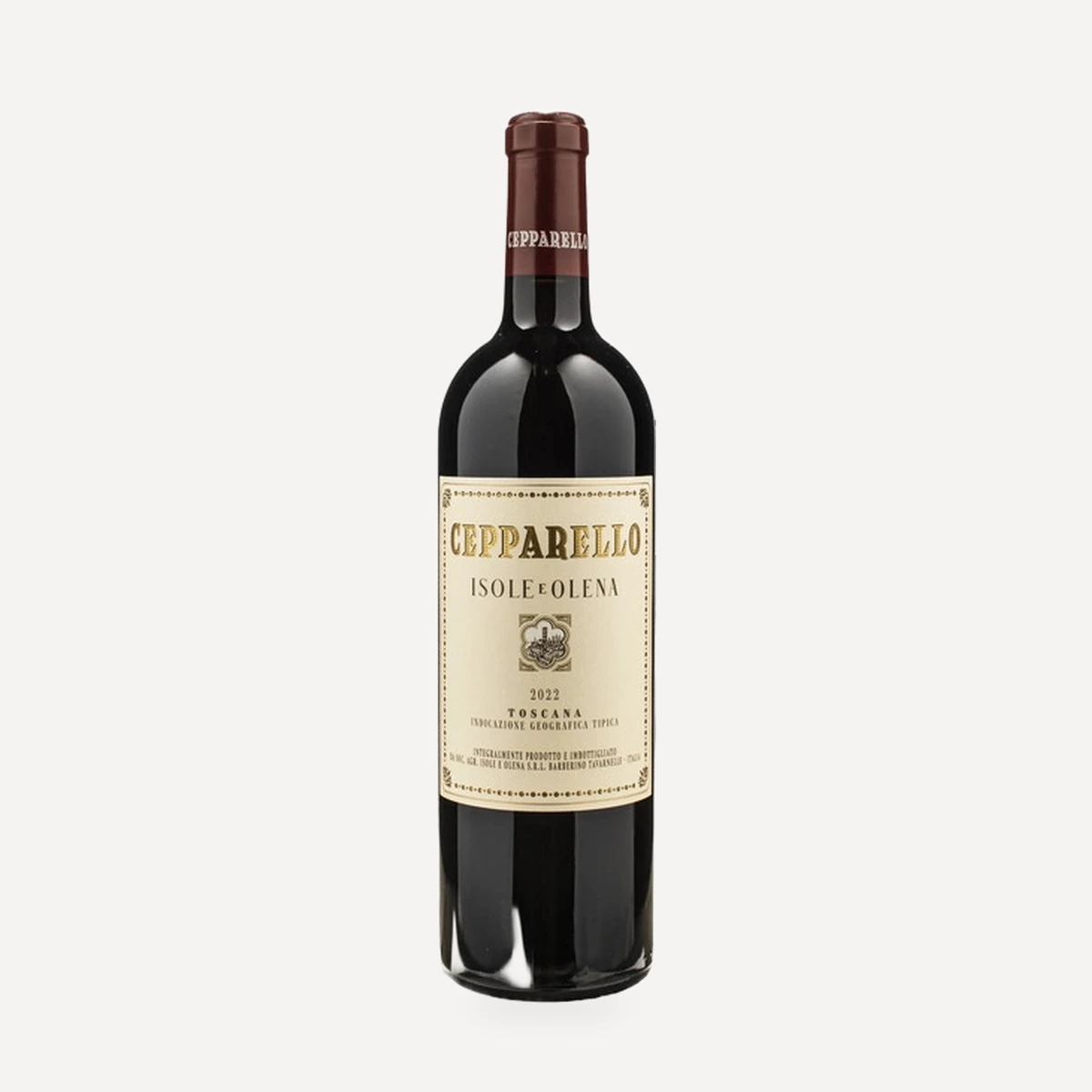
About this wine
Vineyard and terroir
Cepparello is made from a selection of grapes grown in the estate’s best, sunniest and windiest vineyards. Preference is given to well-drained sites with galestro and limestone soils. The selection process is continually refined so that only the most promising fruit is used.
Grapes
100% Sangiovese. Conceived when producing a varietal Sangiovese of this kind represented a deliberate departure from convention, Cepparello has retained its IGT classification.
Vinification
Fermentation takes place in conical French oak vats.
Ageing
The wine matures for 18 months in French oak barriques, tonneaux and large casks, followed by a further year of refinement in bottle.
Technical data
2023 vintage: 15% alcohol.
Vintage notes
The 2023 growing season was more balanced than preceding years. Adequate spring rainfall replenished soil-water reserves. Summer was warm but avoided the extreme heat waves of the recent past, while periodic rain supported vine health and fruit development. Summer-like conditions returned in late September and early October, allowing grapes to be harvested with a pronounced aromatic and acidic profile suited to ageing.
Label / history
Cepparello is the estate’s premium wine and was first produced in 1980. It began as a departure from established convention: a wine made entirely from Sangiovese at a time when this was considered impossible. Its identity continues to develop through an evolving vineyard-selection process and close engagement with the vineyard.