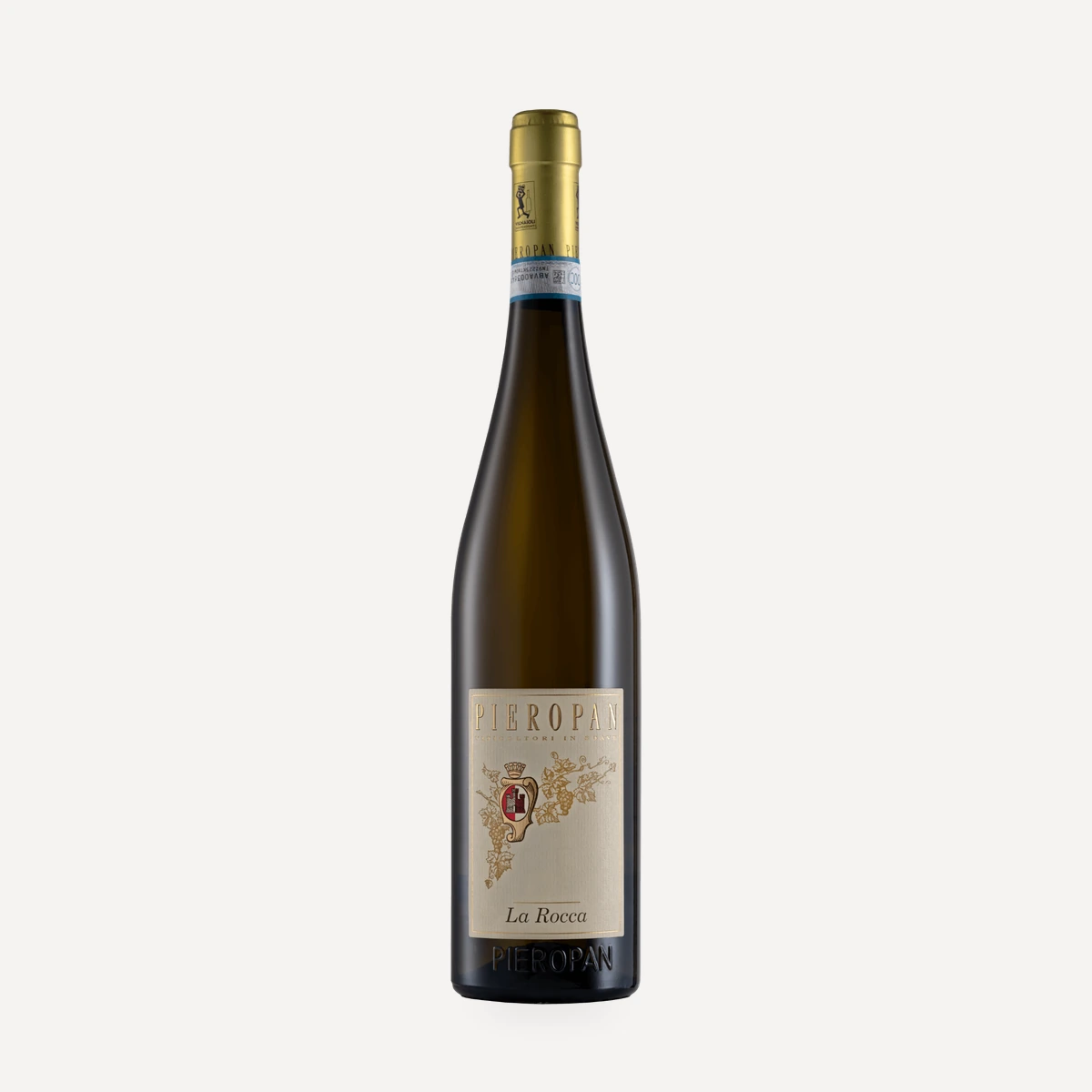
About this wine
Vineyard and terroir
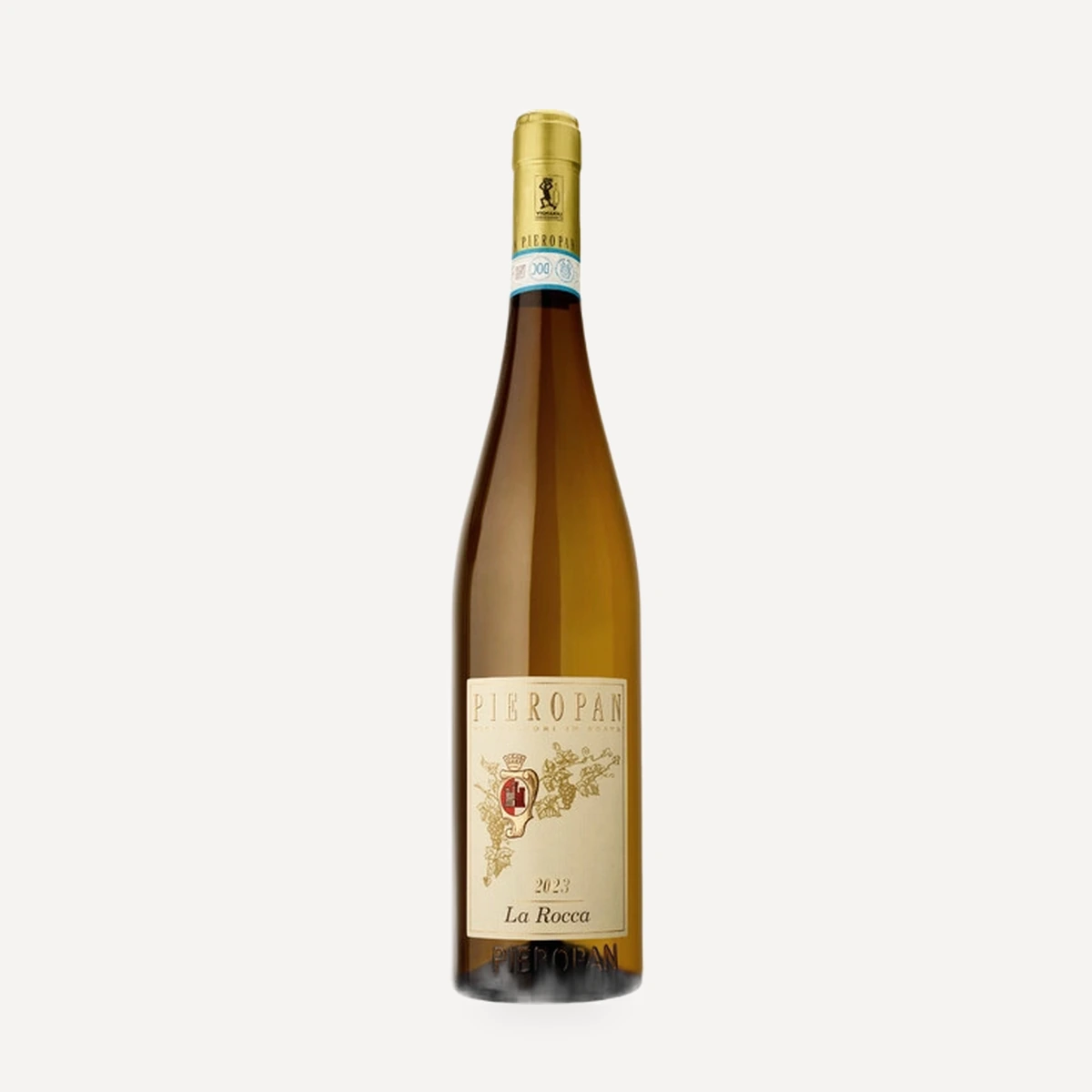
La Rocca is a single-vineyard wine from Monte Rocchetta, behind the medieval castle overlooking Soave. The site has marine-origin limestone soil rich in clay and a distinctive microclimate. The wine page places the vineyard at 150 metres with a south-west exposure; the technical sheet gives 95–145 metres and a west exposure. Vines range from 10 to 50 years old. They are spur-pruned on cordons at 5,000 vines per hectare, with eight buds per vine. Certified-organic production yields 60 hl/ha, or about 2 kg per vine.
Grapes
100% Garganega.
Vinification
The grapes are harvested by hand at the end of October, often in two passes to select the ripest bunches, including fruit with limited botrytis development. After destemming, the grapes are gently pressed pneumatically under nitrogen. The free-run must begins fermenting at 14–18°C in glass-lined concrete tanks and is transferred to French oak tonneaux and large Slavonian oak barrels once the entire lot is fermenting.
Ageing
La Rocca matures for approximately 12–15 months, with 70–80% in French oak tonneaux and 20–30% in large Slavonian oak barrels. It remains on its fine lees, with periodic bâtonnage contributing softness, body, aromatic richness and complexity. Several months of bottle ageing precede release.
Technical data
Alcohol: 13% vol. Total acidity: 6.20%. pH: 3.30.
Tasting profile
Intense straw yellow with golden nuances. The layered bouquet evokes exotic fruit, yellow peach, dried apricot, nuts and almonds, followed by saffron, cinnamon, powdered ginger, white pepper, honey and a light balsamic note. The palate is warm, elegant, smooth and persistent.
Serving and pairing
Serve at 12–14°C. Pair with risotto or fresh pasta featuring porcini, duck ragù, truffle or squash; salmon, eel and scallops; roast veal with milk and mustard sauce, chicken stew or stuffed guinea fowl. It is also suited to strongly flavoured ethnic cuisine.
Label / history
First released in 1978, La Rocca introduced a markedly innovative expression of Soave and became a defining Pieropan wine, demonstrating the character attainable from Garganega through fermentation and maturation in wood.