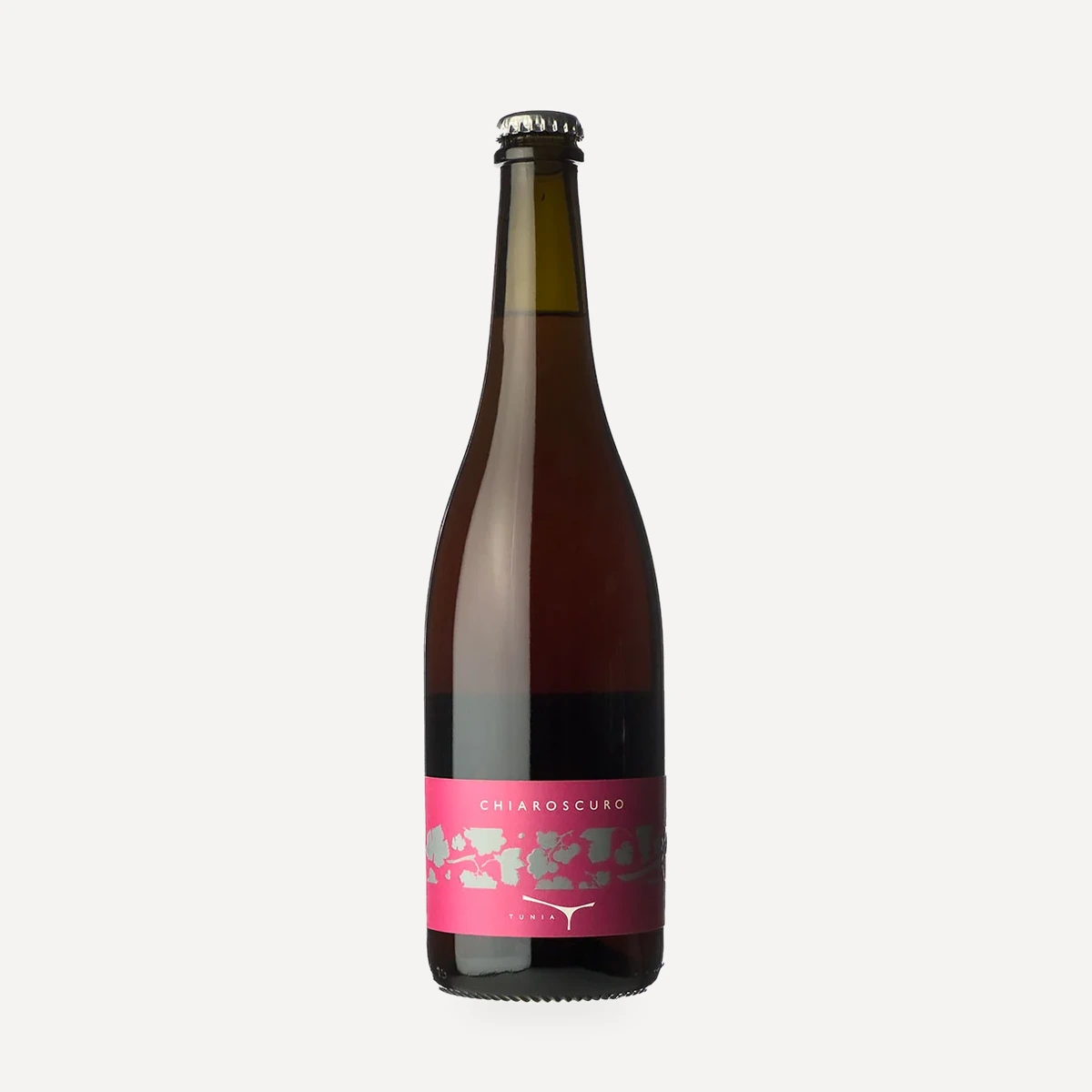
About this wine
Vineyard and terroir
Chiarofiore comes from vines planted in 1970 on the hills forming the northern boundary of Val di Chiana. The vineyards lie at 300 metres above sea level, face south-west and have calcareous-clayey soils. Yields are approximately 2,500 kilograms per hectare, and the grapes are harvested by hand into crates.
Grapes
The blend is 85% Trebbiano and 15% Vermentino. Fully ripe Trebbiano develops pink-coloured bunches, contributing to the finished wine's amber colour and pink reflections alongside the effects of skin-contact fermentation.
Vinification
Four separate harvests and vinifications shape the wine. Slightly underripe Trebbiano is picked in late August to preserve high acidity and fermented without its skins. Ripe Vermentino follows in mid-September and macerates for approximately one month. Fully ripe Trebbiano is harvested at the end of September and fermented on its skins. A final Trebbiano harvest takes place in November, when the bunches are lightly dried and partly affected by noble rot, Botrytis cinerea; this component also undergoes skin maceration.
Each parcel is fermented separately in stainless steel through spontaneous fermentation with indigenous yeasts. The wine is neither clarified nor filtered.
Ageing
The four components mature for one year on their fine lees before being blended and bottled.
Tasting profile
Chiarofiore is an amber-coloured orange wine with pink reflections. Clove is prominent when the wine is first poured, sometimes accompanied by a fleeting sulphurous nuance that dissipates rapidly. Aeration reveals almond, dried apricot and caramelised notes, followed by orange peel. The palate combines marked acidity with a saline, mineral sensation. A slight temporary effervescence may result from continuing yeast activity in bottle. Skin-derived tannins bring some astringency, balanced by the softness of the late-harvest component. The wine is full-bodied, with a persistent finish.
Serving and pairing
Serve cool rather than cold, at approximately 14°C. Open the bottle a few minutes before drinking and allow it to breathe. Pair with mature cheeses, rabbit, pork, guinea fowl, liver dishes or vegetable-based courses.