Questo vino
Vineyard and terroir
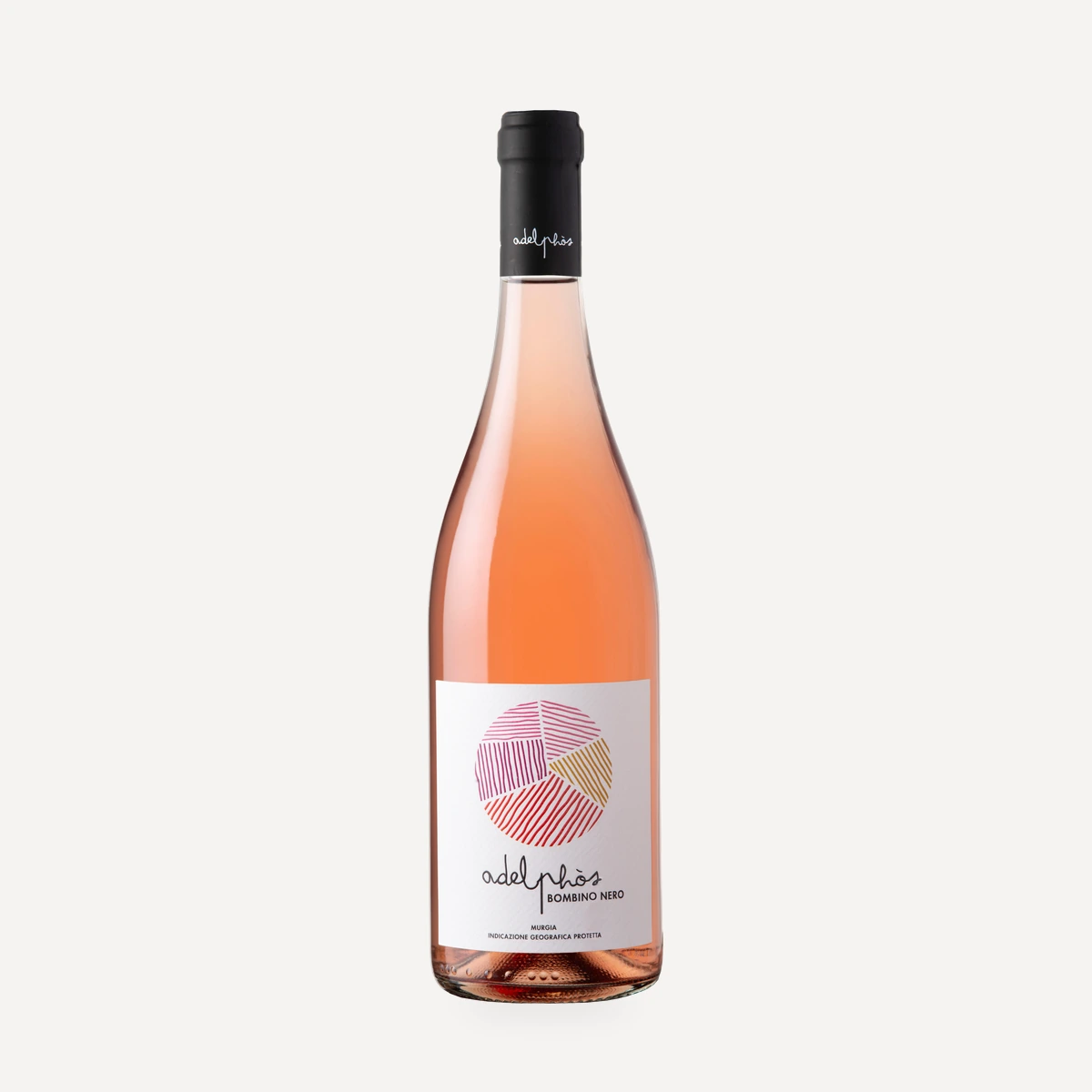
This varietal Susumaniello rosé is presented as an interpretation of an old grape variety. The product page locates the vineyard at Adelfia on clay soil, while the technical sheet gives the broader Murgia area and calcareous-clay soil. Low vertical trellising is used.
Grapes
100% Susumaniello.
Vinification
The current process gently presses whole grapes and ferments only the clear free-run must at controlled temperature in stainless-steel tanks with selected yeasts. The must's low pH prevents malolactic fermentation. The technical sheet additionally records cold maceration, crushing and destemming, followed by fermentation of the free-run must at 10°C.
Harvest is manual and follows ripeness curves. The current page specifies the final ten days of September; the technical sheet gives a broader window from September into early October.
Ageing
Matured in stainless steel and bottle; no duration is given.
Technical data
The current alcohol level is 13% vol, compared with 12.5% vol in the technical sheet. Bottled in a white 750 ml Burgundy bottle with an agglomerated cork.
Tasting profile
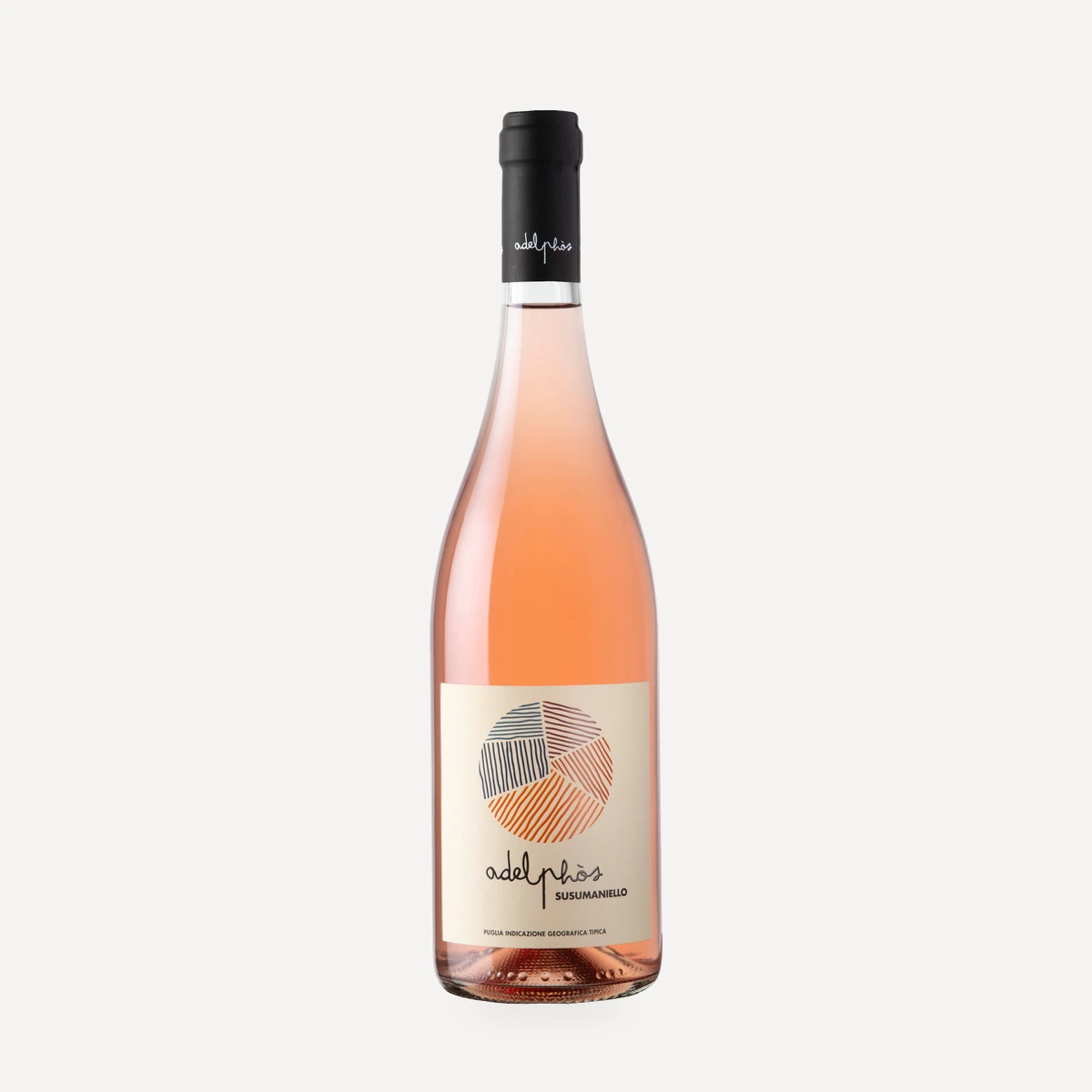
Bright pink with slight violet reflections. Aromatic herbs and citrus shape the nose, while the palate is fresh, balanced and easy to drink. The introductory description emphasizes an enveloping, rich and fruity palate. The technical sheet offers a simpler profile of pale pink with violet nuances, fullness, balance and moderate terroir-derived acidity.
Serving and pairing
Serve at 10–12°C in a medium-sized, inward-tapering tulip glass. It works as an aperitif and with antipasti, vegetables, and light fish- or vegetable-based dishes.