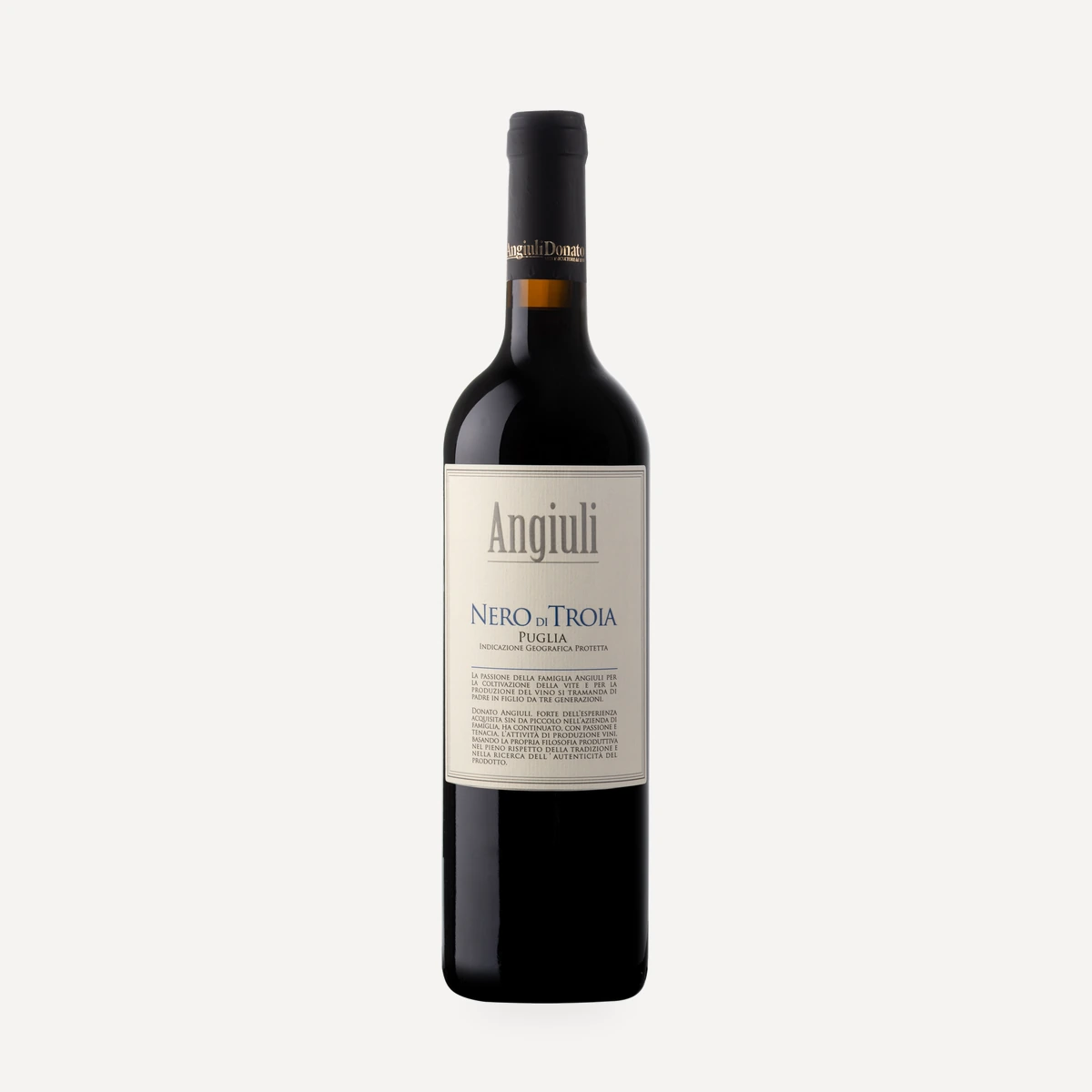
Questo vino
Vineyard and terroir
The product description places the vineyard at Contrada Torre Quadra, Rogadeo, in the countryside of Mariotto near Bitonto, on clay soil. The vines are trained using the traditional Puglian tendone system with a limited bud load. The technical sheet identifies Castel del Monte, limestone-and-clay soil, approximately 2,000 vines per hectare and a yield of 150 quintals per hectare.
Grapes
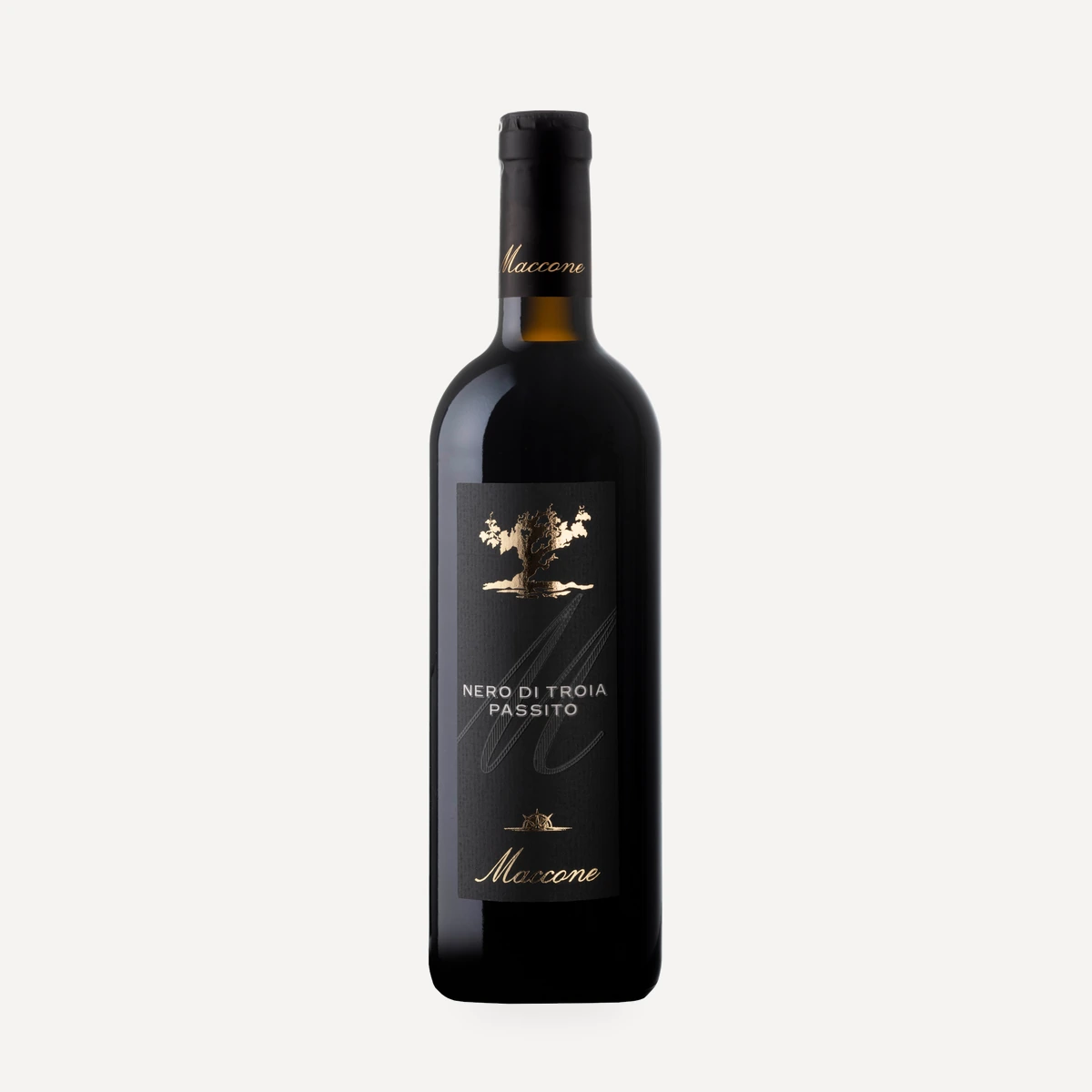
100% Nero di Troia, an indigenous Puglian variety with thick, polyphenol-rich skins.
Vinification
The manually selected grapes are destemmed and crushed, then given a long skin maceration. Fermentation proceeds at controlled temperature in small stainless-steel tanks, with frequent pump-overs and oxygenation. The technical sheet describes soft crushing, approximately ten days of submerged-cap maceration and draining after fermentation. Malolactic fermentation takes place in tank.
Ageing
Six months in stainless steel. The technical sheet also indicates release one month after bottling.
Technical data
Puglia IGT Nero di Troia Rosso; the technical sheet uses the designation IGP Puglia. Alcohol: 14% vol. The 75 cl Bordeaux-style UVAG bottle is listed with an agglomerated closure on the product page and a cork in the technical sheet.
Tasting profile
The colour is vivid and intense. The elegant bouquet combines violet, sour cherry and spice. The palate is fresh, with abundant polyphenols and tannins.
Serving and pairing
Pair with robust first courses, lamb and cheeses. The product page recommends 14–16°C and a medium tulip-shaped glass; the technical sheet gives 10–12°C and specifies a medium tulip glass with a narrowing rim.