Questo vino
Vineyard and terroir
The fruit comes from Contrada Sirenga in the municipality of Adelfia. The sandy clay-loam soil has excellent organic-matter and macronutrient content. The vines are trained to the tendone pugliese system; vineyard work is manual and includes winter pruning, tying, green pruning, leaf removal and bunch selection.
Grapes
100% Notardomenico, a nearly vanished old variety preserved in Adelfia by growers who maintained surviving bush vines.
Vinification
The grapes are harvested manually during the first ten days of October, following ripeness curves. Whole grapes are softly pressed at 0.6 bar. The resulting must rests for 72 hours before static clarification, after which the clear must ferments for 30 days at controlled temperature.
Ageing
The wine remains on fine lees for six months with frequent bâtonnage. It is then clarified to achieve protein stability and microfiltered at low pressure in an inert environment; depth filtration provides microbiological stability.
Technical data
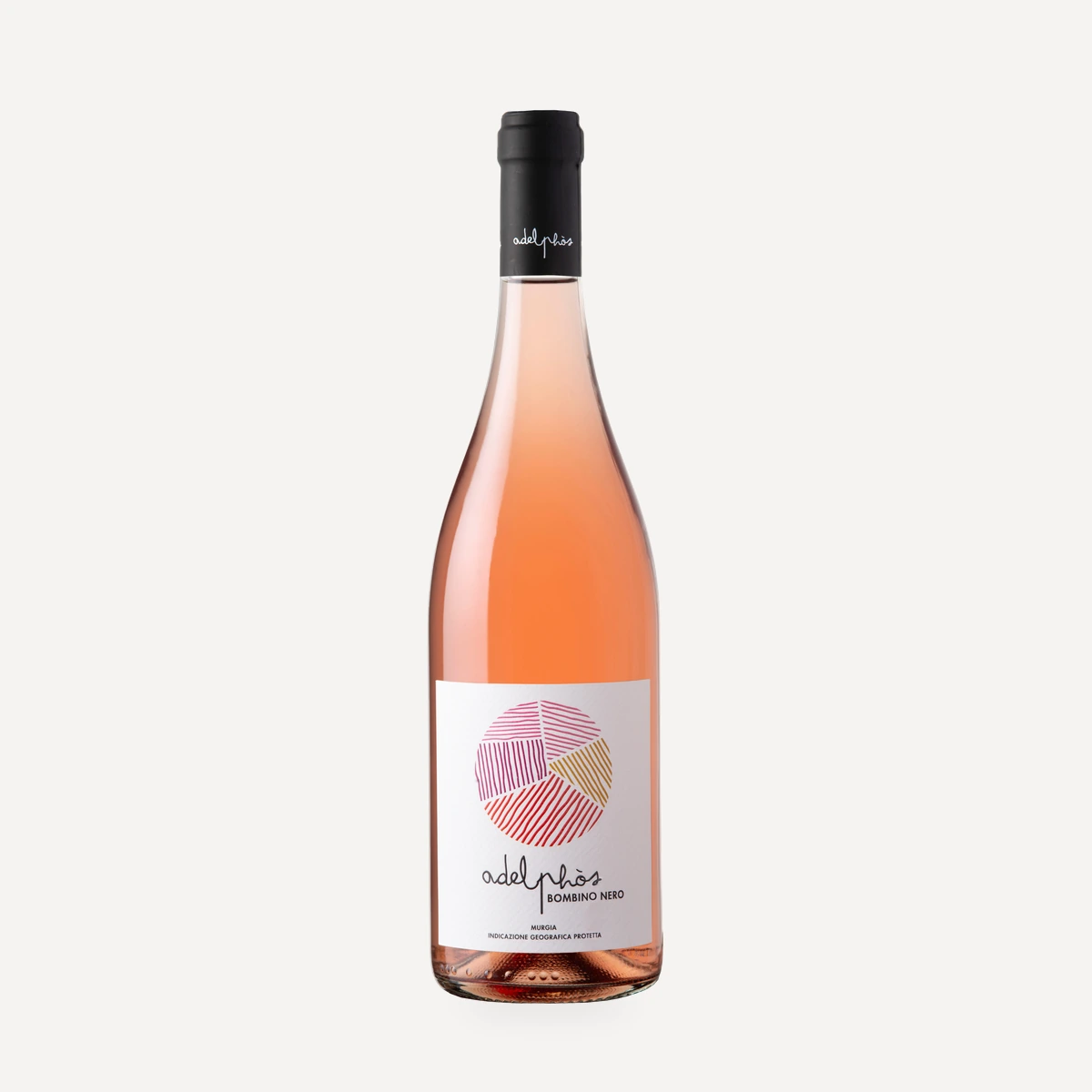
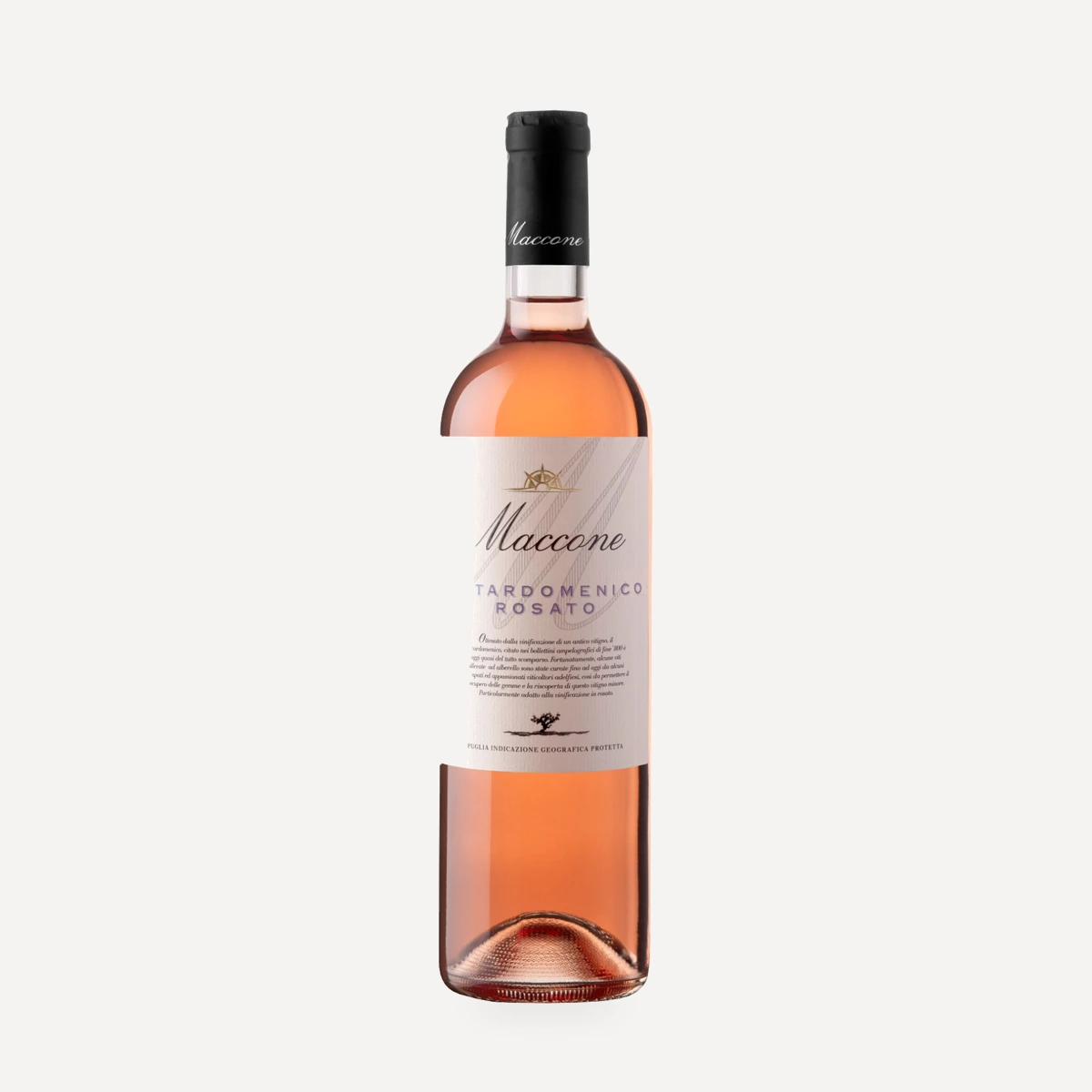
Puglia IGT Notardomenico Rosato. Alcohol: 13.5% vol. Presented in a white European Bordeaux bottle.
Tasting profile
Very pale pink with subtle violet nuances. Delicate aromas of strawberry-tree fruit, almond and white peach lead to a dry, light palate shaped by vibrant freshness and a saline quality.
Serving and pairing
Serve at 10–12 °C in a medium-opening glass. Suitable for starters, fish dishes and fried fish.
Label / history
The wine revives Notardomenico, an old local variety that had almost disappeared. A small number of bush vines survived through the care of experienced Adelfia growers, enabling its recovery.