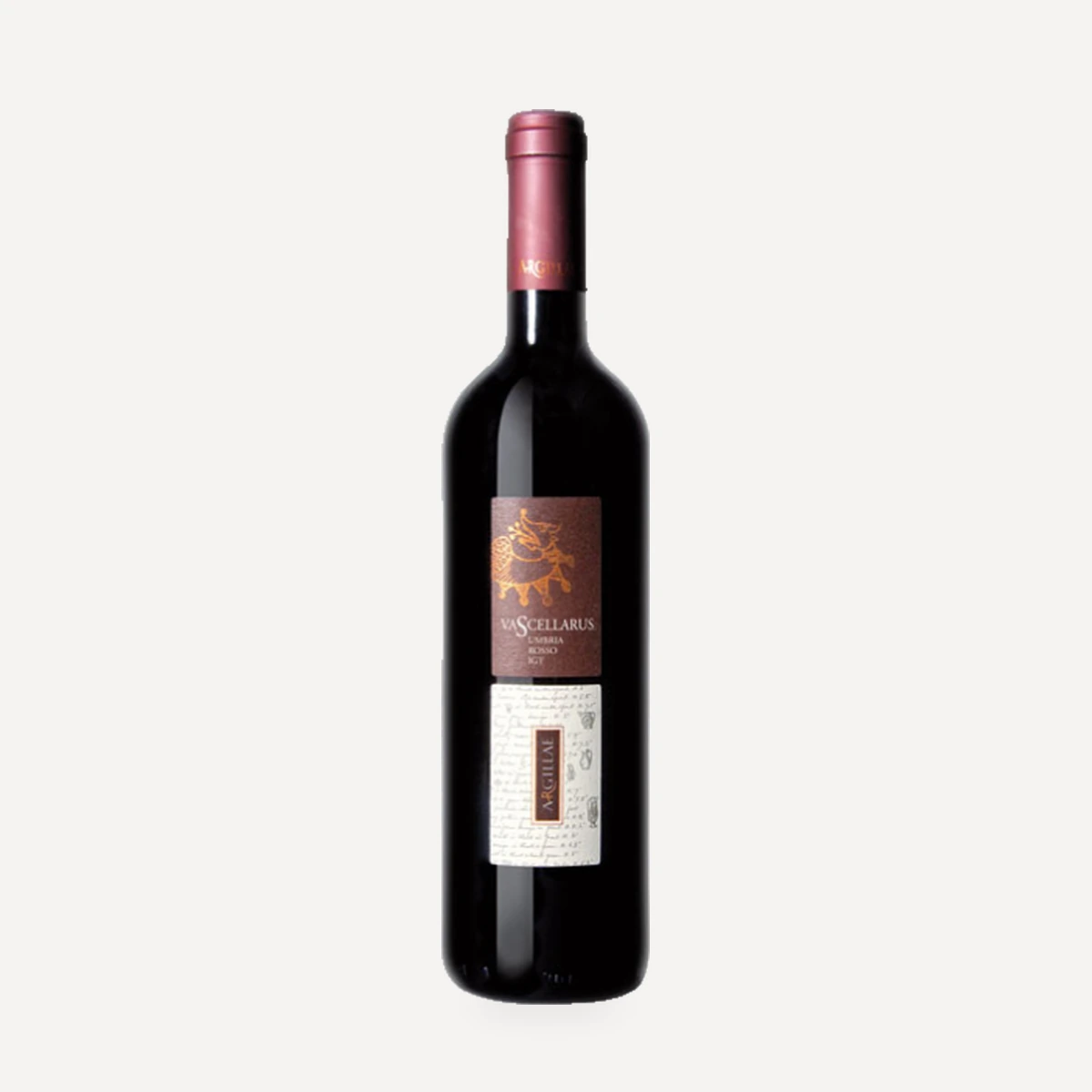
Questo vino
Vineyard and terroir
A limited-production red made from selected vineyards in the Orvieto area and produced only in the best vintages. The vines are trained to Guyot at a density of 3,333 plants per hectare, with a yield of 70 q/ha. Grapes are picked by hand in October.
Grapes
Sangiovese and Gamay del Trasimeno, identified as Grenache.
Vinification
The grapes are crushed and destemmed, then macerated for 25–30 days. Regular pumping over and several délestages accompany alcoholic fermentation, which takes place entirely in stainless steel. Malolactic fermentation proceeds in temperature-controlled barriques.
Ageing
Part of the wine matures for several months in barriques, while the balance matures in amphora. After bottling, it rests for a further 12 months and is released two years after the harvest.
Tasting profile
The colour is an intense red that develops garnet tones with age. Aromas of ripe red fruit mingle with sweet oriental spices and a light suggestion of roasted cocoa. Rounded tannins and measured oak give an immediately approachable texture, while the enveloping, velvety palate finishes with black pepper and vanilla.
Serving and pairing
It may be enjoyed on release or cellared. The local tradition of Orvieto associates red wines of this kind with cured meats and game.
Label / history
The name derives from the medieval vas-cellari, ceramic makers whose refined maiolica brought Orvieto considerable renown. The dragon on the label is adapted from this ceramic tradition as a tribute to the territory’s art and history.