Storia
The family vineyard in Val Cerasa
The project began with a small Bonaccorsi family vineyard in Contrada Val Cerasa, in the territory of Piedimonte Etneo. The vineyard lay at approximately 800 metres above sea level. Its district name means “valley of the cherries” and subsequently gave Valcerasa both its name and its identity.
Alice and Rosario’s shared passion for wine and their land provided the impetus for developing the family vineyard into a wine-producing estate.
1997: the first wine
The first wine produced was Valcerasa Etna Rosso. Its inaugural vintage was 1997, preceding the acquisition of the estate’s later base in Randazzo. The wine became the principal historical label associated with the property.
2000: establishing the Randazzo estate
In 2000, Alice and Rosario purchased a new property in Contrada Croce Monaci, Randazzo. This acquisition laid the foundations of the present agricultural estate. Its holdings now extend across the northern side of Mount Etna, between 700 and 900 metres above sea level, and cover approximately 20 hectares.
The present estate
The operation remains associated with the Bonaccorsi family and trades as Azienda Agricola Alice Bonaccorsi. Vineyard management, vinification and bottling are all performed within the estate. The vineyards are farmed organically and trained as alberello bush vines, combining established Etnean practices with gradual development rather than radical change.
Terroir
Location and elevation
The vineyards occupy the northern side of Mount Etna. The estate’s land lies within the municipality of Randazzo and rises from approximately 700 to 900 metres above sea level. Vineyard descriptions give an average elevation of about 750 metres, while the original family vineyard in Contrada Val Cerasa at Piedimonte Etneo stands at roughly 800 metres.
Altitude, varied exposures and climatic contrasts define the setting. Long, hot summers alternate with severe winters, while pronounced temperature differences occur between day and night. At vineyard level, the northern slopes have a cool, well-ventilated mesoclimate with regular precipitation and persistent winds. These conditions prolong grape ripening, help retain balanced acidity and provide natural protection against vine diseases.
Volcanic soils
The vineyards grow on volcanic terrain rich in minerals, ash and basaltic rock. The soils are also notably stony and provide effective drainage. The small Carricante vineyard is specifically associated with stone-rich volcanic ground.
Contrasting mountain conditions
Mount Etna is conceived as an “island within an island”: elevation, exposure and climate intensify the contrasts of Sicily. The conjunction of hot summers, cold winters, substantial diurnal variation, wind and volcanic ground shapes the conditions under which the estate’s grapes mature.
Vinificazione
The vineyards are managed organically and trained using the traditional alberello, or bush-vine, system. Human labour is presented as central to vineyard care, maintaining continuity with local practice while allowing measured progress.
The approach is to work with natural events and conditions in pursuit of the best possible result. Cool ventilation, persistent winds and pronounced day–night temperature differences slow grape maturation, support acidity and provide a degree of natural protection against vine diseases. Volcanic soils rich in ash, minerals and basaltic rock offer strong drainage.
Harvest timing varies by variety and wine: the published protocols place picking between September and October, with the red blend harvested in October and Carricante and Nerello Mascalese for the white and rosato wines gathered from September into October.
Production is managed entirely within the estate, encompassing vineyard care, vinification and bottling. Keeping every stage in-house is intended to maintain direct quality control throughout the process.
Stainless steel is central to the documented cellar work. Red grapes may be destemmed and crushed before spontaneous fermentation in steel, with skin maceration accompanied by pump-overs, punch-downs and analytical monitoring. White grapes are whole-cluster pressed gently; part of the fruit ferments on its skins to create a pied de cuve for the main must, which ferments in stainless steel at controlled temperature. Fine-lees maturation with regular bâtonnage is also employed. For rosato production, destemmed Nerello Mascalese receives a brief cold pre-fermentation maceration on the skins before controlled-temperature fermentation and maturation in stainless steel.
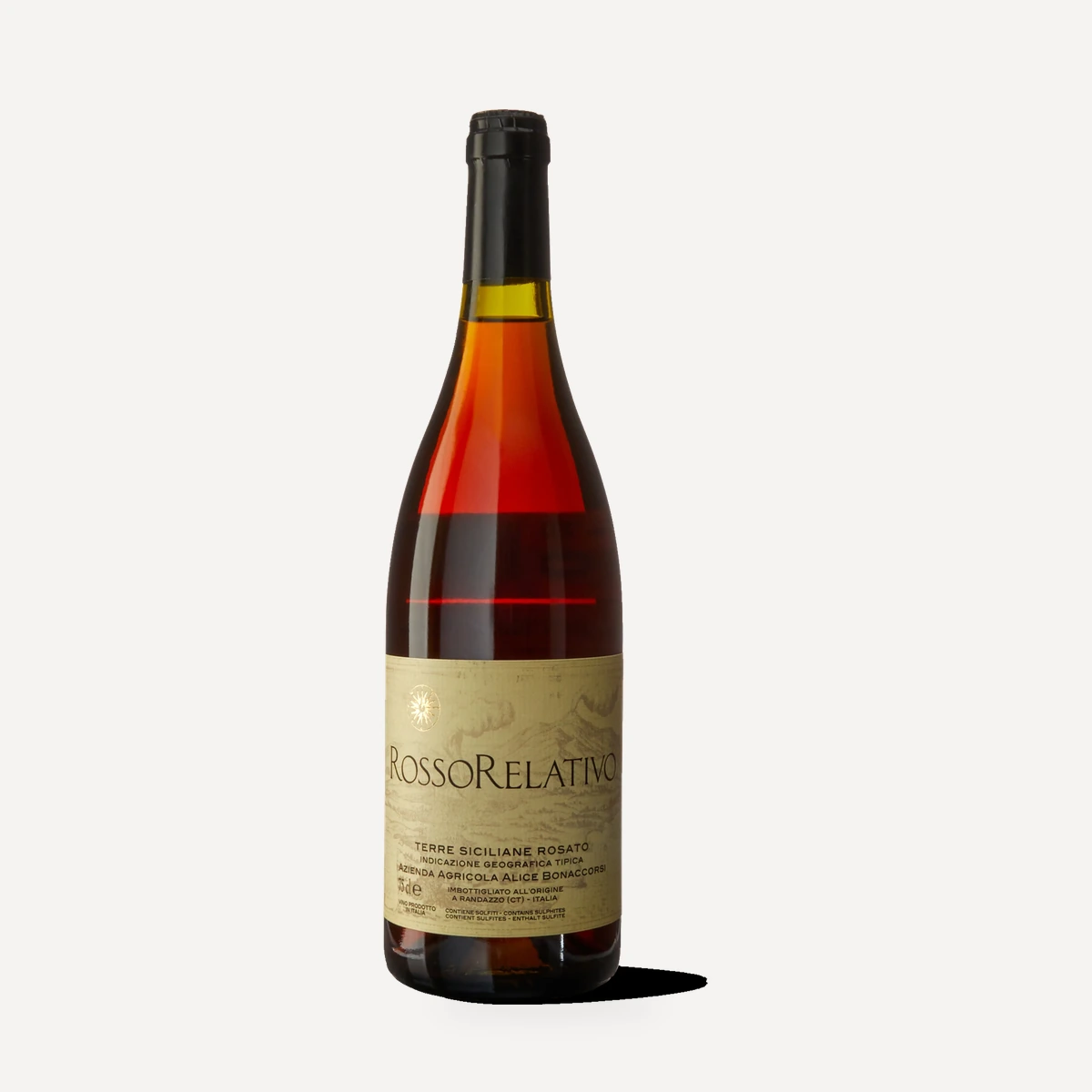
These techniques include references to older Etnean practice. In particular, the brief skin contact used for Rossorelativo recalls the traditional pistammutta method associated with Etna’s palmenti. Across the range, the stated production objective is to preserve the character of the territory and the distinctions of each growing season.
Filosofia
Valcerasa’s guiding principle is to follow natural events and conditions in order to obtain the best possible result. Organic cultivation, alberello-trained vines and intensive human work embody an approach based on respect for tradition and progress without disruptive change.
The estate seeks to make its labels expressions of the Etnean territory rather than detached stylistic products. Its stated aims are to protect and enhance Mount Etna’s winegrowing heritage, preserve the identity of the region and allow wines to convey the distinctive characteristics of their place of origin.
Direct control is another central principle. Vineyard work, vinification and bottling remain inside the estate so that quality can be followed through every stage. Vintage variation is also treated as meaningful: Rossorelativo is deliberately allowed to vary in intensity with the growing season, presenting each release as a record of its year on Mount Etna.
Vini