Storia
1933: the estate enters the Simeti family
Bosco Falconeria has belonged to the Simeti family since 1933. At that time, it comprised approximately 12 hectares and was devoted predominantly to viticulture. Its working cellar contained seven palmenti—traditional platforms or installations used during grape processing—and employed as many as 30 people at harvest.
1968 and the early 1970s: abandonment and restoration
Family circumstances, a wider agricultural crisis and the 1968 earthquake led to a brief period of abandonment. In the early 1970s, the cellar and farmhouse were restored and repurposed as a summer retreat. Summers and weekends at the property subsequently became increasingly occupied with agricultural work.
Early 1980s: the return to farming
Agronomist Antonio Simeti’s commitment to the land was complemented by Mary Taylor Simeti’s interest in emerging approaches to organic agriculture. While writing books and articles that introduced Sicily to readers in the United States, Mary began bringing information about organic farming back from across the Atlantic in the early 1980s.
The former holiday property gradually became productive again. The holding expanded from approximately 12 hectares to almost 17 hectares, while its agricultural activity broadened beyond its earlier, principally wine-growing orientation.
1989–1990: Bosco Falconeria and organic certification
In 1989, the farm adopted Bosco Falconeria as its identity and formally converted to certified organic agriculture. Organic cultivation has continued without interruption since then. In 1990, the Simeti family made the farm its permanent home.
Estate bottling and diversified production
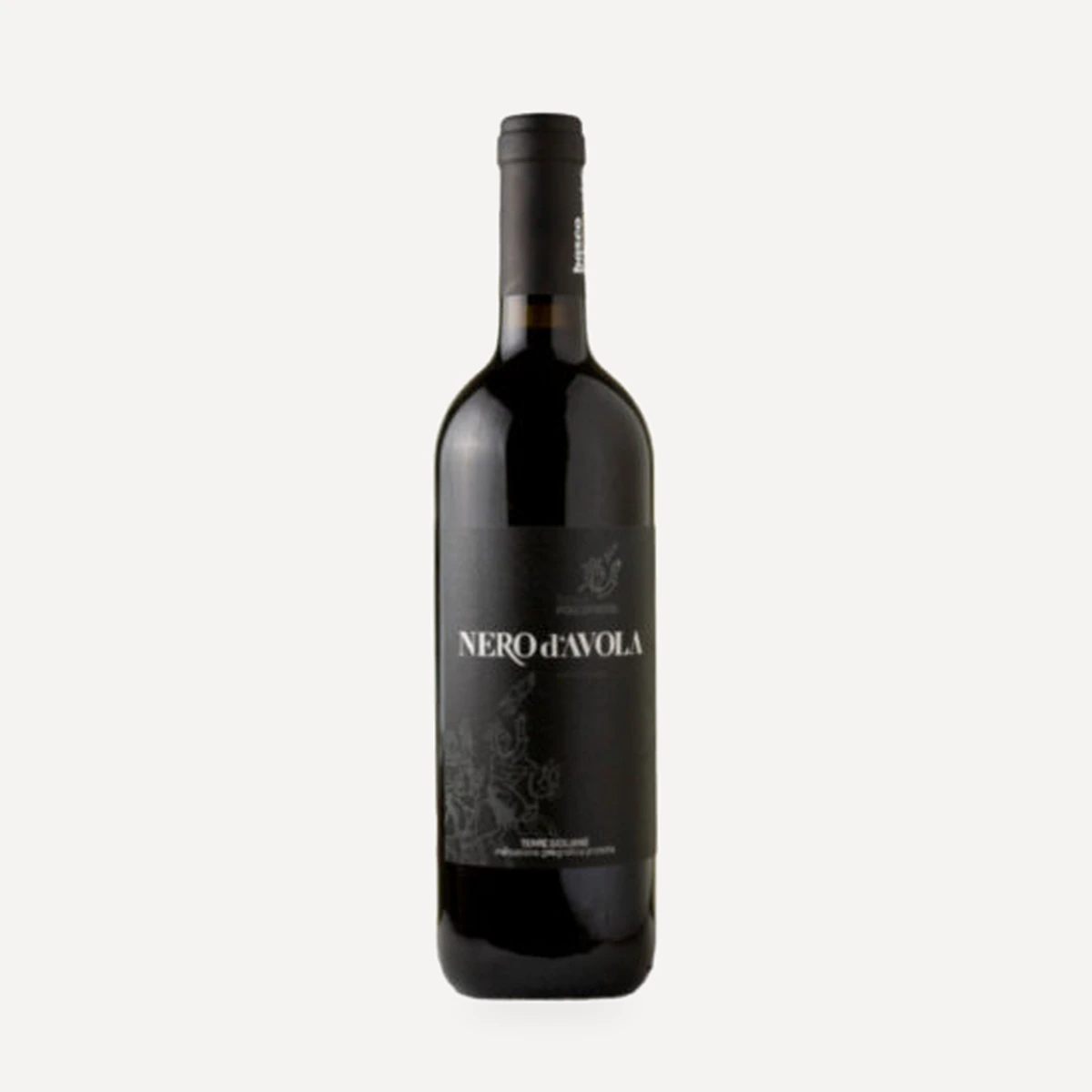
A later phase brought the bottling of the farm’s own organic extra-virgin olive oil, the supply of fresh organic fruit and vegetables to specialist retailers in Palermo, and the bottling of estate-grown organic wine. Wine production developed around Catarratto and Nero d’Avola, with fermentation and maturation centered on temperature-controlled stainless steel.
The family also brought its domestic vinegar-making tradition into commercial production. After years in which the vinegar was made only for relatives and friends, a dedicated acetaia was constructed to meet production requirements. Its original reinforced-concrete design was replaced with a timber structure insulated with compressed-straw panels.
Transfer of management
Natalia Simeti and her Finnish husband, Rami Salo, chose to live at Bosco Falconeria and assume responsibility for managing the farm. Erissa and Besnik Delilaj also made their home on the estate and became central members of the working team, together with Saverio.
Terroir
Bosco Falconeria lies in the countryside of Partinico, approximately 60 km from Palermo, on hills overlooking the Gulf of Castellammare. The vines grow at about 250 metres above sea level.
The vineyard soils are red, calcareous and of medium texture. Vines are trained both on trellises and in the local alberello alcamese bush-vine form. No individually differentiated vineyard mesoclimates or geological units are identified.
Vinificazione
Bosco Falconeria formally converted to organic agriculture in 1989 and has remained under continuous organic cultivation. Its organic status is associated with the control bodies Demeter and Codex under registration ITCDX 7665.
In the vineyards, spontaneous herbs and legumes are grown and incorporated as green manure. The approach developed by agronomist Antonio Simeti is based on stepping back from unnecessary intervention, preserving the vineyard’s equilibrium and intervening as little as possible. Antonio followed these principles in the estate vineyards for more than 25 years.
The vines are trained both on trellises and as alberello alcamese. Specific information about pruning, disease-control materials, grape-harvest methods, vineyard yields and sorting procedures is not presented.
The cellar works principally with Catarratto and Nero d’Avola. Stainless steel is the principal fermentation and maturation material, and fermentations take place under temperature control.
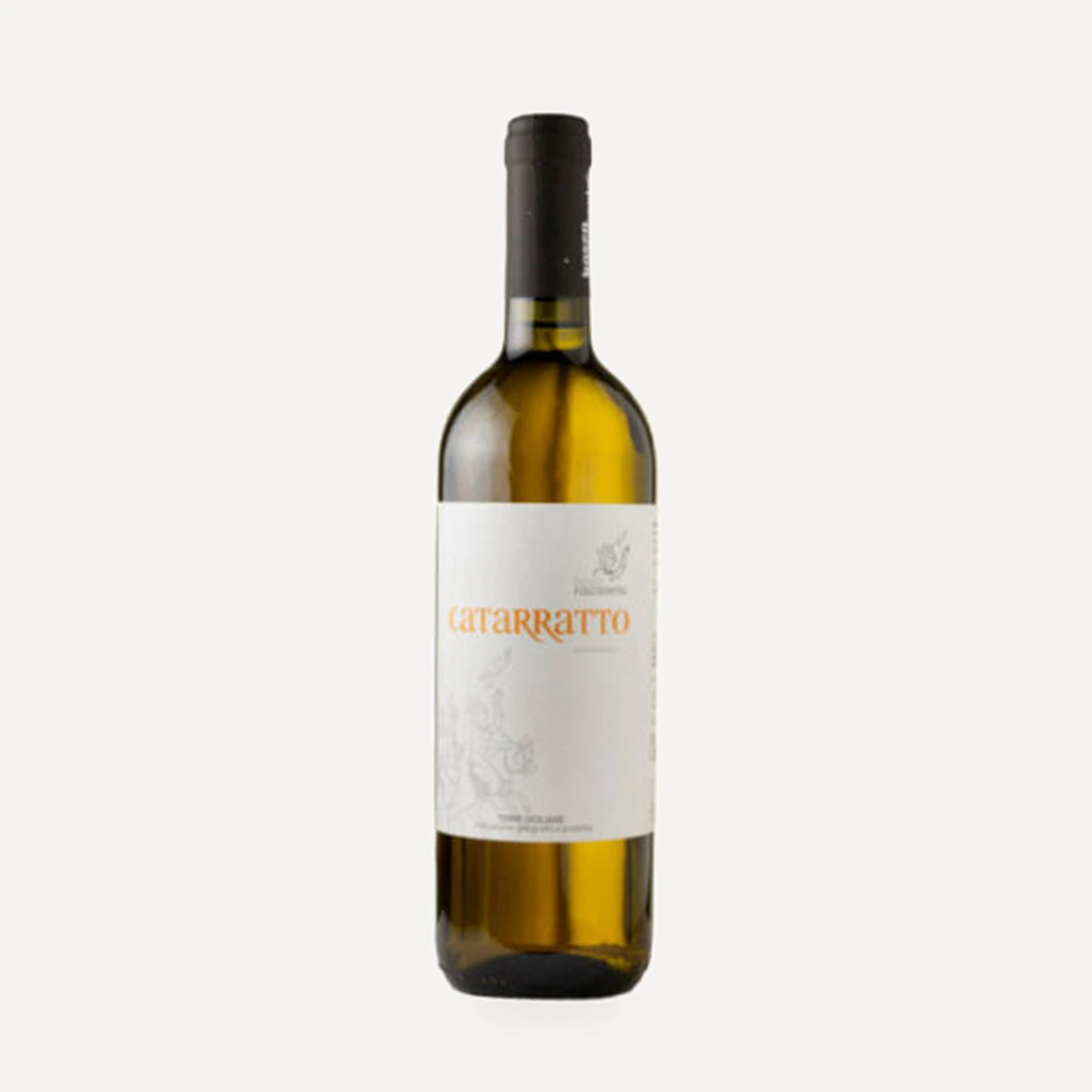
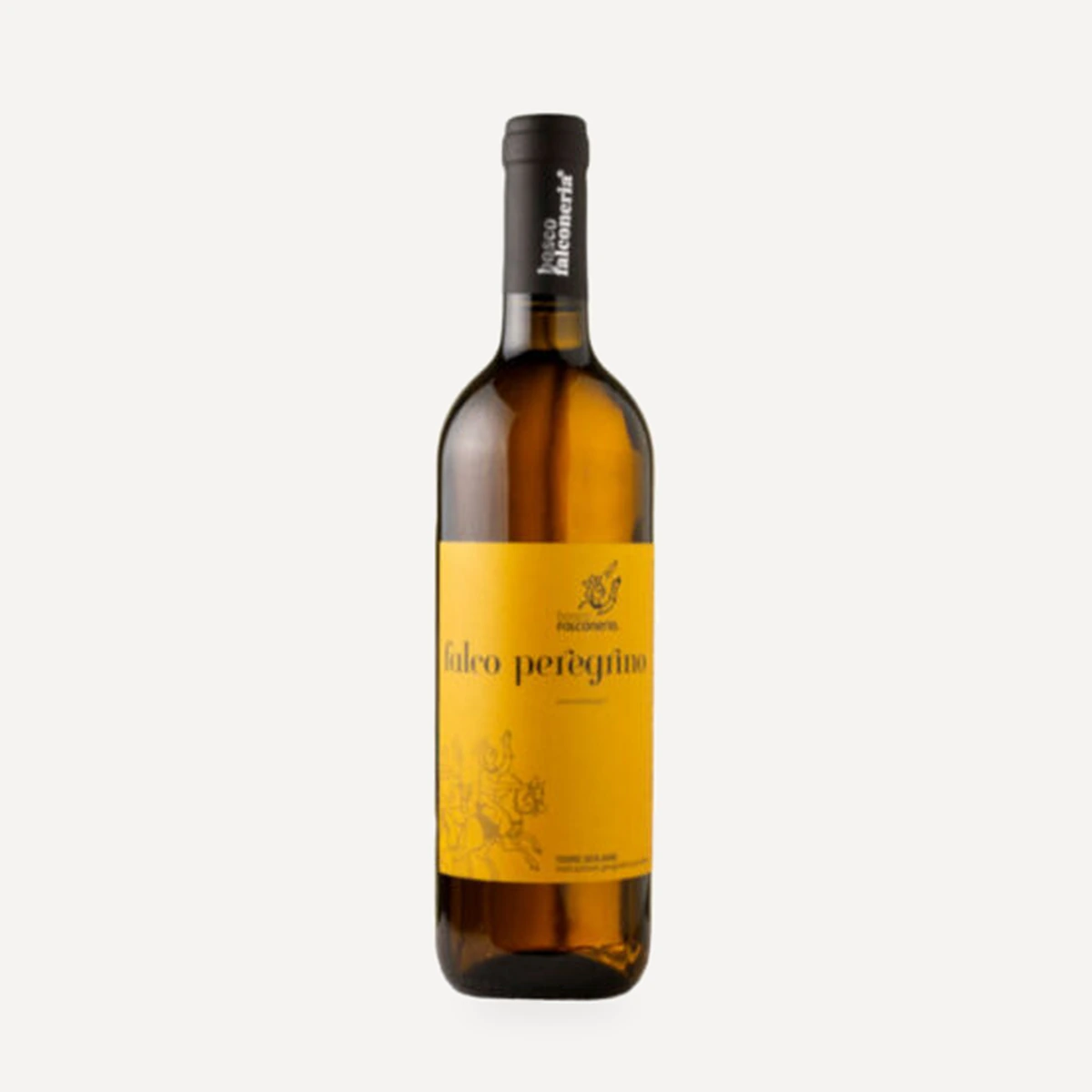
Catarratto is fermented spontaneously in stainless steel. One expression is fermented conventionally as a white wine, while another undergoes spontaneous fermentation on its skins. Both mature in steel for approximately nine months. The skin-fermented Catarratto is made without added sulfur dioxide.
Nero d’Avola is fermented on its skins in temperature-controlled stainless-steel tanks, matures in steel for approximately nine months and then receives at least four months of bottle aging.
The family frames its cellar work as an extension of its vineyard practice: learning from each vintage, experimenting, exercising restraint and seeking a style rooted in its own farming experience.
Filosofia
Bosco Falconeria’s agricultural philosophy developed around restraint: stepping back, recognizing the farm’s natural equilibrium and intervening only when necessary. Antonio Simeti applied this principle to the vineyards for more than 25 years, and the family extended it to winemaking through continual observation, experimentation and learning from one vintage and wine to the next.
Organic agriculture is not treated as an isolated winegrowing technique. The estate is a diversified farm whose vineyards, olive trees, fruit, vegetables and legumes form parts of the same agricultural system. Its permanent family residence, succession within the family and multicultural household are also integral to its identity.
Environmental choices extend beyond the fields. When the dedicated vinegar building was constructed, the family replaced the original reinforced-concrete plan with timber and compressed-straw panels, materials that also help keep the interior temperature stable.
Vini
Catarratto
Falco Peregrino