Questo vino
Vineyard and terroir
The vineyards lie at Vigoleno, between Vall’Ongina and Val Stirone, two subsidiary valleys of Val d’Arda in the province of Piacenza. The four hectares under vine have soils containing balanced proportions of silt, sand, clay and limestone. The limestone and mineral content are characteristic of Vigoleno, within the Stirone and Piacenziano Regional Park.
The vines are trained on trellises and pruned using a branched, arched Guyot system. Short winter pruning limits production, while late-spring shoot selection and manual canopy cleaning improve ventilation and sunlight exposure. Integrated pest management is used. Annual production is 120 hl, with a yield of 60 q of grapes per hectare.
Grapes
70% Barbera and 30% Bonarda, locally identified as Croatina.
Vinification
Gutturnio is made by the ancestral method, without added sulfites. Fermentation relies on indigenous yeasts and naturally occurring grape sugars. The skins remain in contact with the must for approximately 15 days.
The wine is racked in response to ambient cellar temperatures and receives a single filtration through diatomaceous earth. Bottling takes place during the waning moons of February, March and April. Indigenous yeasts then consume the remaining natural sugars in bottle, producing the wine’s fine, gentle effervescence.
Ageing
Six months in fiberglass or concrete vats precede bottling and natural refermentation in bottle.
Technical data
Dry, naturally sparkling red wine with no added sulfites. Alcohol is 13.5% vol. It is sold in bottles and demijohns.
Tasting profile
Deep red in color and full-bodied, it balances the softer character of Bonarda with Barbera’s firmer, subtly bitter notes. The interaction of these contrasting varieties creates a broad aromatic range. Its natural bubbles are fine and restrained, while the palate remains fresh and balanced.
Serving and pairing
Serve at 18°C. Its freshness suits the traditionally rich cuisine of Piacenza. Suggested pairings include anolini filled with Parmigiano Reggiano, served in broth, and local DOP cured meats such as coppa, salame and pancetta.
Label / history
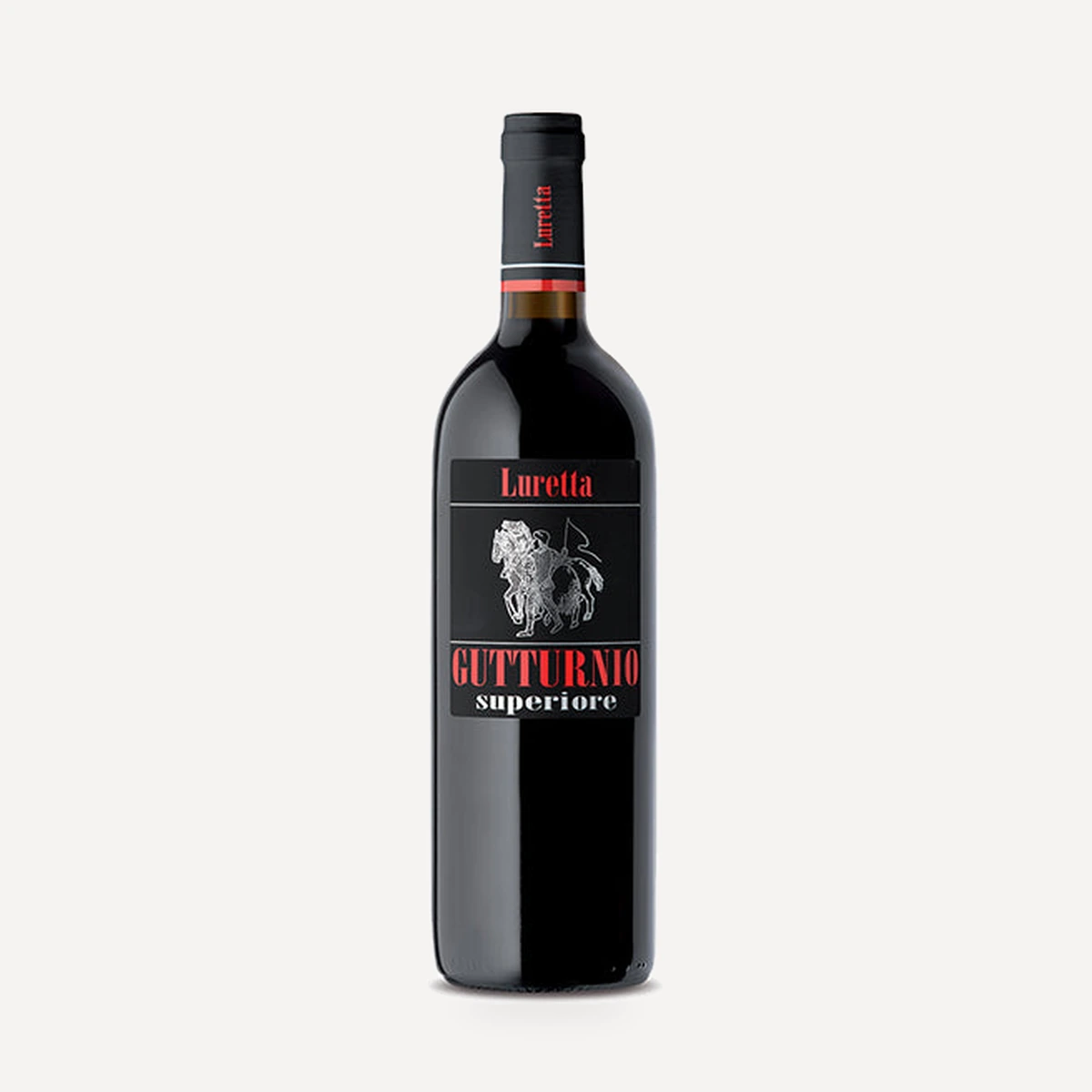
The name recalls the Roman gutturnium, a large silver communal drinking cup. One example, holding approximately two litres, was discovered in 1878 at nearby Veleia Romana. Passed among diners at the end of a meal, it symbolized fraternity and friendship. A later local custom served Gutturnio in white ceramic bowls. The label was created by artist Franco Murer.