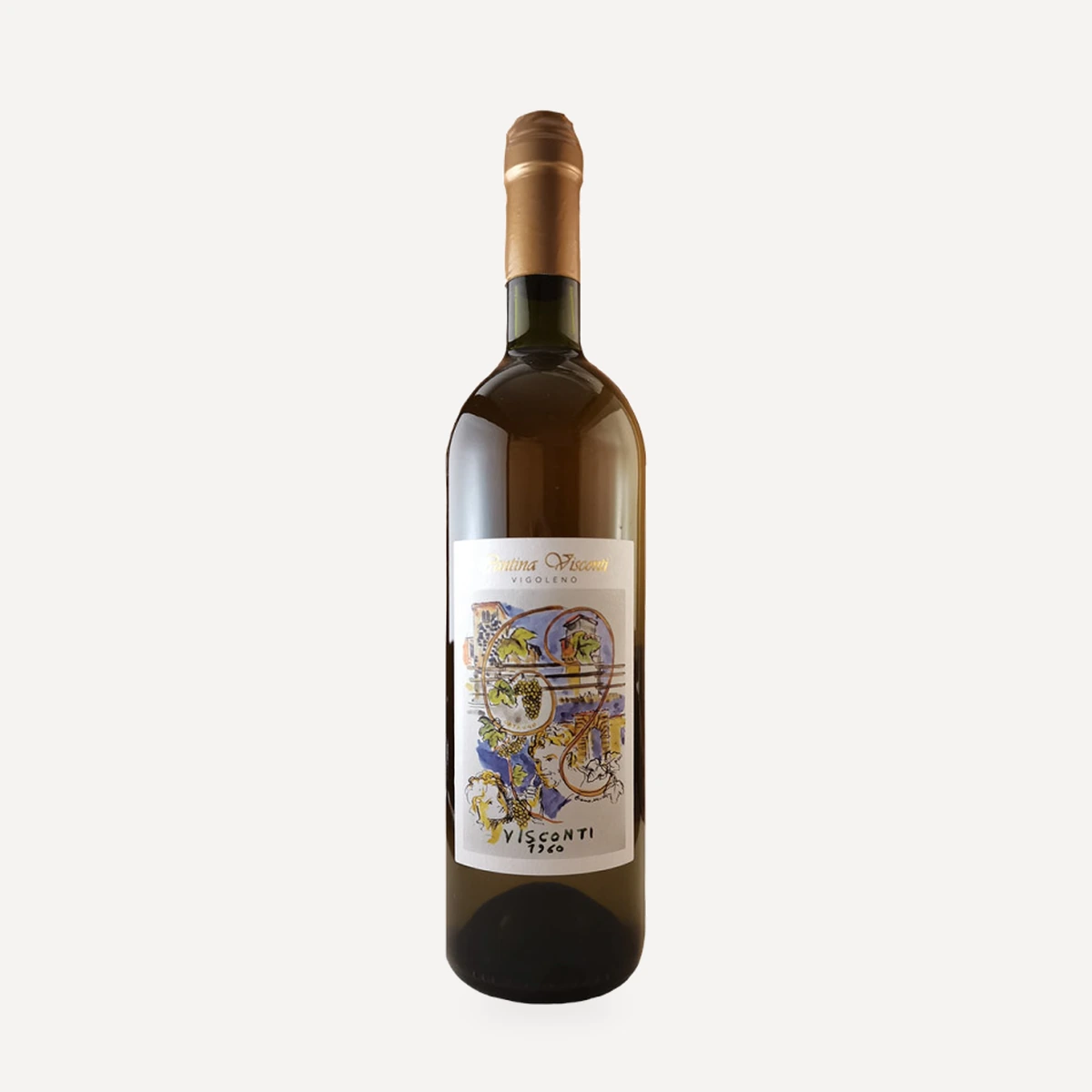
Questo vino
Vineyard and terroir
The grapes come from 0.5 ha in Vigoleno, between Vall’Ongina and Val Stirone in the Val d’Arda area of Piacenza. The soil is a balanced mixture of silt, sand, clay and limestone, with limestone and minerals defining the local terroir.
The vines are vertically trellised and pruned to an arched, branched Guyot system following the Simonit & Sirch method. Integrated pest management, short winter pruning, late-spring green pruning, shoot selection and manual canopy cleaning are used to restrict production, improve ventilation and sunlight exposure, and keep the fruit healthy.
Grapes
100% Ortrugo.
Vinification
The wine is made by the ancestral method without added sulfites, relying on indigenous yeasts and the grapes' natural sugars. The skins remain in contact with the must for 36 hours.
After maturation, the wine is racked according to external temperatures and receives a single filtration through diatomaceous earth. Bottling follows the waning moons of February, March and April, when the yeasts are considered less active. Indigenous yeasts then consume the remaining natural sugars in bottle, creating carbon dioxide and a fine, gentle natural sparkle. Some sediment may remain.
Ageing
Six months in fiberglass or cement tanks, followed by refermentation in bottle.
Technical data
- Alcohol: 12.5% vol.
- Vineyard area: 0.5 ha
- Yield: 80 q/ha (8 t/ha)
- Annual production: 20 hl
- Serving temperature: 8–10 °C
- Formats offered: bottle and demijohn
Tasting profile
Pale straw yellow with green highlights. Savoury and delicately off-dry, with a gentle palate, a slightly bitter finish and dry, subtly astringent freshness. Its naturally formed bubbles are fine and restrained.
Serving and pairing
Serve at 8–10 °C as an aperitif or with a light meal. Suggested pairings include fish starters, smoked cured meats, savoury tarts with eggs and delicate vegetables, young Parmigiano, porcini risotto and tortelli d’erbetta.
Label / history
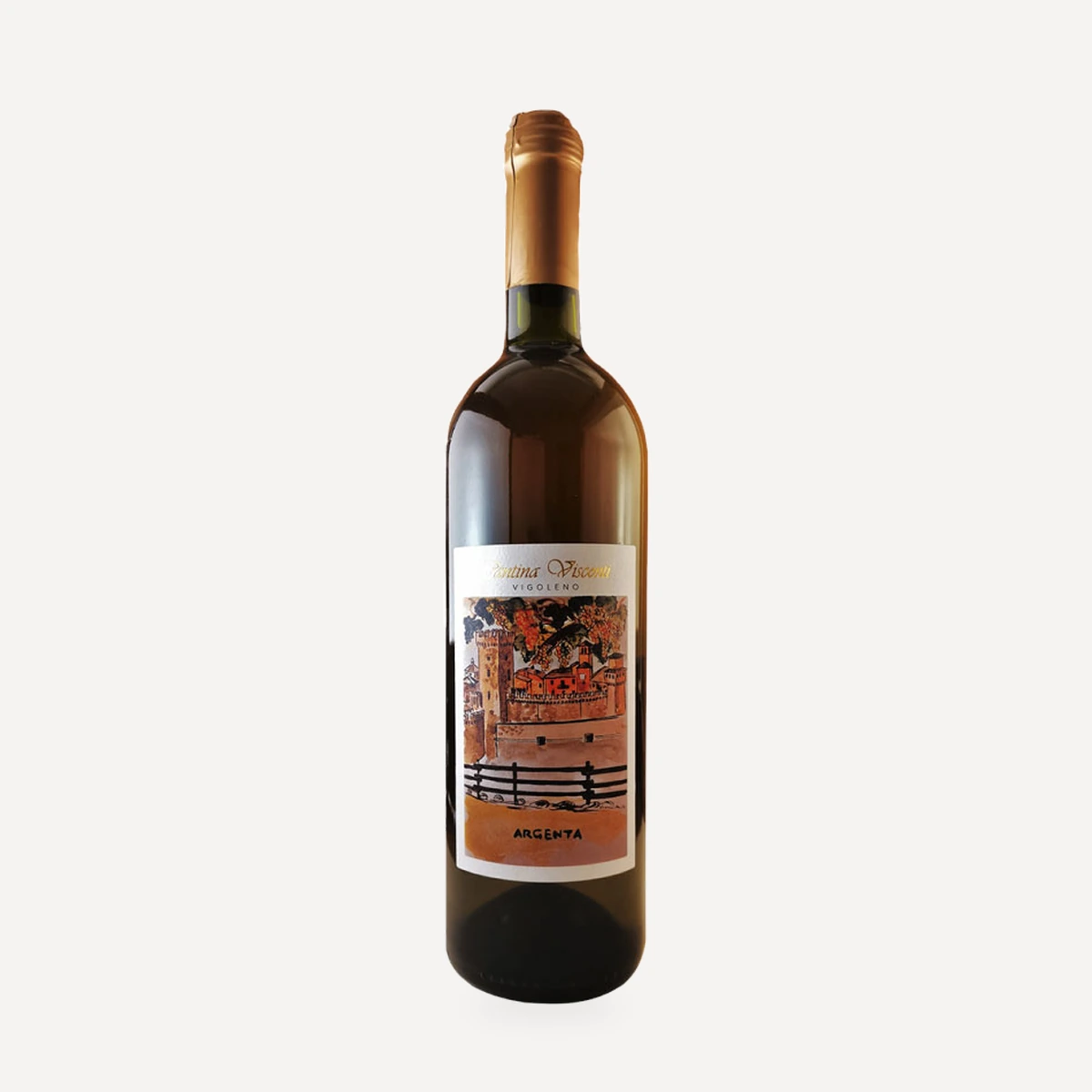
The name commemorates 1960, when Pietro Visconti purchased land around the farm and planted the family's first vineyards. Ortrugo was among his first plantings, at a time when it was used mainly as a blending grape and was locally called “altruva,” meaning “other grape.” The estate began making varietal Ortrugo during the 1970s.