Storia
Beginnings in the early 1980s
Casanuova delle Cerbaie began its wine-producing history in the early 1980s through the initiative of a German woman with a strong attachment to Italy and Italian wine. She acquired the old estate, carefully restored it and initiated its first wine production.
Recognition for the 1998 vintage
The estate's continuing pursuit of quality brought growing recognition. Its Brunello di Montalcino 1998 was placed 27th in Wine Spectator's ranking of the world's 100 leading wines.
A new phase from 2008
In 2008, a wine connoisseur and long-standing admirer of Montalcino and Brunello assumed control of the property. The new proprietor purchased additional vineyards and enlarged the winery. A close collaboration with Montalcino native Alessandro Brigidi accompanied this phase, during which further investment was directed toward improving wine quality.
Cellar development
Winemaker Giuseppe Gorelli became responsible for the cellar work. His approach employs 20–24 hl Slavonian-oak casks and carefully selected barrels made by the Austrian cooper Franz Stockinger, with the aim of supporting Brunello's gradual development. The estate currently concentrates on a limited production of approximately 35,000–40,000 bottles a year.
Terroir
The estate lies immediately below the village of Montalcino, in the northern sector of the commune. Its vineyards are situated within a few kilometres of the production cellar and extend as far as the hill of Montosoli.
The main vineyard elevation is approximately 350 metres above sea level, while the broader production area is given as 250–350 metres. The prevailing exposure is north-west. The vines receive sunlight through the day, while northerly winds provide ventilation during much of the year.
The land dates to the Eocene and combines limestone, marl, clay and conglomerate rocks. The broader estate soils are described as mixtures of clay, galestro and calcareous rock with a high proportion of coarse mineral material. Montosoli differs in its more specific combination of galestro, calcareous rock and marl.
The estate associates this northern Montalcino setting with fragrant, refined and structured wines capable of extended ageing.
Vinificazione
The planted area is devoted to Sangiovese, with production yields maintained at approximately 40 quintals/ha. The estate vineyards use unilateral spur-pruned-cordon training. Planting density is 5,000 vines/ha in the broader vineyard holdings and 4,500 vines/ha at Vigna Montosoli.
Work from the first selection in the vineyard through final grape sorting is performed manually. Grapes are harvested into small perforated crates and gently emptied onto a vibrating table, which distributes the fruit evenly for manual selection. A six-person team examines the grapes and removes damaged or unripe berries and bunches, leaves and foreign material before the selected fruit reaches the destemmer.
The cellar combines stainless-steel vinification with maturation in steel or large oak, according to the intended wine. The principal red wines undergo approximately 20 days of vinification in stainless-steel tanks. Extraction is strongest at the beginning of fermentation, with frequent pump-overs, followed by a quieter period of maceration on the skins. Fermentation temperature is controlled, brought to a maximum of approximately 29°C and then allowed to fall naturally until racking.
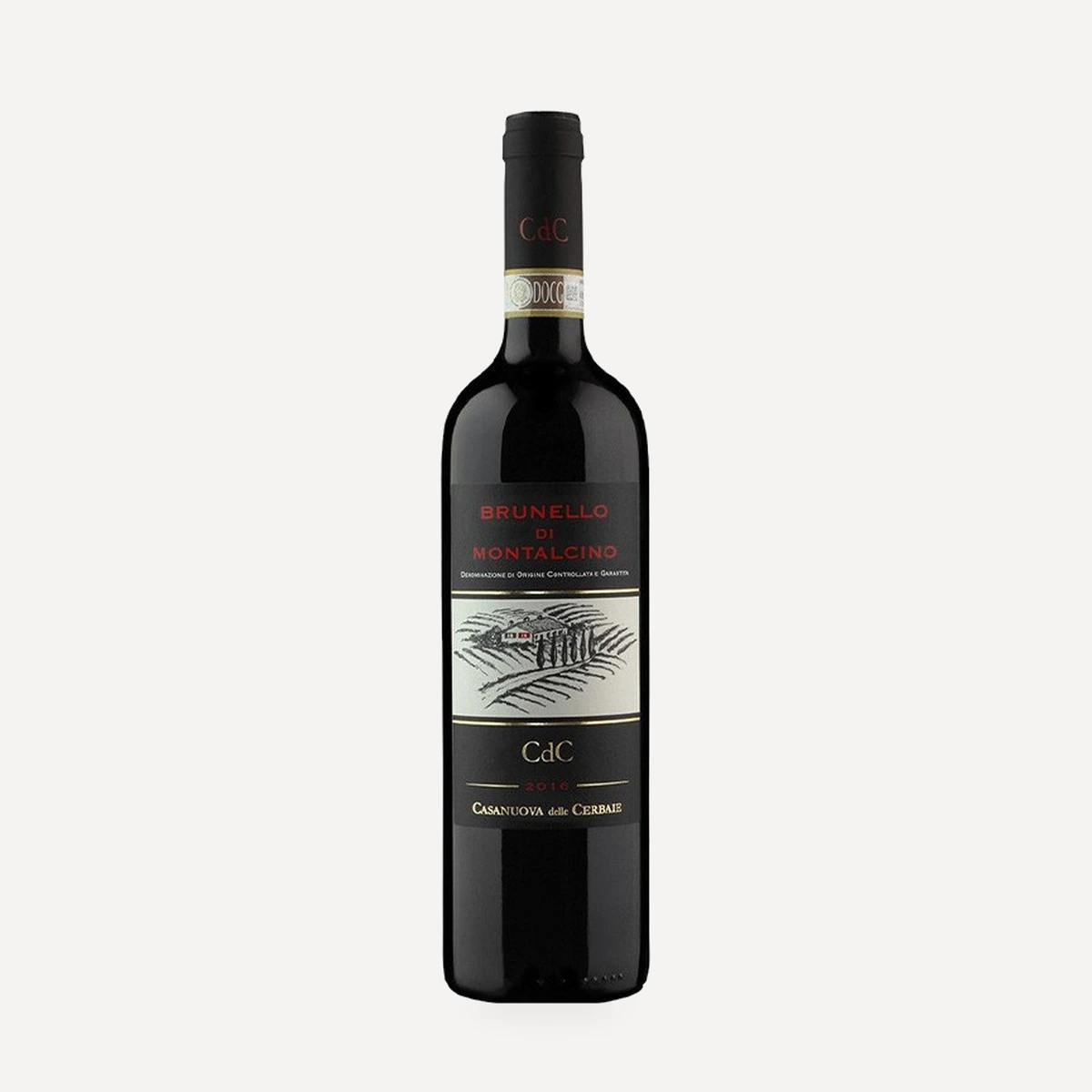
Brunello matures for at least 24 months in large Slavonian-oak casks, including barrels made by Franz Stockinger, followed by at least four months in bottle in a temperature-controlled room. The Riserva from Vigna Montosoli matures for 30 months in Stockinger Slavonian-oak casks and at least six months in bottle under controlled conditions. Cellar casks are described as holding 20–24 hl.
Rosso di Montalcino receives eight months in large Slavonian-oak casks and at least four months of bottle maturation in a controlled room. Rivale Toscana IGT remains in stainless steel for eight months before bottling.
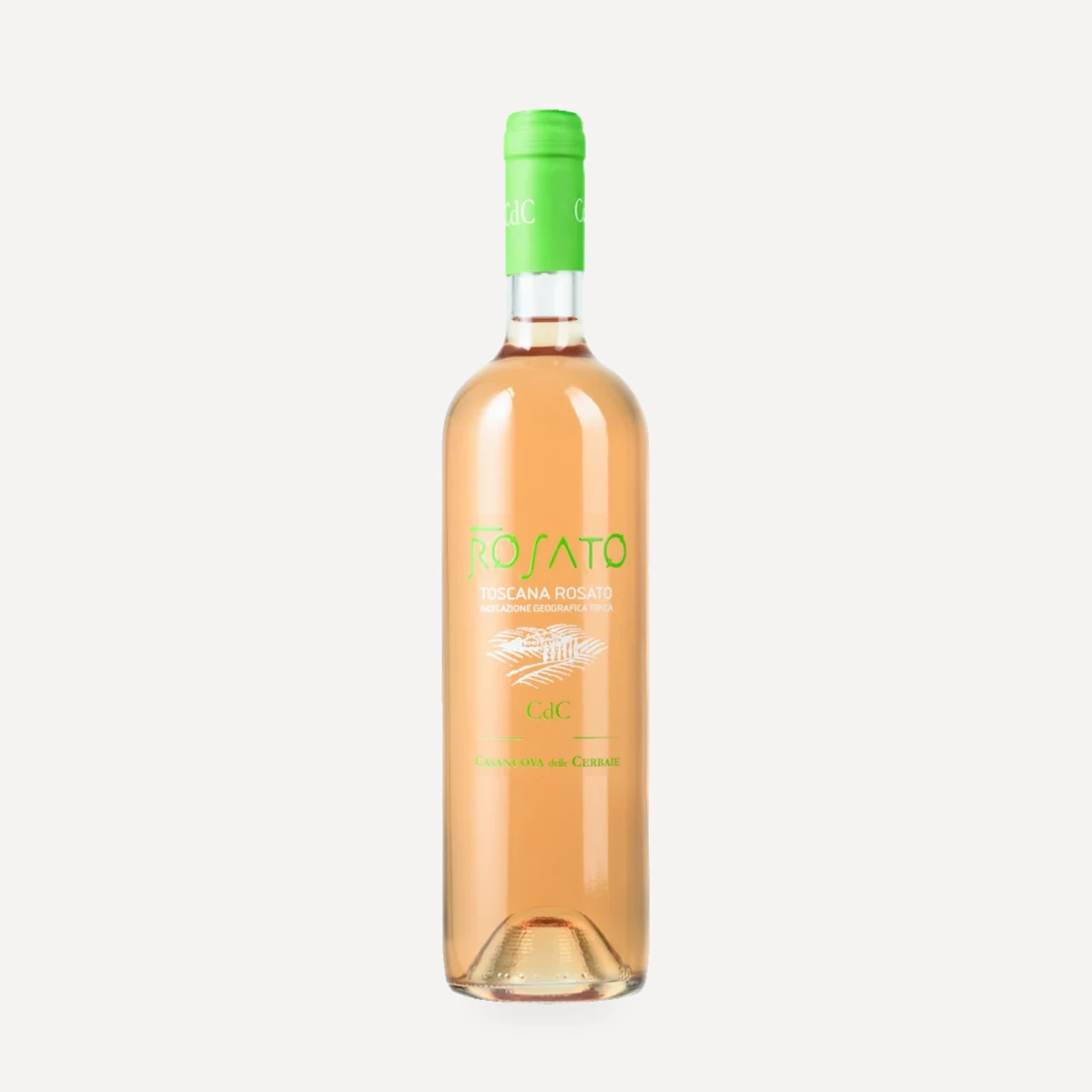
The Rosato is produced by salasso from Sangiovese Grosso grown in Vigna Montosoli. Approximately 15–20% of the juice is drawn from tanks intended for the Riserva after only a few hours of skin contact. It then ferments without skins in stainless steel at no more than 18–20°C. Both alcoholic and malolactic fermentation occur spontaneously through indigenous yeasts present on the grapes and in the cellar. The wine remains in stainless steel until bottling, normally at the end of spring.
Annual production is approximately 35,000–40,000 bottles. The stated allocation of roughly 40,000 bottles comprises about 26,000 bottles of Brunello, 10,000 bottles divided between Rosso di Montalcino and Toscana IGT, and a further 4,000 bottles of Brunello di Montalcino Riserva Vigna Montosoli, made only in suitable vintages.
Filosofia
Casanuova delle Cerbaie presents quality, rather than volume, as the priority governing its limited annual production. Its wines are intended to express the northern Montalcino vineyards and their individual combination of elevation, exposure, ventilation and Eocene-derived soils.
The production approach combines traditional maturation in large Slavonian-oak casks with controlled stainless-steel vinification and rigorous manual grape selection. Oak is chosen to accompany Brunello's evolution rather than dominate it. Continued investment in vineyards and cellar facilities since 2008 has been directed toward the same quality objective.
The team describes itself as a group of skilled and committed people united by the mission of producing quality wine and caring for the estate.
Vini
Brunello di Montalcino