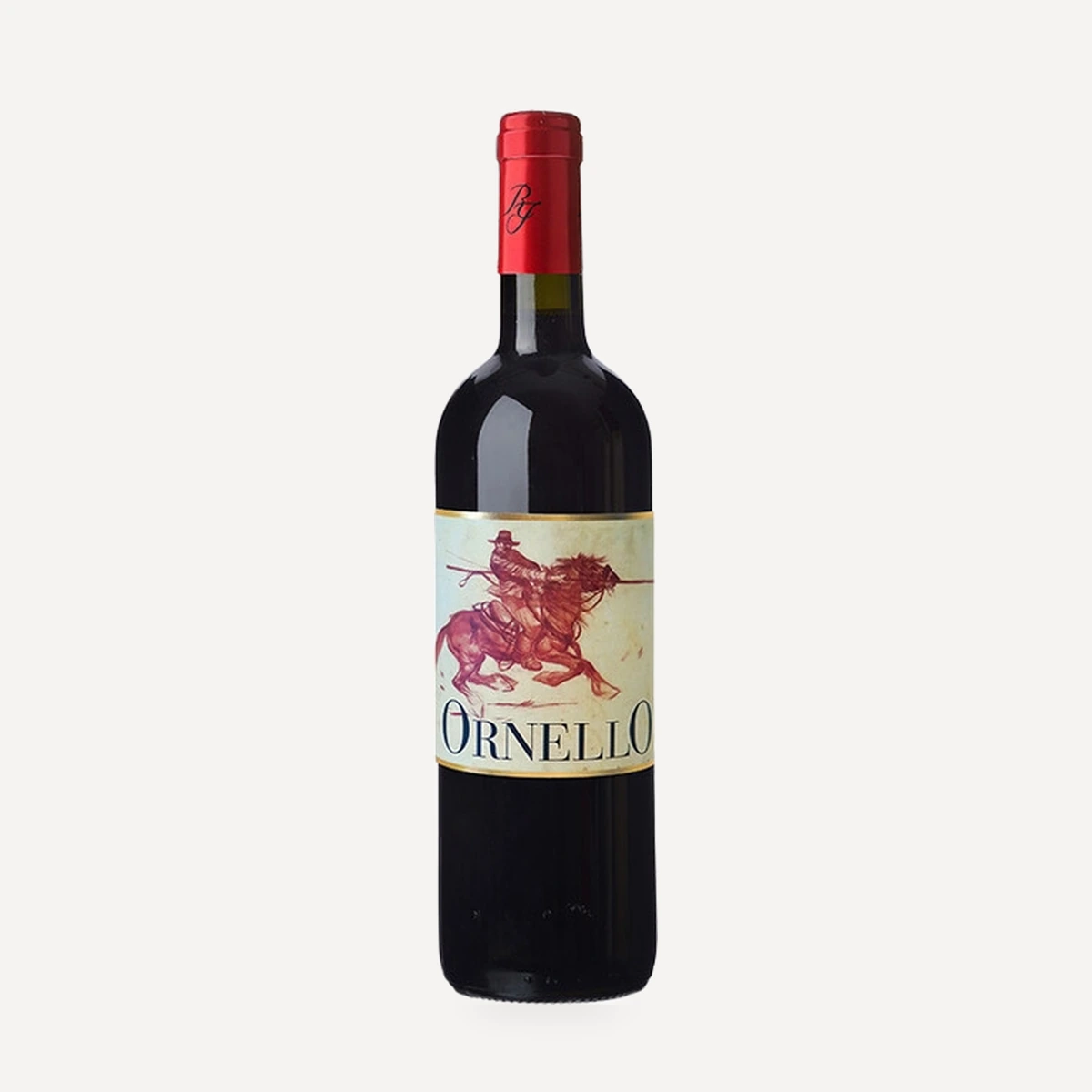
Questo vino
Grapes
The blend combines four varieties with contrasting qualities: Sangioveto contributes lively acidity, Merlot and Syrah bring softness, freshness and aromatic character, and Cabernet Sauvignon adds natural structure.
Vinification
Merlot is harvested in late August; Sangiovese, Cabernet Sauvignon and Syrah are picked in mid-September. Fermentation takes place in stainless steel vats at a controlled temperature, to highlight fresh berry notes.
Ageing
12 months in French oak barrels, followed by 5 months in bottle after bottling. Good structure and soft tannins give it ageing potential.
Tasting profile
Rich, engaging and beautifully balanced, with an inviting aroma. The nose is a complex mix of fruit, balsamic and spice notes. The palate is smooth, elegant and velvety, with notes of plum and wild herbs and a pleasant finish. The fruit character is bright, and the tannins are soft.
Serving and pairing
Suited to meat.
Label / history
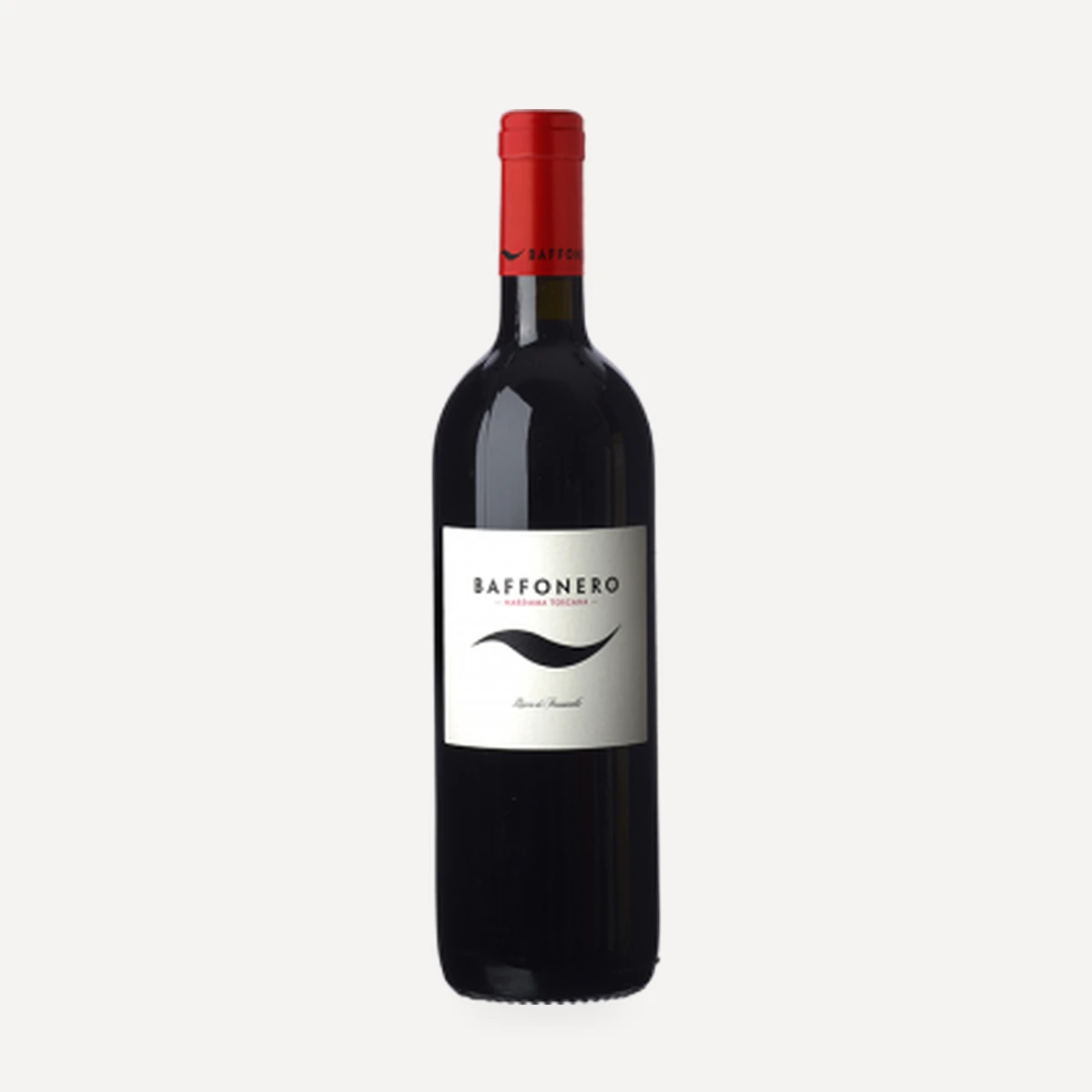
The name comes from the wood used to make the long sticks that cowboys use to drive cattle. The Maremma cowboys on the label symbolize the elegance and strength of the Maremma landscape.
Rocca di Frassinello was created around the idea of bringing together elements that seem difficult to combine, preserving the main traditions of wine production while introducing new technology, practical architecture and design, and an element of surprise. It was developed by the leaders of one of Maremma's largest wine estates. It is the first joint Italian-French winemaking project: the Italian partner is Castellare di Castellina, owned by Paolo Panerai, and the French partner is Baron Éric de Rothschild, owner of Domains Baron de Rotschild-Lafite in Bordeaux.
The winery stands on a low hill, a red-brick building with a rectangular tower, visible from the road between Rome and Pisa. It was designed by the architect Renzo Piano. The cellar holds 2500 barrels and is shaped like an ancient Roman arena, with its central "stage" lit by sunlight through an opening in the ceiling. During harvest, grapes are unloaded on a large terrace and, after a first sorting, move down into the cellar by gravity. The terrace overlooks vineyard-covered hills, fields and hunting grounds.