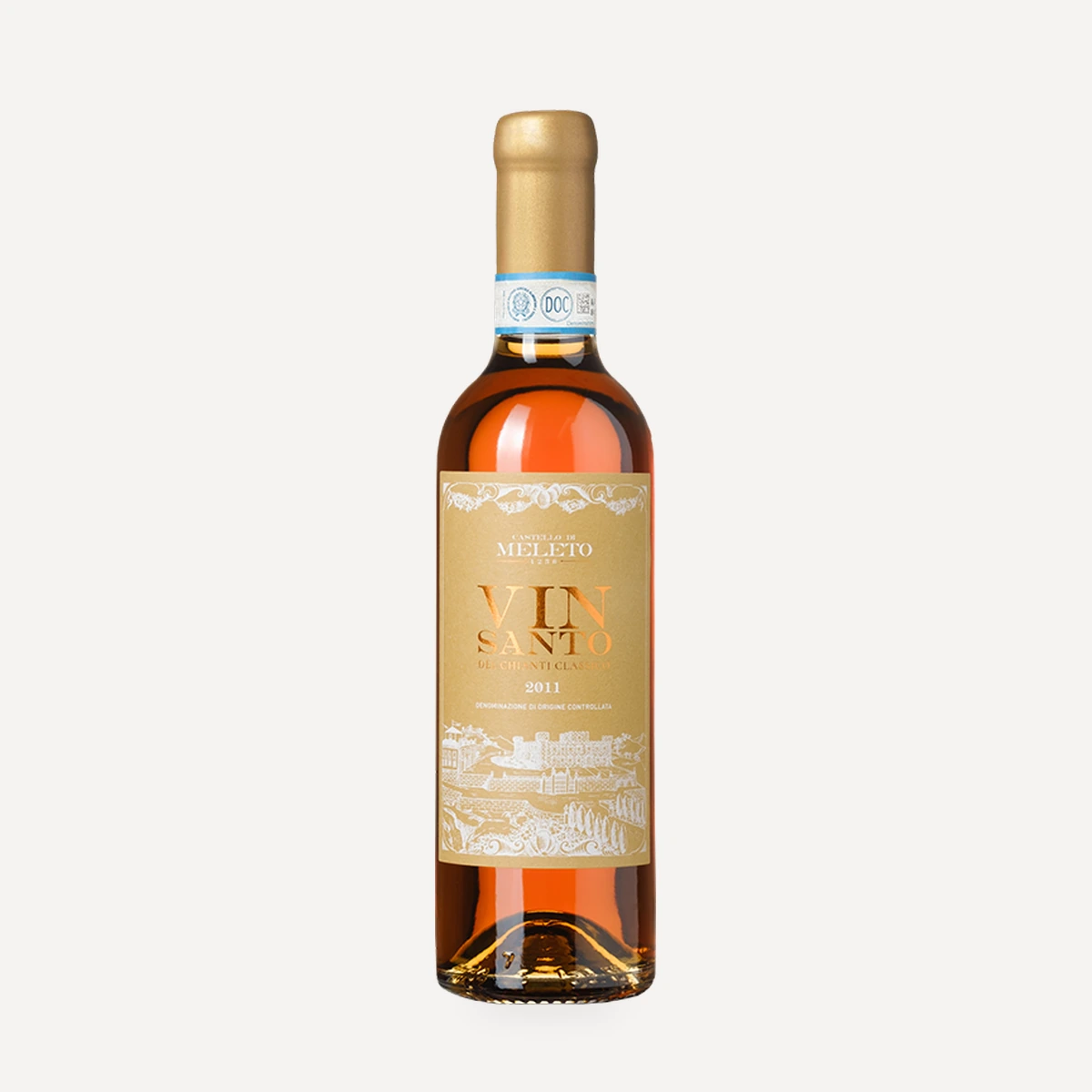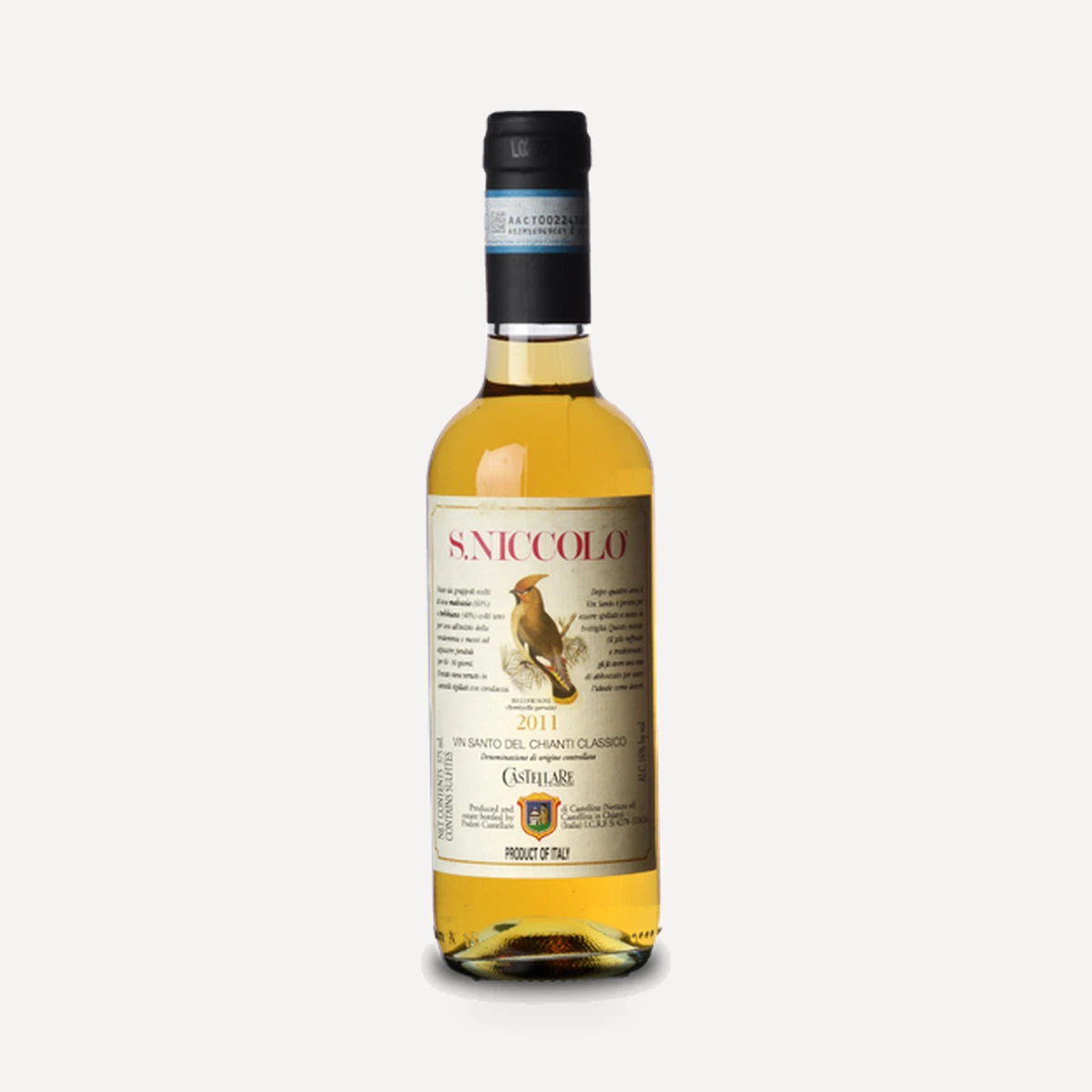
Questo vino
Vineyard and terroir
The grapes come from Castellina in Chianti, Siena, at 350–400 metres above sea level. The soil is fine-grained and contains little skeletal material. The wine page gives a planting density of 2,500 plants per hectare and a yield of 20–25 quintals per hectare; the technical sheet gives 3,500 plants per hectare and 30–35 quintals per hectare. Training is described as simple and double Guyot on the page and single-arched-cane Guyot in the sheet. Harvest is at the end of September.
Grapes
60% Malvasia Bianca and 40% Trebbiano Toscano. The first vintage was 1993. After harvest, the grapes are dried while hanging in a ventilated area rather than laid on traditional reed mats.
Vinification
Vinification takes place in oak and chestnut half-barriques. These vessels contain 20–30-year-old deposits known as madri.
Ageing
The wine matures for five years in oak and chestnut half-barriques or carattelli, followed by eight months in bottle. The technical sheet specifically identifies traditional chestnut barrels for ageing.
Technical data
The wine page classifies it as Vin Santo del Chianti Classico DOC, whereas the technical sheet prints Toscana IGT. It is bottled in a 375 ml format and described as a naturally sweet, structured and complex wine, balanced between dryness and sweetness.
Tasting profile
Bright amber. The bouquet combines dried fruit with pronounced honey, caramel and candied-fruit notes. The palate is full and enveloping, with an impression of chestnut flour and a long finish.
Serving and pairing
Pairs with mature and blue-veined cheeses as well as desserts. It can also be enjoyed alone as a meditation wine.
Label / history
The production method follows the traditional model of Vin Santo while drying the fruit by hanging it in a ventilated space instead of using cannicci reed mats.