Questo vino
Vineyard and terroir
The Cabernet Sauvignon comes from the Lupicaia vineyard, whose calcareous-sandy soil contains stones, moderate mineral elements and organic matter. Its southern exposure, mature vines and low yields promote structure, complexity and aromatic intensity, along with broad structure and high polyphenol levels.
Petit Verdot grows in the Addis vineyard. This south-east-facing site has calcareous-clay soil, stones and a challenging subsoil. Maintaining fertility requires working and turning the soil, helping the grapes achieve balance and concentration.
More broadly, the vineyards overlook the Mediterranean and benefit from reflected sunlight, coastal breezes and abundant sunshine. Their iron-rich soils also contain stones and fossils. Historic plantings have densities of 3,600–4,200 vines per hectare; newer vineyards have 6,250 vines per hectare at 120 metres above sea level and are described in the 2021 technical sheet as facing south/south-west. The training system is spurred cordon.
Grapes
Cabernet Sauvignon and Petit Verdot. Blend proportions vary by vintage; exact percentages are not specified for the latest published vintage, 2021. Petit Verdot has been included since the 2010 vintage; through 2009, Merlot was sometimes part of the blend.
Vinification
For the 2021 vintage, the grapes were selected and harvested by hand, then gently destemmed and pressed with care taken to preserve the skins. Alcoholic fermentation occurred in open-top stainless-steel tanks at controlled temperature. Skin maceration lasted approximately 20 days, with daily draining to extract aromatic character while achieving tannic balance and the structure required for long ageing.
Ageing
The varieties are matured separately for approximately 22 months in Allier oak, using both 225-litre barriques and 500-litre tonneaux. They are then blended and given further bottle ageing before release. The 2021 technical sheet describes the wood more generally as French oak barrels.
Technical data
2021: I.G.T. Rosso Toscana; 15.5% alcohol by volume. Annual production is approximately 30,000 bottles.
Tasting profile
A large-scaled, full-bodied red with complex flavours, broad structure, substantial polyphenolic content and balanced tannic extraction. It is intended for slow enjoyment and extended ageing.
Vintage notes
The 2021 growing season began with a mild, rainy winter that replenished water reserves. March was dry, and budbreak occurred during the first two weeks of April. Gradually rising temperatures and normal rainfall supported regular shoot growth and excellent flowering at the end of May.
From June onward, summer conditions brought slightly above-average temperatures and very little rain. Veraison arrived in the final week of July. Drought continued through August and September, but spring rainfall and deep soils prevented excessive water stress. The resulting berries were small and concentrated, with high quality potential. Warm, sunny and dry September conditions allowed individual vineyard parcels to be picked according to their ripeness. The technical sheet identifies the general harvest window as the end of August through the beginning of September, while its seasonal account places most red-grape harvesting in September.
Label / history
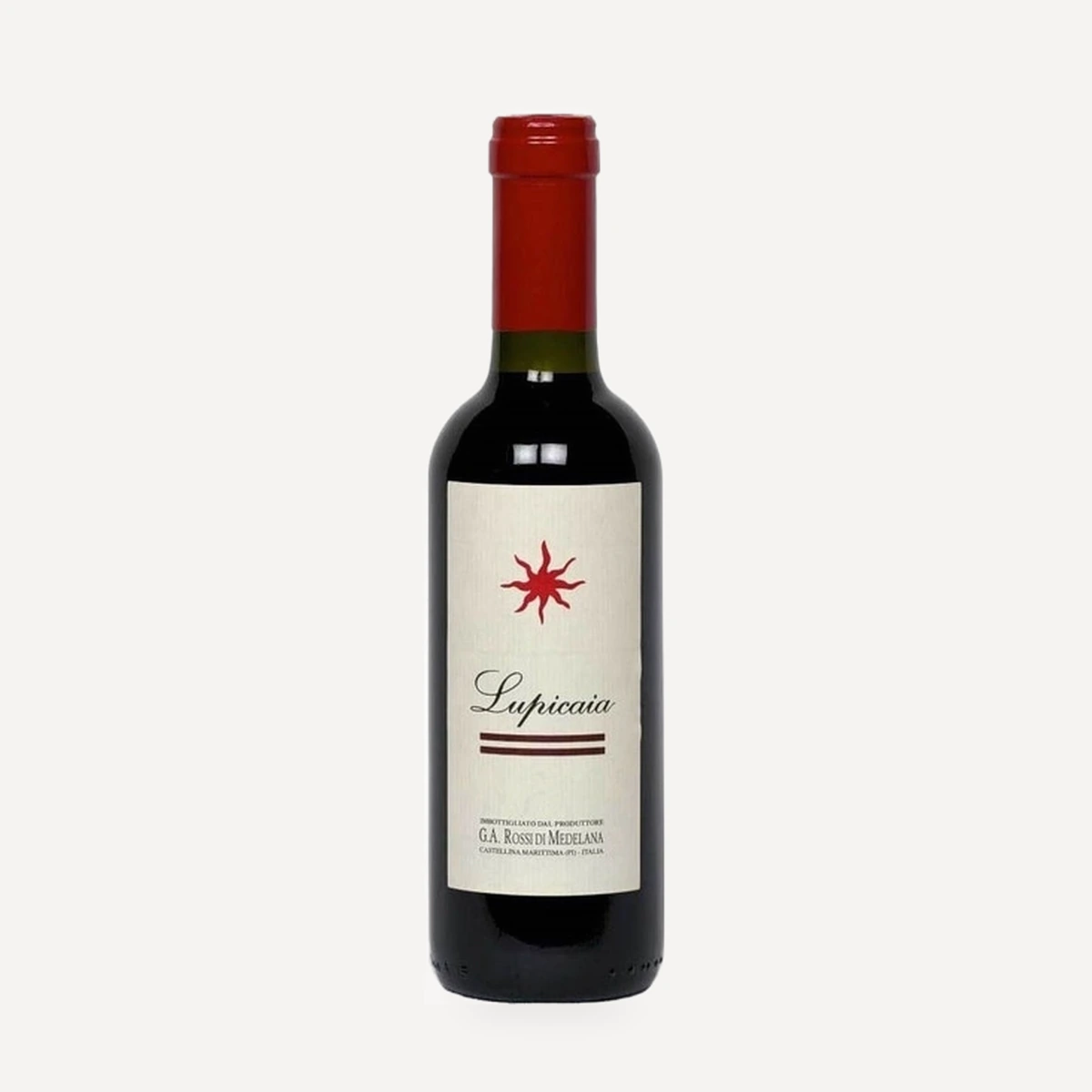
First produced in 1993, Lupicaia is the estate's flagship wine. Its name comes from a local hill where wolves were traditionally said to have been seen: “lupi” refers to wolves and “aia” to an area. The two red lines on the label evoke the vineyards' brown-red soils, coloured by iron associated with Etruscan extraction in the region.