Questo vino
Vineyard and terroir
The vineyards lie between 100 and 300 metres above sea level with south to south-west exposure. Their varied soils have a pronounced presence of stones and fossils. The vines are trained to spurred cordon, with 5,600 vines per hectare in older plantings and 6,250 vines per hectare in newer ones.
Grapes
Tassinaia is a blend of Cabernet Sauvignon and Merlot in almost equal proportions.
Vinification
The grapes undergo extremely gentle pressing and destemming. Fermentation takes place in temperature-controlled stainless-steel vats. Merlot remains on the skins for approximately 9–12 days, while Cabernet Sauvignon macerates for approximately 12–15 days. Pump-overs and délestage are used during fermentation.
Ageing
Each variety matures separately for 16 months in second- and third-use French oak tonneaux. The components are then blended and bottled, followed by at least 12 months of bottle ageing before release.
Technical data
The 2023 vintage has 14% alcohol by volume. Annual production reaches approximately 160,000 bottles.
Vintage notes
The 2023 growing season began with a mild winter, relatively high temperatures and average rainfall, encouraging an early start to vine growth. Abundant spring rain replenished water reserves for summer but required meticulous vineyard work. Summer was hot without reaching extreme temperatures, and intermittent rain helped prevent water stress. The grapes consequently ripened gradually and evenly, developing high concentration. Late-August rain and cool September nights encouraged aromatic complexity and preserved acidity, producing a balance between power and elegance. Merlot harvesting started at the end of August, followed by Cabernet Sauvignon in September.
Label / history
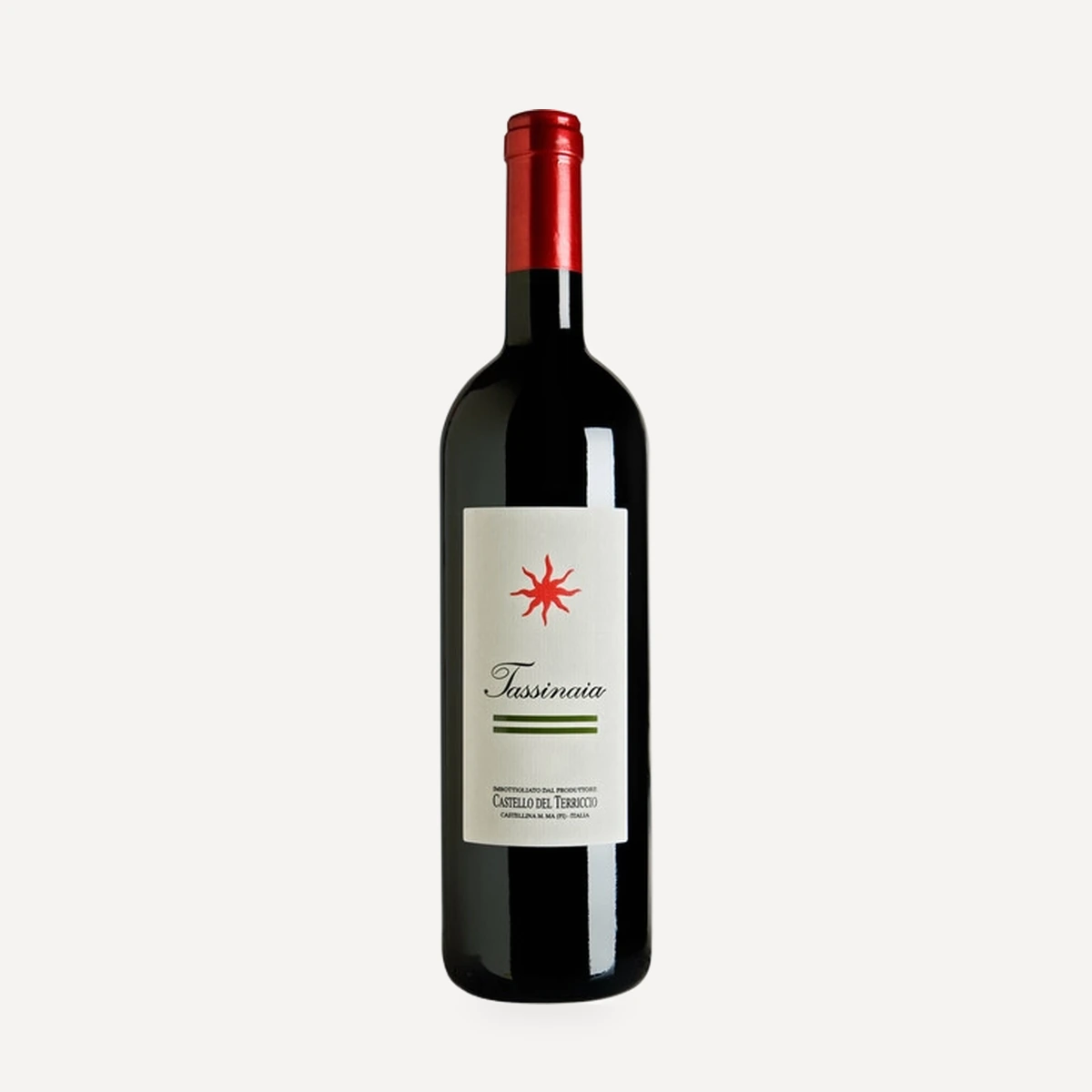
First produced in 1992, Tassinaia was named for the farmhouse on the hill known as “Le Tassinaie,” meaning “the place of the stones.” The label’s two green lines evoke the estate’s green fields in spring.