Questo vino
Vineyard and terroir
The fruit comes from a single vineyard at Tenuta Friggiali, on the southwestern slope of Montalcino. The estate’s 20 ha of vineyards descend towards a broad plain dotted with cypress groves and medieval castles, at elevations of 200–450 m, and are divided into three individually named blocks. Strong winds regularly cross the estate, drying the vineyards quickly after rain and helping to protect the vines from common diseases.
The wine uses fruit from the estate’s youngest vines; grapes from the older vines are reserved for Brunello. The Peluso Centolani family keeps the fruit from each vineyard site separate, rather than blending grapes from different terroirs.
Vinification
The grapes are harvested in early October, destemmed and gently pressed. Fermentation lasts 22 days in stainless-steel tanks at a controlled temperature of 28–30 °C, with frequent punch-downs and pump-overs. Malolactic fermentation takes place in Slavonian oak casks.
Ageing
The wine spends six months in 30 and 50 hl Slavonian oak casks, followed by a further six months in the cellar after bottling.
Tasting profile
It combines some of Brunello’s character with fresher, juicier fruit. The wine is powerful and expressive.
Label / history
The name Friggiali derives from the Latin frigidi, meaning fresh and airy, a reference reflected in the winds that cross the estate. Giovanni Peluso initially bought 4 ha as hunting grounds. After studying the soils and climate and consulting experts, he acquired another 16 ha and planted vineyards.
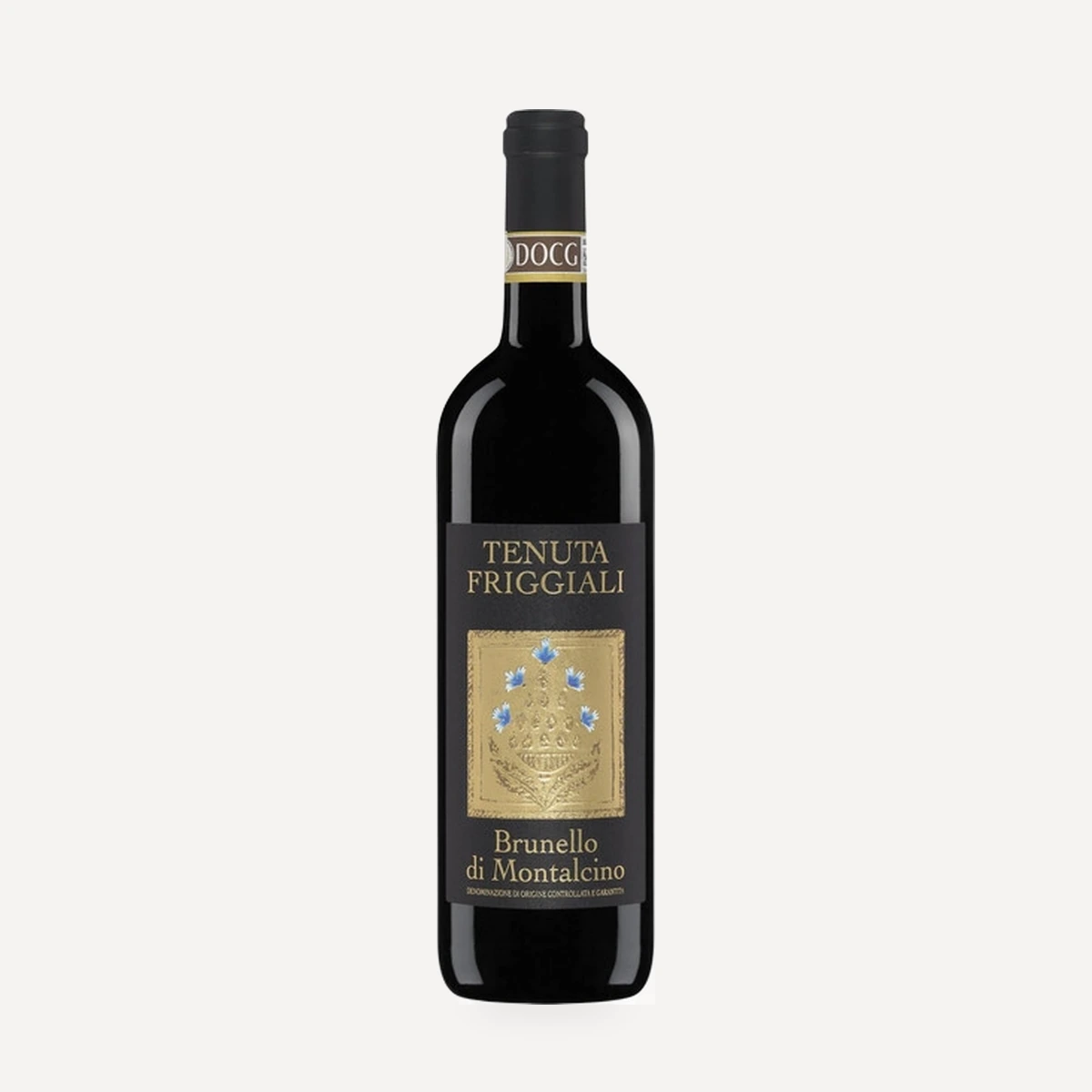
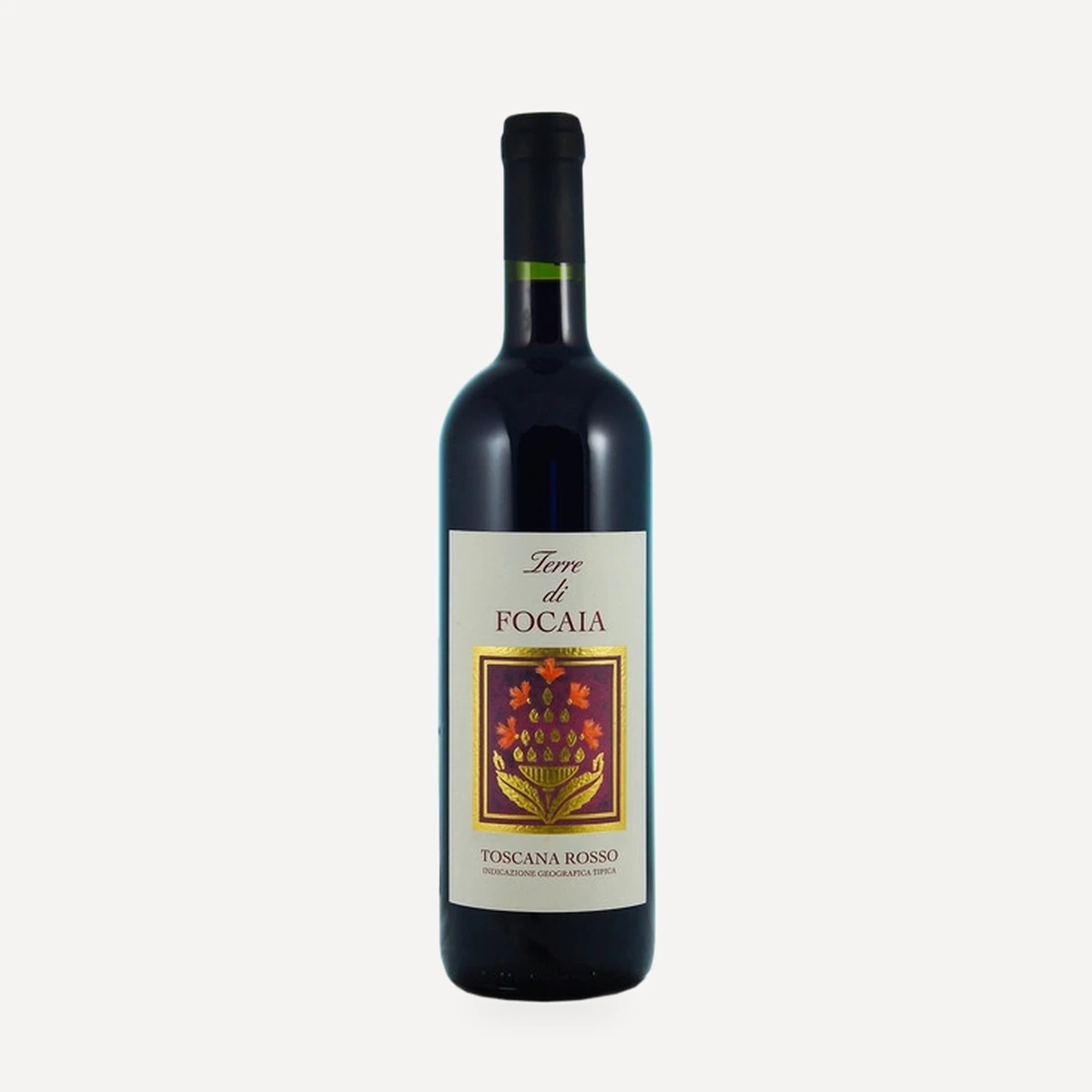
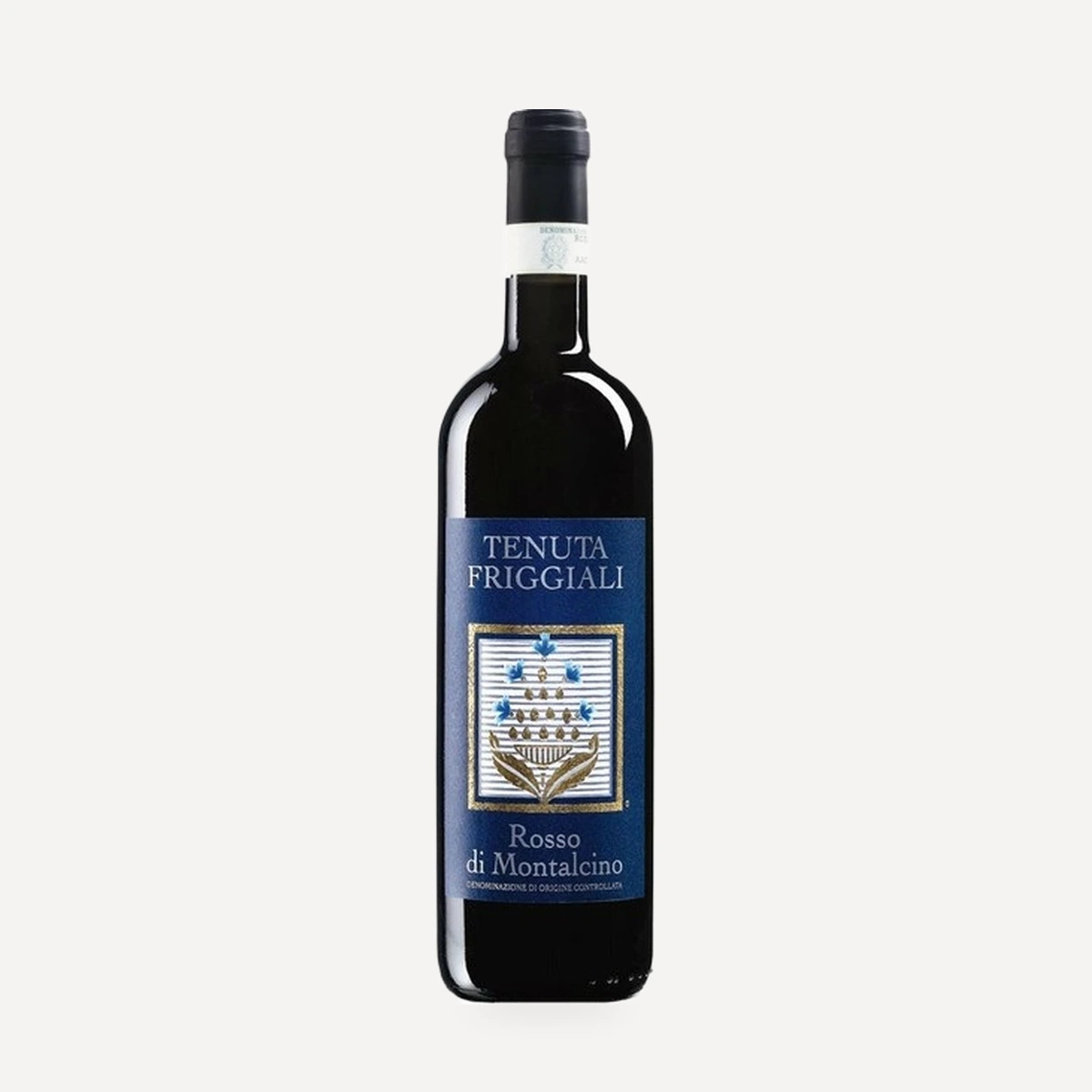
The label is inspired by the Renaissance practice of placing bottles in woven baskets and decorating them with fabric labels bearing a pomegranate, a symbol of prosperity, wealth and fertility. The Rosso label uses silver powder to create a bright accent and refined sheen.