Questo vino
Vineyard and terroir
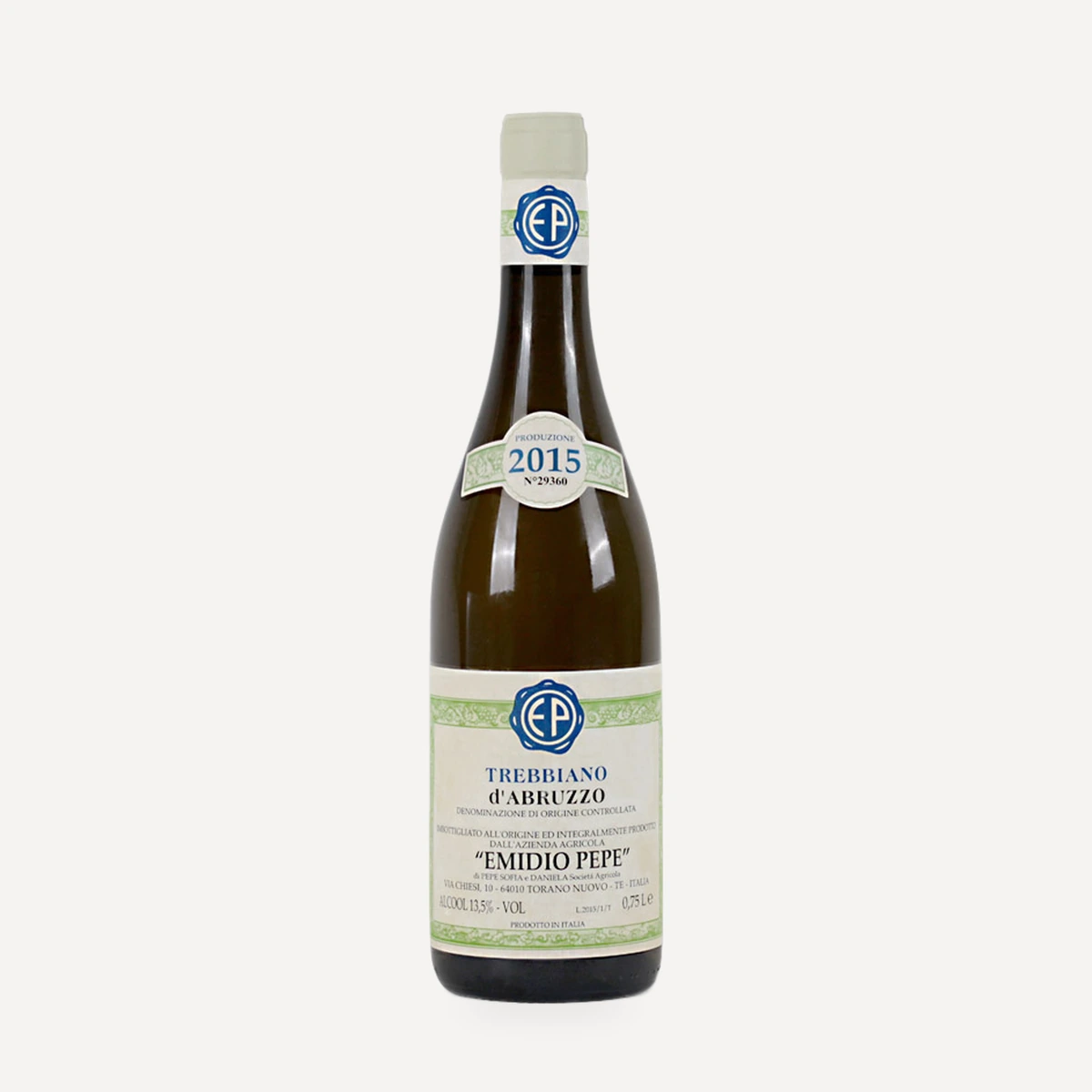
The grapes come from an old Trebbiano vineyard in Loreto Aprutino at 250 m. For the 2024 release, the vineyard is identified as a 1974 planting on clay mixed with sand and limestone. The vines are trained to pergola abruzzese and managed under integrated farming. The stated 2024 yield is 110 q/ha.
Grapes
100% Trebbiano Abruzzese.
Vinification
The grapes are harvested by hand. In 2024, picking took place during the first ten days of September, in the early morning. Processing comprised destemming, crushing, very light draining, static settling and racking. Fermentation was initiated with a pied de cuve prepared seven days earlier from the same grapes. Indigenous yeasts conducted spontaneous fermentation without temperature control in terracotta amphorae, Slavonian oak vats and small stainless-steel tanks kept in very cool cellar rooms.
Ageing
The 2024 wine remained on its fine lees for six months in amphorae, Slavonian oak and small stainless-steel tanks. The components were then blended before bottling and further evolution in bottle. The use of terracotta and Slavonian oak for vinification and ageing began with the 2018 vintage.
Technical data
The 2024 vintage has 12.5% alcohol. Approximately 6,000 numbered bottles were produced.
Tasting profile
The 2024 is straw yellow, fresh and distinctly savoury, with substantial structure and a clearly marked personality. The palate is broad, composed and almost austere, without becoming excessive.
Serving and pairing
Serve the 2024 vintage at 14–16°C.
Vintage notes
The 2024 growing season combined an unusually warm winter with prolonged summer drought and temperatures well above average. Reduced water reserves curtailed vine vigour and yields. Inland hillside sites performed better because of greater soil water-holding capacity, cooler daytime and especially nighttime temperatures, isolated late rainfall and occasional emergency irrigation from old hillside reservoirs. Trebbiano Abruzzese showed greater drought resistance than Trebbiano Toscano, particularly when pergola-trained on deep, vigorous rootstock. Harvest was brought forward to protect the must from excessive sugar and declining acidity.