Storia
From Bulgaria to Miglianico
The Ciavolich family originated in Bulgaria and worked as wool merchants. Around 1560, while seeking refuge from advancing Saracen invasions, the family settled in Miglianico in the province of Chieti. The transition from commerce to landownership took place during the eighteenth century.
The family residence stood in Miglianico’s Codacchio quarter, on the former Via Sud. Its oldest portion dates from the late seventeenth century, and successive additions enlarged it until the middle of the nineteenth century.
The first cellar, 1853
In 1853 Francesco Ciavolich, known as Don Ciccillo, built the family’s first winery opposite the residence so that grapes from the surrounding land could be vinified directly. The Fondaco formed the cellar’s upper level, while a tunnel beneath Via Sud connected it to barrel-vaulted underground rooms below the palace. This structure is among Abruzzo’s oldest surviving winemaking cellars.
The connection with Loreto Aprutino
At the end of the nineteenth century, Giuseppe Ciavolich married the Loreto Aprutino noblewoman Ernesta Vicini. The marriage established the family connection that would later shift the agricultural estate’s centre towards Loreto Aprutino. In her Chieti home, Ernesta hosted one of the early twentieth century’s active literary salons; guests included her friends Costantino Bardella and Francesco Paolo Michetti.
Ernesta’s son Giustino served as a cavalry officer during the First World War. After returning and retiring from military service, he managed the family properties and passed to his son Giuseppe an attachment to the land and the desire to preserve the estate.
War and the end of winemaking in Miglianico
Giuseppe’s father died on 2 February 1941, when Giuseppe was twelve and his sister Giuliana was sixteen. Their mother initially had to entrust practical management to estate overseers, but Giuseppe assumed agricultural responsibilities while still young.
In autumn 1943, immediately after harvest, retreating German troops established their headquarters on the upper floors of the Miglianico residence. The family sheltered in the underground winery. A cave in the cellar’s eastern wall was extended as far as the convent of the Suore di Sant’Anna and prepared as an air-raid shelter. On 8 December 1943, the SS ordered the family and town to evacuate. The 1943 harvest was the last vinified in the old underground cellar.
The Loreto Aprutino estate
During the 1960s, the division of Donna Ernestina’s inheritance brought the family an agricultural property of approximately 50 hectares at Loreto Aprutino. Giuseppe Ciavolich planted Montepulciano, Trebbiano and Cococciola there. Massal-selection pergolas planted during the 1960s and 1970s remain an important part of the vineyard patrimony.
In 2000 Giuseppe planted a new Abruzzo-pergola vineyard at Pianella, facing a small natural lake. The Pianella property now covers approximately 15 hectares, including 6 hectares of Montepulciano, 1 hectare of Pecorino and extensive old Dritta olive trees.
Chiara Ciavolich and the move from bulk wine
Chiara Ciavolich graduated in law in Rome in 2002 but chose the family farm over a legal career. She began working at the estate that year and became its legal manager shortly afterwards, when her father entrusted its future to her. At the time, difficult family circumstances had made agriculture the family’s principal activity, while the business itself required renewed management during a rapidly changing wine market.
Chiara set out to transform an operation selling tanks of bulk wine to regional and extra-regional bottlers into an estate focused on bottled wines grown on its own land. Romano D’Amario, the estate’s consulting agronomist and oenologist since 1997, guided the agricultural and technical work, while Francesco Falcone contributed economic-management expertise.
Chiara’s first working harvest was 2003, a season of extreme heat and drought from May through September. The rainy harvests of 2004 and 2008 exposed the vulnerability of clay-rich Montepulciano pergolas to late-season rot. In 2008, difficult fruit produced the estate’s final bulk-wine tanks at Cantina del Riccio in Ortona. Their difficult sale confirmed the decision to abandon bulk production.
Chiara subsequently replanted 10 hectares to trellises, creating an approximately even balance between old pergolas and new trellised vineyards. This mixed system was intended to moderate opposite climatic extremes: trellises provide air and light in wet, rot-prone years, while pergolas, with deeper roots, broader leaf area and greater shade, perform strongly in hot, dry seasons.
New projects and older materials
Fosso Cancelli began in 2007 as a project devoted to artisanal, traditional wine. The 2015 harvest became a new starting point: the estate revived spontaneous fermentation of Montepulciano in concrete and acquired two un-toasted 15-hectolitre barrels for Trebbiano and Pecorino. The first Fosso Cancelli Pecorino from this work appeared before the Trebbiano; the Trebbiano 2015 was bottled after prolonged maturation in a lot of 1,000 bottles. From 2018, Fosso Cancelli Trebbiano incorporated both terracotta amphorae and Slavonian oak into fermentation and maturation.
Landscape action and recent climate pressure
In October 2019, Chiara joined other Loreto Aprutino farms and residents in opposing a proposed biomethane facility near the Tavo River. Six businesses coordinated territorial action, later forming the Custodes Laureti enterprise network. By 2022, the network was pursuing agronomic, historical-landscape and tourism protection, including the In Vino Lauretum zoning initiative and Nidi in Campagna, a programme installing artificial nests for insect-eating birds that also serve as environmental indicators.
Climate pressure became increasingly marked after 2020. Downy mildew in 2023 reduced the crop by 70%, while drought in 2024 cut it by 50%. These consecutive losses forced a period of economic and agricultural rebalancing through 2025. By 2026, Chiara continued to frame Ciavolich as a family agricultural undertaking built around history, culture, territory and responsibility to future generations.
Terroir
Position and landscape
The production centre lies at Contrada Salmacina in Loreto Aprutino, on rolling hills in the province of Pescara at approximately 250 metres above sea level. The Gran Sasso, the highest massif in the central Apennines, and the Calderone glacier are only a few kilometres away. The Adriatic Sea lies to the east, while the Apennines rise to the west.
The historic Miglianico residence occupies the Codacchio hill between Pescara and Ortona, with views towards the Adriatic in the east and the Maiella in the west.
Geology and soils
The Apennines and their neighbouring hills emerged through the collision of the Adriatic, or northern African, plate with the Eurasian plate between 20 and 40 million years ago. The process raised sedimentary rocks formed on ancient sea floors. Later tectonic movements approximately six million years ago shaped the Gran Sasso’s present structure of compact limestone and dolomite with less compact marl.
Loreto Aprutino is dominated by clay and clay-silt soils. As sand content increases, these grade into clay loam and silty clay loam. Fine windblown sand from the nearby Gran Sasso foothills has partly modified the primary clay-silt material. The soils are generally compact and can store water strongly within their pores—an advantage in drought, but a potential cause of waterlogging in exceptionally wet years.
Pianella shares the same broad geological formation but its clay-dominant soils contain limited silt and sand and are tougher, more compact and more plastic than Loreto’s. Their greater capacity to retain rainfall gives them stronger productive vigour.
Sunlight and airflow
Loreto Aprutino receives one of Italy’s higher levels of global solar radiation and an above-average number of clear days during the vegetative cycle. Proximity to both the Adriatic and Gran Sasso strengthens alternating sea and land breezes. These air movements disperse stratiform cloud, increasing direct radiation available to the vines.
High radiation favours photosynthesis and the synthesis of organic compounds in grapes. The amount intercepted depends on active leaf area, cycle length, training system, planting distances, canopy height and root-zone water availability. The broad canopy of the pergola abruzzese can intercept radiation particularly efficiently when vine vigour sustains a complete leaf surface and healthy lateral shoots through ripening.
A climatic threshold
The Casauriense–Vestino area behaves as a boundary between northern and southern viticultural conditions. Cold, wet seasons can bring low potential alcohol, excessive acidity, incomplete phenolic maturity and fruit deterioration; hot, dry seasons can instead cause excessive sugar, falling acidity, high pH, overripeness and reduced yields. Ciavolich’s combination of trellises, which are better suited to cool and rainy conditions, and pergolas, which perform strongly in heat and drought, is intended to stabilize quality through both extremes while increasing diversity in ordinary seasons.
Vinificazione
Ciavolich employs integrated farming and had practiced certified sustainable viticulture for 15 years by 2026, although the certifying body is not identified.
The vineyard system is deliberately diversified. At Loreto Aprutino, approximately half of the 35 hectares is trained to pergola abruzzese from massal selection and half to trellises from clonal selection. Pergolas develop broad canopies and deeper root systems, shade both soil and clusters, and are particularly valuable in heat and drought. Trellises carry less leaf area and shallower roots but improve exposure and ventilation in cool, rainy seasons. The estate uses this balance to distribute climatic risk and to build complementary components for its wines.
Recent planting work uses local massal-selection material distinct from standard nursery clones. The aim is to preserve the genetic patrimony of vines planted during the 1960s while maintaining a diverse and adaptable vineyard base, particularly for Montepulciano.
Soil-moisture measures include winter legume cover crops, reduced tillage and work to raise soil organic matter. These practices help retain available moisture in the clay-rich hills. Rescue irrigation is used where necessary, especially in trellised parcels with shallower roots and during prolonged drought. In 2022, timely supplementary water helped preserve acidity and aromatic precursors in the white varieties.
Green work includes shoot topping and leaf removal around clusters when conditions require it, while soil cultivation limits competing weeds. Harvest decisions are parcel- and season-specific. In extreme years, different training systems can equalize the final result; in ordinary years, they provide useful diversity. The source of fruit for the leading wines is reassessed each vintage and may come from one block or several blocks with different training systems.
Harvesting is by hand, frequently into small crates. Early-ripening white grapes may be picked during the cool first hours of the morning and transferred rapidly to the cellar. Selection, harvest timing, separate picking rounds and the sacrifice of volume are used to protect quality when disease, drought or uneven maturity affects a season.
Cellars and vessels
The working cellars contain stainless-steel tanks, traditional concrete vats, terracotta amphorae and oak vessels. Stainless steel is used as a chemically inert, temperature-controllable material that permits fermentation and maturation without aromatic contribution. Concrete—an important material in 1960s Abruzzo—is neutral and thermally stable, making it suitable for structured wines and fermentations that tolerate higher temperatures.
Terracotta is used for both fermentation and maturation. Its porosity provides micro-oxygenation without the aromatic contribution associated with wood. Oak is used in several sizes—225-litre barriques, 500-litre tonneaux and 1,500-litre barrels—principally as a permeable vessel for gradual oxygenation and stabilization rather than as a source of flavour.
Two complementary production approaches
The Ciavolich line uses contemporary, variety-conscious vinification. Depending on the variety, handpicked fruit is destemmed and crushed or softly pressed. White musts may undergo cold settling before controlled-temperature fermentation in stainless steel with selected yeasts, followed by several months in steel. Red fruit can ferment with skins in temperature-controlled stainless steel, with délestage and remontage adjusted to extraction needs.
Fosso Cancelli explores spontaneous fermentation and older materials. A pied de cuve is prepared from ripe fruit collected before the main harvest to establish indigenous yeasts. Fruit is handpicked into small crates, and a small crusher-destemmer and old press may be used. Fermentations can take place without temperature control in concrete, terracotta, Slavonian oak or used French oak.
For Fosso Cancelli whites, must may be divided between terracotta amphorae and oak. Maturation proceeds on fine lees, with duration varying by project and vintage; some releases remain on lees for extended periods and are bottled without filtration. From 2018, the Trebbiano was fermented and matured partly in terracotta and partly in Slavonian oak.
The traditional Cerasuolo method includes brief contact between Montepulciano must and skins in small concrete vessels, followed by salasso: fermenting must is drawn from the bottom and moved to terracotta, where spontaneous fermentation continues. It can remain on fine lees in amphora until spring bottling.
Assemblages are treated as a detailed, component-by-component exercise. Different parcels, training systems, harvest dates and vessels can be combined to balance freshness, structure, aromatic power and longevity. Some experimental Meteore wines originate from an idea during harvest or from tasting an old barrel and may not be repeated once the small lot is exhausted.
Filosofia
Ciavolich organizes its identity around three terms: history, culture and territory. History provides continuity and a practical sense of reality; culture is the ethical and intellectual framework directing agricultural work; territory encompasses origins, sensory memory, experience and identity.
Chiara Ciavolich sees wine as an act of responsibility and a language for work, time and human relationships rather than simply a commercial product. Her aim is to carry an inherited agricultural and cultural patrimony forward while leaving future generations a better inheritance.
The estate seeks wines that express their place and grape variety without following short-lived market fashions. Authenticity and internal coherence take precedence over stylistic dogma. Chiara rejects rigid ideological categories and argues that a meaningful wine requires awareness and a guiding idea rather than adherence to an absolute formula.
Sustainability is understood in environmental, social and economic terms. It includes soil and vineyard practices, the dignity and fulfilment of employees, and the farm’s ability to endure without consuming its human or financial resources. Daily choices and practical compromises are considered part of that responsibility.
Vintage differences are managed rather than concealed. The estate uses its own grapes, selects among parcels, separates harvest dates, adjusts volumes and combines different training systems and vessels according to seasonal conditions. The objective is not to make every year identical, but to preserve quality and recognisable estate character through climatic variability.
Experimentation remains part of this framework. Stainless steel, concrete, terracotta and oak are selected for their physical behaviour, and wines may move between materials when this better serves their development. Discovery is accepted as part of defining a wine’s identity, even when the result differs from the original intention.
Vini
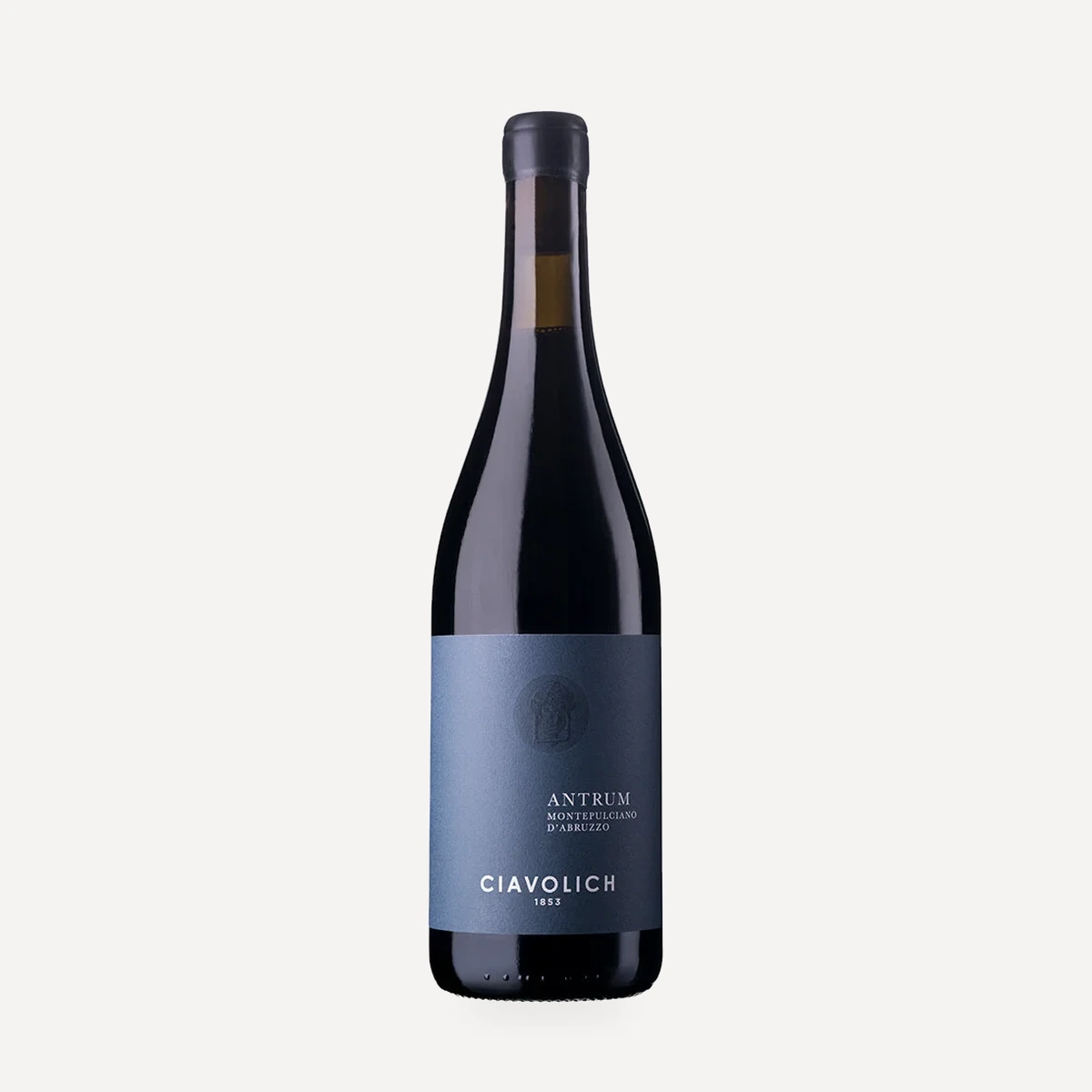
Antrum Montepulciano d’Abruzzo DOP
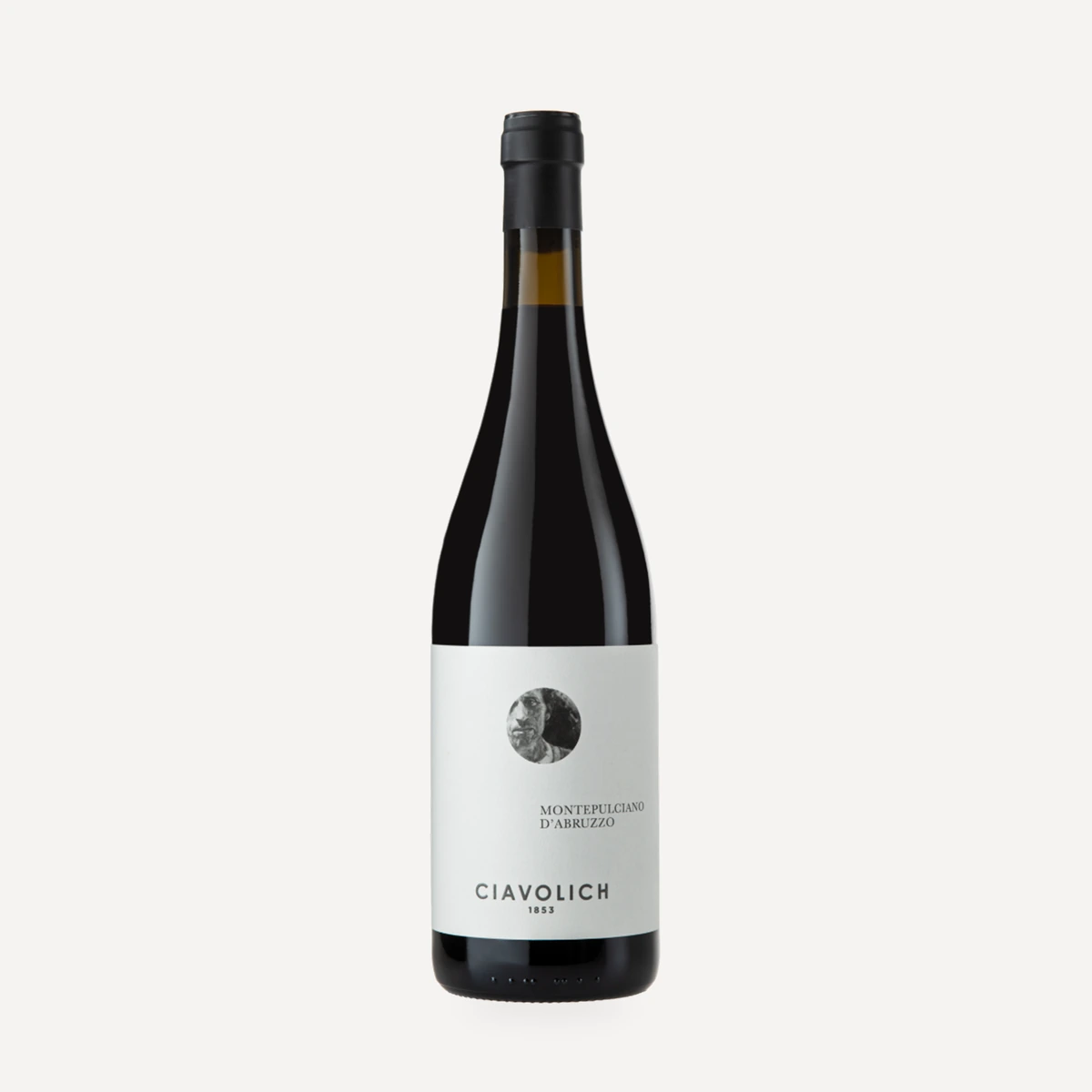
Montepulciano d’Abruzzo DOP