Storia
Foundation in 2005
Ernesto Cattel began working as a farmer-winemaker in 2005 in Costadilà, a hamlet of the municipality of Tarzo. The project took its name from this place. Cattel called himself an “articoltore” and based his work on artisanal farming and winemaking, with particular attention to the native Glera, Bianchetta Trevigiana and Verdiso of the Alto Trevigiano hills. His intention was to revive countryside practices without following fashions or accepting compromises.
Costadilà developed as an expression of Cattel’s personal philosophy. He envisaged a return to the closed-cycle farm, where vineyards coexisted with fruit and vegetable crops, farmyard animals, sheep and pigs. Human intervention was intended to remain minimal, with plants and animals allowed to follow their natural cycles.
Development of the wine identity
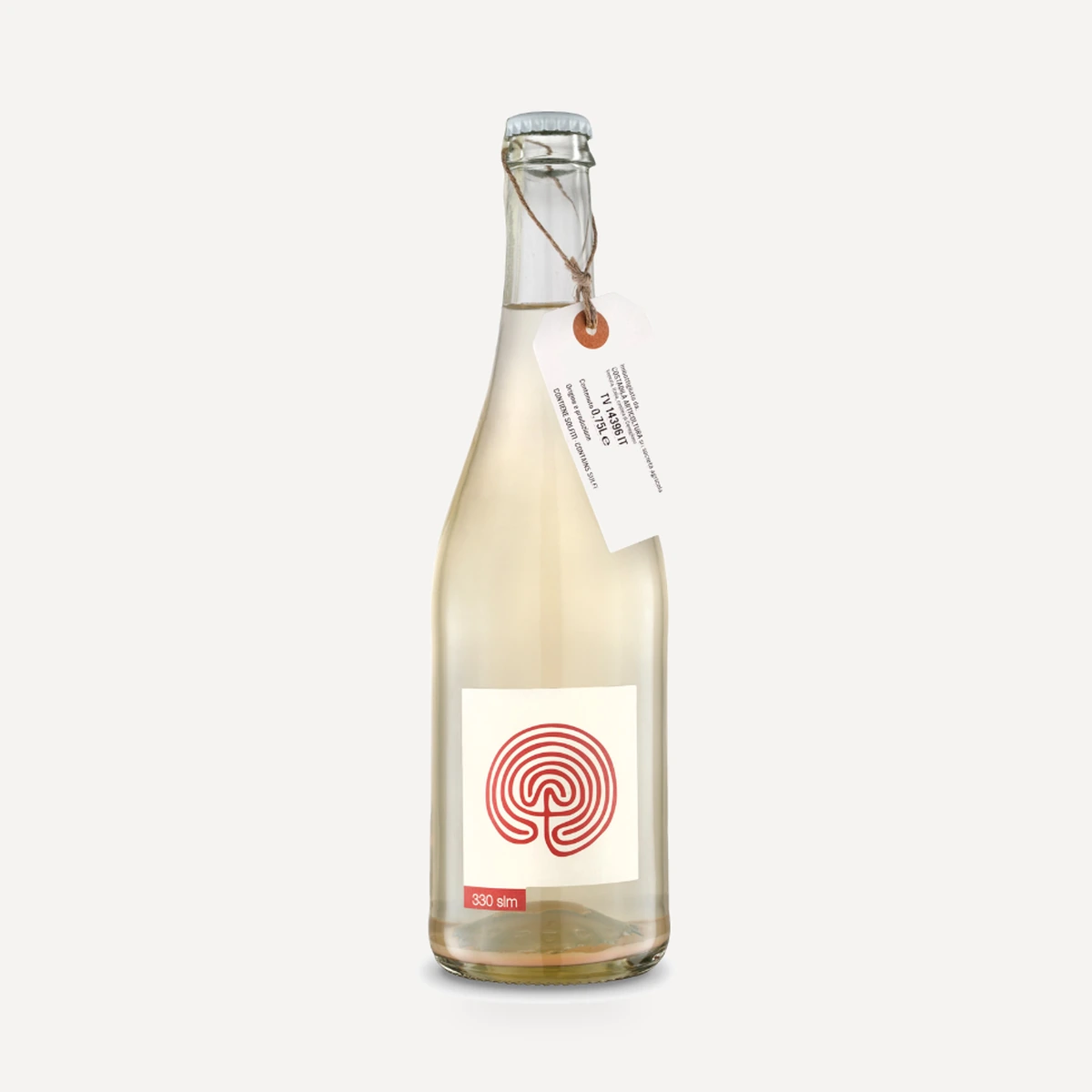
The project adopted transparent bottles so that indigenous yeasts, sediment and the varying cloudy amber colours remained visible. The labels 280 s.l.m., 330 s.l.m. and 450 s.l.m. were conceived around the elevations of their source vineyards.
The 280 s.l.m., made from Prosecco Tondo and Boschera, was remembered by Mauro Lorenzon as the first orange colfondo among the project’s crus to enter Italy’s wine scene and as a source of particular satisfaction for Ernesto Cattel. Its production revived the older practice of handling white grapes like red grapes, including skin maceration, pumping over, unfiltered bottling and refermentation with the wine’s own yeasts.
Present base and continuity
The operation is now based in San Lorenzo, in the hills of Vittorio Veneto. Cattel’s ideas continue through the places he cultivated and the farming knowledge he transmitted. The current legal entity is Costadilà articoltura s.r.l. società agricola.
Terroir
The vineyards and grape sources span several distinct hilly and foothill environments. The project began in Costadilà, a hamlet of Tarzo within the Alto Trevigiano hills, and is now based at San Lorenzo in the hills of Vittorio Veneto.
The vineyard around Combai has calcareous soil. The Vittorio Veneto hills have clay mixed with pebbles associated with morainic hills. At Campea di Miane, the soil is clay marl. Pinot Nero from the Belluno area grows on sedimentary deposits and marl, while Moscato Fior d’Arancio from Villa dei Vescovi di Torreglia in the Colli Euganei comes from volcanic terrain. The vineyards around Salgareda are characterized by sedimentary deposits.
The 280 s.l.m., 330 s.l.m. and 450 s.l.m. names are tied to vineyard elevation, reinforcing the intended connection between each wine and its place of origin.
Vinificazione
The vineyards are managed according to a natural and sustainable approach intended to respect the environment and biodiversity. Weeding and synthetic chemical products are excluded; the broader definition of natural wine also excludes synthetic chemicals, pesticides and herbicides so that the vines retain their vitality. The objective is intact, healthy fruit with a full complement of flavour and other constituents.
The agricultural model draws on the traditional closed-cycle farm. Vineyards are conceived alongside fruit and vegetable cultivation and livestock, including farmyard animals, sheep and pigs. Human intervention is kept to a minimum, and natural cycles are given time to unfold without being forced.
Part of the Merlot and Cabernet crop is allowed to overripen on the vine. Vineyard yields reported for the individual sources range from 50 to 100 quintals per hectare.
General approach
Cellar work follows a low-intervention model. Fermentations start spontaneously through indigenous yeasts, without artificial intervention. Treatments considered invasive or artificial are avoided, and sulphites are kept very low or omitted. The wines are presented as living products whose development depends on the season and their subsequent evolution in bottle.
Skin contact and pressing
Skin maceration of white grapes is a defining practice, applying a method traditionally associated with red-wine production. It is intended to produce greater persistence, flavour and aromatic richness while strengthening the relationship between wine and place. Declared examples include 10 days of skin contact in steel and 30 days of skin contact in steel. Pumping over is used for the long-macerated orange expression. Other lots, including a Glera base, may be directly pressed and fermented without maceration. Pinot Nero is vinified as rosé, while its accompanying Glera is directly pressed. A portion of Merlot and Cabernet is harvested after overripening on the vine and receives a short skin maceration in steel.
Fermentation, maturation and refermentation
Primary fermentation is spontaneous. Steel is used for fermentation and maturation across the range. One long-macerated white lot matures for three months in wood before returning to steel for its final settling. Another sparkling lot matures for three to four months in steel.
The sparkling wines follow the traditional sur lie or colfondo method: they referment in bottle in contact with their own yeasts and retain their sediment. Fresh must or must obtained from dried grapes is added at bottling to initiate refermentation. One expression specifies fresh must from dried Glera and Bianchetta Trevigiana. The retained carbon dioxide is regarded as an antioxidant.
Finishing and presentation
The project emphasizes bottling without filtration; unclarified wines and sediment are integral to the intended style. Sulphur dioxide is not added to the colfondo sparkling wines, and individual orange and red expressions are also explicitly made without added sulphur. Transparent glass is deliberately used to expose the indigenous-yeast sediment and the changing cloudy amber tones rather than conceal them.
Filosofia
Costadilà’s philosophy begins with sustainable agriculture, respect for the environment and biodiversity, and a deliberate return to old countryside values. Ernesto Cattel’s model was the closed-cycle farm: vines forming one part of a diverse agricultural organism that also included fruit, vegetables and animals.
Nature is to be allowed its own time rather than forced. Patience, attention and respect guide both farming and human relationships, while intervention in the vineyard and cellar is kept to a minimum. Tradition is understood as something living that must be carried forward rather than treated as a static relic.
Transparency is both a practical and symbolic principle. Clear bottles reveal sediment, indigenous yeasts and colour variations from bottle to bottle—an expression of the conviction that nothing should be hidden. Vintage variation and bottle evolution are accepted as part of wines that remain alive rather than standardized.
The project understands natural wine as a philosophy rather than merely a category: healthy grapes begin with protection of the land; synthetic chemicals are excluded; intrusive cellar treatments are avoided; indigenous yeasts initiate fermentation; and sulphites are minimized or omitted. Skin contact for white grapes is valued as a way to build flavour, aromatic depth and a more distinct connection between variety and place.
The emblem derives from an ancient Celtic symbol. It represents the search for harmony between humanity and creation, as well as rebirth and the long, non-linear path toward renewed perception and self-understanding.
Vini