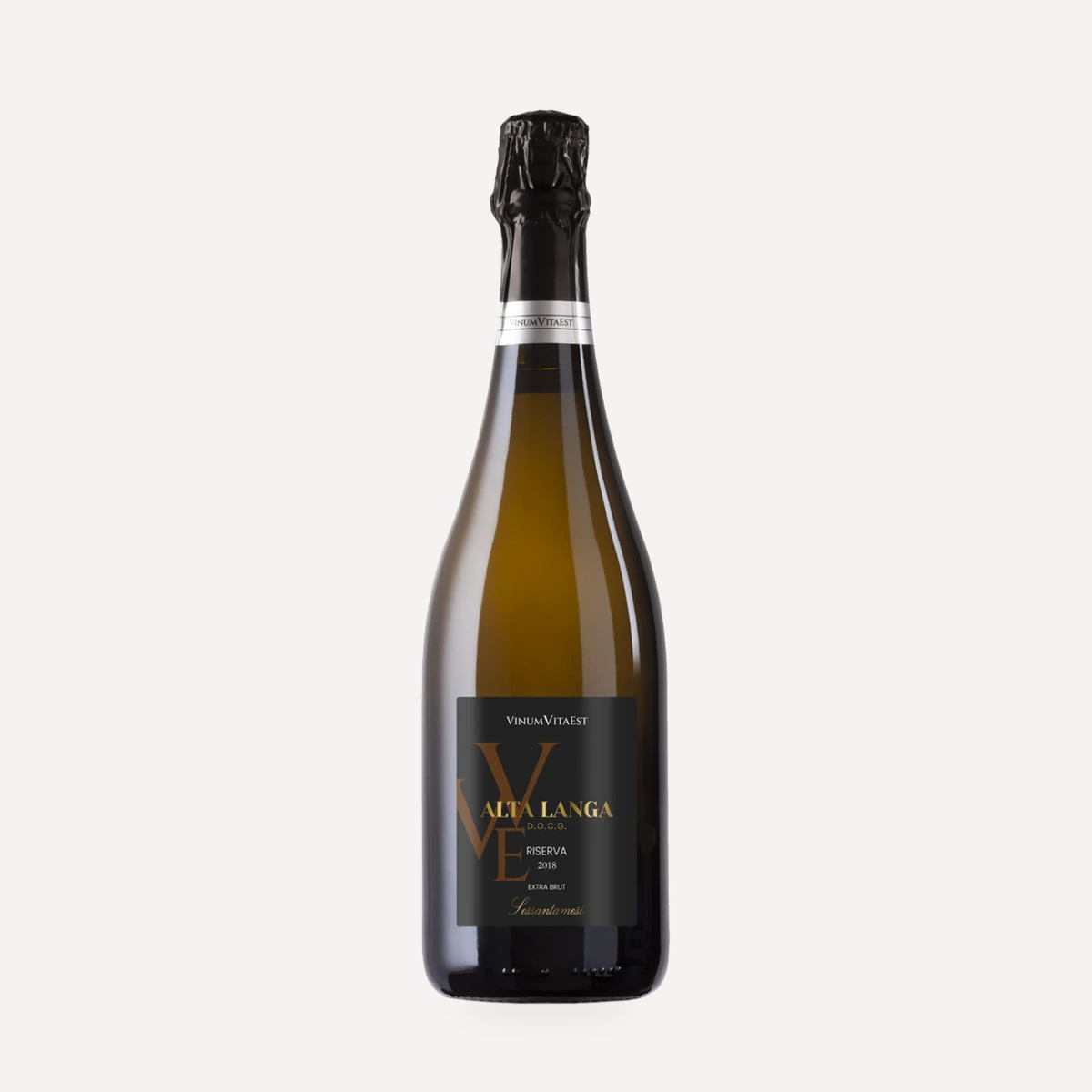
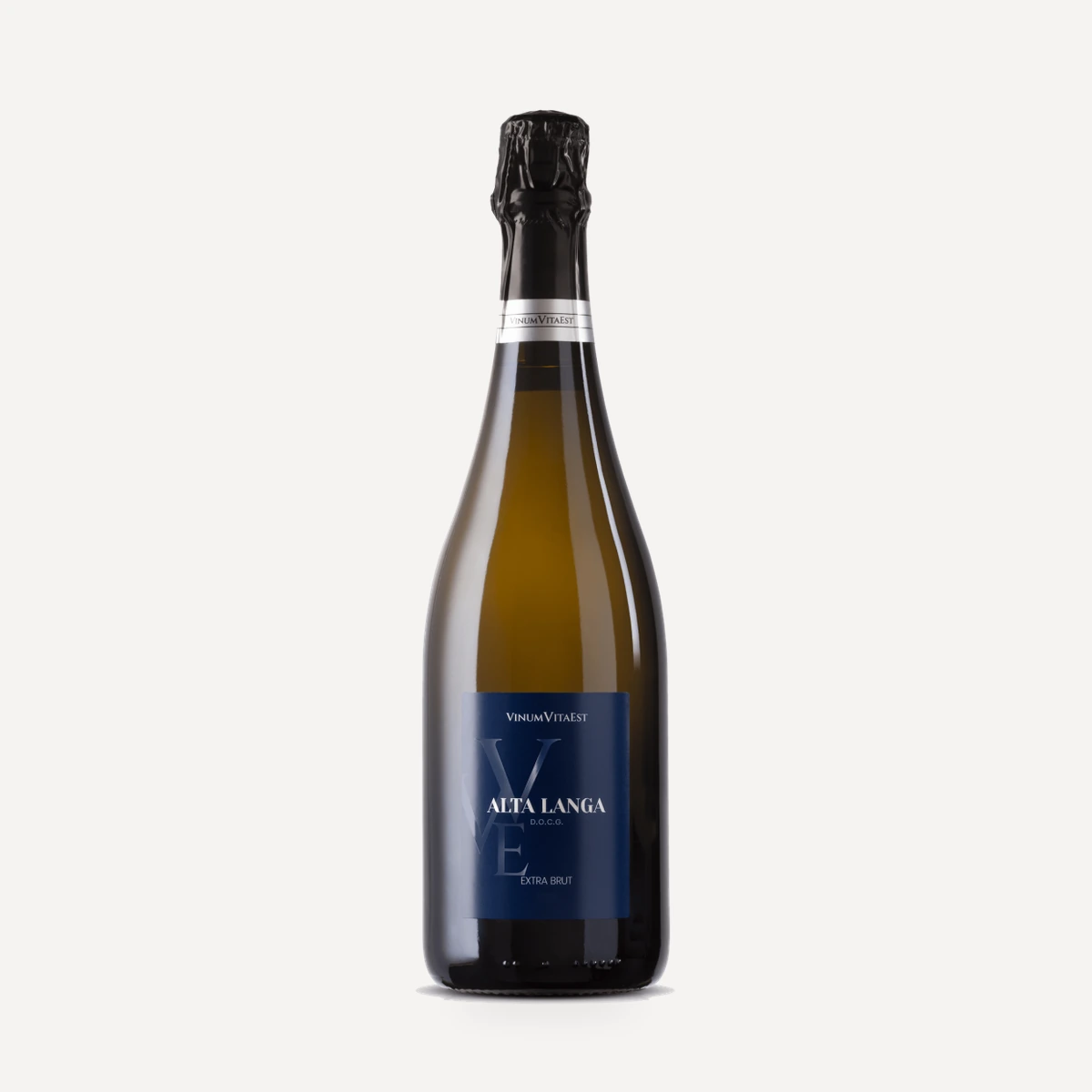
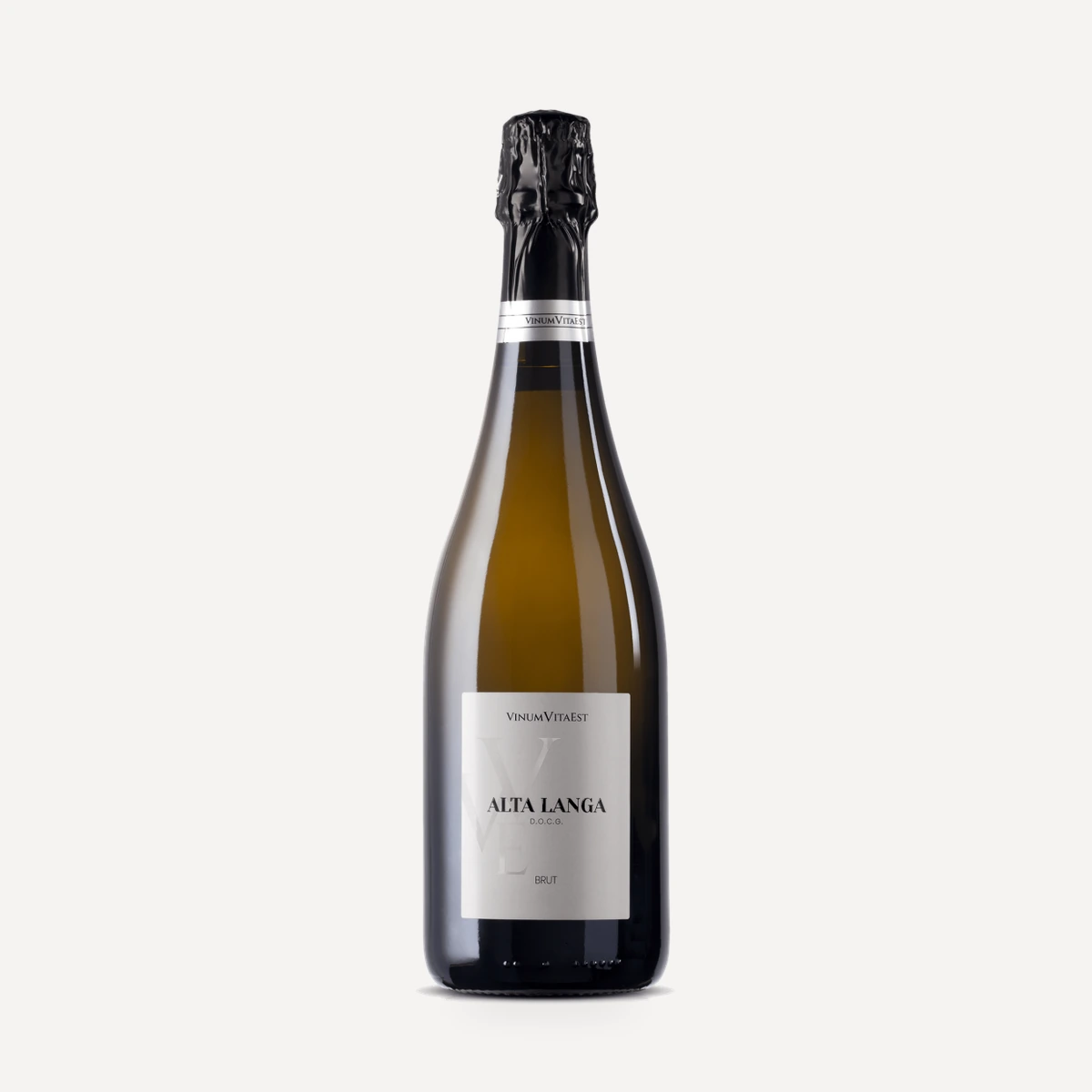
Questo vino
Vineyard and terroir
The Pinot Noir comes from Trezzo Tinella, Loazzolo, Vesime and Bubbio. The vineyards lie at 300–550 m above sea level, with E, SE, W and NW exposures and clay-limestone soils. Vines are 15–25 years old and trained to Guyot. Viticulture is sustainable, and harvesting is entirely by hand.
Grapes
Millesimato 2021 is 100% Pinot Noir. Paolo Giacosa is the winemaker.
Vinification
Bunches are sorted by hand on a vibrating table and cooled with carbonic snow. After destemming and crushing, the must remains for 2–4 hours in an inert nitrogen environment. This short maceration extracts the rosé colour before the must is drawn off and gently pressed. Screw conveyors are avoided throughout grape handling.
The must ferments in temperature-controlled stainless-steel vats, then remains on its lees for six months with bâtonnage. The prise de mousse follows the traditional method, with secondary fermentation in bottle.
Ageing
The wine ages on its lees in bottle for at least 36 months. The first disgorgement takes place after 36 months, and four disgorgements are carried out for each vintage. After disgorgement, a liqueur d’expédition made from reserve wines and sugar is added. It contains no spirits. The final dosage is 7 g/L, placing the wine in the Brut category.
Technical data
- Appellation: Alta Langa DOCG
- Style: Brut rosé, Metodo Classico Millesimato 2021
- Alcohol: 12.5% vol.
- Residual sugar: 7 g/L
- Character: light-bodied and unoaked
- Serving temperature: 6–8 °C
- Cellaring potential: 4–6 years
Tasting profile
Brilliant rosé with onion-skin highlights and a fine, persistent perlage. The broad, elegant aroma brings together strawberry, redcurrant, wildflowers, cotton candy and bread crust. The palate is fruity, dry, multifaceted, complex and elegant, with close correspondence between aroma and flavour. A long, pleasant mineral finish completes the profile.
Serving and pairing
Suitable as an aperitif and with fish or shellfish dishes; it also pairs with ham.
Vintage notes
The 2021 season began with a long, mild winter and limited rainfall. Budbreak started in early April and was followed by several night frosts; the month closed with below-average temperatures and well-distributed rain. May remained cool and frequently rainy, while June and July were hot and comparatively dry. Vine development lagged behind 2020, and August passed without heatwaves.
Harvesting began on 29 August with the first Alta Langa parcel and continued steadily. Yields per hectare were below average. The fruit was healthy, reached full ripeness and retained notably balanced acidity.
Label / history
The name Oudeis is derived from the Greek “Odysseus” and means “no one.” It expresses the idea that the wine’s complexity belongs to the terroir rather than to any single person. Its identity combines Alta Langa terroir, extended bottle fermentation and a brief saignée maceration that creates its rosé colour.