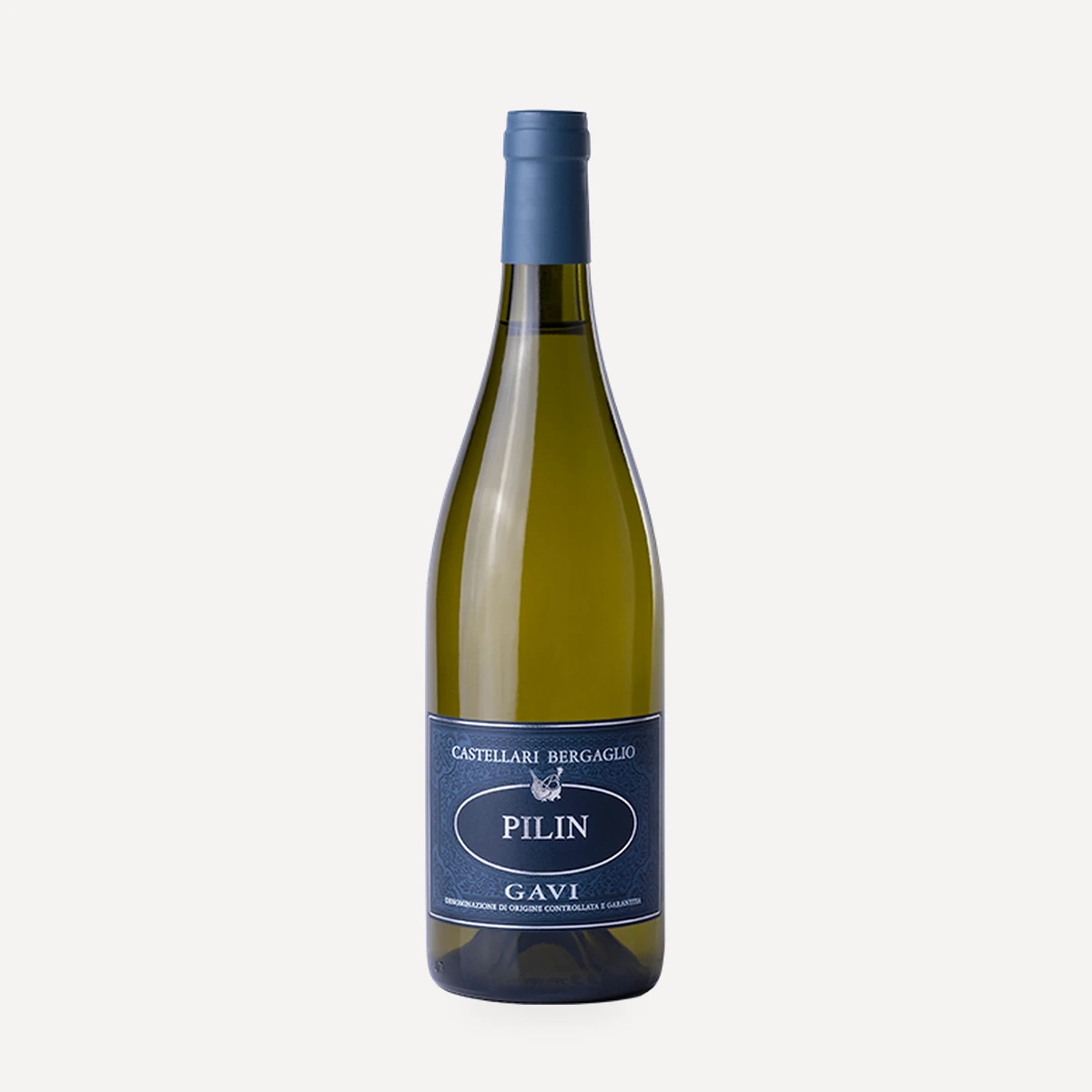
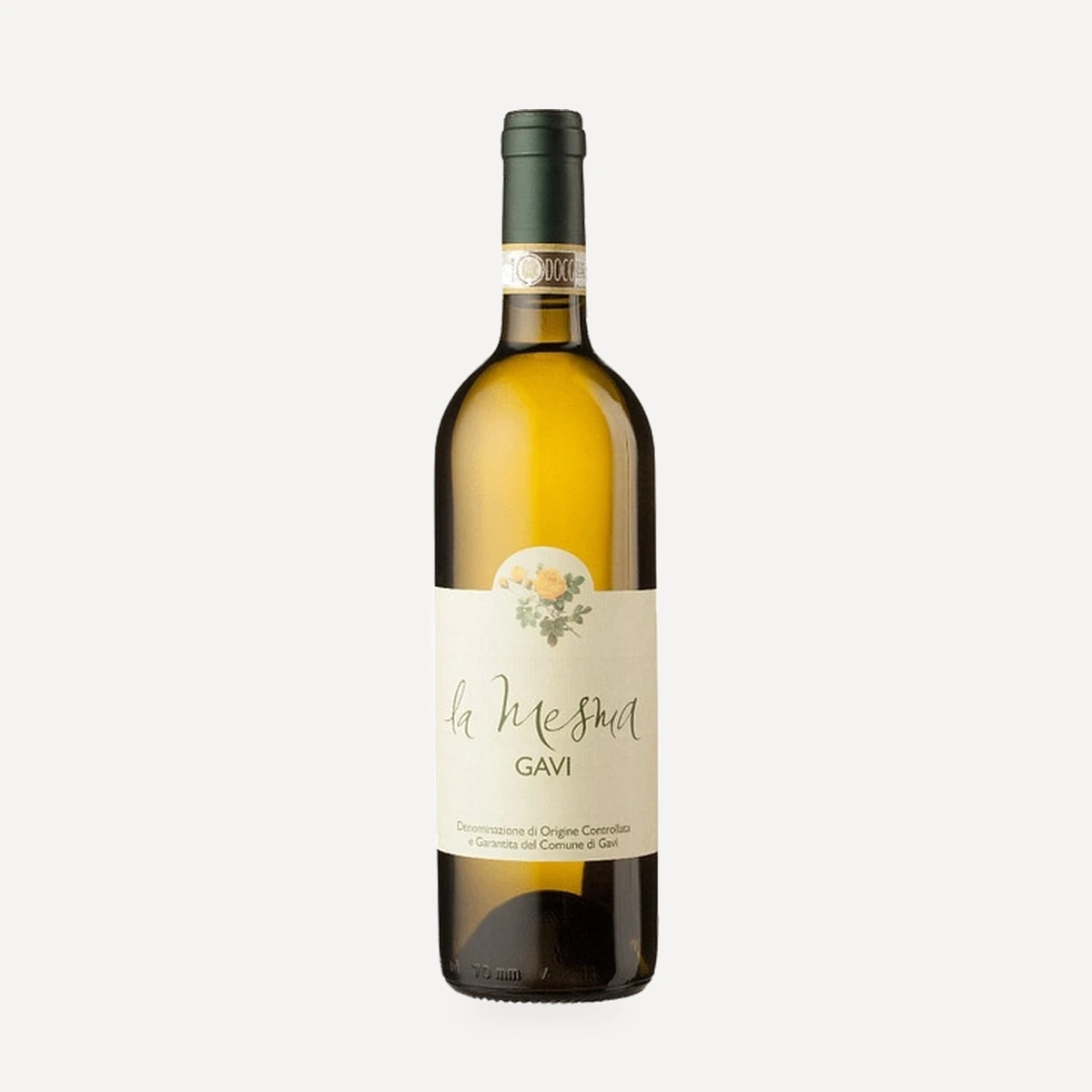
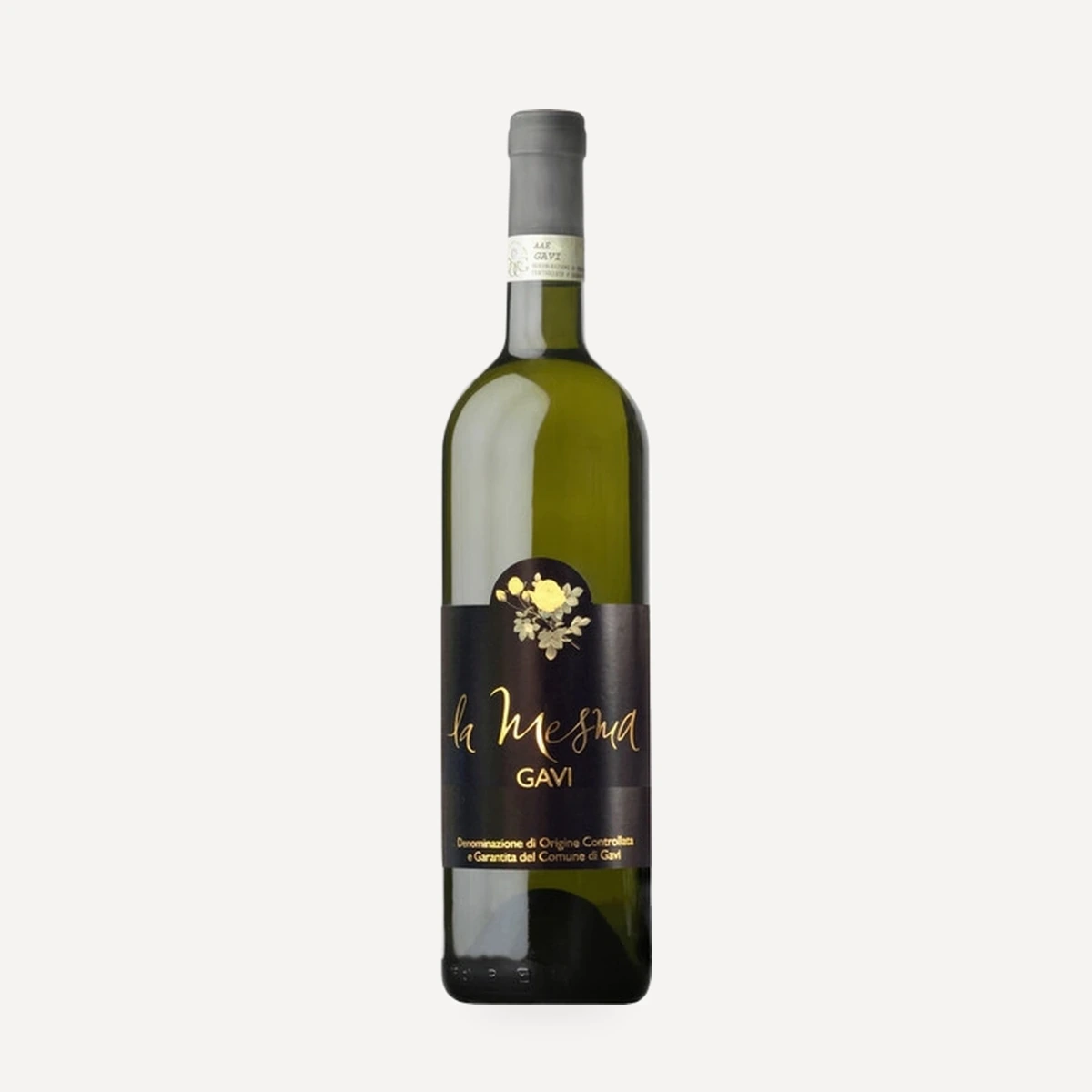
Questo vino
Vineyard and terroir
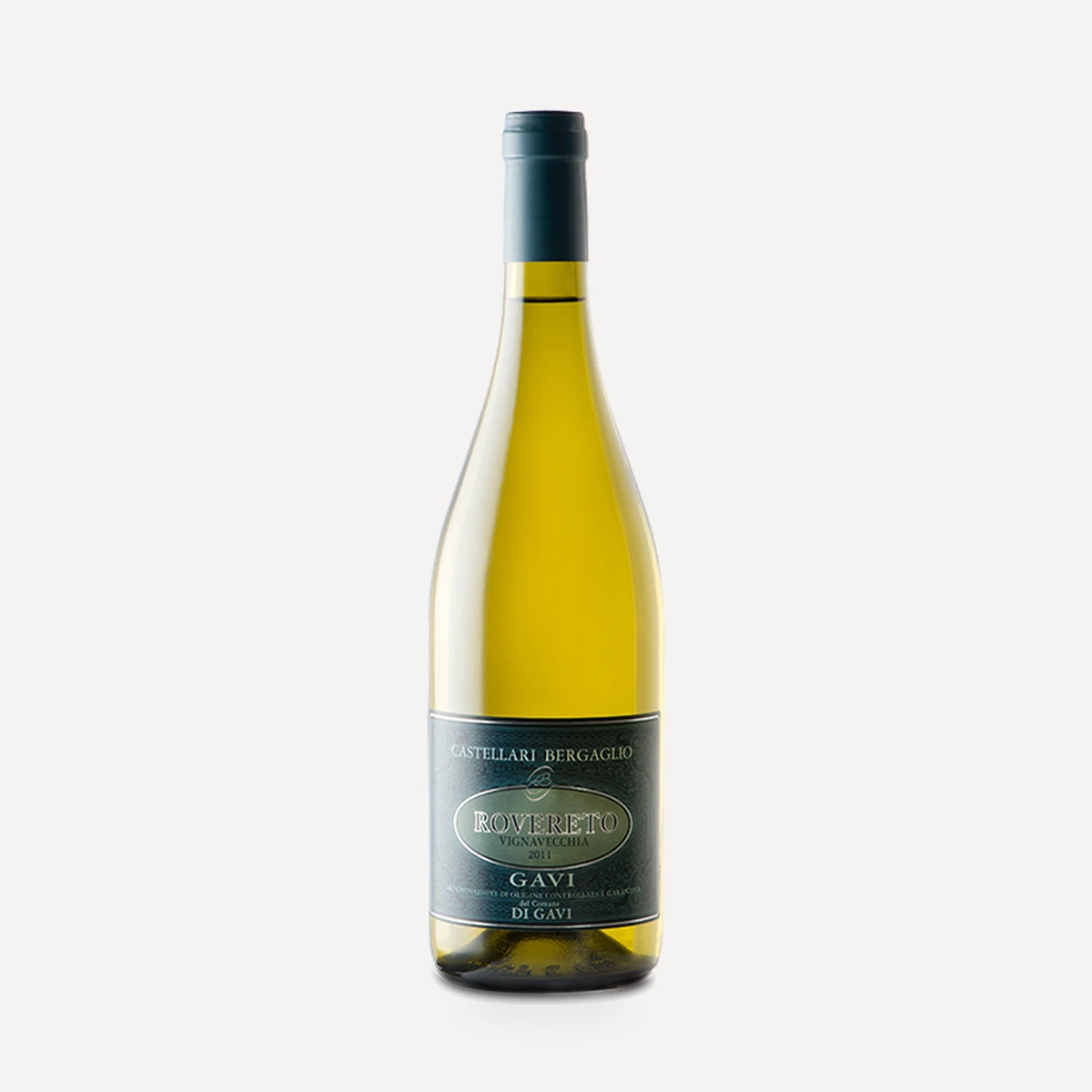
The Cortese comes from Monterotondo di Gavi, within the municipality of Gavi. The vineyard has a southern exposure, 35-year-old vines trained to Guyot and a yield of 8,500 kg/ha. It is managed under sustainable viticulture practices. The 2022 technical sheet identifies the soil as clay-limestone, while the wine page gives clay-loamy soil; the broader description emphasizes a distinctive chalky-sulphurous terroir and local microclimate.
Grapes
100% Cortese.
Vinification
The grapes are harvested entirely by hand and the bunches are manually sorted on a vibrating table. Carbonic snow chills the fruit, limiting oxidation and substantially reducing the need for sulphur. The cellar avoids screw conveyors to minimize handling.
Whole clusters are softly pressed in an inert nitrogen atmosphere. Part of the fruit remains in the press for one night of cool maceration. The must is chilled and fermented in temperature-controlled stainless-steel vats.
Ageing
The wine remains on its own lees in stainless-steel tanks for 6–7 months and subsequently undergoes further refinement in bottle.
Technical data
- Alcohol: 13.5%
- Yield: 8,500 kg/ha
- Winemaker: Paolo Giacosa
- Farming: sustainable viticulture; VIVA certified
Tasting profile
Straw yellow with characteristic greenish highlights. The broad, complex aroma combines fresh wildflowers, lavender and sage with white peach and apricot. The palate is fresh, mineral and intense, with a full body, pronounced yet balanced acidity and a very long finish.
Serving and pairing
Serve at 8–10 °C. It pairs with fish appetizers, shellfish, seafood, sushi and strongly flavoured sauces, and can also be served as an aperitif. Cellaring potential is 7–8 years.
Vintage notes
The 2022 growing season was among the hottest and driest recorded. Winter brought exceptionally little rainfall, followed by mild conditions and more than 180 days without significant rain. In July the vines adapted to limited water availability by producing smaller clusters. Harvest began early, with sparkling-wine grapes picked at the end of August and white varieties following immediately. Fruit quality was notably high, although yields per hectare were lower.