Storia
Documentary roots
The vineyards under Etnella’s care include land documented as vineyard since at least 1918. Some parcels retain old and pre-phylloxera vines, while their terraces and dry-stone lava walls belong to Mount Etna’s long tradition of steep, manually worked viticulture.
2008 — the beginning of Etnella
Davide Bentivegna came to wine after many years in a corporate career at Siemens. He had inherited neither vineyards nor a family winemaking tradition. In 2008 he began the project from the ground up on Mount Etna’s north-eastern slopes. Its initial aim was to make authentic wines capable of expressing the mountain’s volcanic landscape.
From winery to agricultural estate
The original wine project gradually developed into Casa Etnella, a working family agricultural estate combining artisan wine, biodiversity, seasonal Sicilian cooking, education and hospitality. The holdings came to extend from Milo in the east through Presa and Linguaglossa in the north-east to Solicchiata, Passopisciaro and Randazzo in the north.
Carla Romano later joined Davide in developing the estate. Trained as an agronomist, she subsequently studied cooking at ICIF in Piedmont and opened an Italian restaurant in Brazil before bringing her combined agricultural, culinary and hospitality experience to Etnella.
Education and international exchange
Etnella also developed into a place for practical learning. Students, researchers and young wine professionals visit to work alongside the vineyard team and experience high-altitude, manually farmed viticulture. The project established collaborations with Geisenheim University, the Edmund Mach Foundation in San Michele all’Adige, the University of Florence and the International School of Wine Tourism in Bordeaux. It also became a member of VinNatur, aligning itself with the association’s emphasis on research, knowledge exchange, sustainability and transparency.
Terroir
A mosaic of volcanic sites
Etnella’s vineyards extend from Milo on Mount Etna’s eastern side through Presa and Linguaglossa in the north-east to Solicchiata, Passopisciaro and Randazzo in the north. They occupy elevations between 500 and 1,000 metres above sea level.
Etna is treated not as one uniform terroir but as a mosaic shaped by successive lava flows, volcanic ash, changing mineral compositions, elevation, exposure, rainfall and biodiversity. Altitude and exposure can change within a few hundred metres. Maritime influence reaches one side of the mountain while cold continental and mountain winds affect another, allowing nearby vineyards to produce markedly different expressions.
The historic contrade embody these local differences. Each combines particular lava strata, soils, altitude, exposure and meso- and microclimate. Etnella consequently regards a Cru as the expression of a precise place rather than simply a geographical name.
Climate and light
The vineyards experience an average day-to-night temperature swing of approximately 16 °C. Sicilian sunlight, sea breezes and cold air descending from Etna interact with the high elevations. Loose volcanic stones known locally as ripiddu reflect light through the canopy and absorb heat during the day, supporting phenolic ripening despite the cool conditions and pronounced nocturnal temperature fall. Cold conditions can continue into October and the fermentation period.
Terraces and volcanic soils
Many vines occupy steep terraces supported by dry-stone walls built from local lava. The volcanic ground is rocky and physically demanding to work. Planting densities of approximately 6,000–9,000 vines per hectare create competition, encouraging roots to descend in search of water and nutrients.
Etnella’s own Grand Cru concept has no official standing on Mount Etna. It is reserved for sites where old vines, exceptional volcanic soil, high elevation, favourable exposure, historic dry-stone terraces, surrounding native woodland, long-term consistency and the capacity to produce strongly identified wines converge.
Vinificazione
Etnella’s vineyards are certified organic and are worked according to a sustainable approach. The majority are trained as alberello, or bush vines, on steep volcanic terraces. This structure makes most vineyard operations manual. Harvesting is performed by hand, and workers may carry 18 kg cases over considerable distances across uneven slopes.
Dry-stone lava walls support the terraces. Planting densities of approximately 6,000–9,000 vines per hectare promote competition among the plants and encourage deeper rooting in search of moisture and nutrients. Old vines are part of the holdings, and Contrada Galfina includes pre-phylloxera Nerello Mascalese.
Vineyard protection is based on Bordeaux mixture—copper sulphate—applied in very low doses. During the difficult approach to the 2026 vintage, an additional copper treatment followed pre-véraison hail, particularly because of damage in Contrada Savina and Contrada Donnabianca.
Etnella also began experimenting with kaolin in 2026. The natural mineral clay creates a reflective white film on the leaves, lowering leaf temperature, reducing water stress and helping stomata remain functional during summer heat. The objective is slow, balanced ripening with retained freshness, aromatic complexity and natural acidity, moderated potential alcohol and a clear expression of each vineyard.
Viticulture takes place within a mixed agricultural landscape that also contains olive trees, fruit orchards, native woodland and a botanical garden. Biodiversity is treated as part of the wider estate rather than as a feature limited to the vines.
Etnella follows a minimal-intervention approach intended to preserve the identity of each volcanic site and vintage. Every parcel is vinified separately rather than being treated as part of a uniform mountain-wide blend.
Fermentations begin spontaneously with indigenous yeast populations. Native grape varieties and old-vine material form the core of production. The wines are made without filtration, while intervention in the cellar is kept to a minimum. The stated objective is precision without obscuring the character imparted by each contrada, its elevation and its volcanic ground.
Production remains small, at approximately 15,000 bottles annually. Detailed estate-wide information about crushing, maceration regimes, fermentation vessels and temperatures, malolactic fermentation, maturation vessels and durations, sulphur additions, clarification, stabilization and bottling procedures is not consolidated into a general production protocol.
Filosofia
Etnella’s philosophy begins with the conviction that Mount Etna is a collection of distinct places rather than a single terroir. The aim is not merely to secure highly regarded vineyards, but to care for sites capable of communicating a history. Each parcel is therefore vinified separately, each vintage is allowed to retain its differences, and intervention is limited to avoid replacing the identity of the place with the signature of the winemaker.
Davide Bentivegna describes wine as the beginning of a wider conversation about Mount Etna, its landscape, inhabitants, agriculture, culture and hospitality. Within this view, the estate is not solely a production facility: biodiversity, seasonal cooking, education and welcoming visitors are connected expressions of the same agricultural setting.
Etnella’s unofficial concept of Grand Cru depends on evidence accumulated over time rather than reputation. Old vines, volcanic geology, elevation, exposure, historic terraces, native woodland and consistency across decades must coincide. The estate distinguishes between a Cru that represents a place and a Grand Cru capable of creating a lasting memory.
Organic farming, spontaneous indigenous-yeast fermentation, no filtration and low-intervention cellar work are intended to make the vineyard, altitude, soil and vintage more apparent. Membership in VinNatur further connects this approach with shared research, transparency, ethical agriculture and exchanges among independent growers.
Vini
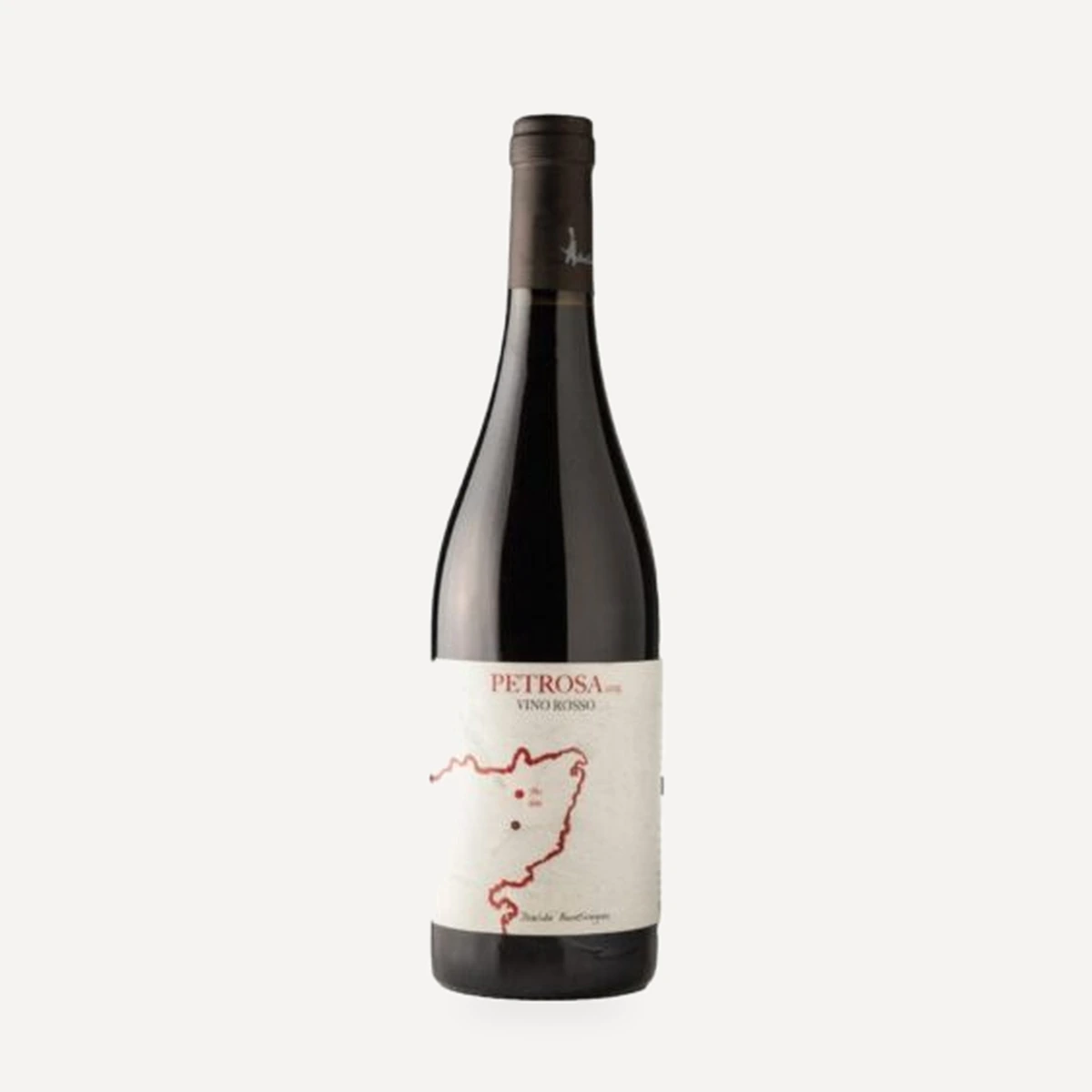
Petrosa di Santo Spirito
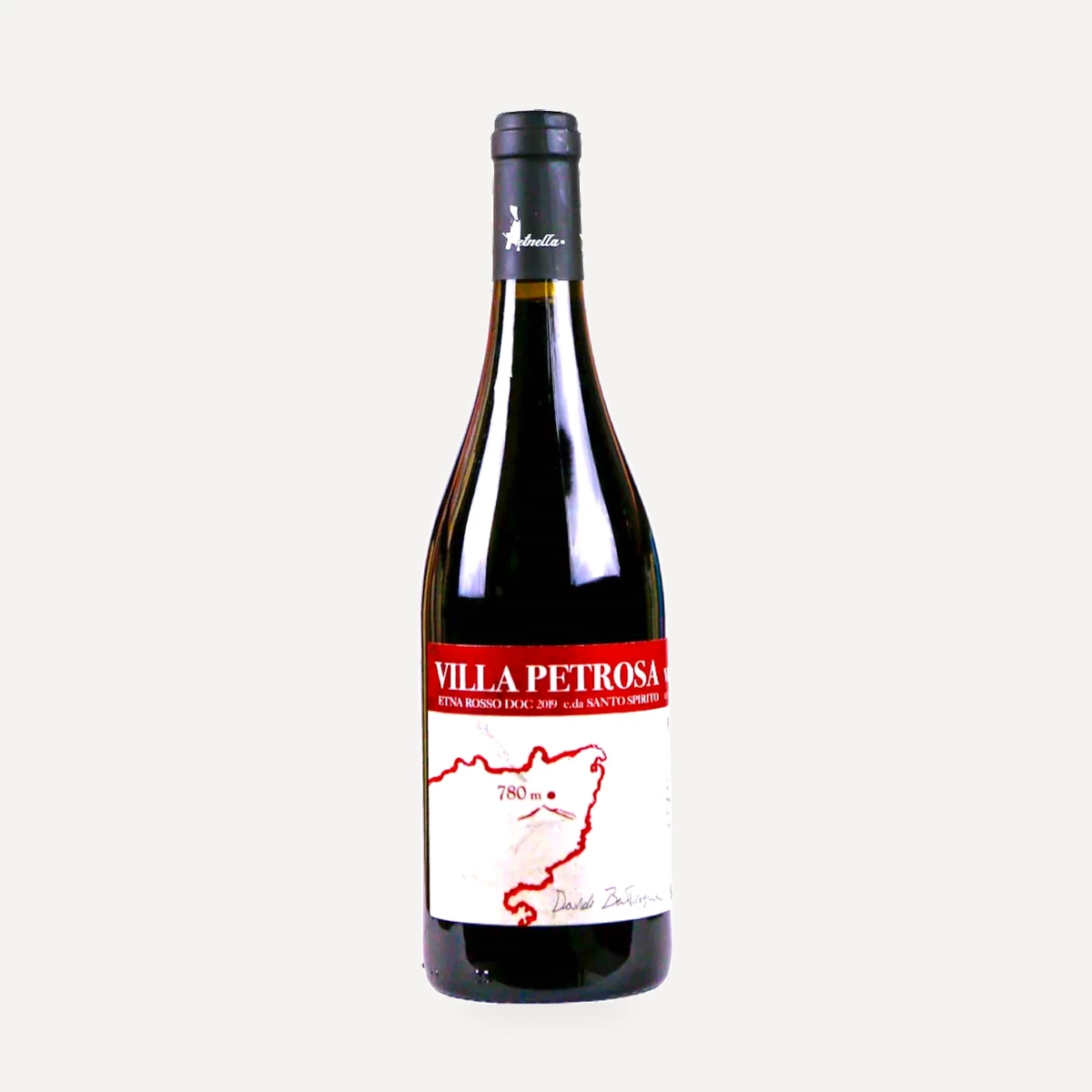
Villa Petrosa di Santo Spirito
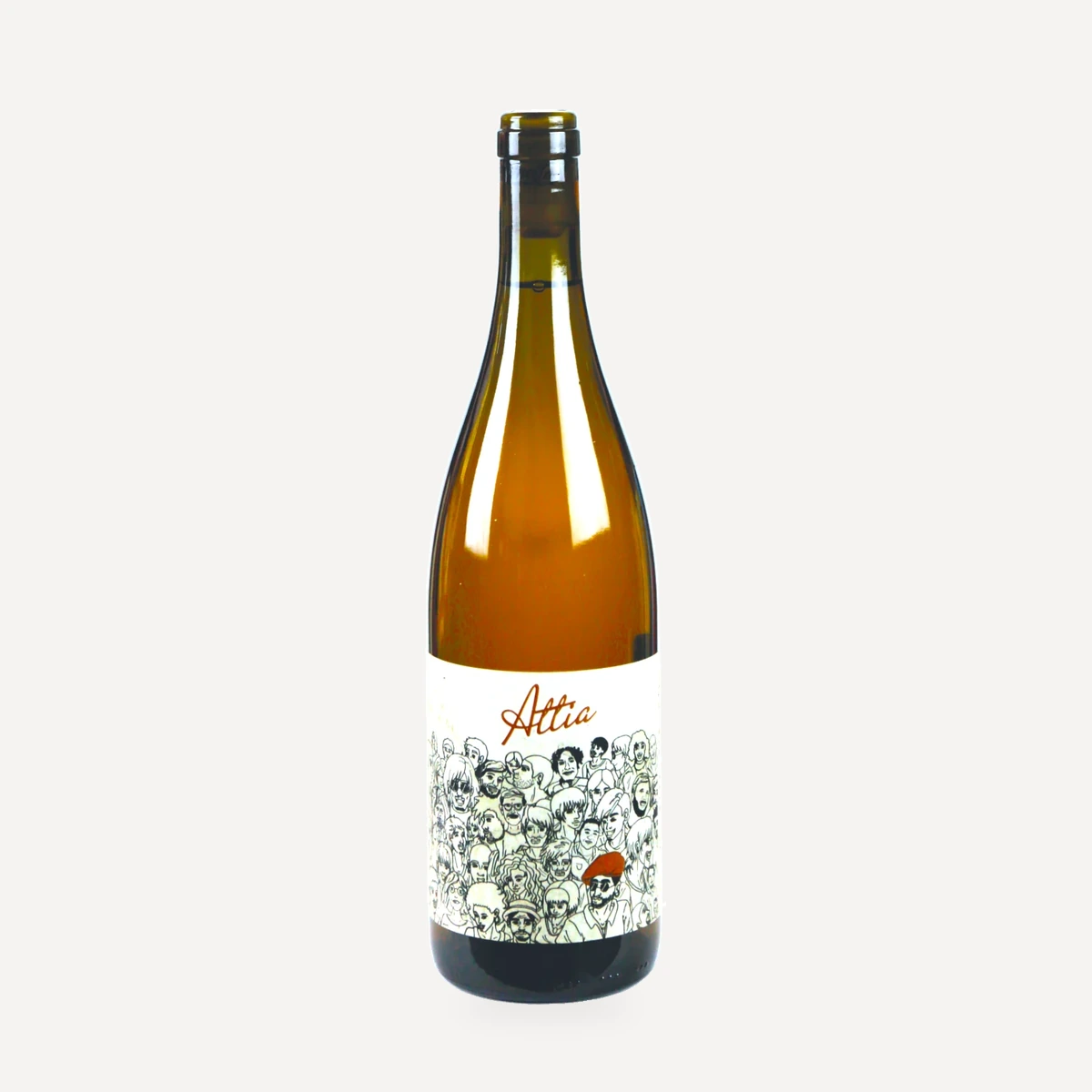
Attìa Bianco