Storia
A childhood ambition
Calogero Statella’s connection with wine began in the family restaurant. His father, Nino, was a chef and sommelier and one of the early organisers of wine-tasting courses in the Catania area. Calogero accompanied him to the restaurant, observed the lessons and became fascinated by the way a glass of wine could evoke vineyards, landscapes and the people who cultivated them.
During the 1980s, the wines discussed in those lessons came from distant places; Calogero remembers hearing little about Etna or the beauty of his own surroundings. This absence gave shape to an ambition: to make an authentic Etna wine capable of standing alongside the world’s finest wines.
Education and return to Sicily
Calogero studied first at the Scuola Enologica di San Michele all’Adige and subsequently at the Faculty of Viticulture and Oenology in Milan. After graduating, he gained his first professional experience in wine. That path eventually brought him back to Sicily, Etna and the objective of producing wine from vineyards under his own care.
2016: foundation of Famiglia Statella
In 2016, Calogero and his wife Rita founded Famiglia Statella. The first vineyard was acquired in Contrada Pettinociarelle, in Castiglione di Sicilia. This site established the family’s work as winegrowers and became the emotional and viticultural starting point of the estate.
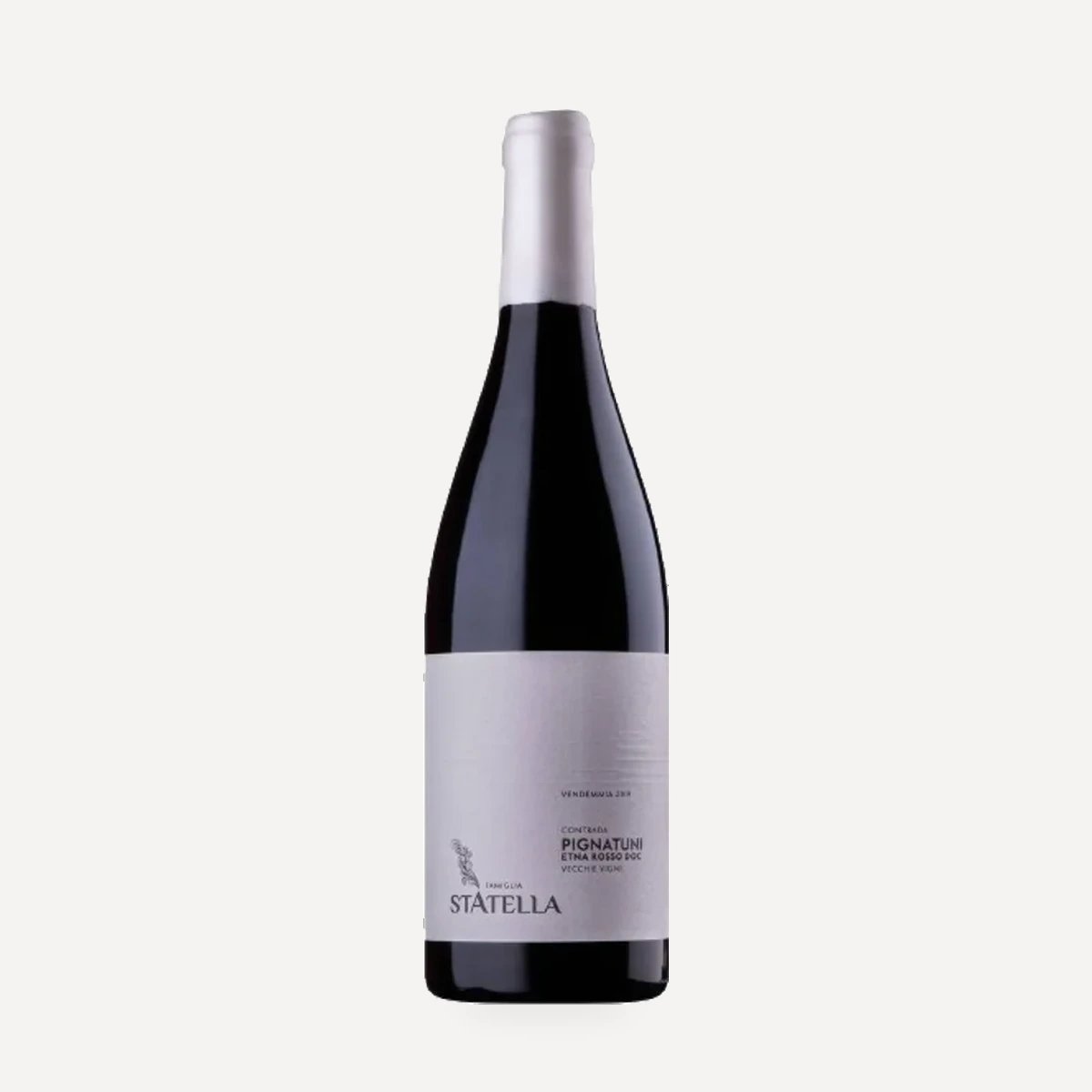
Additional vineyards were added over time. The family established a presence in Contrada Pignatuni near Randazzo, where old alberello vines—including a small number of pre-phylloxera plants—grow on soils associated with the ancient Ellittico volcano. The Tartaraci property in Bronte subsequently extended the project to a high-altitude site outside the Etna DOC boundary, combining a vineyard intended for white varieties with a small grove of about 100 olive trees, some centuries old.
The estate’s development has remained centred on interpreting individual vineyards and contrade rather than treating Etna as a uniform origin. Its range now includes Etna Bianco, Etna Rosato, Etna Rosso and contrada-focused red wines from Pettinociarelle and Pignatuni.
Terroir
Famiglia Statella works on Etna’s northern and north-western slopes. Its principal vineyards lie between Castiglione di Sicilia, Randazzo and Bronte, while fruit for Etna Rosso also comes from Biancavilla. The estate distinguishes three main contrade—Pettinociarelle, Pignatuni and Tartaraci—whose elevations, lava histories, soil depths and water behaviour differ markedly.
Etna is divided into northern, eastern, south-eastern and south-western slopes and contains 142 officially recognised contrade. The family’s northern sites experience a comparatively continental mountain climate, strong day–night temperature differences and regular air movement. Altitude moderates summer heat and slows ripening; cool nights help retain acidity and encourage gradual aromatic development. On the northern slope, less direct light further reduces the risk of overripening. Harvest generally falls between the second half of September and October, with each parcel picked according to its own progress.
The soils are volcanic but not uniform. Pettinociarelle and Tartaraci are associated with the activity of the recent Mongibello, spanning roughly the last 15,000 years. Pignatuni occupies the remains of the much older Ellittico volcanic structure, whose origin is dated to approximately 60,000 years ago. Across the holdings, sand, lava stones and rock fragments create drainage, while differences in fine material, depth and water retention produce contrasting conditions.
Dry-stone walls and lava-stone terraces stabilise sloping ground, limit erosion and assist natural drainage. The stones absorb heat during the day and release it after sunset, moderating the immediate microclimate around the vines. The vineyards also support wild herbs, useful insects, prickly pears and old olive trees, forming a varied cultivated ecosystem.
Vinificazione
Viticulture is organised around observation of each parcel rather than a single calendar. Winter dormancy, budbreak, flowering, fruit set, veraison and harvest occur at different times according to altitude, exposure, soil and seasonal conditions. Pruning is performed during winter; spring and summer work regulates canopy growth and seeks balance between vegetation, crop, ripeness, freshness, concentration and finesse rather than maximum yield.
Alberello training is used in the vineyards, notably at Pignatuni. The self-supporting form promotes air circulation, shades bunches from intense summer sunlight and uses water efficiently under hot, dry conditions. During humid periods, its open canopy helps reduce moisture around leaves and clusters and therefore lowers pressure from downy mildew and botrytis.
Conservative pruning and dendrosurgery are directed by Giulio Caccavello. Inspired by the Poussard method, pruning uses targeted cuts that preserve sap flow and minimise wounds and plant stress. Work plans are adapted to vine age, variety and production objectives. Personnel are trained to read each plant and apply consistent methods. The objectives are longer vineyard life, steadier production, more efficient use of water and a lower incidence of trunk disease.
Water management combines several measures. Pettinociarelle and Pignatuni receive localised, plant-by-plant emergency irrigation, particularly for younger vines. A cistern at Tartaraci supplies drip irrigation to the vineyard and olive grove. At the beginning of winter, scalzatura creates a furrow around each vine to intercept rainwater. Subsequent sbarbatura removes surface roots and encourages deeper rooting.
Leguminous green manure is used to restore soil nutrition and structure and improve water retention. Organic fertilisers and soil biostimulants support soil life and improve the availability of water and nutrients. Green pruning is adjusted to avoid excessive exposure during heat peaks. In July and August, kaolin rock powder may be applied as a reflective white layer that limits heat stress and sunburn on leaves and bunches.
Dry-stone walls and terraces are maintained as working agronomic structures. They stabilise steep slopes, restrict erosion, drain heavy rainfall and moderate temperature changes. Excess lava stones removed manually from cultivated ground are traditionally gathered into piles known locally as armagie or margeri.
Harvest timing is determined parcel by parcel. The family generally harvests between the second half of September and October, evaluating acidity, vine and fruit balance, and the distinct response of each site rather than sugar accumulation alone.
Production is described as artisanal and adapted to individual wines and sites.
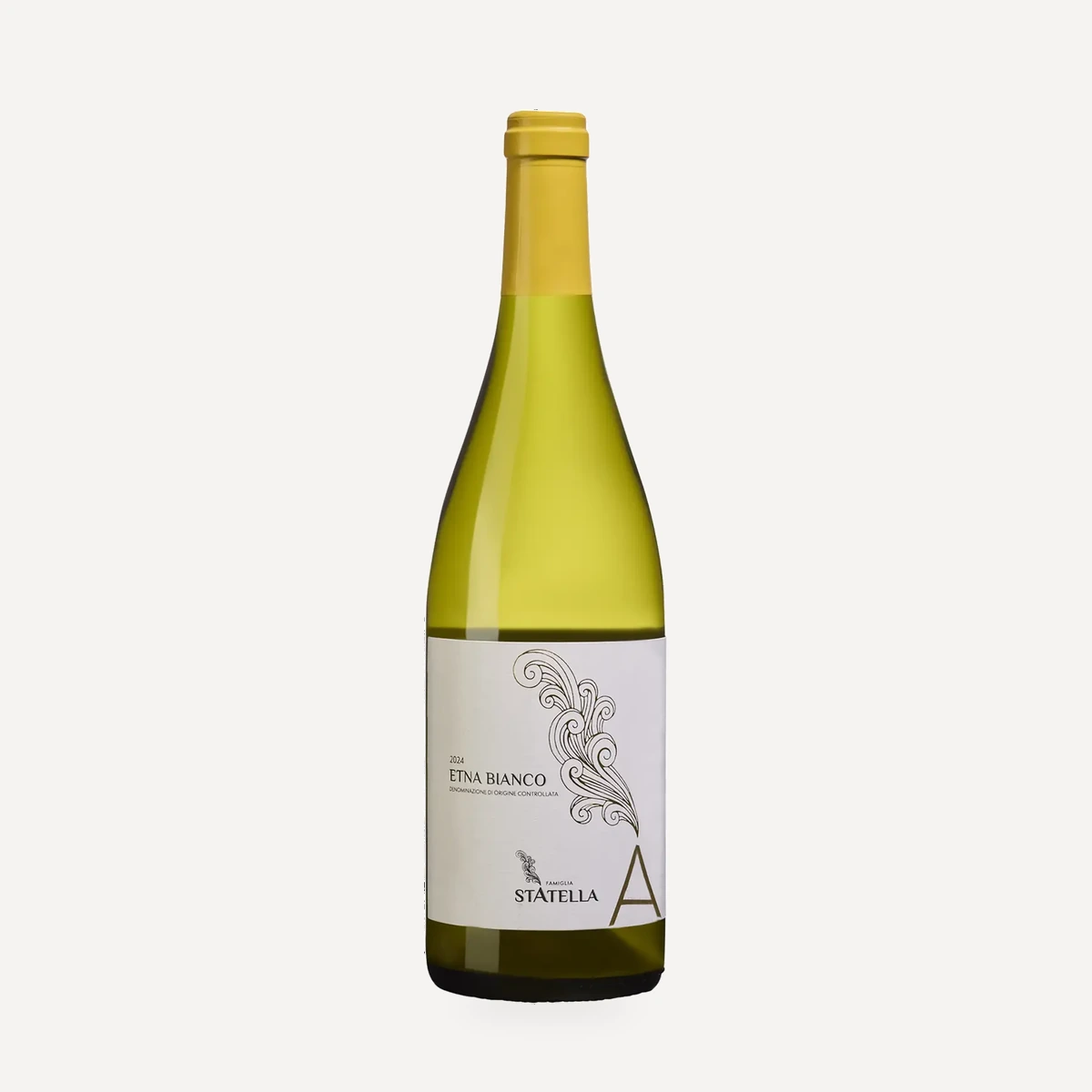
White grapes for Etna Bianco undergo traditional white vinification in stainless steel at controlled temperature. Alcoholic fermentation uses selected yeasts. The wine remains in steel on its lees until March.
Etna Rosato receives a short cold pre-fermentation maceration followed by gentle pressing. Fermentation takes place at controlled temperature with selected yeasts, followed by maturation in stainless steel until March.
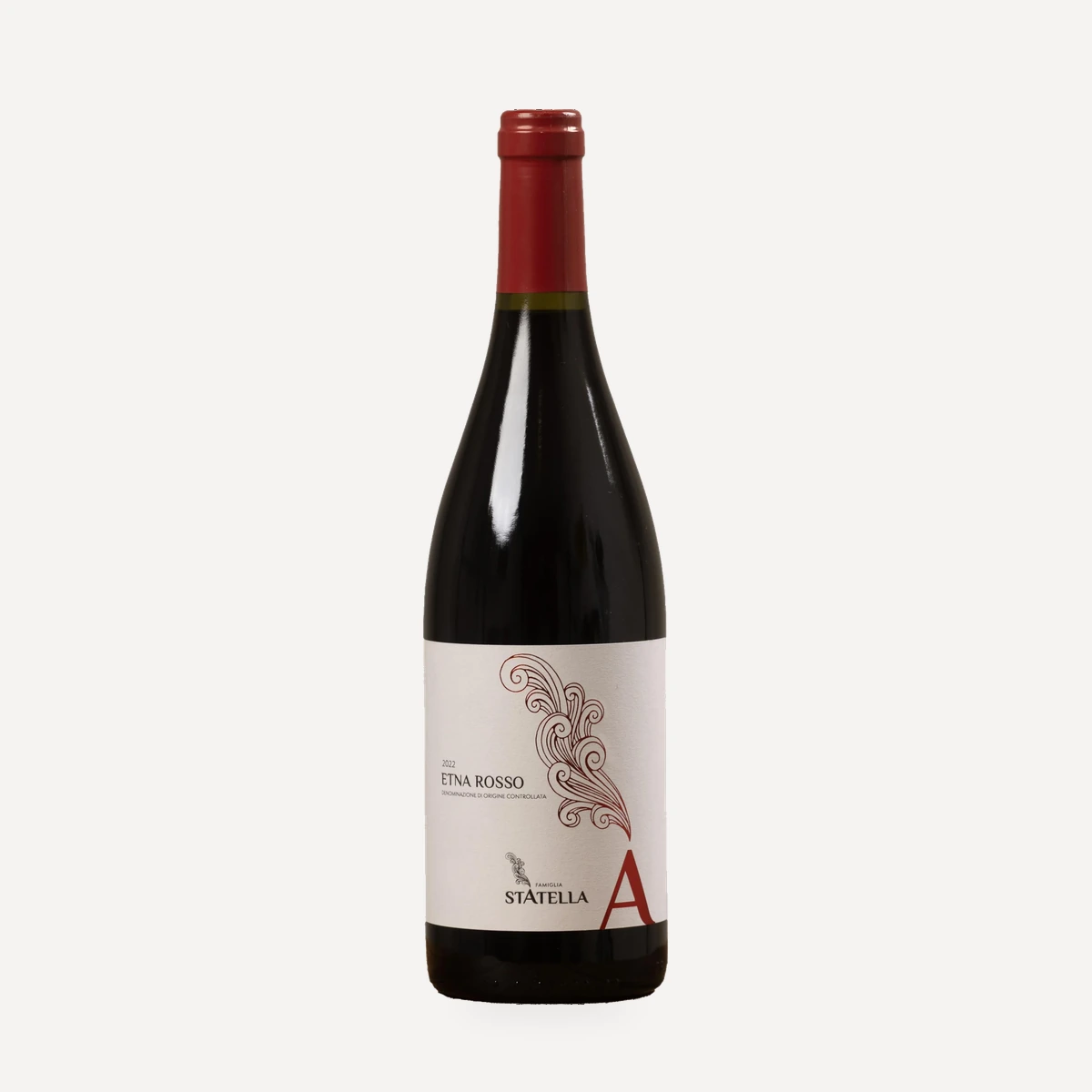
Red vinification uses skin contact and punching down. Pettinociarelle 2018 underwent 10–15 days of maceration and matured in second- and third-use French-oak tonneaux. Etna Rosso 2022 received 6–7 days of skin contact; half matured in three- to four-year-old French-oak tonneaux and half in stainless steel. Alcoholic fermentation was conducted with selected yeasts.
Filosofia
Famiglia Statella defines wine as an interpretation of a precise place. Etna is approached as a mosaic of slopes, contrade, vineyards, elevations, soils and lava histories rather than a single homogeneous terroir. The family’s aim is to preserve those differences and convey them accurately in the finished wines.
The project combines knowledge, experience and detailed manual work with restraint. Nature’s timing is accompanied rather than accelerated: intervention is reserved for moments when the health or balance of the vine requires it. Vintage variation is accepted, and harvest dates are determined through observation instead of a predetermined calendar.
Calogero Statella’s stated objective is to balance quality, craftsmanship and terroir. Vineyard longevity, careful pruning, water conservation, biodiversity and maintenance of dry-stone structures are treated as parts of the same responsibility toward the land. Quality is pursued through balance and precision, not through maximum yield, alcohol or concentration.
Vini
Etna Bianco Doc Organic
Etna Rosso Doc