Storia
Early life and education
Federico Curtaz was born in 1960 in Brusson, a community of approximately 1,000 inhabitants in Valle d’Aosta at the foot of Monte Rosa. Although he grew up amid the Alpine mountains, his maternal family connected him to the hills of Piedmont. Originally from Monferrato Astigiano, that branch of the family managed a property in which vineyards and a cellar played an important part.
At the end of each school year, Curtaz stayed with his grandmother and worked alongside his uncles. He helped both with livestock and with vineyard management through to harvest. This annual transition from student to agricultural worker fostered the interest that led him to study viticulture and oenology. He subsequently qualified as an agricultural technician in Asti. He later returned to the same school, first as a technical assistant and then as a part-time teacher.
The Gaja years, 1983–1997
In July 1983, Curtaz met Angelo Gaja and committed himself fully to professional viticulture and oenology. Gaja was then pursuing the international development of Barbaresco and his company through a strong focus on wine quality. Curtaz spent 15 years in that fast-moving environment. During this period, the business expanded in the Barbaresco hills and into Barolo, while evolving from a traditional farming property into a technically advanced wine enterprise. Its wines also received major recognition from Parker, Wine Spectator, and national and international critics and publications.
Curtaz complemented this work with a sequence of international study journeys: Bordeaux in 1984; the Rhône and Châteauneuf-du-Pape in 1985; California in 1986; Burgundy in 1987; Chablis and Alsace in 1989; and the Rhine and Moselle in 1991.
A defining event came at the 1991 New York Wine Experience, held in the ballroom of the Marriott in Times Square. A two-hour vertical tasting for 1,000 people presented Gaja Barbaresco from the 1955, 1961, 1964, 1971, 1978, and 1982 vintages. The event ended with a standing ovation and 15 minutes of applause.
Independent consultancy, 1997–2006
Curtaz left Barbaresco in 1997 and began the independent professional activity that continued alongside his later wine projects. He worked initially with Gianpiero Romana in Piedmont and then developed the agronomic branch of Matura, a technical group active throughout Italy and internationally.
In 1999 and again in 2001, he conducted lecture series in Australia in collaboration with Richard Smart, known as “the vine flying doctor.” These visits were accompanied by consultancy work for the local vine-nursery sector.
Beginning in 2001, Curtaz’s collaborations in Italy and abroad gradually expanded from purely agronomic assignments into oenological work, particularly where the scale and objectives permitted an artisanal approach to quality. The aim was to carry vineyard work coherently into wines capable of expressing the distinctive elements of their places of origin.
Arrival on Etna, 2007
In 2007, Federico Curtaz, Roberto Silva, and Silvia Maestrelli established Tenuta di Fessina, a small Etna estate. Their work sought to develop viticulture and winemaking consistent with Etna’s terroir. The project quickly gained public and critical attention, with recurring recognition for its flagship Etna Rosso, Il Musmeci, and Etna Bianco, A Puddara.
The Federico Curtaz label, 2015
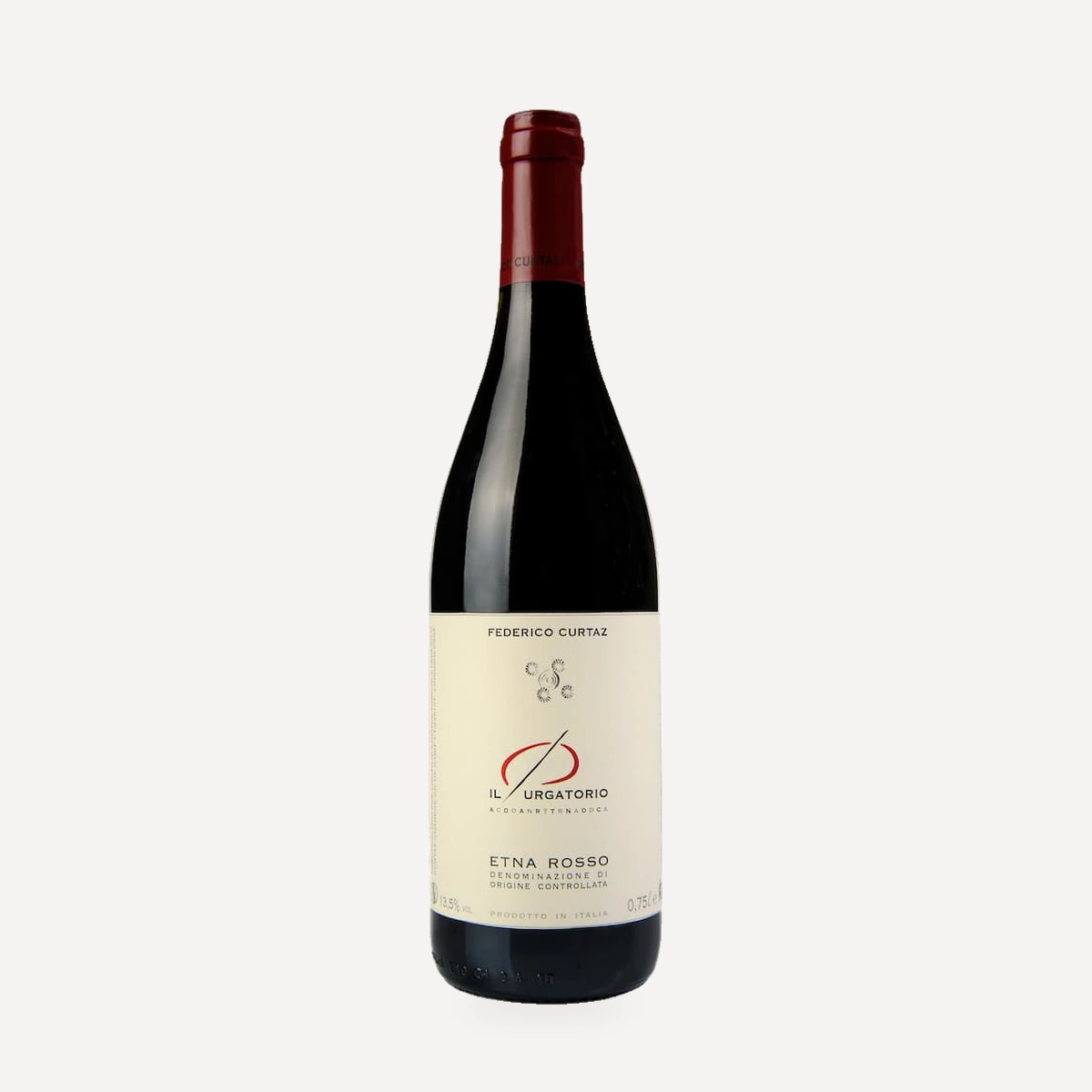
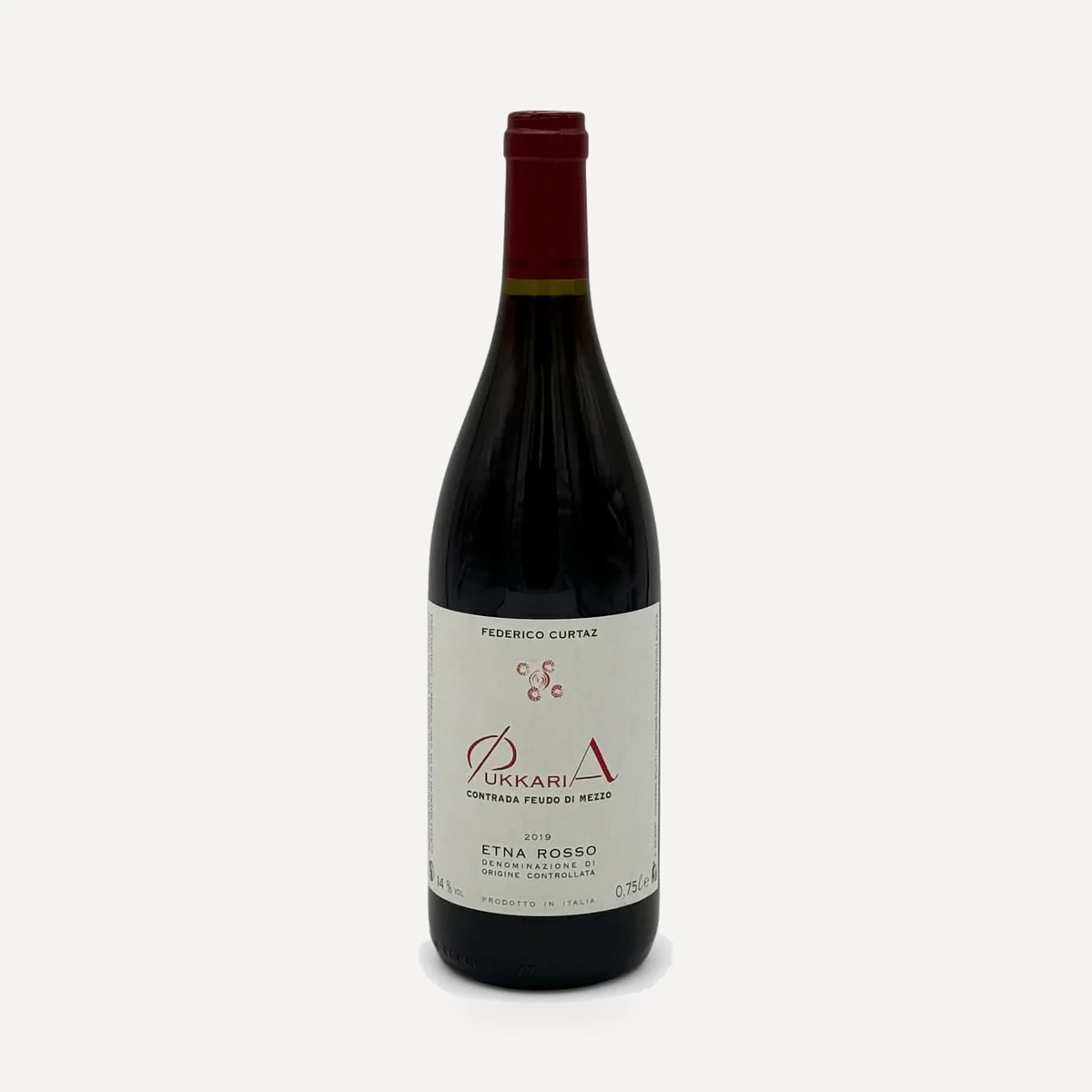
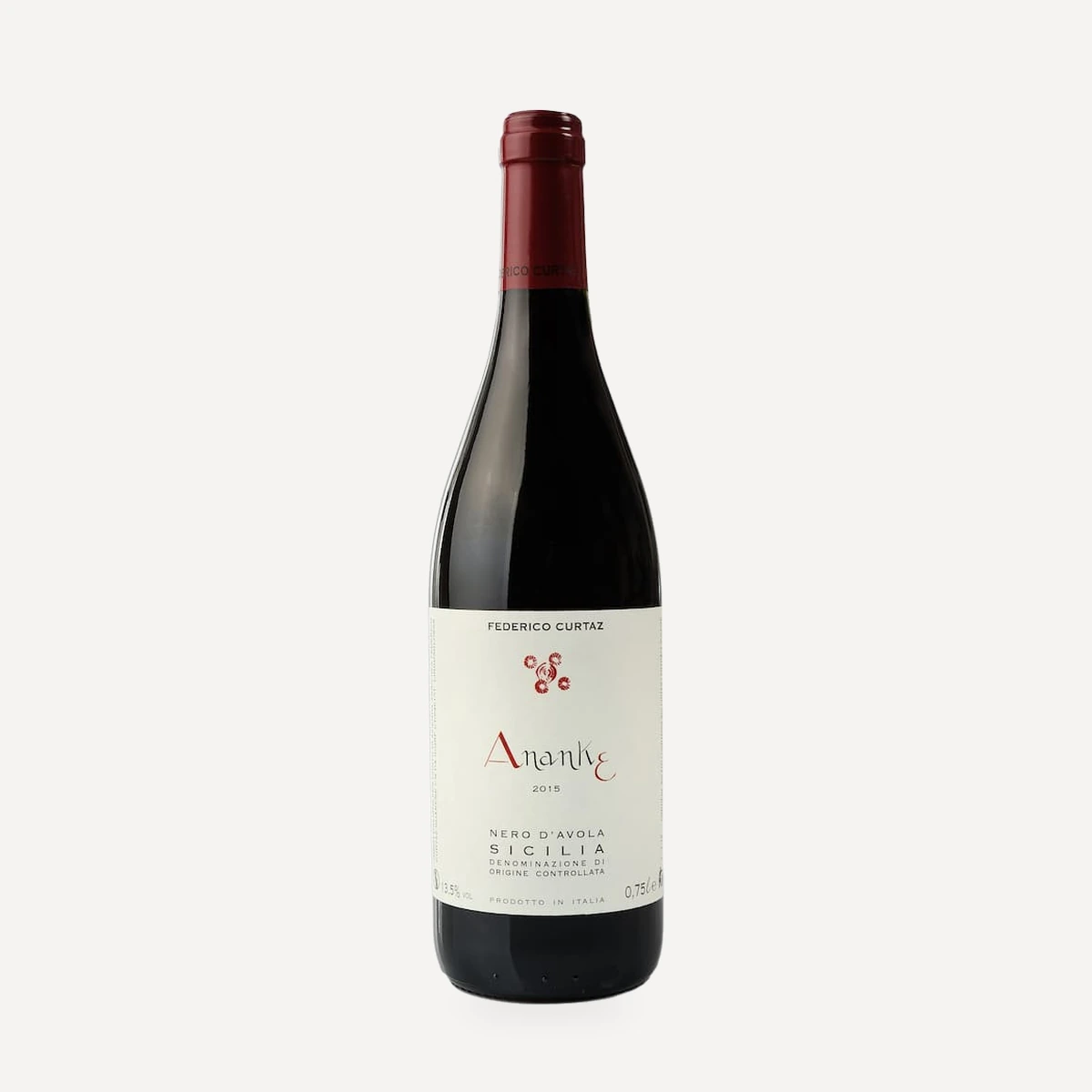
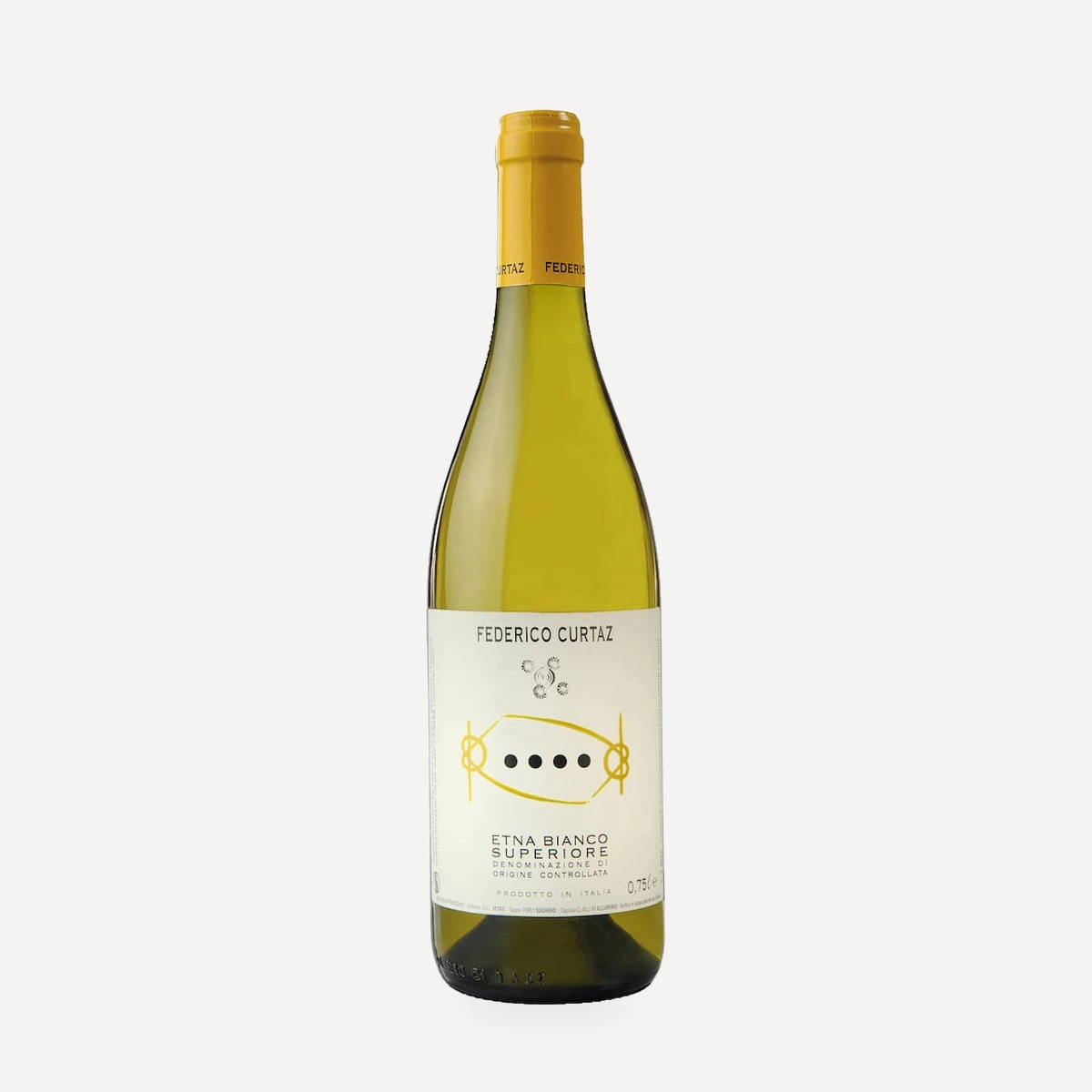
Curtaz left Tenuta di Fessina in 2015 and released the first labels bearing his own name as a winegrower. The initial wines were Ananke from Nero d’Avola, Gamma from Carricante, and Il Purgatorio from Nerello Mascalese. A small production of olive oil accompanied the wines. Pukkaria, presented as the most recent addition and a riserva, subsequently joined the range.
The resulting project works across distinct Sicilian territories: Etna sites around Milo, Biancavilla, Passopisciaro, and Feudo di Mezzo, and a Nero d’Avola site at Contrada Buonivini Bonniscuro near Noto.
Digital development, 2024
A 2024 development phase, described as “Federico Curtaz 2.0,” envisaged bringing the production online through a digital shop offering direct home delivery. The shop is presented as forthcoming rather than operational.
Terroir
Federico Curtaz works in two markedly different Sicilian settings: the volcanic landscape of Etna and the calcareous-clay countryside near Noto.
Etna
The Etna production extends across Milo, Biancavilla, and the northern area around Castiglione di Sicilia, Passopisciaro, and Contrada Feudo di Mezzo. The Milo and Biancavilla sites associated with Carricante have volcanic rock and sand. A further Carricante site at Milo and Contrada Riazzo combines dark ash with volcanic sand and includes an old vineyard.
At Passopisciaro, Contrada Feudo di Mezzo has volcanic sand and ash and is planted to Nerello Mascalese. The Biancavilla source for Nerello Mascalese and Nerello Cappuccio is formed from volcanic rock and sand. Its old vines grow on deposits dated to approximately 15,000 years ago.
Noto
The Nero d’Avola source lies at Contrada Buonivini Bonniscuro in Noto. Here the soils are calcareous and clay-rich, providing a geological counterpoint to the volcanic Etna sites.
Curtaz treats Sicily’s diversity of soils, climates, and environments as fundamental to the ability of its varieties to develop distinct character. Within this framework, Carricante is associated with austerity, Nerello with evocative depth, and Nero d’Avola with a character that Curtaz relates to the Barbera wines that formed his early understanding of wine.
Vinificazione
Curtaz’s viticultural thinking places sensitivity to the land ahead of personal ego. Scientific and technological tools have a role, but decisions are intended to remain guided by close attention to the place, its energy, climate, plants, and the character of the people involved.
The project works with locally established Sicilian varieties—Carricante, Nerello Mascalese, Nerello Cappuccio, and Nero d’Avola—across volcanic and calcareous-clay environments. Old vineyards are part of the Etna work, including Carricante at Contrada Riazzo and old Nerello vines at Biancavilla. Vineyard effort is conceived as the beginning of a continuous process: agronomy and winemaking should remain coherent so that the resulting wines retain the distinguishing features of their growing places.
The production uses different vessels according to site and variety rather than imposing one cellar regime across the range.
Carricante from the Milo and Biancavilla sources is vinified and matured in stainless-steel vats. Carricante from the old vineyard associated with Milo and Contrada Riazzo is vinified and matured in a 25-hectolitre wooden cask.
Nerello Mascalese from Passopisciaro and Contrada Feudo di Mezzo is vinified and matured in first- and second-use tonneaux. Nerello Mascalese and Nerello Cappuccio from Biancavilla are handled in oak casks. Nero d’Avola from Contrada Buonivini Bonniscuro in Noto is vinified and matured in stainless-steel vats.
Across these choices, the objective is to carry the work completed in the vineyard into wines that make full use of the defining elements of each place. Stainless steel, large wooden casks, oak casks, and previously used tonneaux therefore form the documented range of cellar vessels.
Filosofia
Federico Curtaz presents sensitivity as the governing principle of his work with land. Technological and scientific research provide useful instruments, but they do not replace human attentiveness. He regards the winegrower as an interpreter whose task is to reveal a place’s vocation rather than impose a personal signature upon it.
In this view, land, energy, climate, the vine, the available local production chain, and the disposition of the people involved collectively form a pre-existing score. Agronomy and oenology should work continuously and coherently so that vineyard effort becomes wine without losing the particular qualities of its origin.
Sicily offered Curtaz the opportunity to apply decades of accumulated experience through a personal reading of work begun by earlier generations. His approach combines that individual perspective with respect for established Sicilian territories and varieties. He sees the current investigation of old places and old grape varieties as a recovery of vocation following a period in which imported varieties were treated as the principal challenge.
His attachment to Sicily also extends beyond viticulture. History, literature, art, and everyday life are interwoven in his understanding of the island, from ancient Greek theatres to Alberto Burri’s Cretto di Gibellina. Marsala, Nero d’Avola, Nerello, and Carricante provided the vinous route into this broader cultural landscape.
Vini
Pukkaria
Ananke
Etna Bianco Superiore
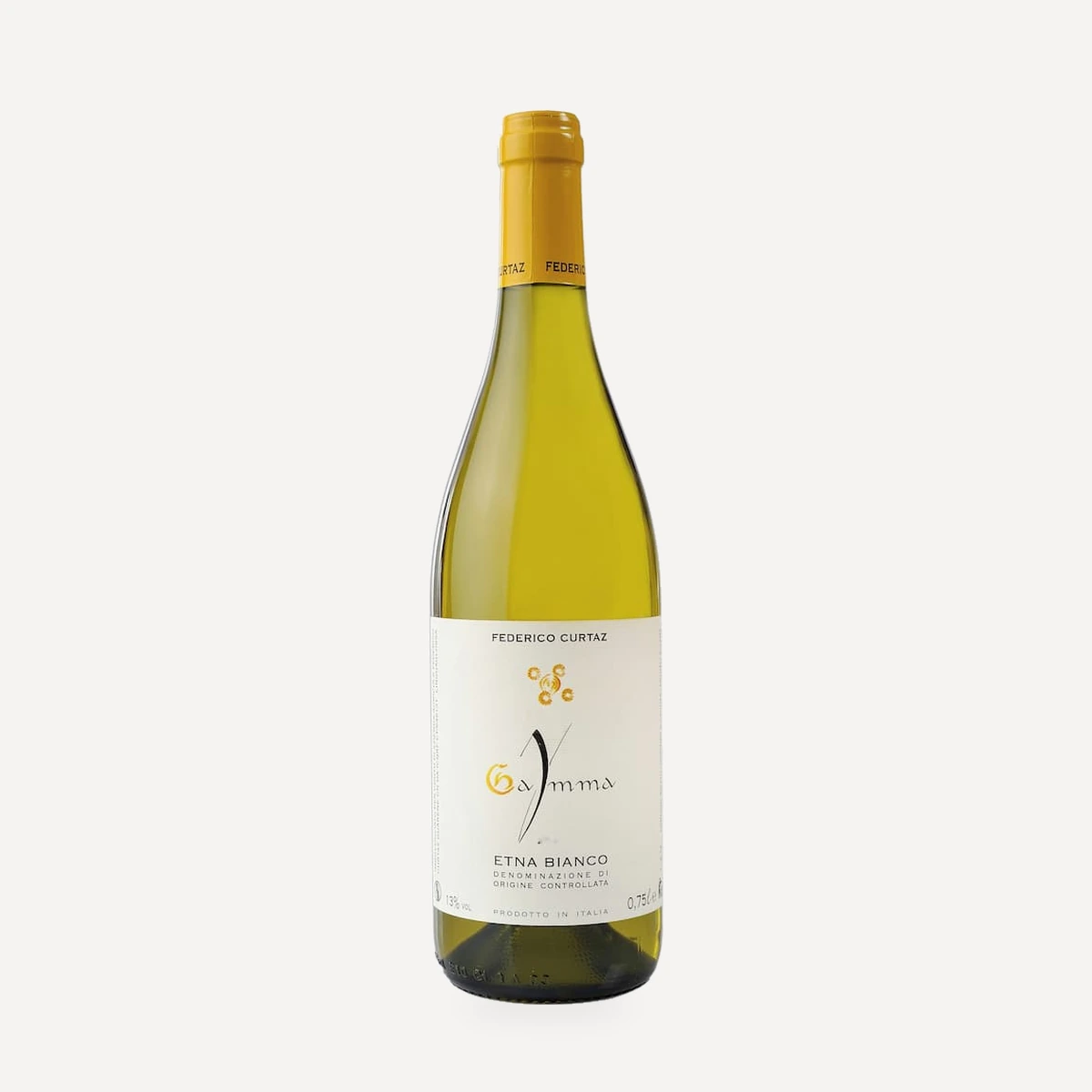
Gamma