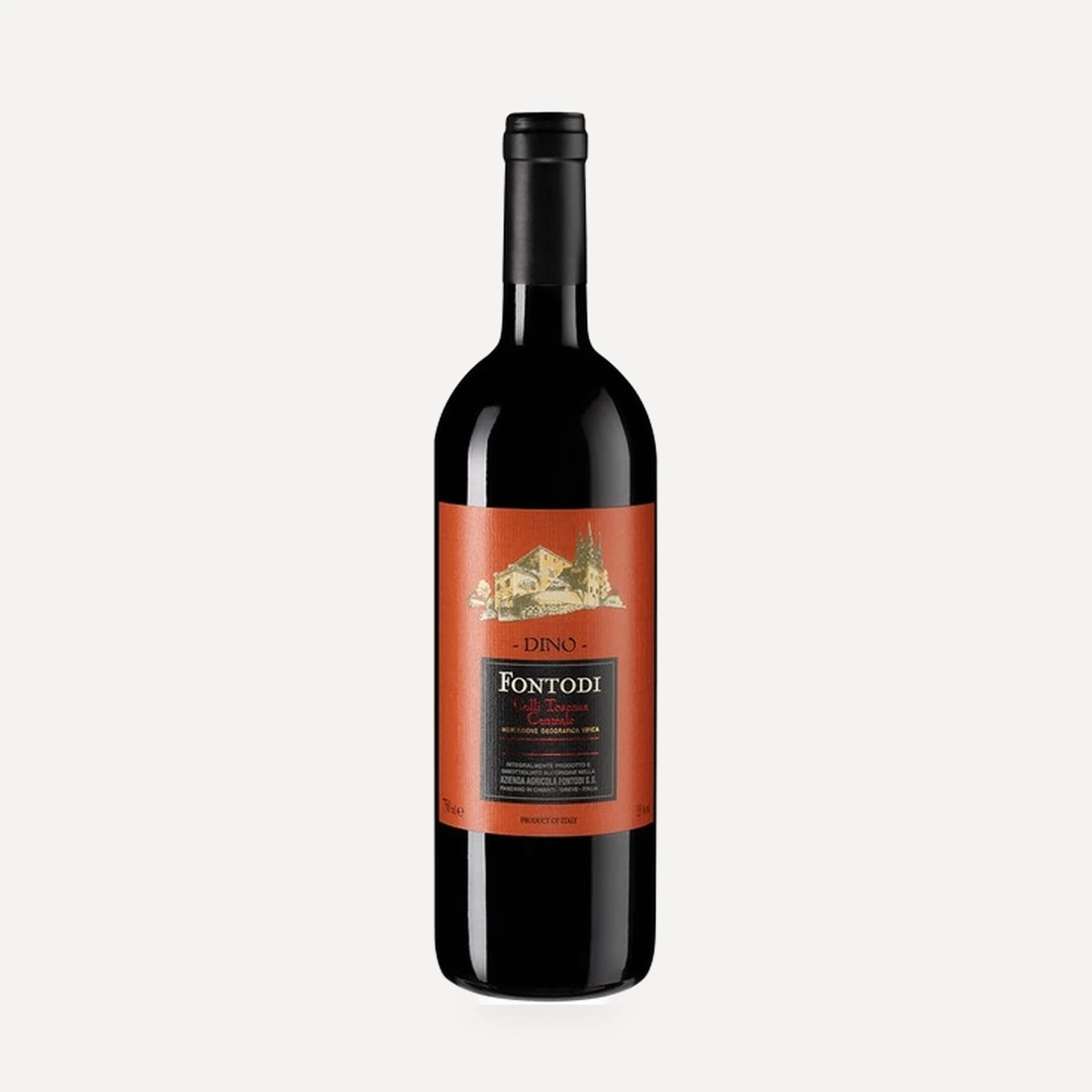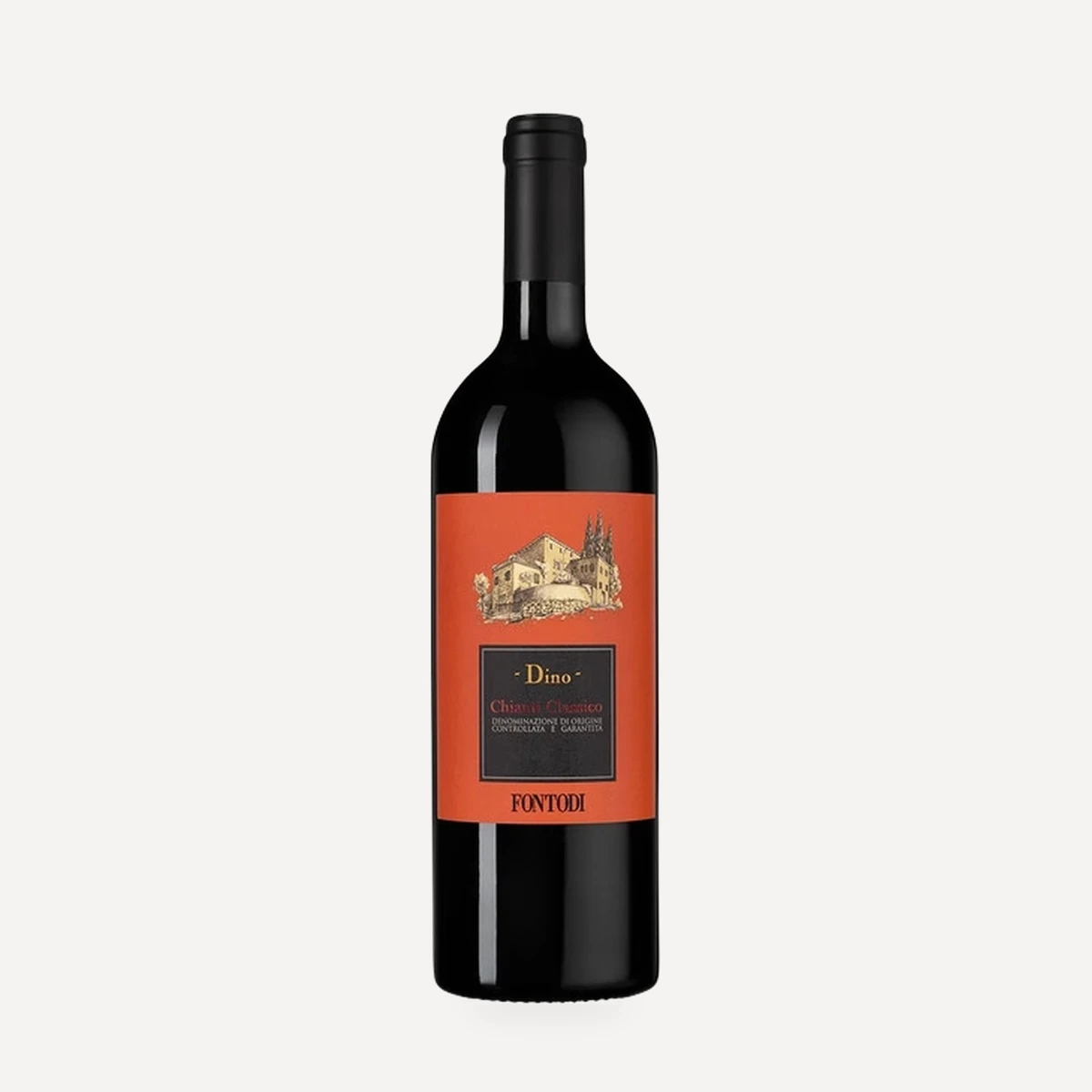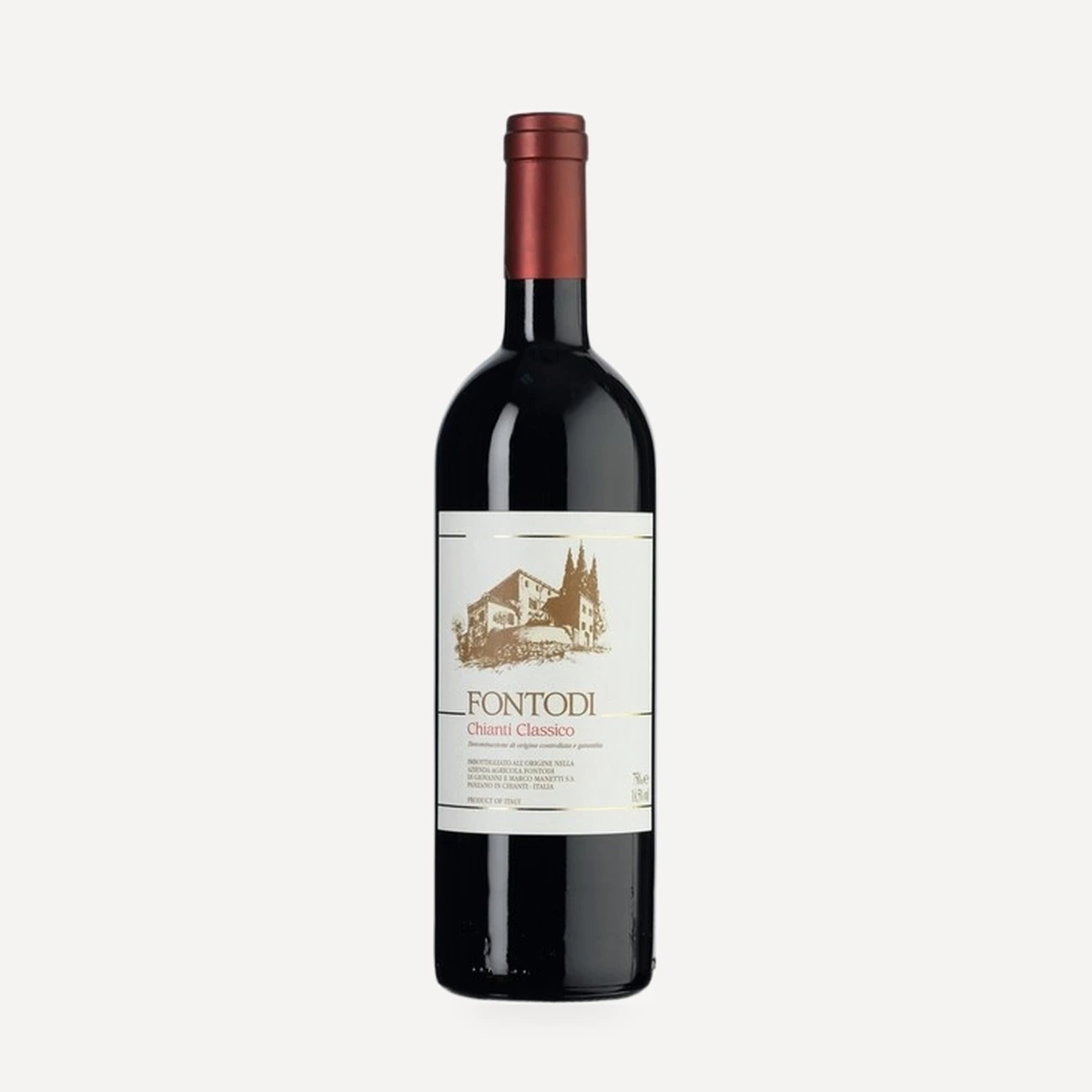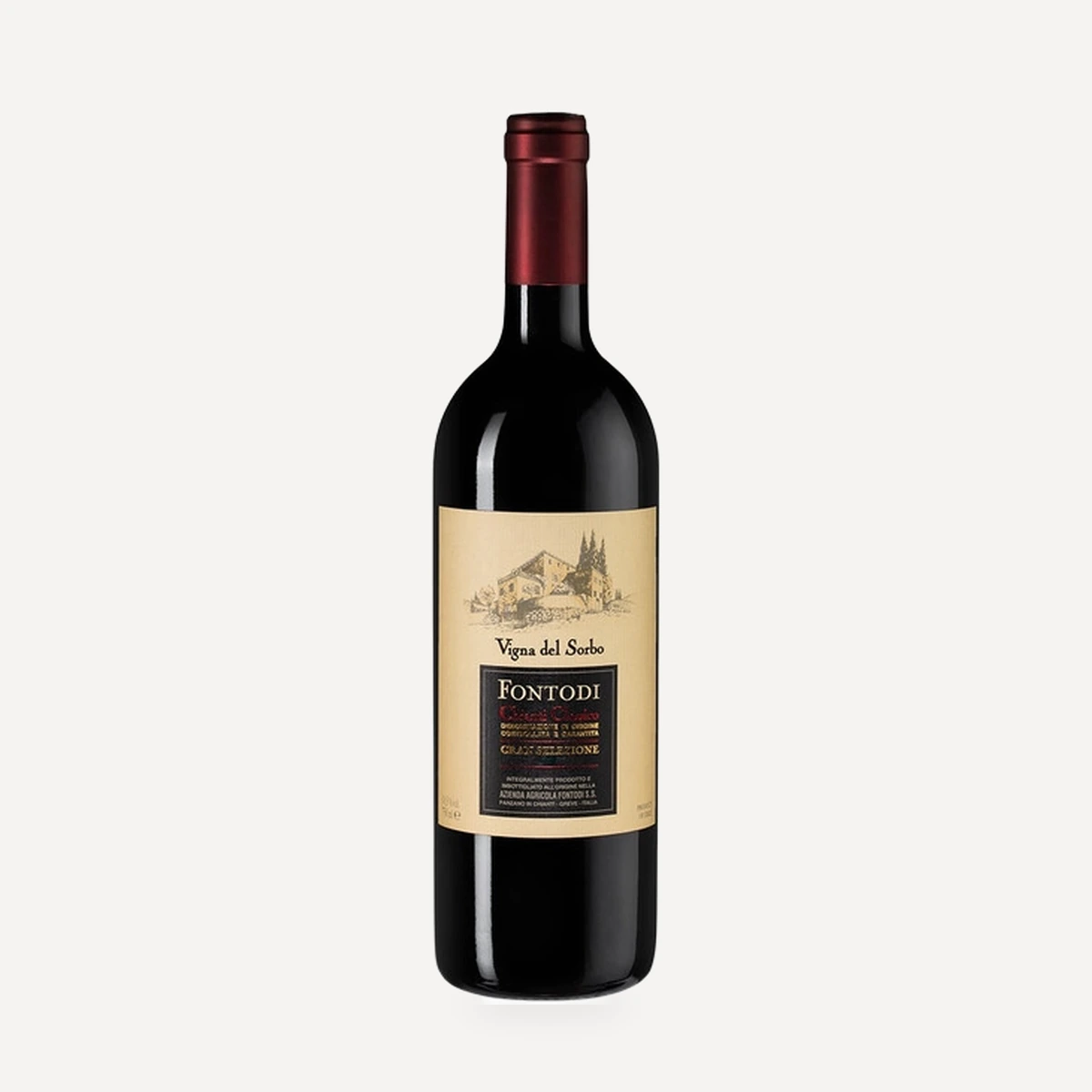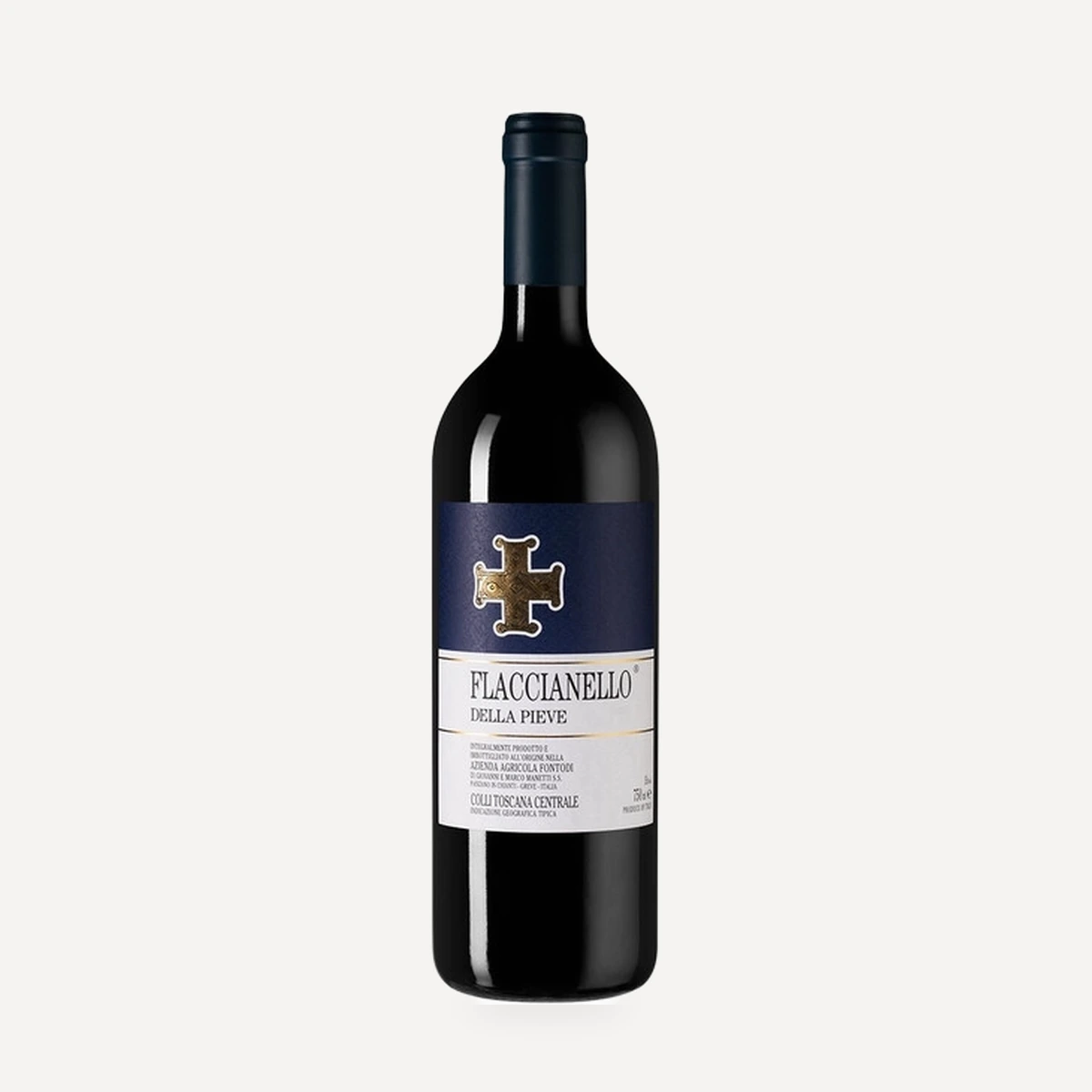
Questo vino
Vineyard and terroir
The grapes come from the estate’s organically farmed, 10 ha Flaccianello della Pieve vineyard in the Conca d’Oro valley, south of Panzano. The hillside site lies at 380–400 m above sea level and has clay and limestone soils. The vines are more than 30 years old. Grapes are grown without chemical fertilizers.
Vinification
The grapes are picked and selected by hand. Spontaneous fermentation uses natural yeasts. Maceration lasts three weeks in temperature-controlled stainless-steel tanks, with regular punch-downs to extract tannins and aromas. Malolactic fermentation takes place in barrels. Fontodi’s multi-level gravity-flow cellar, completed in 1998, allows wine to be moved between vessels without pumps.
Ageing
The wine matures for 24 months in French oak barrels from Tronçais and Allier.
Tasting profile
The nose combines black berries, violets, lavender, mineral notes and a smoky depth. Concentrated fruit is framed by velvety tannins and characteristic Sangiovese acidity, giving the wine elegance. Oak ageing contributes a softer palate, a velvety texture and spicy notes.
Serving and pairing
Pair with a wide range of meat dishes.
Label / history
The label features a stone cross found at the Fontodi estate, identified as the oldest surviving stone cross discovered in Tuscany from the time of the Crusades. The name Fontodi derives from the Latin “Fons-odi”, meaning “a place with plenty of water”.
Grapes were grown on the estate in Roman times. Sixteenth-century documents record winemaking with dedicated equipment at the “Case Via” farm. After several centuries producing Tuscan terracotta and clay goods, the Manetti family bought the Panzano estate in 1968. It is now run by brothers Marco and Giovanni Manetti, with Franco Bernabei as consulting enologist.