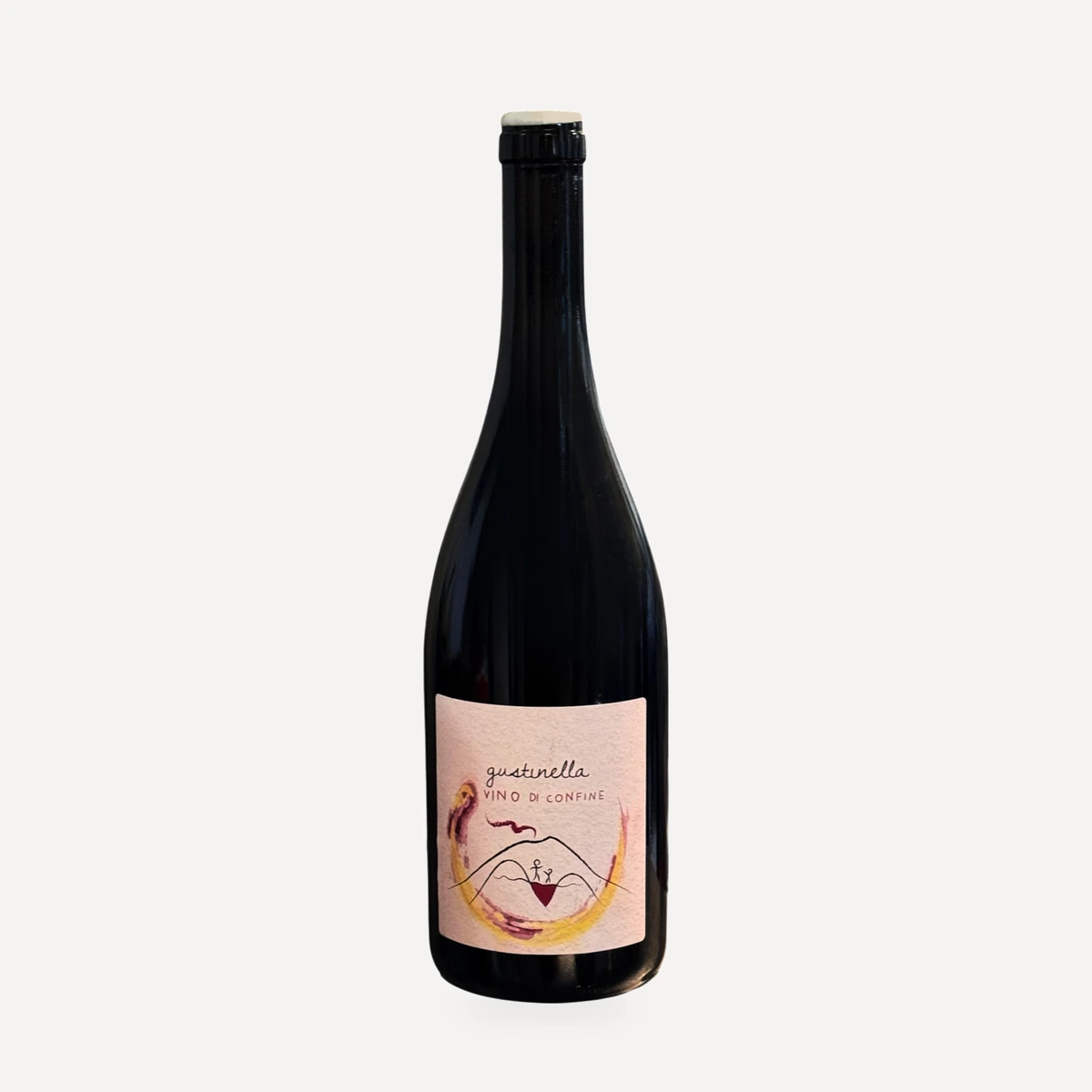
Storia
Mid-19th-century background
Grenache has been present on this side of Etna since the middle of the 19th century. Locally called Granazzu, it was brought from France during the period of the Ducea di Nelson, whose territory included Maletto. The variety subsequently became part of the old mixed vineyards found around the village.
Peppe Gustinello and the village palmento
Sonia Gambino’s grandfather, Peppe Gustinello, was well known in Maletto. He owned the village palmento, a forerunner of the cooperative winery where local growers brought their grapes to be transformed into wine during the harvest.
The return to Maletto
The family’s direct involvement in winemaking paused for one generation. Nearly 40 years after Peppe Gustinello’s activity, Sonia Gambino returned over a distance of 1,340 km and began her own relationship with Maletto’s vineyards. The older residents who helped with the new project recognized the family connection by asking whether she was Gustinello’s granddaughter. This return revived the family’s wine story through Gustinella and its work with Maletto’s old, high-elevation vineyards.
Terroir
Gustinella works with mountain vineyards around Maletto, on the northwestern side of Etna. The vines lie between 1,000 and 1,200 metres above sea level, while the oldest Gustinella vineyard is at 1,100 metres and overlooks Etna.
The highest sites extend from 1,100 to 1,200 metres. Elevation preserves pronounced acidity in the fruit and contributes to the ageing capacity associated with the wines of Maletto.
The vineyards retain a heterogeneous local plant population. Old mixed plantings contain white- and dark-skinned grapes together, including centenarian vines and minor varieties that have not yet been fully identified. Grecanico Dorato is described as a particular Grecanico biotype that developed on Etna’s northwestern slope. Grenache, locally called Granazzu, has been present on this side of the volcano since the mid-19th century.
Vinificazione
Work in the vineyards is performed entirely by hand. Grapes are hand-harvested, including fruit from the old mixed vineyards, and the oldest vines retain the traditional alberello etneo training system.
Gustinella preserves mixed vineyards in which numerous local varieties grow together. These include centenarian vines and minor cultivars whose identities have not yet been fully established, maintaining the heterogeneous composition historically found in Maletto’s old vineyards.
Gustinella uses delicate, small-scale cellar work intended to respect the condition of the grapes. No oenological products are added, and fermentations are spontaneous, including fermentations driven by indigenous yeasts.
Processing varies with the composition of the harvested fruit. Grapes may be pressed directly or gently destemmed and crushed. Short skin contact lasts approximately one to two days for some white and mixed-variety lots, while dark-skinned fruit can remain on the skins for about 25 days. After the longer maceration, the wine is drained and the pomace receives a light pressing.
Fermentation takes place in stainless-steel vats. The historic local practice of fermenting white- and dark-skinned varieties together is retained for fruit from the old mixed vineyard, where roughly ten varieties coexist. In this co-fermentation, the two colour groups are used in approximately equal proportions. A small amount of the teinturier grape Alicante Bouché supplies intense colour immediately during crushing rather than through prolonged extraction.
Ageing vessels include stainless steel, concrete vats and glass demijohns. Some lots mature for around 10 months in stainless steel, followed by approximately eight months in bottle. Lees are stirred by bâtonnage in selected stainless-steel lots to add softness and balance the acidity associated with elevation. Mixed old-vine wine matures for roughly 10 months in concrete and demijohns before approximately eight months in bottle. Longer-macerated red material spends about 12 months across stainless steel, concrete and demijohns, followed by around eight months in bottle.
Filosofia
Gustinella defines its production through mountain-grown grapes, manual work and delicate vinification. Its stated objective is to respect the harvested fruit without relying on added oenological products.
The approach also preserves Maletto’s local wine culture: centenarian alberello vines remain within mixed vineyards, incompletely identified minor grapes are harvested with better-known varieties, and white and dark fruit may be fermented together in accordance with local tradition. Modern stainless-steel equipment is used alongside concrete vessels and glass demijohns, combining controlled cellar tools with inherited practices.
Vini
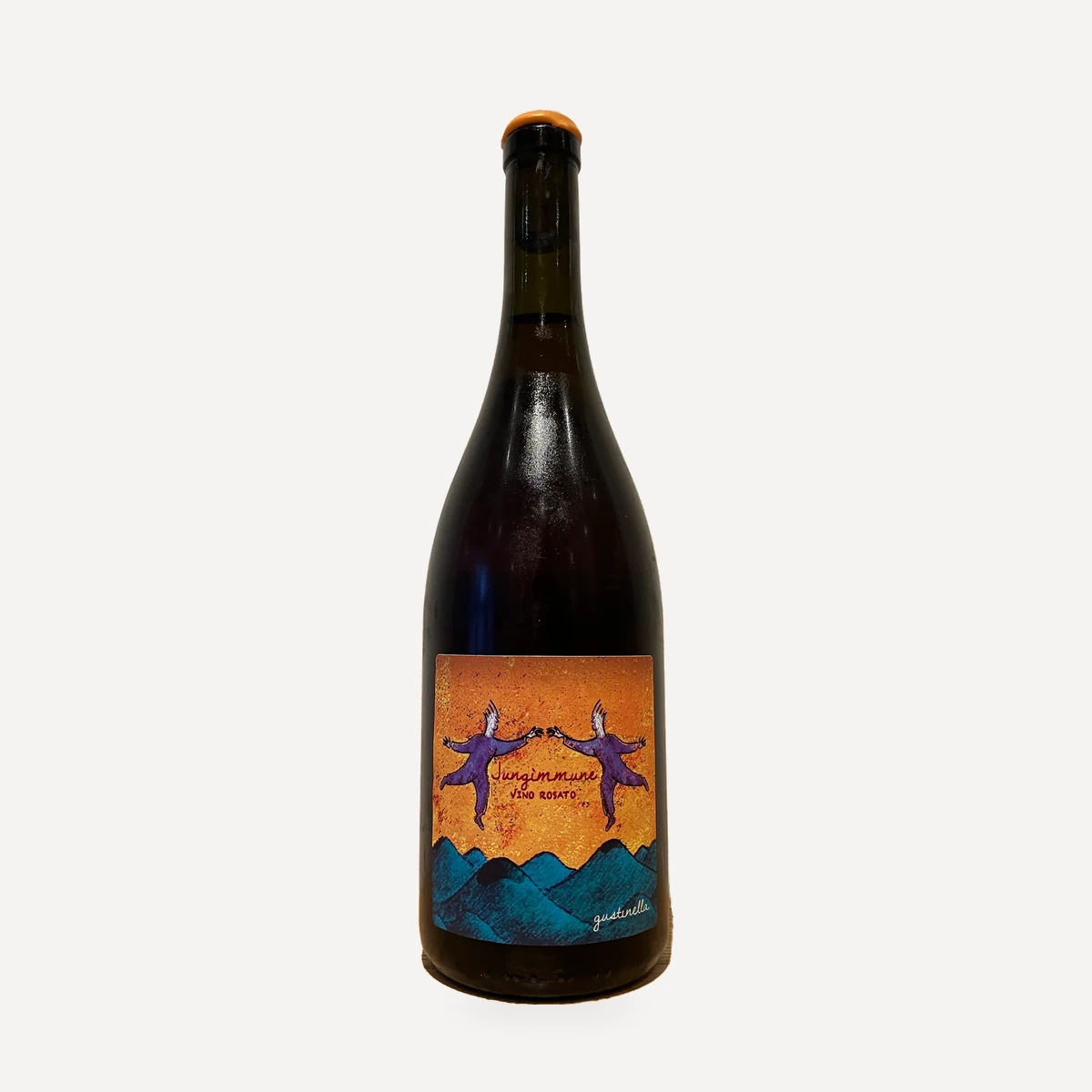
Jungìmmune Rosato