Storia
Ancient roots
Il Borro’s origins reach back to Roman times, when a strategically positioned fortress occupied the site. During the Middle Ages, the territory was contested between Arezzo and Florence. It became the property of the Dal Borro family in 1254. Following a period under the Florentine Republic, the family recovered the castle in 1644 together with the title of marquis.
Nineteenth- and twentieth-century ownership
In 1823, Il Borro passed to Count Della Torre Hoffer Valsassina, who revived its agricultural activity and improved conditions for the surrounding rural communities. Prince Emanuele Filiberto of Savoia purchased the estate in 1903. In the mid-1950s, it was inherited by Duke Amedeo of Aosta.
Ferruccio Ferragamo first encountered Il Borro during a hunt in 1985, while the estate still belonged to Duke Amedeo. His connection with the Valdarno countryside had begun in childhood: when he was six, his parents bought an agricultural property in the area, and he grew up beneath the Pratomagno mountains among rural traditions, farming rhythms and hunting culture.
The Ferragamo restoration
Ferruccio Ferragamo acquired Il Borro in 1993. He began a meticulous restoration of the medieval hamlet and its historic buildings, regarding himself as a temporary guardian of the property. Local artisans worked with traditional materials and methods, and the restoration later extended to the agricultural estate. Hospitality was developed in the village suites, Aie del Borro, private villas and three Tuscan farmhouses.
In 1995, Ferruccio and his son Salvatore began reviving Il Borro’s winemaking tradition. Much of the surrounding land had been used as orchards for decades. After studying its soils and microclimates, the family restored existing varieties and planted new vineyards, assigning each variety to the sites considered best suited to it. Organic principles shaped the project from the outset.
The medieval cellar beneath Villa Il Borro was completely rebuilt in 2000. In 2004, an underground tunnel was created to connect the original cellar with the new production complex and serve as a barrique-maturation space. The historic cellar is now linked to a modern winery of approximately 3,000 m² by this 300-metre tunnel.
The Wine & Art Gallery opened in 2008 around Ferruccio Ferragamo’s private collection of wine-themed engravings and lithographs.
Organic conversion and the Valdarno di Sopra DOC
A formal organic-conversion process began in 2011. The transition culminated in official organic certification in 2015, formalising the abandonment of synthetic fertilisers and pesticides in favour of a sustainable agricultural model.
Salvatore Ferragamo was among the founding members of the Valdarno di Sopra DOC and its protection consortium in 2011. The denomination revived the identity of a winegrowing area recognised by Cosimo III de’ Medici in his 1716 delimitation of Tuscany’s principal quality-wine zones. Salvatore joined the consortium’s board of directors in 2022.
Amphora vinification began in 2015. Since 2020, the winery has included dedicated areas for amphora wines and Metodo Classico production. Il Borro also publishes an annual sustainability report.
Expansion and current leadership
Il Borro acquired the neighbouring historic Vitereta estate in 2019. Vitereta brought 40 ha of vineyards, 150 ha of arable land and its own winery, doubling Il Borro’s vineyard area at that time and strengthening its work with Sangiovese and Chardonnay.
Vittoria Ferragamo joined Il Borro in 2013, initially overseeing horse breeding and the vegetable garden with an emphasis on organic agriculture. She assumed responsibility for sustainability in 2023.
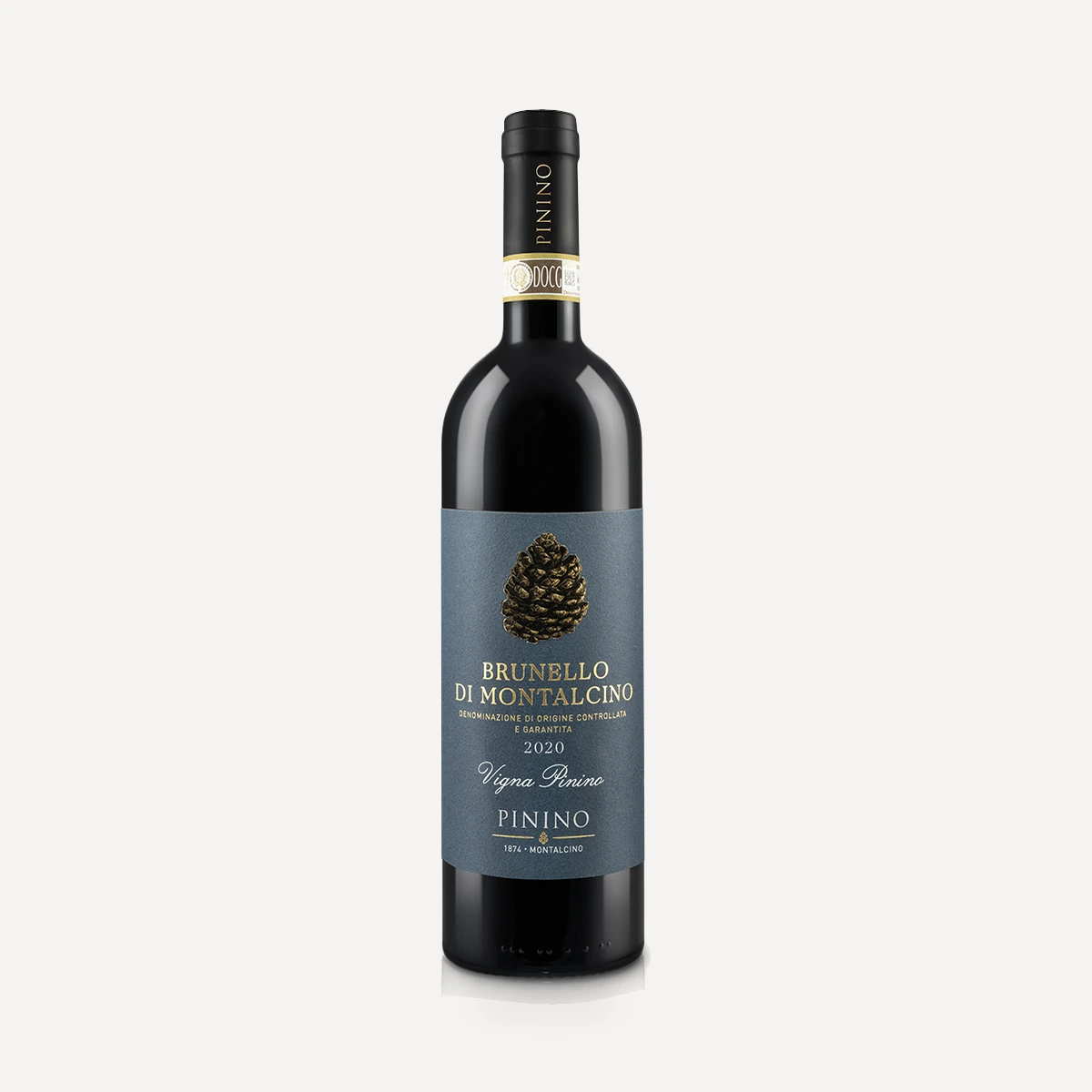
In 2024, the Ferragamo family acquired Azienda Agricola Pinino in Montalcino. Pinino remains a distinct estate and wine identity. The acquisition extended the family’s wine activities into Brunello di Montalcino and was presented as an opportunity to preserve an established Montalcino tradition while developing an interpretation of Sangiovese centred on elegance, complexity, purity and transparency.
Il Borro obtained VIVA Sustainable Winery certification in 2024. The estate is now led by Ferruccio Ferragamo’s children Salvatore and Vittoria. Salvatore directs company strategy with particular responsibility for the wine project and represents the Il Borro and Pinino labels internationally. Vittoria leads sustainability policy and implementation.
Terroir
Location and climate
Il Borro lies in the Valdarno hills at the foot of Monte Pratomagno, between Florence and Arezzo. Its vineyards rise between approximately 350 and 500 m. Mild winters, humidity and strong sun exposure shape the growing environment.
During the Pliocene, large lakes covered the surrounding valley. Their waters left a geological imprint that now interacts with varied exposures and microclimates across the estate.
Geology and soils
The principal bedrock is sandstone locally known as pietra forte. Above it lies a well-drained, medium-textured soil rich in stones, with a sandy-clay matrix. Individual sites vary in their proportions of galestro, sand, stones, clay, limestone and alluvial material, as well as in depth, mineral content and water-holding capacity.
Variety-to-site matching
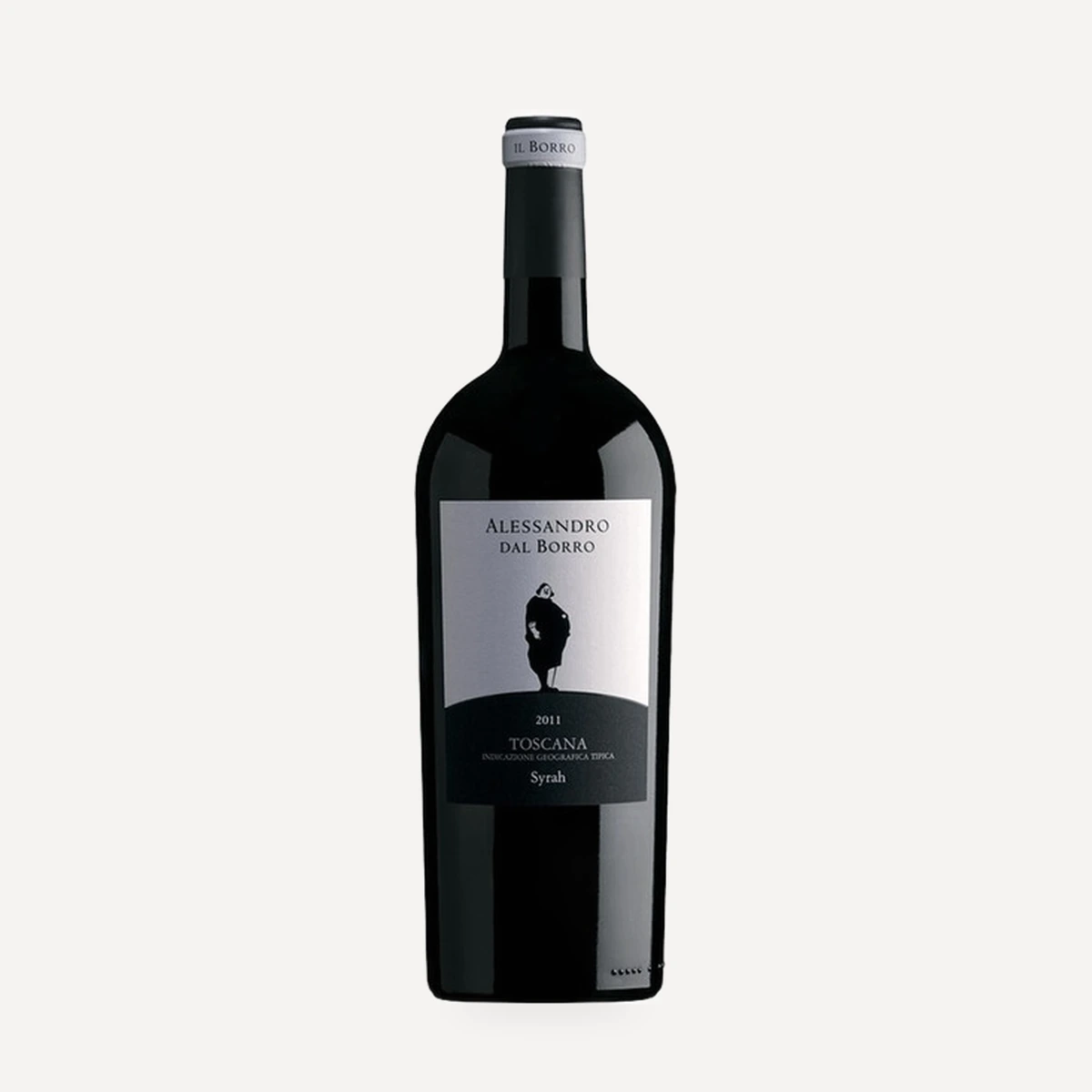
The vineyards were planted following a detailed study of the terroir. Sangiovese occupies medium-textured soils with a significant galestro component that favours drainage. Cabernet Sauvignon is planted in cool, deep, mineral-rich sandy and stony soils. Merlot grows in mineral-rich clay-limestone ground capable of retaining water for extended periods. Chardonnay is placed on high hills with clay and limestone. Syrah occupies medium-textured alluvial soils rich in stones.
Polissena is a specifically identified Sangiovese vineyard on schistose, strongly draining soil. Nitrito is a Cabernet Sauvignon vineyard whose soil is worked with draught horses to limit compaction and preserve aeration, water movement and microbial life.
Vinificazione
Organic and regenerative management
Il Borro has been certified organic since 2015. Its formal conversion began in 2011 and replaced synthetic fertilisers and pesticides with an organic agricultural model. Vineyard management combines manual work, organic plant protection and preventive monitoring. Chemical herbicides have been excluded for more than 15 years.
Weeds beneath the rows are controlled mechanically or physically with ploughs, rotary hoes and selective, low-impact equipment. Fertilisation relies exclusively on materials of organic origin. Manure from the estate’s Chianina cattle plays a central role, while grape pomace and pruning residues are shredded and left on the soil to improve its structure and fertility.
Green manure is sown between rows using legumes, grasses and cruciferous plants. These crops are subsequently incorporated into the soil to add organic matter, improve structure and moisture retention, bring micronutrients toward the surface and encourage beneficial insects.
Plant protection and monitoring
Plant protection uses natural methods intended to preserve the vineyard ecosystem. Pheromone-based sexual confusion interferes with the reproductive cycle of grape moths and reduces the need for other interventions. Vineyard weather stations collect climatic parameters in real time, supporting resource management and the optimisation of agricultural work.
Water, materials and biodiversity
Rainwater-collection basins and widespread drip-irrigation systems support targeted water use. Vineyard materials are selected for recyclability and low environmental impact: posts are predominantly wooden, wires are iron and pruning ties are biodegradable.
Only 8% of the 1,100 ha property is planted to vines and 9% is devoted to other agriculture, including arable crops and olive groves; 73% consists of forests and protected natural areas. More than 100 beehives support pollination, local flora and organic honey production.
Harvest
Harvesting takes place from August to October, depending on variety and site. Grapes are picked by hand into 10 kg crates, allowing selection in the vineyard while protecting the berries from excessive pressure before they reach the winery.
Cellar and grape reception
The original cellar is medieval in origin and was carved into the earth beneath Villa Il Borro. It was completely rebuilt in 2000. A modern production complex of approximately 3,000 m² is connected to the historic cellar by a 300-metre underground tunnel created in 2004; the tunnel also serves as a barrique-maturation cellar. Dedicated amphora and Metodo Classico areas have been in place since 2020.
Hand-harvested bunches arrive in 10 kg crates. The grapes are held overnight in a cold room at 5°C, mechanically destemmed the following day and passed through an optical sorter using quality criteria set by the winemaker. Subsequent protocols are adapted to the grape variety and vineyard.
White and rosé wines
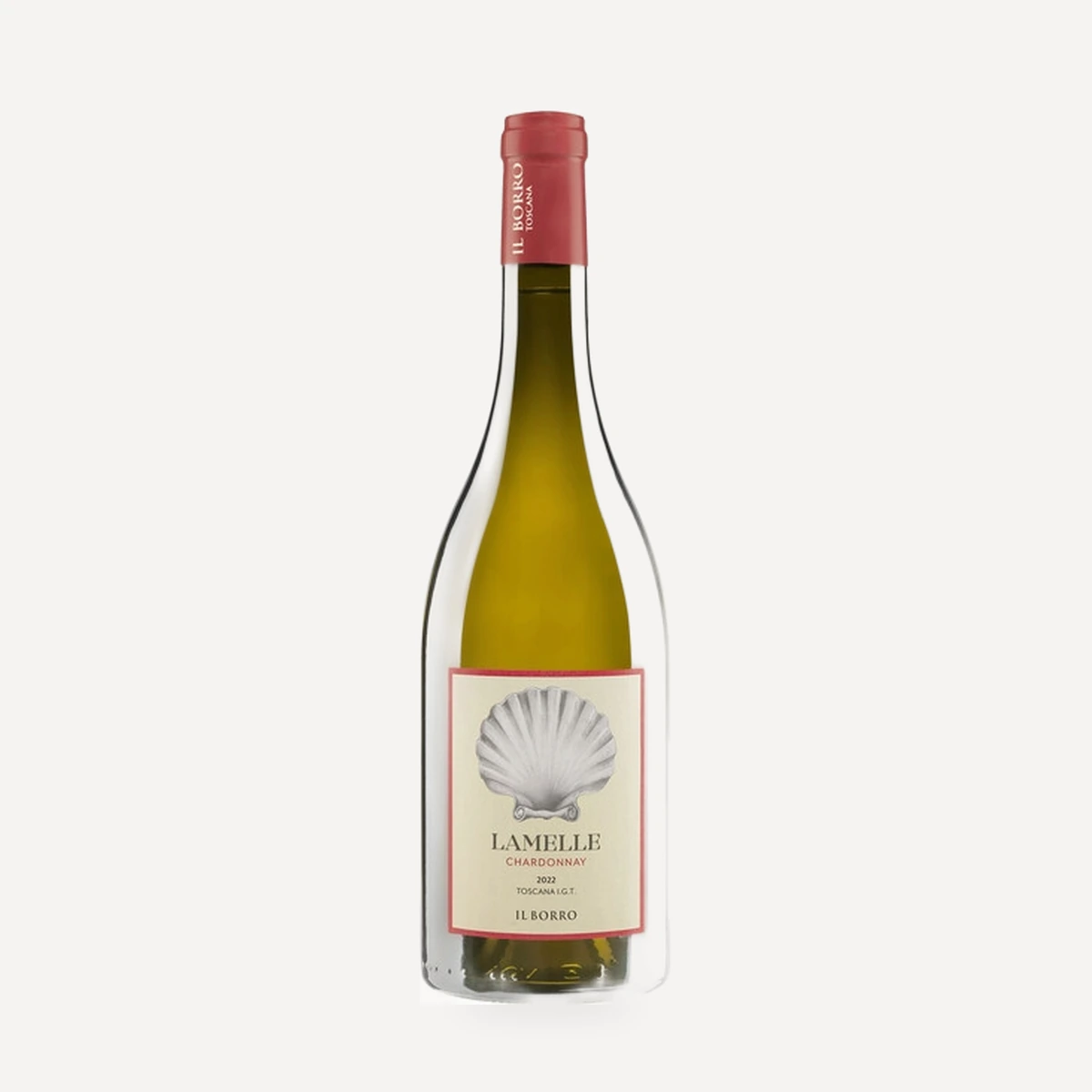
White and rosé grapes are gently pressed and fermented in stainless steel. Maturation normally takes place entirely in steel to preserve fruit, freshness and aromatic intensity. Chardonnay follows a more complex regime: ten months divided among fine lees in Clayver vessels, acacia barriques, oak barriques and Alma vessels made from oak and ceramic.
Amphora wines
During amphora fermentation, the cap is punched down daily to maintain contact between the must and skins. After fermentation, the vessels are sealed with stainless-steel lids. The wine remains in contact with the skins for approximately 12 months. Natural clay provides gentle micro-oxygenation throughout the extended maceration and maturation.
Metodo Classico
The base wine is vinified as a rosé to approximately 10–11% alcohol with natural acidity around 10 g/l. Liqueur de tirage initiates the second fermentation in bottle. Lees ageing lasts 18, 60 or 120 months according to the style, followed by remuage, disgorgement, addition of liqueur d’expédition and final corking.
Vin Santo
Grape bunches are dried for approximately two months to concentrate their sugars and aromas, then gently pressed. The wine matures in small wooden caratelli for at least five years.
Packaging and cellar materials
Heavier bottles have been replaced with lighter glass to reduce material use and transport emissions. Wooden packaging is progressively being replaced by cardboard, and most paper used for labels, boxes and communications is eco-friendly and FSC-certified. Used corks collected from restaurants and wine shops are recycled.
Filosofia
Il Borro presents itself as the temporary guardian of a historic landscape rather than as its sole author. Restoration, agriculture, hospitality and winemaking are intended to preserve the relationship between the medieval hamlet, the surrounding countryside and the community that works there.
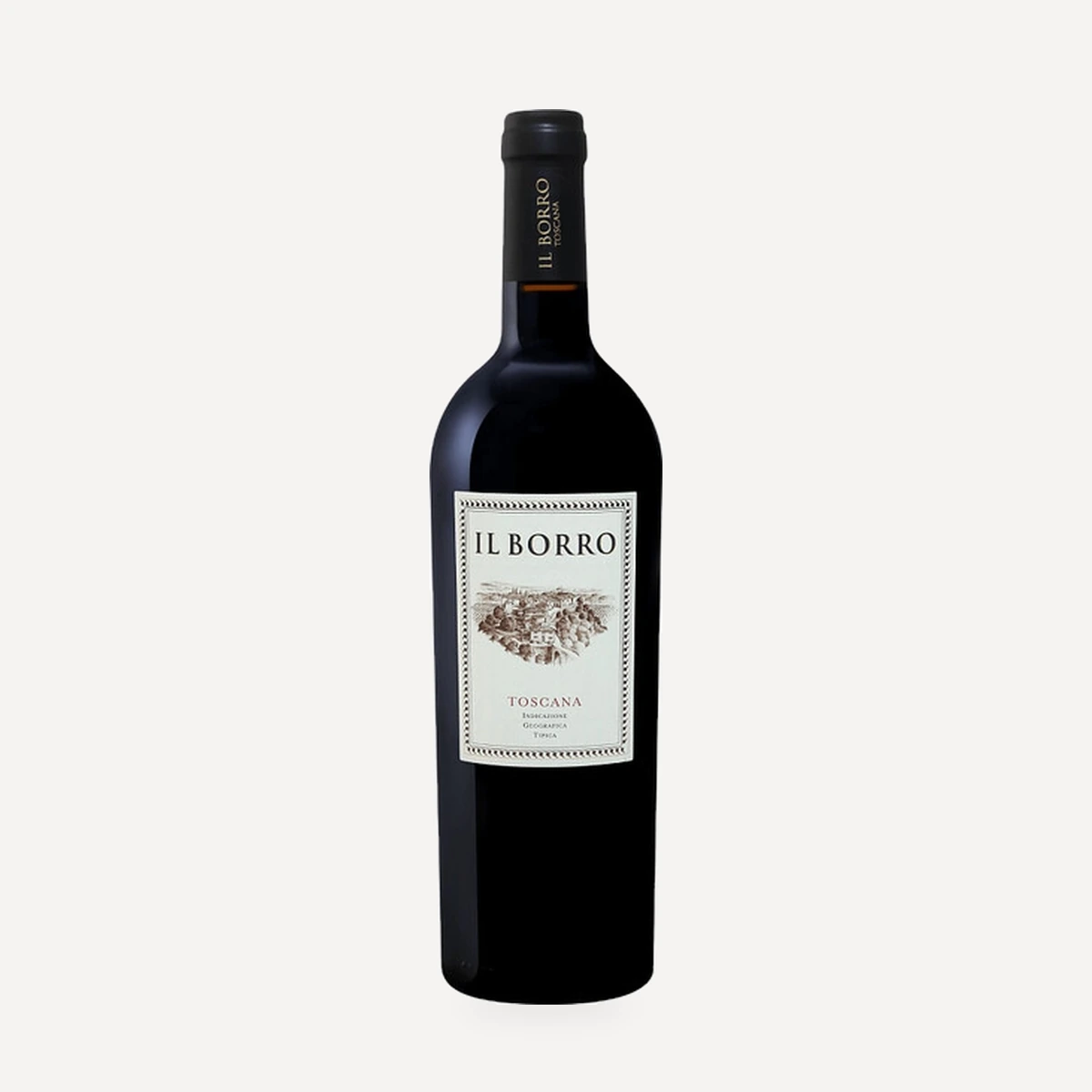
The wine project combines Tuscan tradition with international grape varieties, matching each variety to the soil and microclimate considered best suited to it. Sangiovese remains central, while Merlot, Cabernet Sauvignon, Syrah and Chardonnay are used to express different aspects of the estate’s terroir.
Organic and regenerative agriculture is framed as a search for harmony between nature, people and the land. The practical objectives are to maintain soil fertility, reduce chemical intervention, protect biodiversity, use water and materials responsibly and return agricultural by-products to the production cycle.
In the cellar, tradition and technology are treated as complementary. Hand harvesting, historic underground spaces, prolonged wood maturation, amphorae and caratelli coexist with refrigerated grape reception, optical sorting, temperature-controlled steel, composite ageing vessels and precisely managed Metodo Classico production. The stated objective is to respect natural cycles while allowing individual varieties and vineyards to retain a clear identity.
Vini
Il Borro
Alessandro dal Borro
Brunello Vigna Pinino
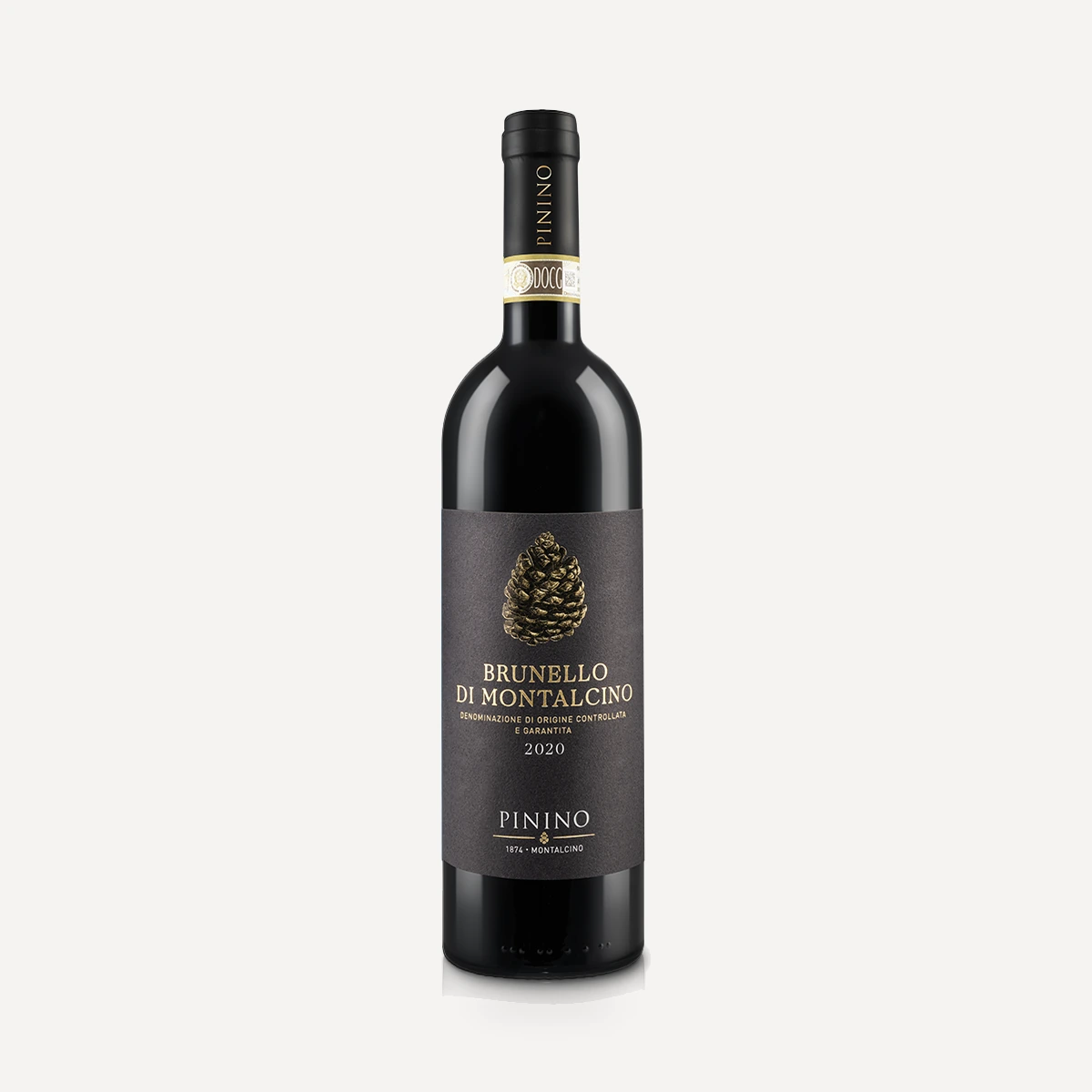
Brunello di Montalcino DOCG
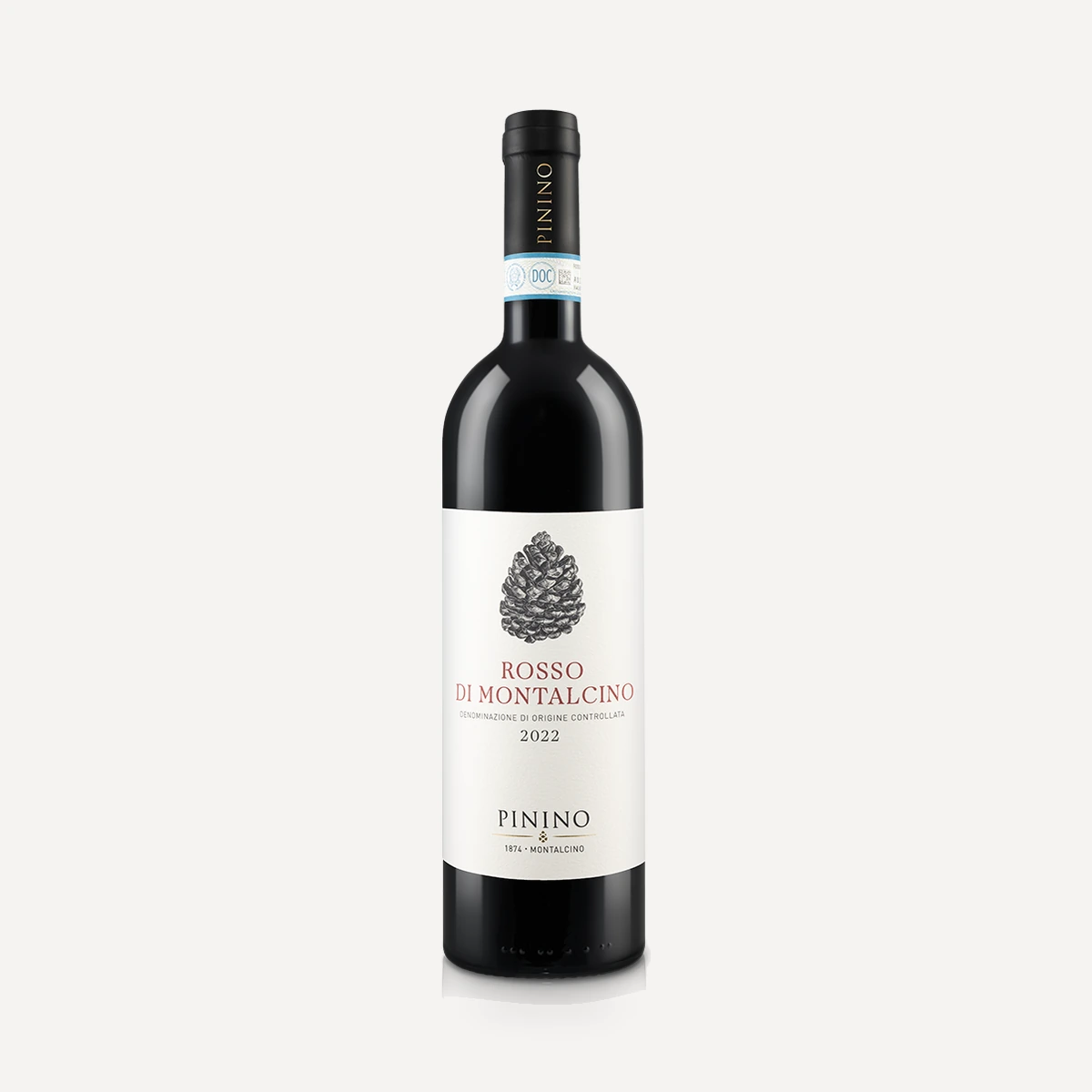
Rosso di Montalcino
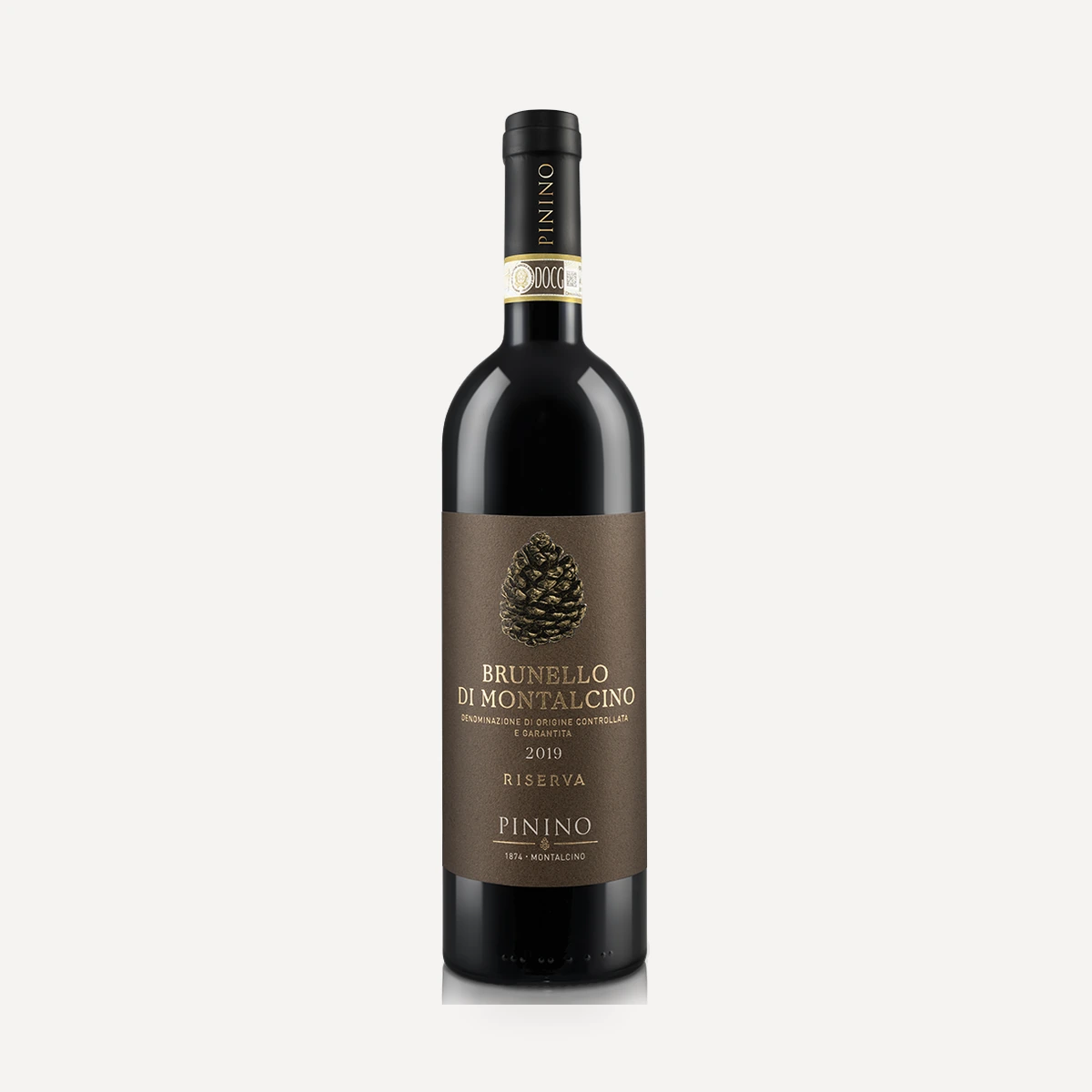
Brunello Riserva Pinino
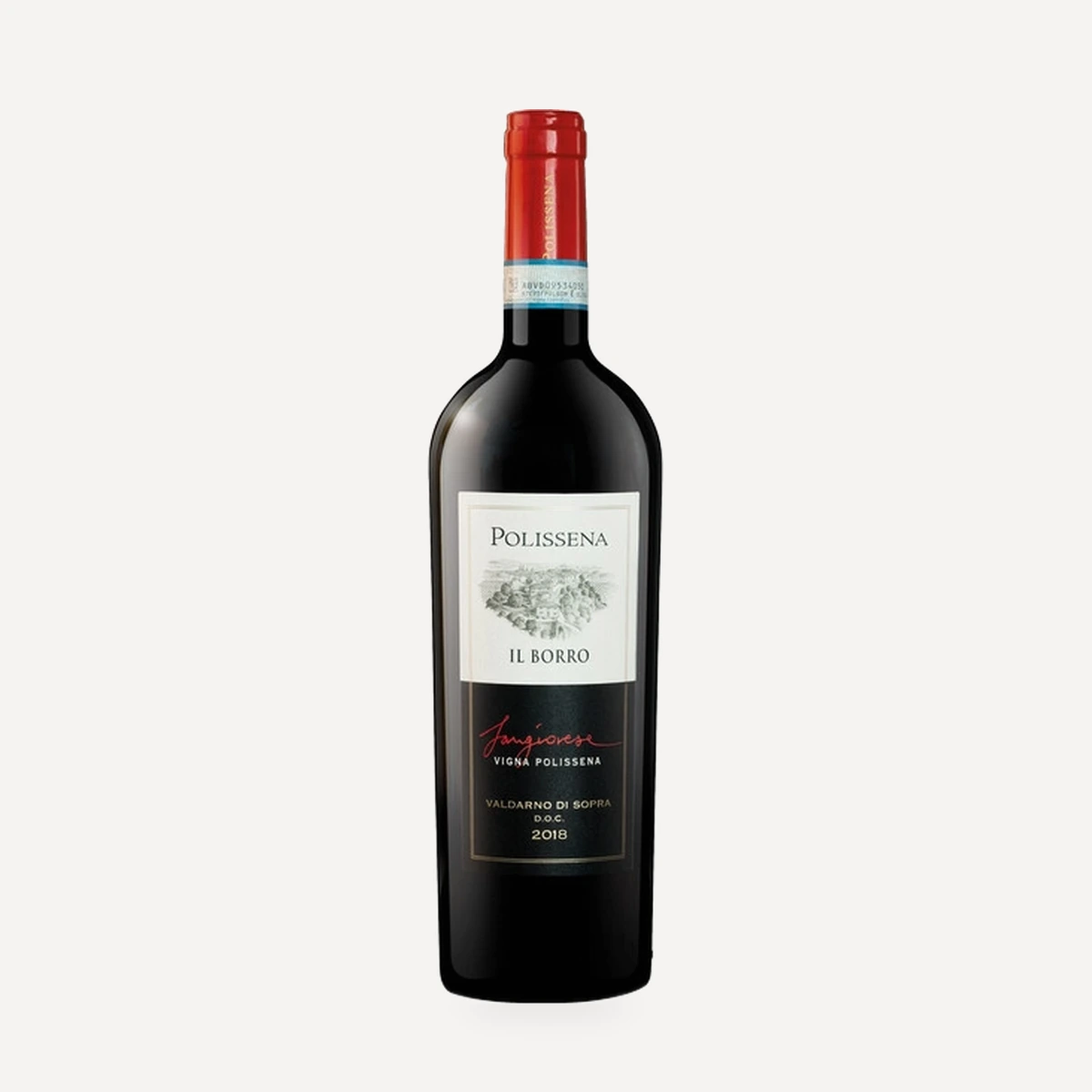
Polissena
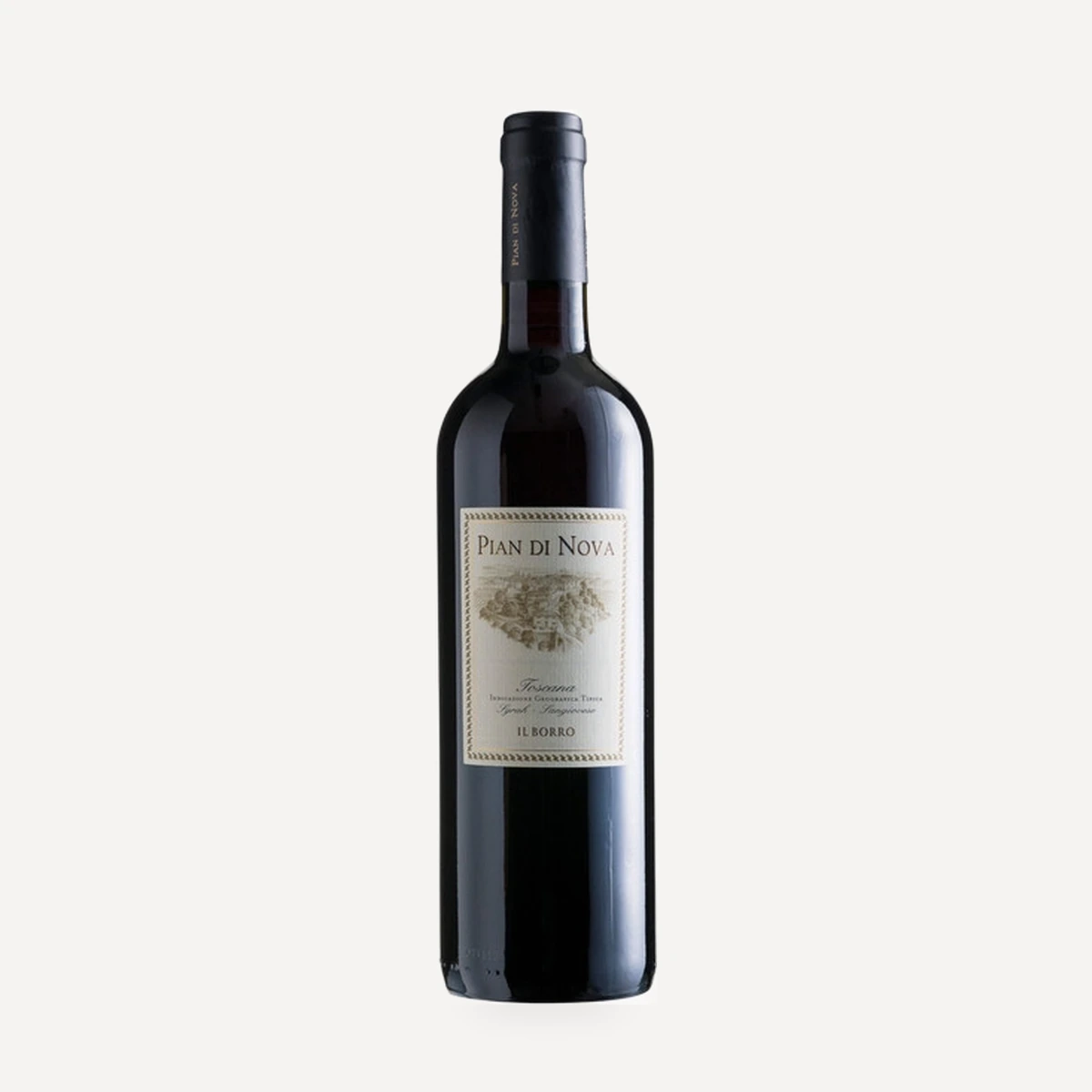
Pian di Nova
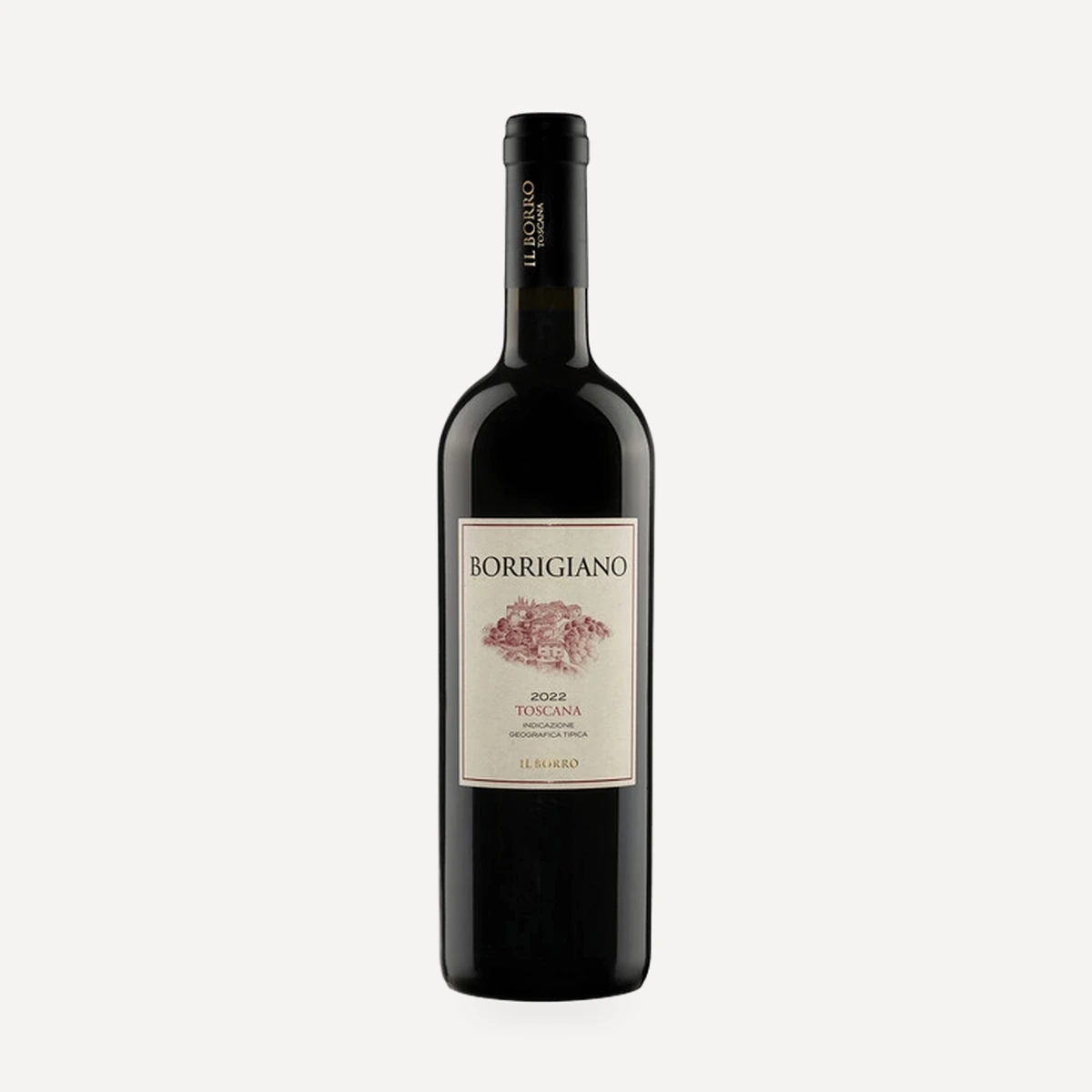
Borrigiano