Questo vino
Vineyard and terroir
Èureka comes from two Chardonnay vineyards planted with different clones in Contrada Buonivini, Val di Noto. One lies on grey calcareous ground beside a saia, one of the drainage channels built by the Arabs; this position is cooler and more humid. The other occupies deep, cool, black-clay soil on the valley floor. The Èureka and Saia vineyards range from 30 to 44 metres above sea level and face south and west. The soils are described more broadly as fine- to medium-textured alluvial calcareous material and fine-textured calcareous clay. Vines are spur-cordon trained, and yields are 55 quintals of grapes and 36 hectolitres of wine per hectare.
Cultivation is biodynamic, without herbicides or chemical or synthetic treatments and fertilisers. Plant protection is limited to low doses of mined sulphur; biodynamic preparations, shredded prunings and grass-and-legume green manure support soil fertility.
Grapes
Chardonnay from two vineyards planted with different clones.
Vinification
Spontaneous fermentation takes place in stainless-steel tanks with the skins for approximately 15 days.
Ageing
The wine matures in steel for approximately a year and a half, with regular bâtonnage timed to lunar phases. The stated overall maturation is 20 months, encompassing steel and subsequent bottle ageing.
Technical data
For the latest listed vintage, 2024, energy is 74 kcal/100 ml (307 kJ/100 ml), glycerol 6.24 g/l, carbohydrates 0.9 g/100 ml, sugars below 0.5 g/100 ml and total sulphur dioxide 11 mg/l.
Tasting profile
The wine is intended to express the aromas and flavours of southeastern Sicily rather than overtly varietal Chardonnay characteristics, with a distinct identity shaped by its two contrasting vineyard sites.
Label / history
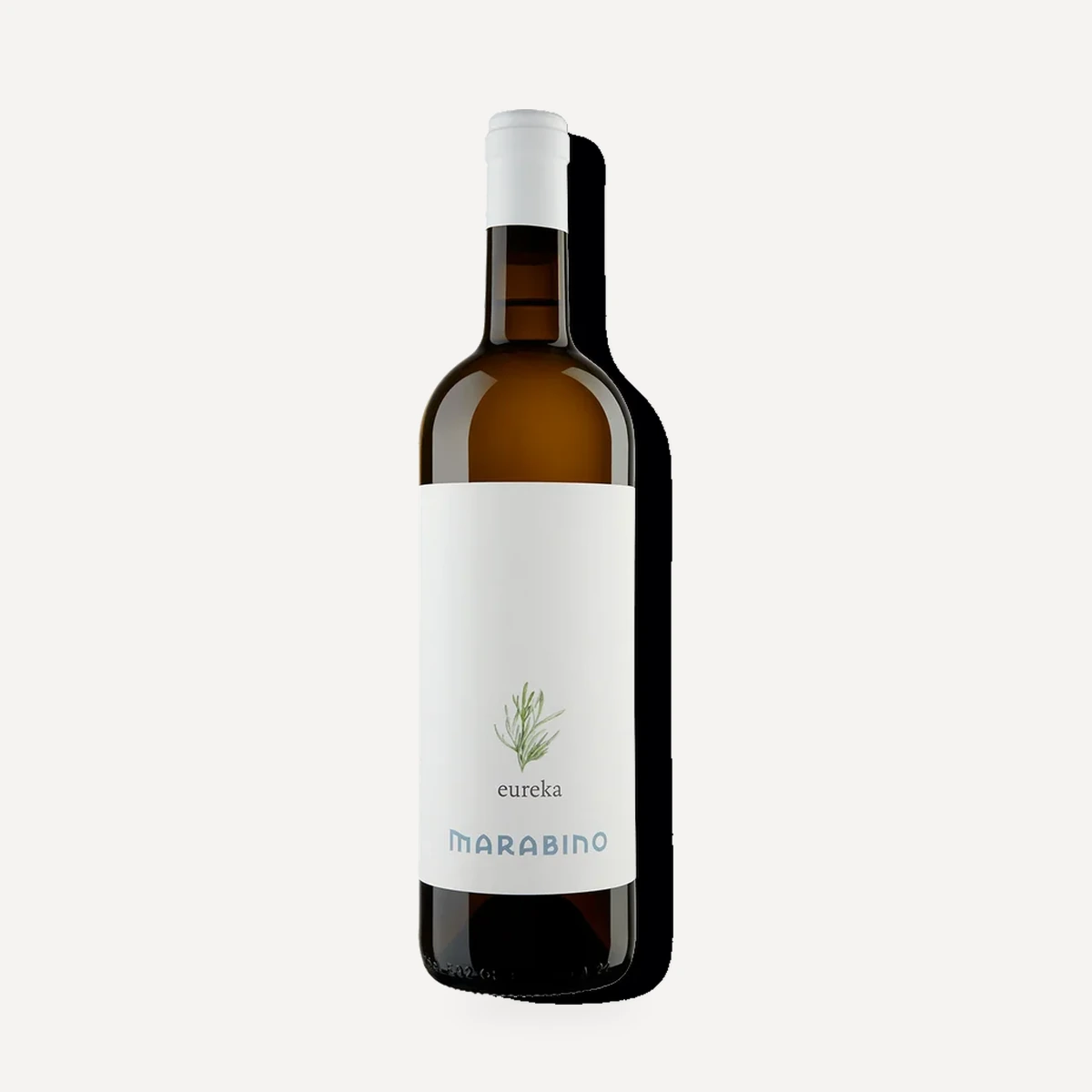
The name recalls Archimedes of Syracuse and his exclamation “Eureka”—an expression of discovery, emotion, joy and wonder. The label features an Artemisia leaf, a medicinal plant that grows spontaneously beside the vineyards. In the symbolism of the four natural elements, the liquid-rich leaf represents water, the source of life.