Storia
The Palmeri family’s documented roots
The families’ experience as winegrowers extends beyond the surviving documentary record. Its first precise date is 29 October 1911, when Antonino Palmeri, progenitor of the Palmeri family, became the owner of the Baglio in contrada Pedone together with its surrounding vineyards and olive groves.
The Baglio combined a family residence with the buildings needed to complete the entire production cycle, including vinification. Wine was made through empirical methods passed from one generation to the next, under the supervision of the figure known as the mastro.
Formation of Mastro di Baglio
In April 2016, members of the long-established Genna, Manzo and Palmeri farming families joined forces to recover their inherited traditions. Their collaboration created Mastro di Baglio, conceived as a producer of natural wines made exclusively from grapes grown in the partners’ own vineyards.
The enterprise brought together five young winegrowers from Marsala: Mastro Nino, Mastro Giacomo, Mastro Vincenzo, Mastro Vito and Mastro Daniele. Their shared project joined the agricultural heritage of their respective families with an ecological approach to vineyard management and cellar work.
First harvest
Mastro di Baglio completed its first harvest in 2016. Only a small proportion of the grapes available from the partners’ vineyards was used. The inaugural production comprised two monovarietal wines, one from Grillo and one from Nero d’Avola, amounting to just over 3,500 bottles.
Both wines came entirely from organically grown indigenous grapes. Fermentation relied on native yeasts, without synthetic chemical aids, and took place in modern temperature-controlled stainless-steel tanks rather than the wooden vessels associated with the families’ earlier winemaking tradition.
Restoration and modernization of the cellar
The working cellar occupies the historic rural building locally called u’ malasenu, constructed almost a century ago for household wine production. It was subsequently renovated while retaining the building’s historic character and equipped with temperature-controlled stainless-steel tanks and other modern production equipment.
A further modernization of the production line introduced new plant and equipment with the objective of improving wine quality. All operations—from destemming and vinification through bottling and packaging—are carried out in the cellar.
Terroir
The vineyards lie around Marsala in western Sicily, at elevations ranging from 50 to 120 metres. Their exposures include north, northwest, southeast and south. The soils described across the individual vineyard blocks are calcareous, calcareous tending toward sandy, and clay-rich.
The climate is mild and sufficiently dry to support cultivation without irrigation. Proximity to the sea brings a cooling influence, with one vineyard oriented toward the Egadi Islands.
The Scirocco is a defining climatic element, particularly in May. Locally called Cilocco, it can arrive forcefully with Saharan sand and may damage vines when especially intense. Its regular presence also maintains dry conditions that discourage fungal diseases such as downy mildew and helps keep vineyard treatments to a minimum.
Vinificazione
The vineyards are managed organically and without irrigation. Chemical herbicides and synthetic plant-protection products are excluded. Vineyard protection is limited to sulfur and copper treatments, generally only two or three applications per year; the mild, dry climate and regular Scirocco help reduce fungal pressure.
Manual work is a defining feature of the vineyard program. Grapes are harvested by hand and carried in small crates, while the Nero d’Avola crop is also selected directly on the vine. Individual technical descriptions specify Guyot training on vertical trellises, with planting densities of 3,300–3,500 vines/ha and reported yields ranging from 40 to 80 quintals/ha.
Biodiversity protection, an attentive relationship with the land and intimate knowledge of each vineyard form the core of the farming approach.
The cellar occupies the restored historic u’ malasenu, a rural building originally constructed almost a century ago for household wine production. Its traditional architectural character has been retained while the facility has been equipped with modern technology, including temperature-controlled stainless-steel tanks. The production line has also been undergoing modernization with additional plant and equipment.
Every stage is carried out on the premises: destemming, vinification, bottling and packaging. Cellar operations include destemming the bunches, soft pressing, separating wine from skins after maceration in stainless-steel tanks, manual pressing for selected wine types, and controlling must temperature in stainless steel.
Fermentation is conducted at controlled temperature with indigenous yeasts. The wines are not filtered; clarity is achieved through natural decanting and static sedimentation.
The documented red-wine process begins with hand-harvested grapes in small crates. The fruit is crushed and destemmed, transferred to tanks, and fermented with approximately 10 days of skin maceration at 25 °C. It is then softly pressed and sent through malolactic fermentation.
The documented white and rosé processes use soft pressing without skin maceration, followed by natural settling rather than filtration. The sparkling wines are made by slow natural fermentation directly in bottle, using indigenous yeasts, and remain in darkness in the cellar for several months.
Filosofia
Mastro di Baglio was created to make natural wines while respecting nature and recovering the farming and winemaking traditions inherited by the Genna, Manzo and Palmeri families. Its five founders present cooperation as fundamental: separate family histories and vineyard holdings are brought together in pursuit of a common objective.
The estate’s idea of quality begins with its own organically cultivated grapes and close familiarity with each vineyard. Biodiversity, an empathetic relationship with the land and minimal vineyard treatments are central principles. In the cellar, inherited methods are combined with temperature-controlled stainless steel, native yeasts, natural clarification and hands-on processing.
The symbolic model is the traditional mastro di baglio: the custodian of knowledge passed through generations, responsible for directing vinification while respecting natural rhythms. The project seeks to preserve that outlook while using modern equipment where it offers greater control.
Vini
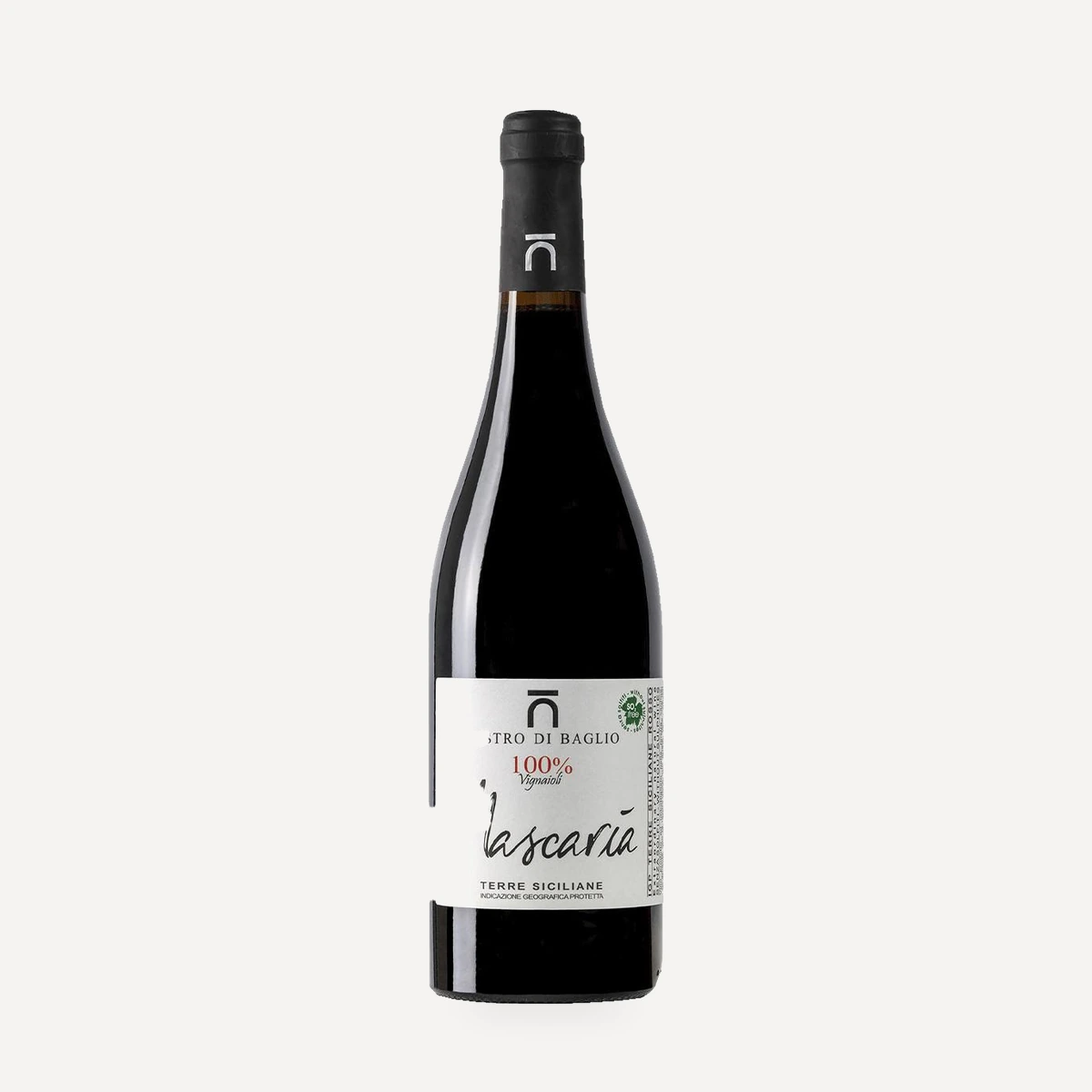
Mascarìa
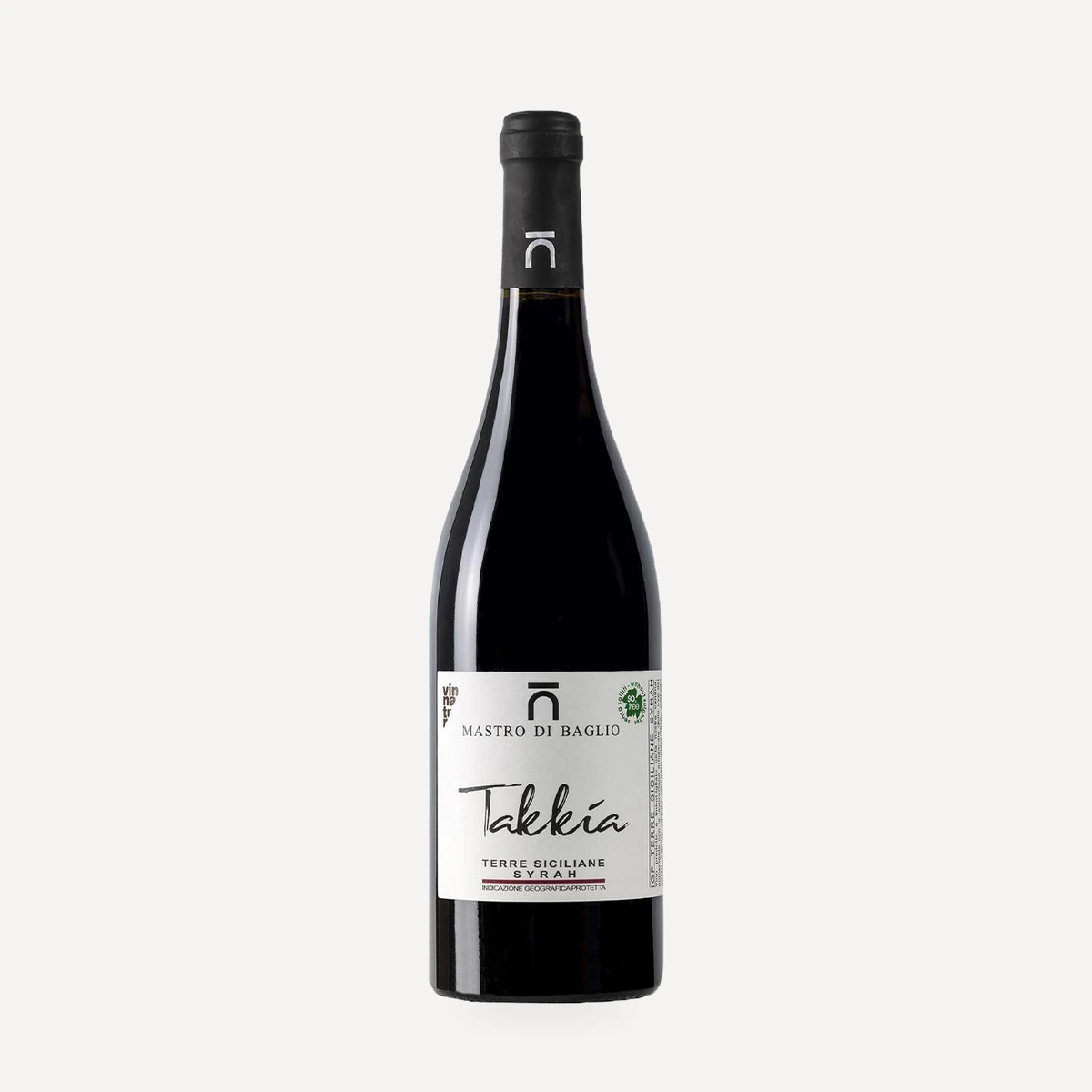
Takkìa