Questo vino
Vineyard and terroir
The grapes come from selected hillside sites in the Province of Verona and areas south of Lake Garda, at an altitude of 250 m above sea level. The dark soil contains little clay and has a mixed texture incorporating disintegrated rock, with an almost neutral pH. Yield is 40 q/ha. Harvesting is traditional and manual, with the fruit collected in small-capacity crates.
Grapes
Corvina, Corvinone, Rondinella, Molinara and Oseleta.
Vinification
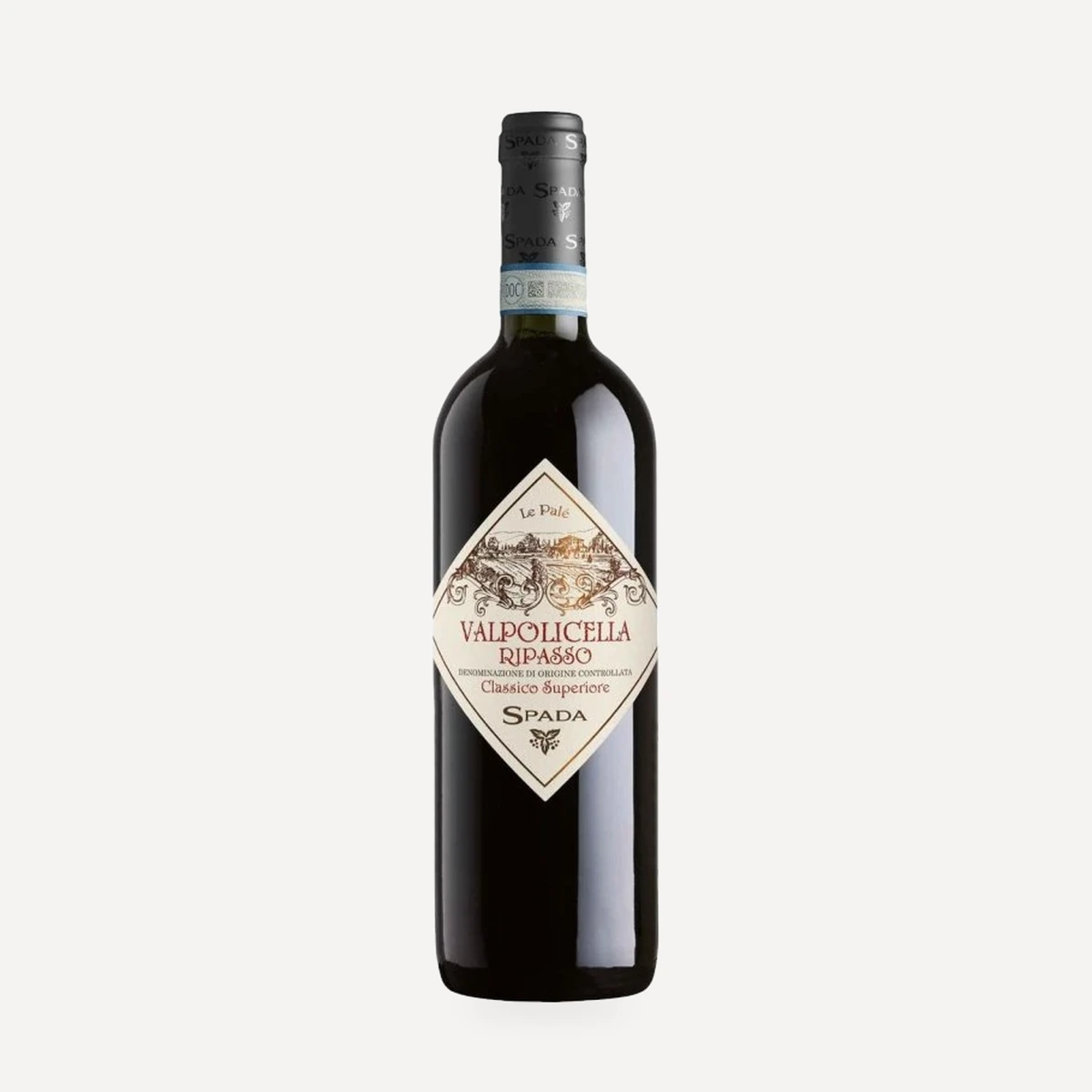
In March following the harvest, the new wine is macerated with skins left from the production of premium Verona wines. This application of the Veronese Ripasso technique is intended to heighten the wine's aromas and reinforce its structure. After fermentation, the wine is separated from the heavy lees. No animal-derived products are used.
Ageing
The wine spends 12 months in oak barrels. Maturation includes several months in large barrels with frequent, gentle bâtonnage to encourage the extraction of varietal aromas. It then rests in bottle for at least 3 months before release. Its substantial structure and alcoholic strength allow it to mature for several years, developing greater complexity over time.
Technical data
Rosso Verona IGT. Alcohol is 14.5% vol., total acidity is 5.95 g/L and residual sugar is 8.5 g/L. The available format is 750 ml, packed in cartons of six. A Burgundy-style bottle is standard, while a dark, heavy Bordeaux-style bottle is available on request. The closure is natural cork.
Tasting profile
Ruby red in colour, brilliant in appearance and tending towards garnet with age. The nose combines black cherry and ripe forest berries with a touch of vanilla from oak maturation. A vinous, delicate and characteristic aromatic note may recall bitter almond. The palate is ripe and fruity, full-bodied and structured yet approachable, with a dry to velvety texture, savoury character, a lightly bitter nuance and harmonious balance.
Serving and pairing
Serve at 15 °C. Pair with guinea fowl, roast veal or pork, or risotto prepared with meat or legumes.
Sustainability and packaging
Production practices include photovoltaic energy, organic fertilisation with green manure, responsible water use and rainwater recovery. Packaging measures include lightweight glass bottles, recycled cartons and low-carbon closures made from sugar cane or recycled material.