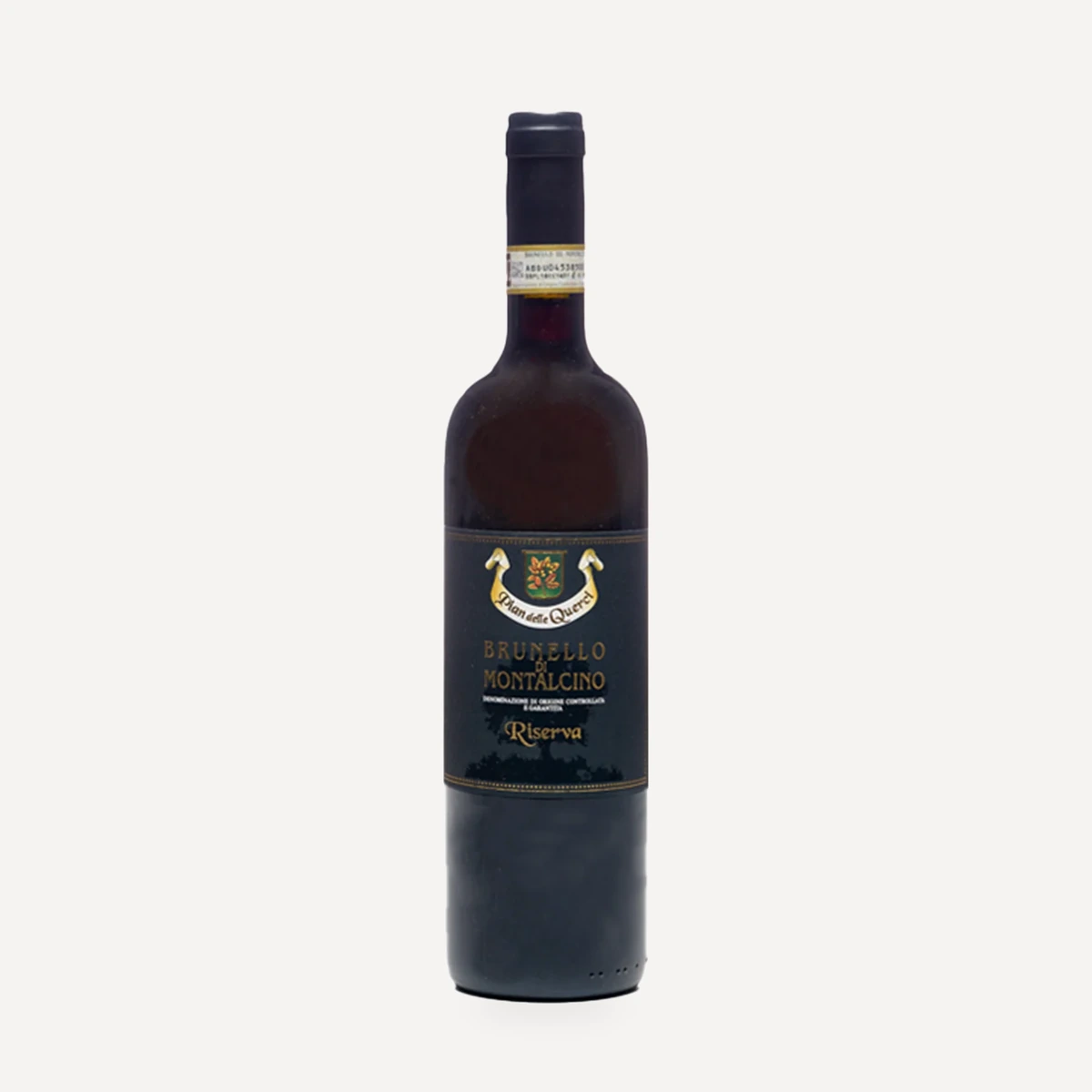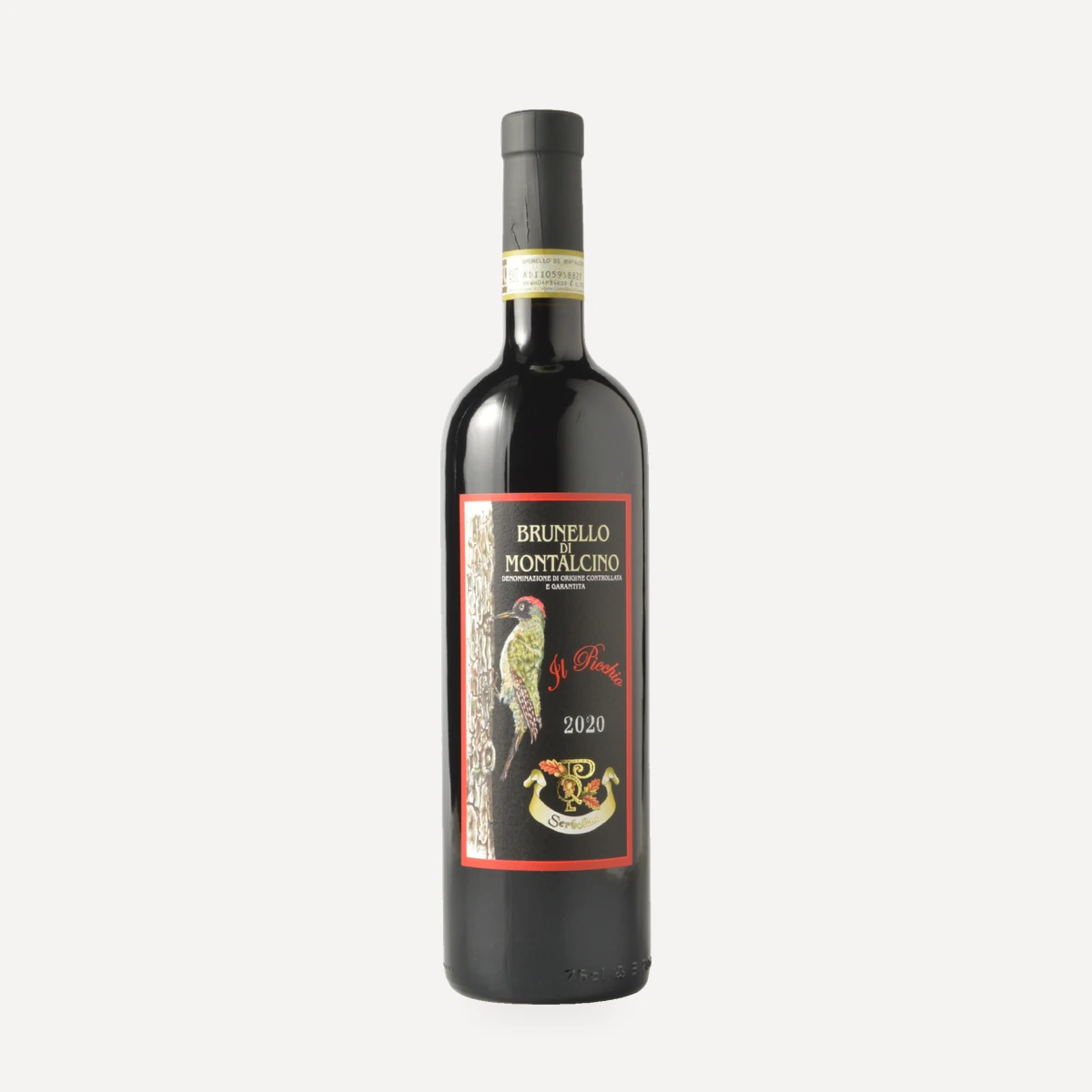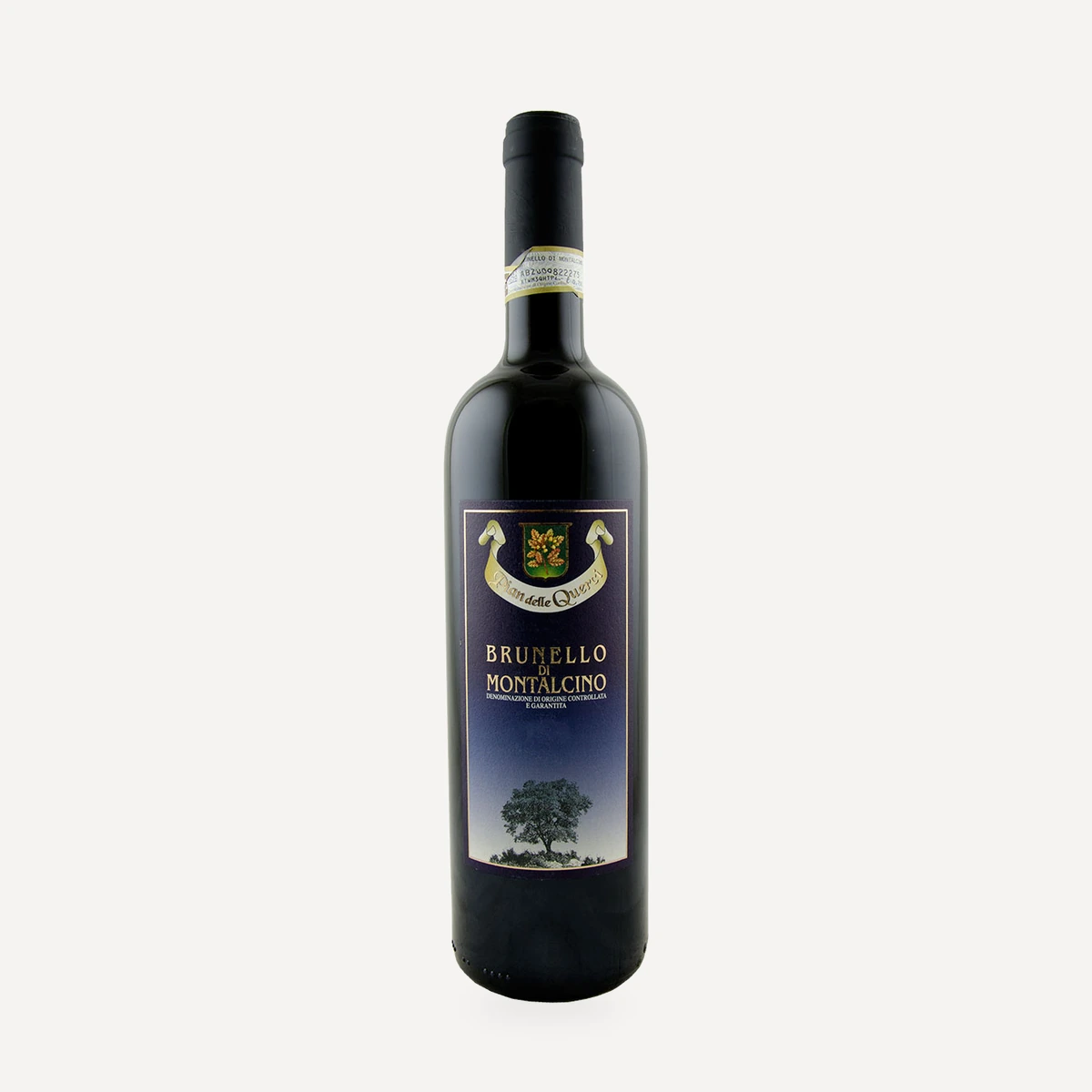
Questo vino
Vineyard and terroir
The Sangiovese comes from vineyards in the municipality of Montalcino, averaging 250 m above sea level. The soil is tuffaceous clay with abundant skeletal material. Planting density is 4,000 vines per hectare, and the vines are trained to balanced bilateral cordon.
Grapes
100% Sangiovese Grosso, known locally as Brunello.
Vinification
The grapes are selected by hand and gently discharged directly into the destemmer hopper. Vinification involves medium-long skin contact and frequent pump-overs. These are particularly intense and progressively adjusted at the beginning of fermentation. The maximum temperature is allowed to rise to 33°C.
Ageing
The wine matures for 36 months in young Slavonian oak casks. The introductory description identifies these as new, medium-toast casks with a capacity of 50 hl. It then receives extended bottle maturation: the narrative specifies at least 10 months, while the product sheet describes a period exceeding the four-month regulatory minimum.
Technical data
Alcohol: 13.50%. Total acidity: 5.48%. pH: 3.59. Net dry extract: 28.88%. Total polyphenols: 3,205.00‰.
Tasting profile
Clear, intense ruby red with garnet nuances. The bouquet is ethereal and complex, retaining fruit notes integrated with suggestions of oak. The palate is soft and inviting, with substantial structure and tannins.
Serving and pairing
Serve at 20°C in Brunello di Montalcino glasses. Pair with red meat, Tuscan pecorino, piquant Gorgonzola or Parmigiano Reggiano. It also suits meat-based international dishes with structured sauces, mushrooms or truffles, as well as furred and feathered game. Well-cellared bottles from great vintages, enjoyed at full maturity, may be served as meditation wines.
Label / history
Brunello emerged toward the end of the nineteenth century. Earlier Tuscan practice employed the traditional governo method, adding must from selected grapes to new wine to initiate a second fermentation. Vinifying Sangiovese alone and ageing it for years in cask led to the development of Brunello. The denomination received DOC recognition in 1963 and DOCG recognition in 1980.