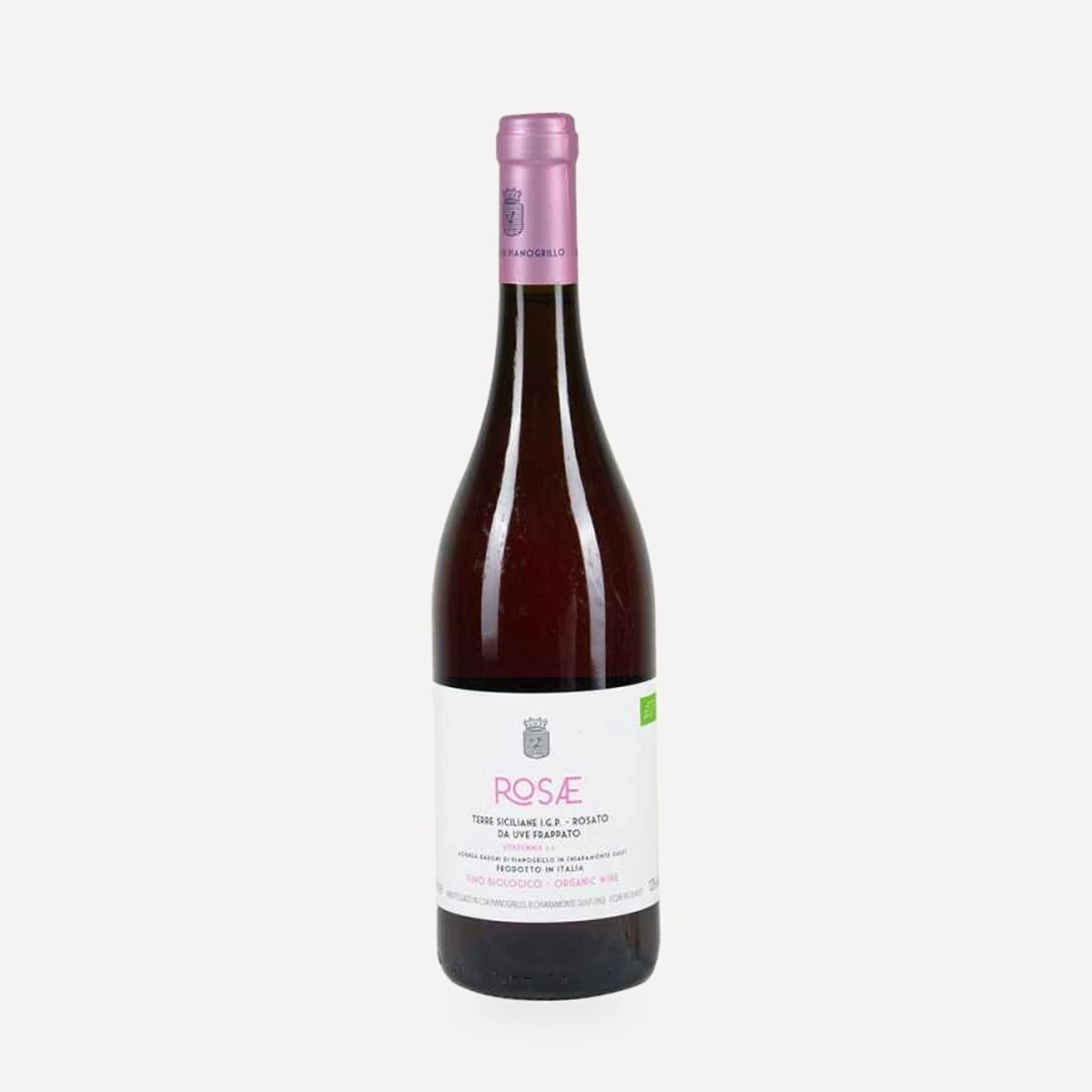
Storia
Ancient landscape
The Pianogrillo estate occupies a hill in the Monti Iblei, near the archaeological area of Akrillai. The earliest settlement associated with the site is described as Neolithic, while Akrillai subsequently became an ancient Greek colony. Physical traces of later occupation survive within the farm: a lava-stone olive mill dating from the third century AD and an early Christian necropolis in the area called San Nicola.
From watchtower to manor
During the Middle Ages, the building on Pianogrillo hill served as a watchtower for observing and defending against Saracen incursions. In the eighteenth century it was converted into a manor house in the architectural style of Ragusa. The transformation included a private family chapel and subterranean cellars with tuff-vaulted ceilings. The house, surrounded by cypresses and old olive trees, overlooks the Piana dell’Acate in the former county of Modica and Chiaramonte.
The Piccione di Pianogrillo family
For more than three centuries, Pianogrillo was a fief of the barons Piccione di Grassura e del Molino d’Immezzo. The family originated in Acireale; later members moved to northern Italy in pursuit of their careers. The property has remained in the Piccione di Pianogrillo family for centuries.
Lorenzo Piccione di Pianogrillo, described as the last direct descendant of the baronial line, returned to Sicily and assumed management. Under his direction, the former fief was developed into a modern agricultural estate. Olive oil has long been a central product, while wine production was introduced more recently, with both activities conducted under organic farming principles.
Conservation and modernisation
In 2010, the estate launched the Progetto Suino Nero Siciliano to help preserve and breed the native black pig known locally as Nero Ibleo. Five hectares of woodland were enclosed for free-range husbandry.
A new winery was constructed in 2014. It introduced low-impact systems, dedicated vessels for standard and small-lot vinification, an assortment of maturation vessels and a nitrogen-protected bottling line. Pianogrillo now combines its historical manor and agricultural landscape with vineyards, olive groves, woodland and livestock conservation.
Terroir
Pianogrillo is an old Sicilian estate in the Monti Iblei at Chiaramonte Gulfi, in the province of Ragusa. The manor stands on Pianogrillo hill, overlooking the Piana dell’Acate within the historic territory of Modica and Chiaramonte and adjoining the archaeological area of Akrillai.
The vines and olive trees are described at an average elevation of approximately 480 metres above sea level. Vineyard elevations associated with the principal estate-grown varieties extend from about 420 to 480 metres, with predominantly southern, south-eastern and south-western aspects.
The soils combine sand, limestone, clay and conspicuous white marl. The vineyard description characterises them more specifically as calcareous clay marl. A pronounced difference between daytime and nighttime temperatures operates within the Mediterranean climate; Pianogrillo associates this diurnal range with the freshness and finesse of its wines.
Vinificazione
Pianogrillo practises organic agriculture throughout the estate. The vineyards carry SIDEL organic certification under operator code IT BIO 012-01896-15-001. Organic farming had already been practised for almost twenty years when the estate’s agricultural description was prepared.
Pesticides, chemical fertilisers and other inputs considered potentially harmful to people or the natural environment are excluded across the property. Working horses are raised to assist in the vineyards. The training systems retain both wire-trained forms—Guyot and spurred cordon—and local bush-vine forms, including Alberello Ibleo and Alberello a pedale d’olivo.
Environmental care extends beyond the vines. Woodland is maintained for native Nero Ibleo pigs, olive groves include exceptionally old trees, and the farming model links organic crop production with preservation of native plant and animal varieties.
The 2014 winery
The present winery was built in 2014 with systems designed for minimal environmental impact. Its principal fermenters are 50-hectolitre stainless-steel vessels. Truncated-conical 25-hectolitre vats are used for maceration, while 7-hectolitre vessels support microvinification and the preparation of must inocula.
Fermentations may employ the estate’s indigenous vineyard microflora or selected yeasts. The general repertoire of cellar operations includes maceration, manual punching down, pumping over, délestage, racking and bâtonnage.
Maturation options include 25-hectolitre Slavonian oak casks, Etna chestnut tonneaux, stainless steel and 22-hectolitre truncated-conical French oak vats. The cellar also uses larger oak casks of up to 60 hectolitres for selected lots. White-wine work represented in the range includes soft pressing, separation of free-run juice, occasional pre-fermentation skin maceration and fermentation or maturation in stainless steel.
Bottling takes place under nitrogen in a modified-atmosphere system. The range also includes a Frappato sparkling rosé made by refermentation in bottle according to the ancestral method.
Filosofia
Environmental protection and respect for nature are central to Pianogrillo’s declared values. The approach joins organic cultivation with the preservation of local agricultural biodiversity: indigenous Sicilian grape varieties, Tonda Iblea olives, the Nero Ibleo pig and working horses all form part of the same mixed-farm identity.
The estate’s conception of quality is rooted in continuity between place, farming and history. The ancient manor, archaeological remains, old olive trees and local training systems are retained alongside a modern cellar equipped for small-lot work and controlled bottling. Native vineyard microflora may be used in fermentation, but selected yeasts and contemporary equipment remain available; tradition and technical control are therefore treated as complementary rather than mutually exclusive.
Family continuity is another defining principle. Lorenzo Piccione di Pianogrillo presents the estate through its people, care of the land and accumulated history, while directing its transition into a modern agricultural enterprise.
Vini
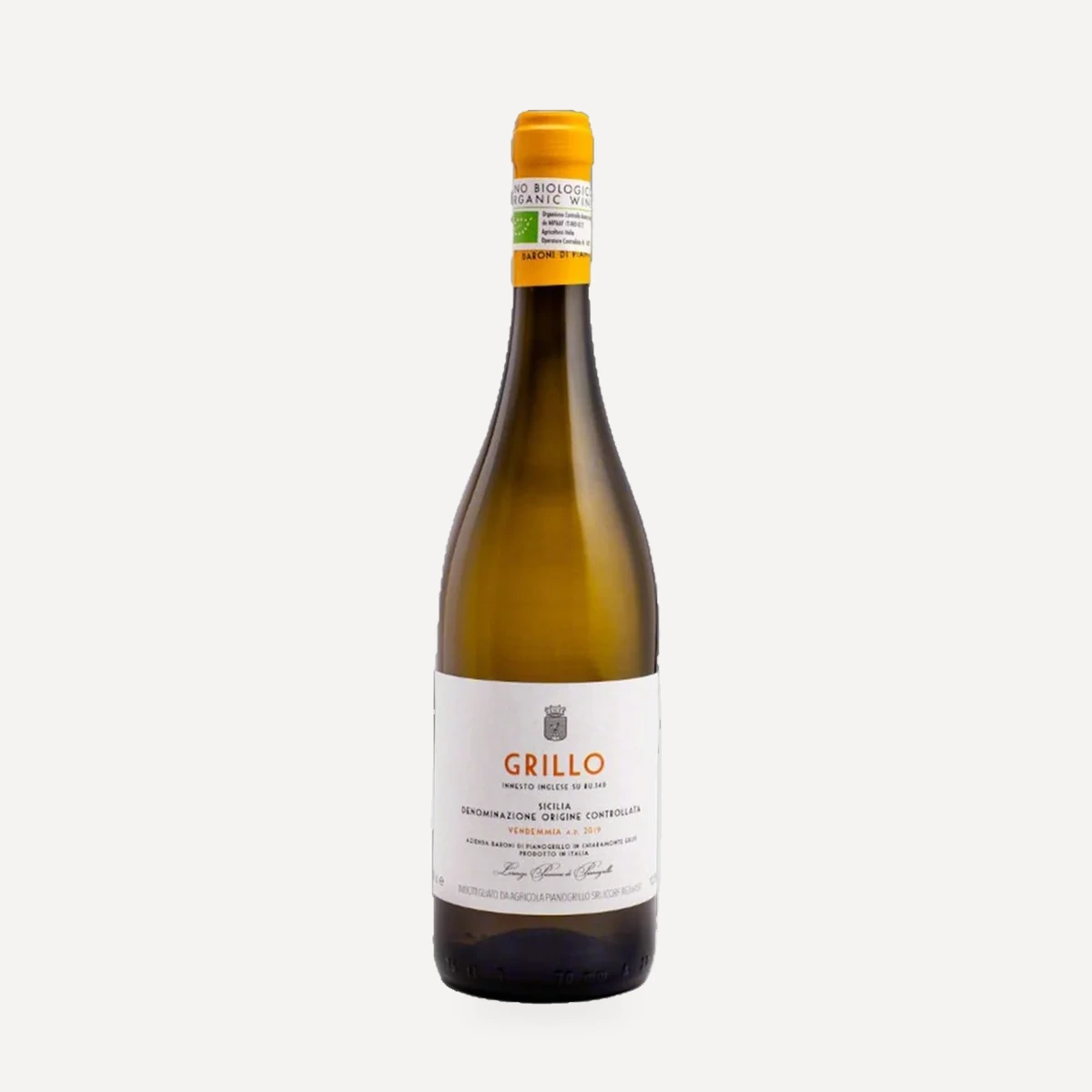
Grillo
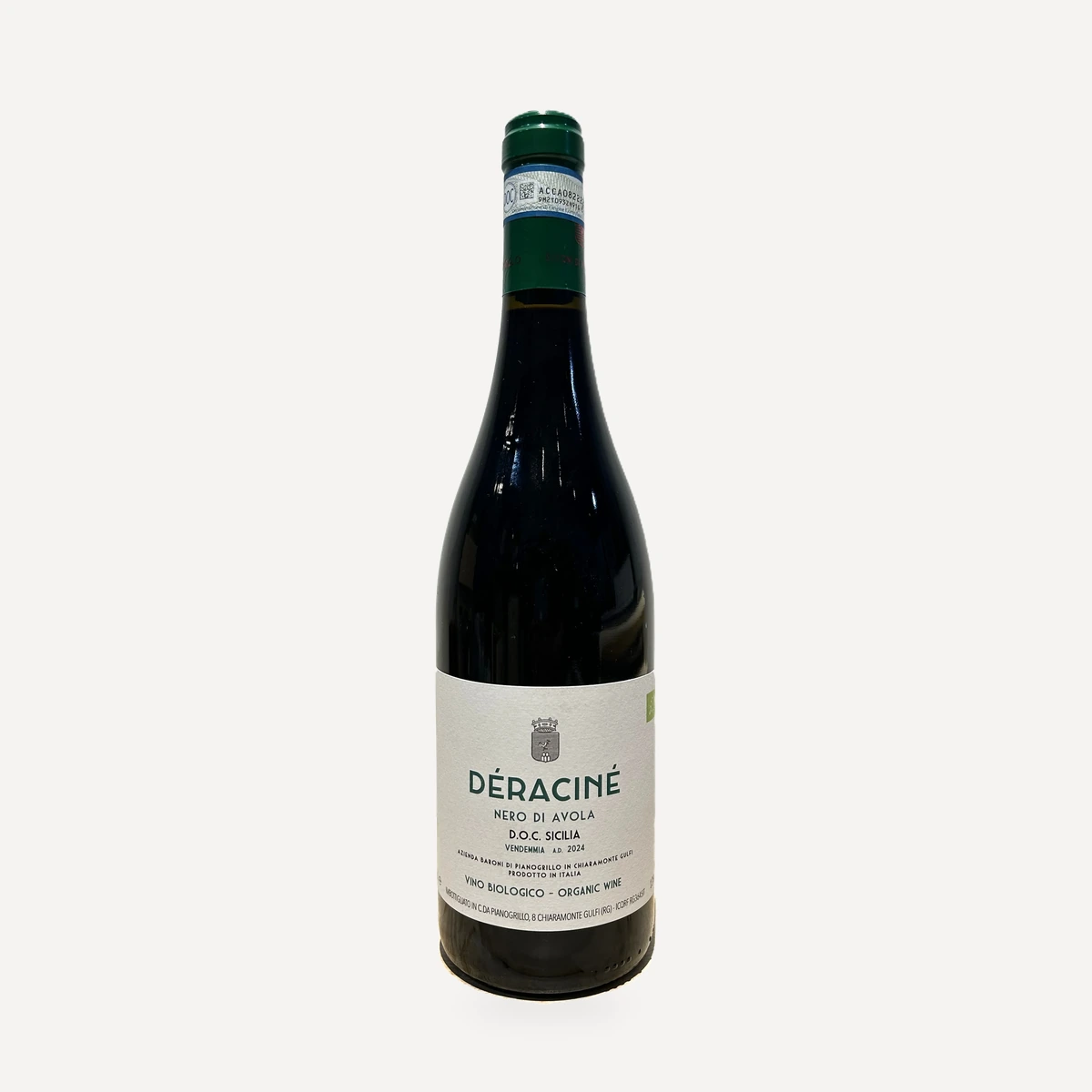
Déraciné
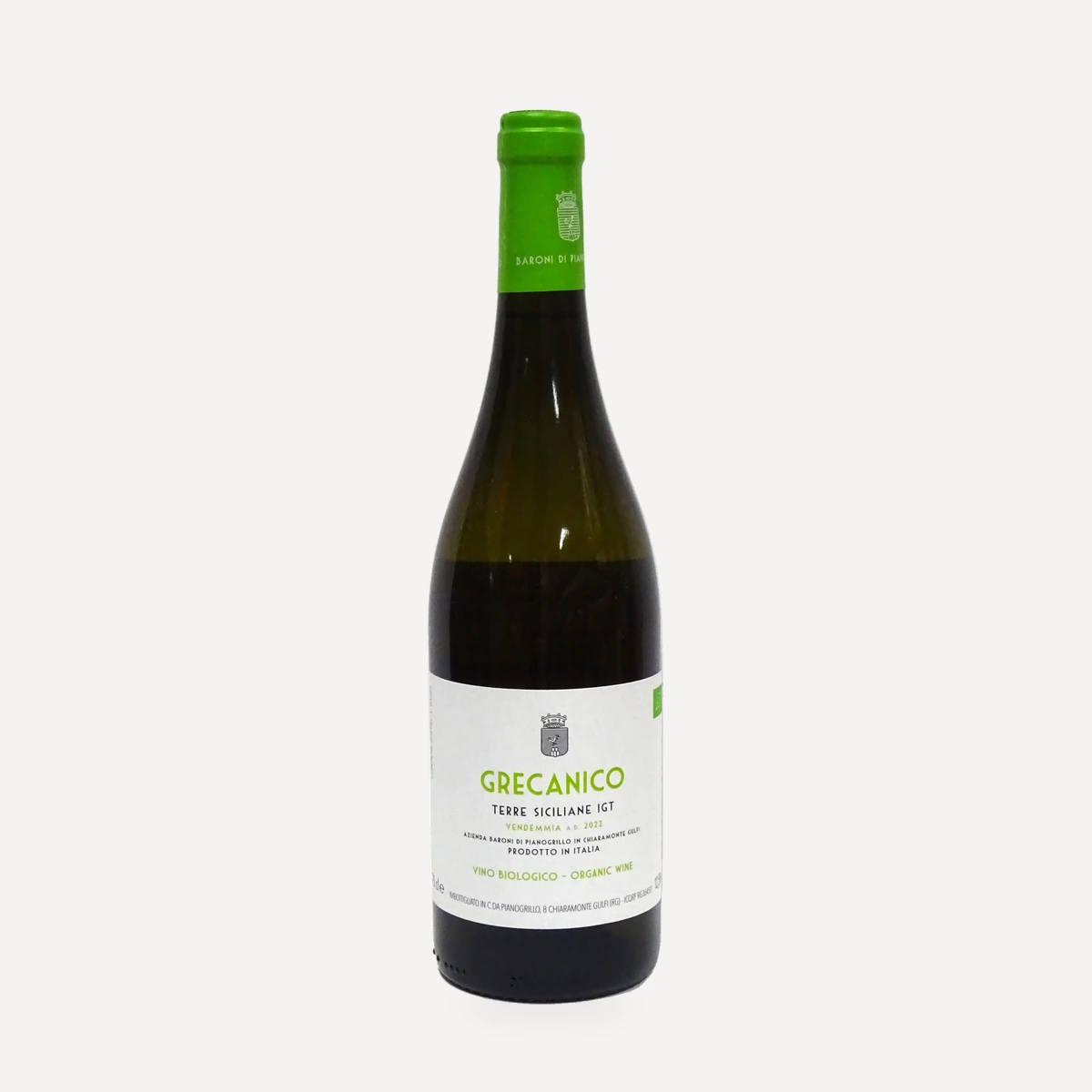
Grecanico
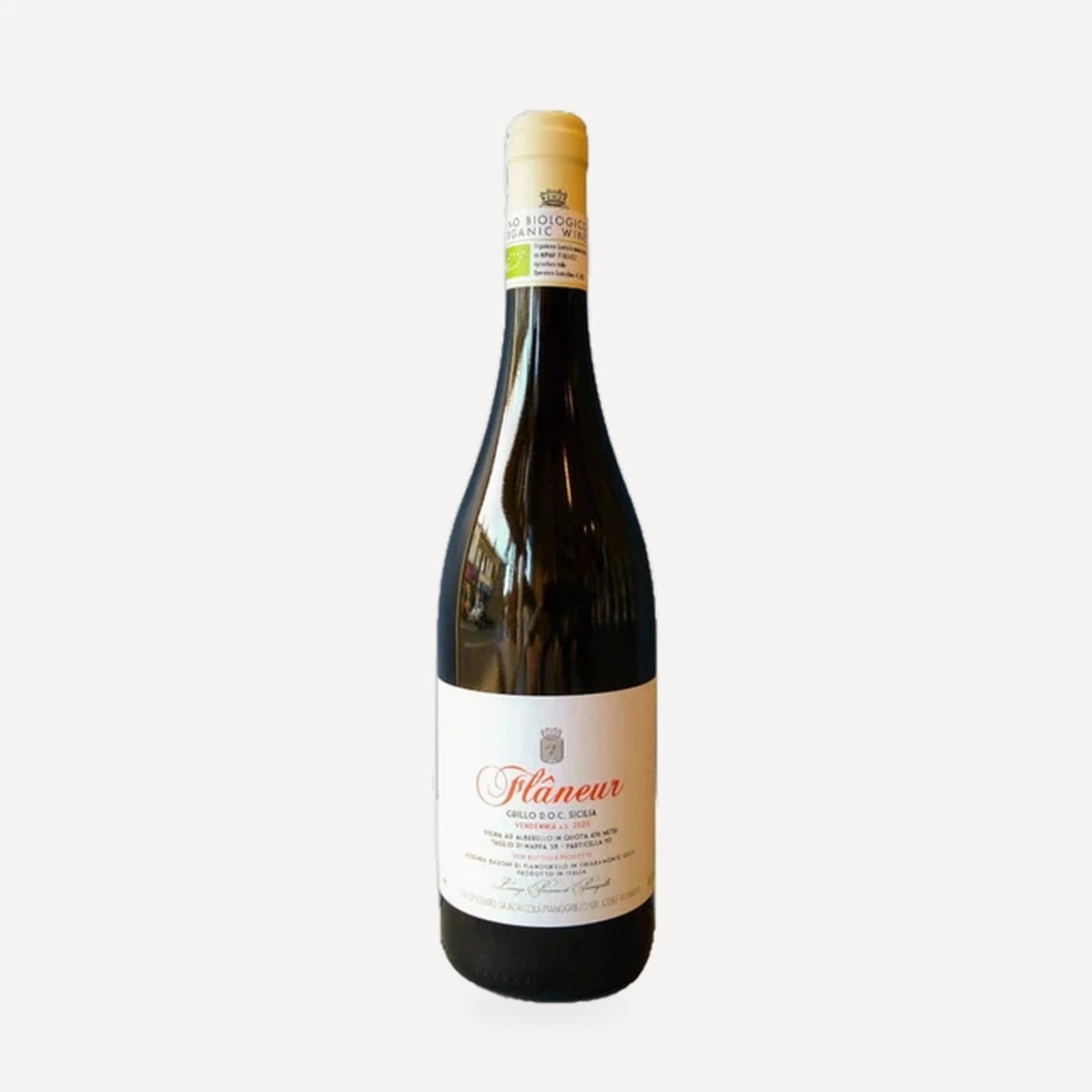
Flâneur
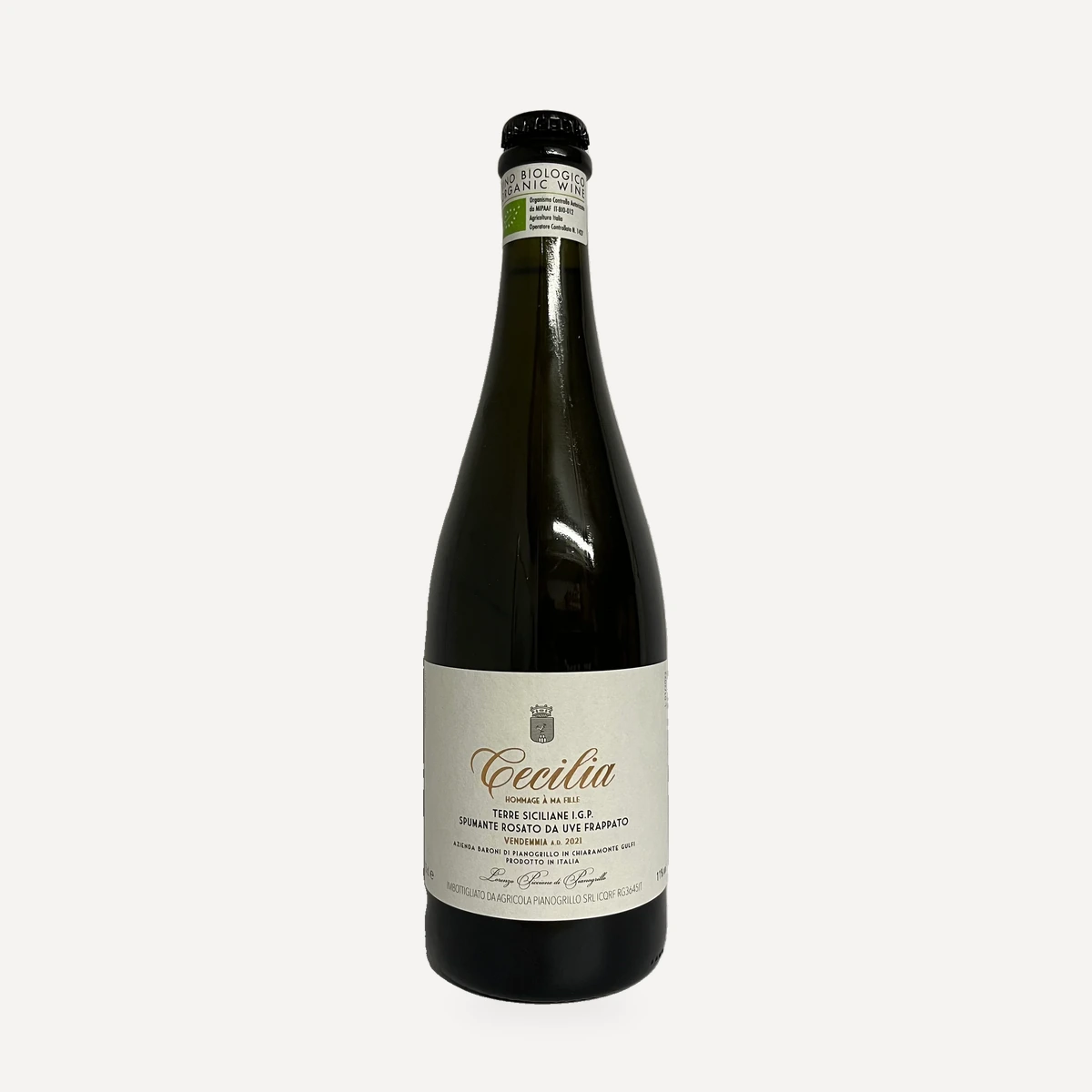
Cecilia
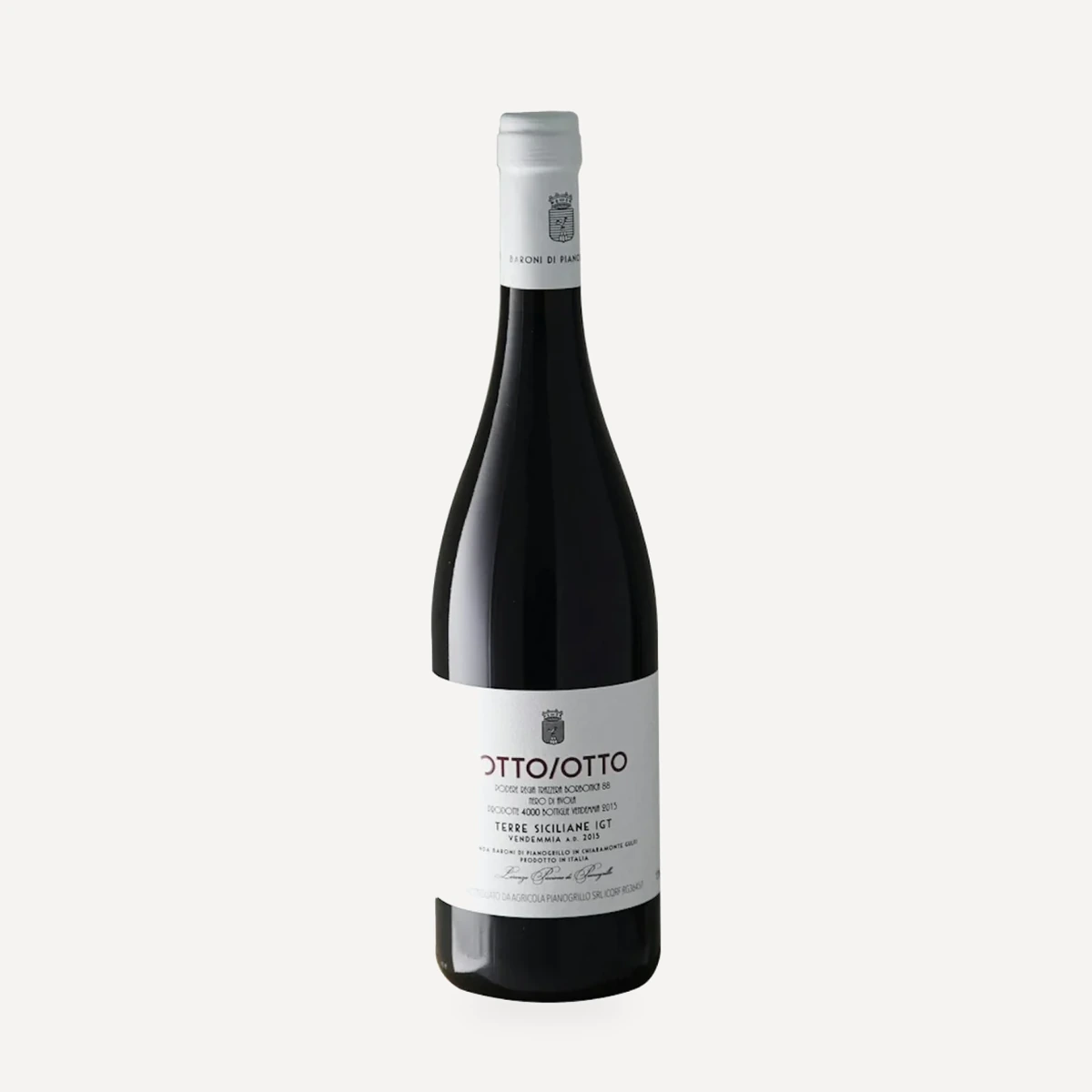
Otto/Otto