Questo vino
Vineyard and terroir
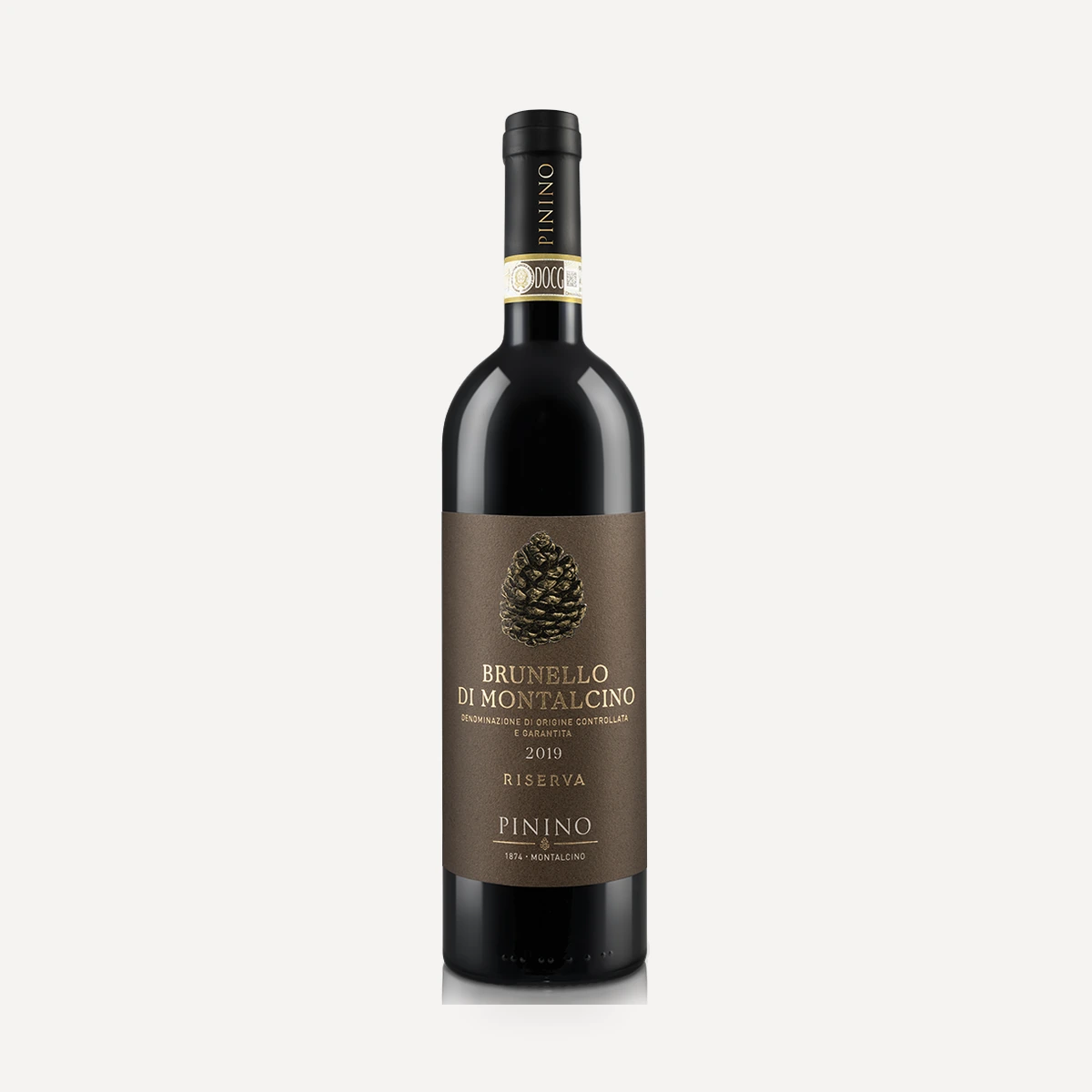
Produced only when strict quality standards can be met, the Riserva combines selected grapes from Pinino’s historic vineyard planted in 1980 with the finest fruit from Canchi. Pinino lies north of Montalcino at 284.2 metres, faces southeast and has a skeleton-rich soil containing marl and limestone. Canchi is northeast of Montalcino at 318.2 metres, also facing southeast, on an almost entirely clayey soil with traces of silt. The vines are trained to spurred cordon.
Grapes
100% Sangiovese Grosso.
Vinification
Fermentation takes place in temperature-controlled steel tanks, followed by 18–25 days of skin maceration.
Ageing
At least 36 months in oak casks and barriques.
Technical data
Production amounts to 1,300 bottles. Alcohol is 14%, total acidity 5 g/L and dry extract 29.3 g/L. Available in 750 ml bottles.
Tasting profile
Ruby red with garnet highlights. The bouquet begins with cherry and raspberry-confiture aromas before developing warm-spice notes. Full-bodied and smooth, with velvety yet clearly present, well-integrated tannins and a long, persistent finish.
Vintage notes
The year began with above-average temperatures and moderate rainfall, followed by a cooler spring. Summer temperatures were around average and rainfall was scarce. Previously accumulated water reserves, together with the absence of extreme heat peaks, kept the foliage largely intact and effective. The grapes therefore ripened slowly and evenly, reaching sound phenolic and technological maturity. Rain during the first week of September delayed harvest and helped moderate potential alcohol. The resulting wines showed elegance, finesse, balanced tannins, clearly defined aromas and pronounced primary-fruit notes.