Questo vino
Vineyard and terroir
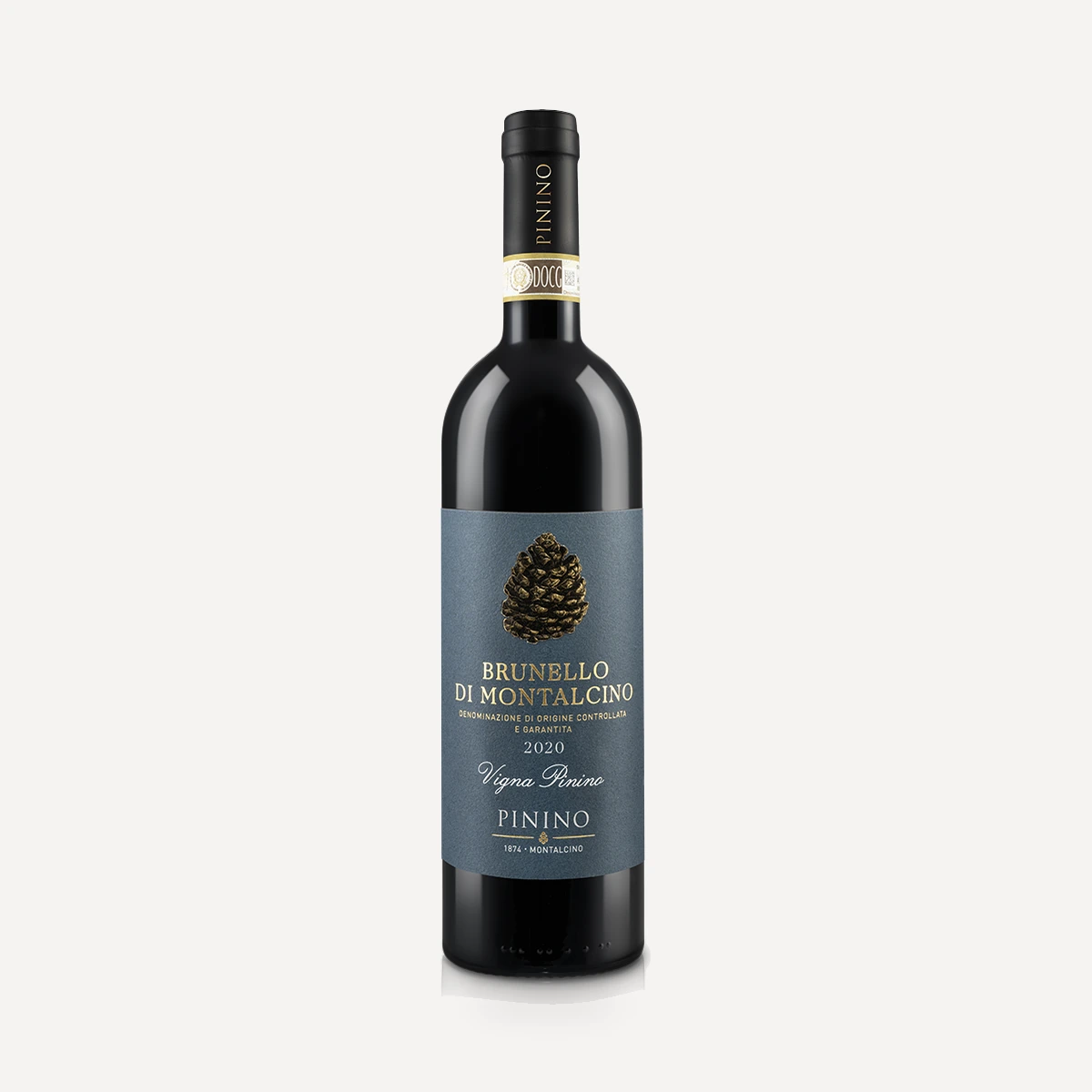
A cru produced exclusively from selected grapes grown in Vigna Pinino, the namesake vineyard in the estate’s historic heart. The site is north of Montalcino at 284.2 metres and faces southeast. Its skeleton-rich soil contains galestro and alberese; the English wine page also mentions tuff. The vines are trained to spurred cordon.
Grapes
100% Sangiovese Grosso.
Vinification
Fermentation takes place in temperature-controlled steel tanks, followed by 18–25 days of maceration on the skins.
Ageing
At least 30 months in oak casks and barriques.
Technical data
Production totals 4,000 bottles. Total acidity is 5 g/L and dry extract is 30.8 g/L. The wine page gives 14% alcohol, while the downloadable fact sheet gives 14.5%. Available in 750 ml bottles.
Tasting profile
Deep, intense ruby red. The aroma and palate are elegant and refined, with red-fruit notes of cherry, black cherry, redcurrant and raspberry. Oak supports rather than obscures the fruit. The palate is sophisticated, with velvety tannins and pronounced verticality.
Vintage notes
After a relatively dry January and February, March was cold, with rain and snow. Spring began with below-average temperatures before turning fairly warm, with normal precipitation. June was comparatively rainy, though the vines and berries developed regularly. July was mainly dry; August brought substantial downpours with temperatures around the seasonal average. September’s marked day-to-night temperature changes encouraged the formation of valuable compounds in and around the berries. Significant rainfall resulted in a relatively late harvest and grapes combining technological and phenolic ripeness with a strong aromatic component.