Questo vino
Vineyard and terroir
The grapes grow at 200 m above sea level on south- and south-east-facing vineyards. The vines average 20–30 years of age. The estate’s 12 ha of vineyards have clay soils containing pieces of rock, with dense, low-growing vines planted at 6,500–10,000 vines per hectare. Vineyard management is organic and follows a minimal-intervention approach, without chemical fertilisers or pesticides.
Vinification
The fully ripe grapes are harvested entirely by hand. They are placed with their skins in small oak barrels, where alcoholic fermentation proceeds without temperature control for about 30 days, until the natural sugars are exhausted. During maceration, the must is stirred three or four times daily. The grapes are then pressed very gently. No sulphur is added; the wine contains only traces produced naturally by the grapes during fermentation. It is bottled without filtration or clarification.
Ageing
The wine matures for three years in large Slovenian oak casks of 25 and 35 hl, followed by at least one year in bottle.
Tasting profile
The wine has a striking flavour and aroma. Its extended skin contact and traditional production methods produce natural flavour with powerful, complex and layered aromas.
Label / history
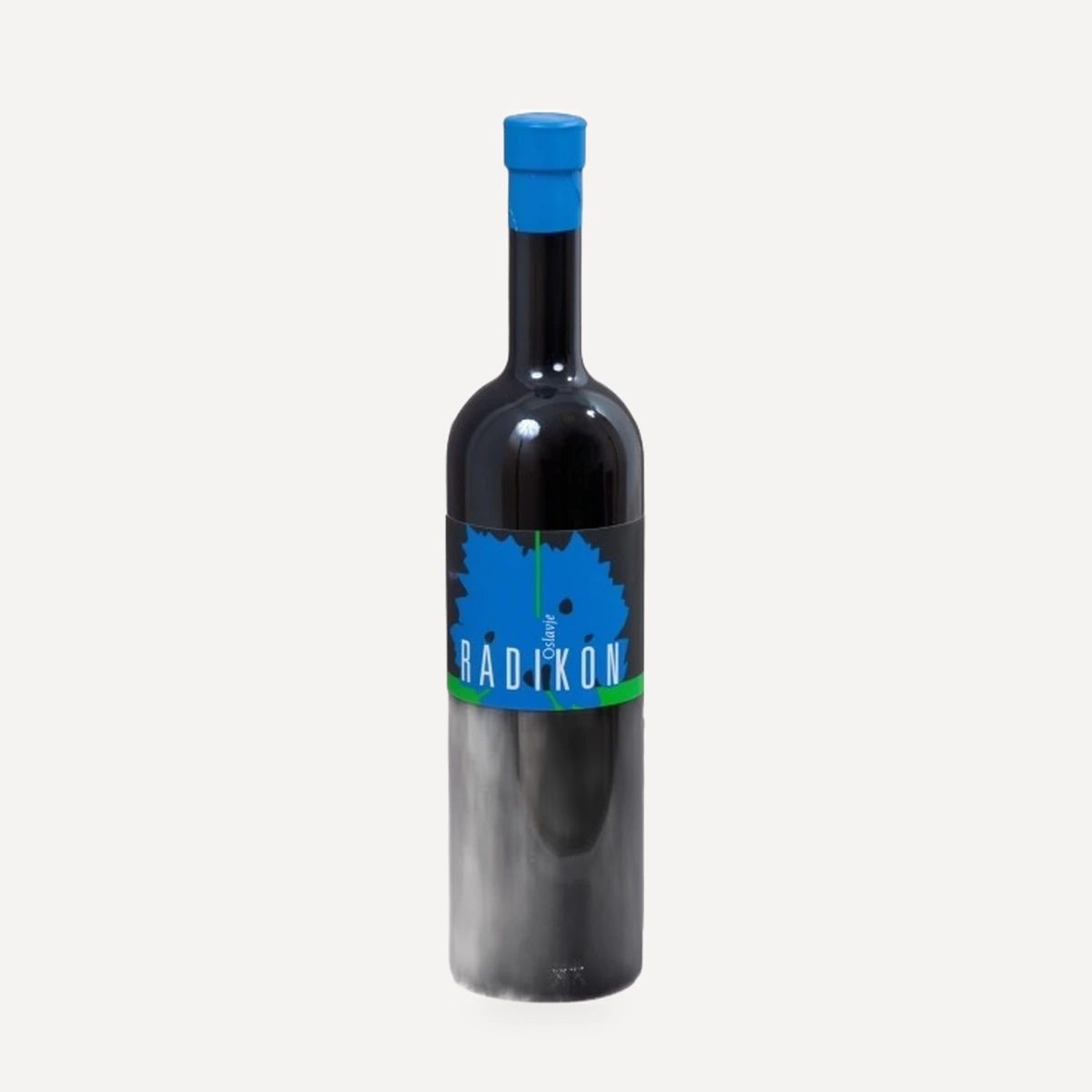
The wine takes its name from Oslavia. Its production follows methods used in the region before the 1930s, described by the estate as the “Slovenian style.” Stanko Radikon and oenologist Edi Kante designed the estate’s 0.5- and 1-litre bottles with narrow necks and the proportions of a 1.5-litre magnum. They are sealed with high-quality corks made from a special cork tree with very thin bark. Introduced in 2002, the bottles were designed to store wine and support its development.