Storia
Foundation and first vintage
Tenuta San Giorgio was founded in 1982 at Castelnuovo dell’Abate, in the southeastern part of the commune of Montalcino. The estate occupies a ridge overlooking the Val d’Orcia, with its highest position at approximately 400 metres above sea level.
The first vintage produced and released by the estate was 1985.
Entry into ColleMassari Domaine
In 2016, Tenuta San Giorgio became part of ColleMassari Domaine, the Tuscan agricultural and wine project created by the siblings Maria Iris and Claudio Tipa. It joined Castello di ColleMassari, Grattamacco and Poggio di Sotto as the domaine’s fourth estate.
Organic conversion
By 2018, the estate was undergoing conversion to organic farming. At that time it comprised 146 hectares, including 25 hectares of Sangiovese vineyards and approximately 26 hectares of olive groves.
Corporate management certification
On 12 July 2023, Località San Giorgio was included as a vine- and olive-growing operating unit within ColleMassari S.p.A. – Società Agricola’s ISO 45001:2018 occupational health and safety management certification. Certificate no. 2860 carried an expiry date of 11 July 2026.
Terroir
Tenuta San Giorgio lies at Castelnuovo dell’Abate in southeastern Montalcino. The property occupies the summit and slopes of a ridge overlooking the Val d’Orcia, beneath Monte Amiata. The estate’s highest position reaches approximately 400 metres above sea level, while its steep hillside vineyards extend from 250 to 400 metres.
The vineyards face east and southeast. Mediterranean winds arriving from the west help maintain a relatively dry climate, while pronounced differences between daytime and nighttime temperatures are particularly important toward the end of summer.
The soils contain abundant coarse mineral material and a marked clay component, with sections of conglomerate and outcrops of tuff. Variations among these soils, together with the vineyards’ position, provide contrasting conditions for the estate’s sole grape variety, Sangiovese.
Vinificazione
Sangiovese is the estate’s only cultivated wine grape. The vines are trained to cordon spur on steep hillside sites, and yields are kept very low. The combination of vineyard position and varied soils is intended to give Sangiovese sufficient scope to express complexity and individual character.
Harvest selection is performed manually. In 2018, the estate was undergoing conversion to organic cultivation; a subsequent completion date, certifying organization and current organic certificate status are not established.
Harvested grapes undergo careful manual selection. Alcoholic fermentation begins spontaneously and takes place in wooden vats and stainless-steel tanks. The wines receive long macerations accompanied by frequent pump-overs.
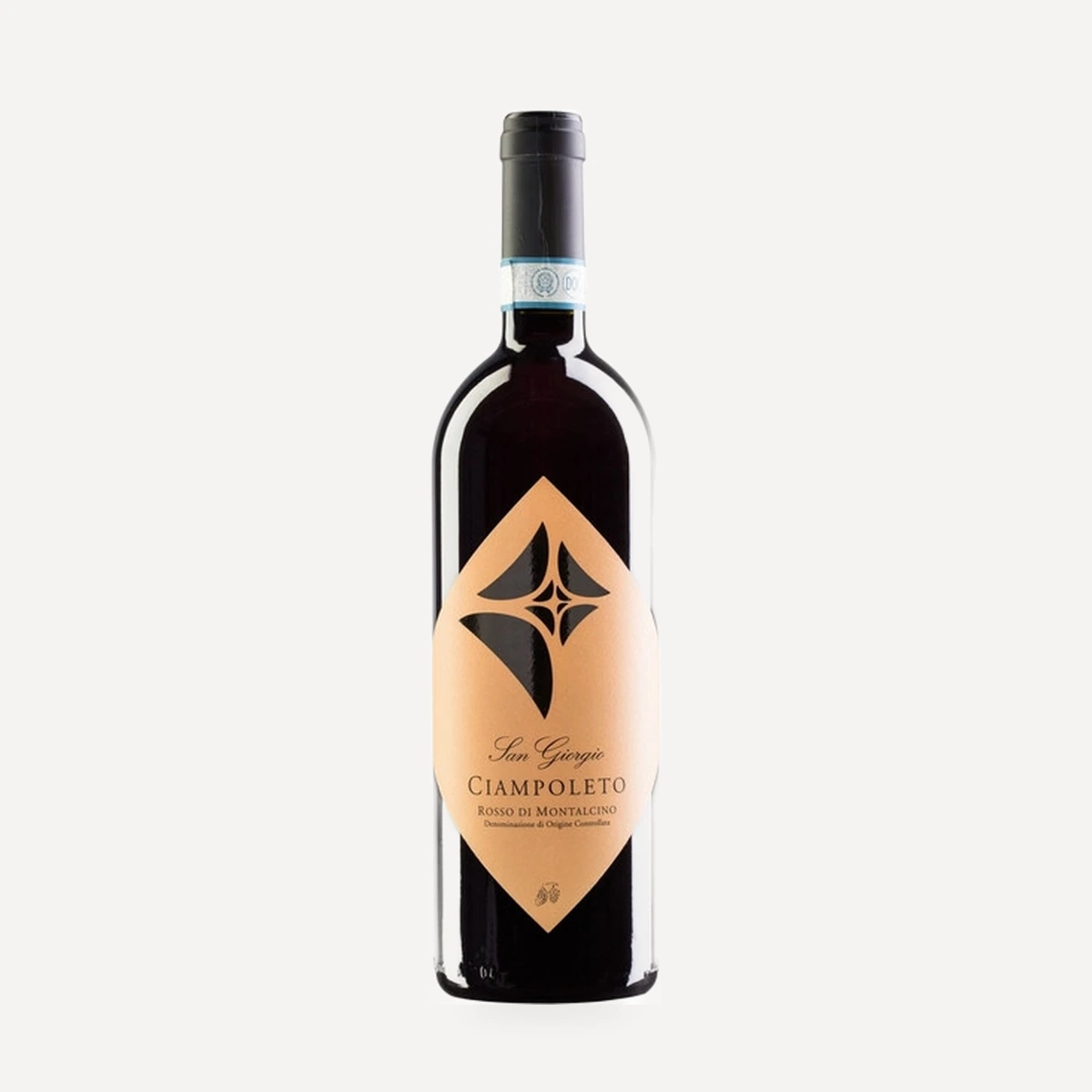
After malolactic fermentation, the wines mature in Slavonian oak casks. Rosso di Montalcino spends approximately one year in cask, followed by at least six months in bottle. Brunello di Montalcino spends three years in Slavonian oak and then at least one year in bottle before release.
Filosofia
The estate’s approach is centred on Sangiovese and the interaction between the variety, the elevated ridge sites and the property’s varied clay-rich, stony and tuff-influenced soils. Low vineyard yields, manual grape selection, spontaneous fermentation, long maceration and maturation in Slavonian oak form a restrained production model designed to preserve the grape’s complexity and character.
Vini
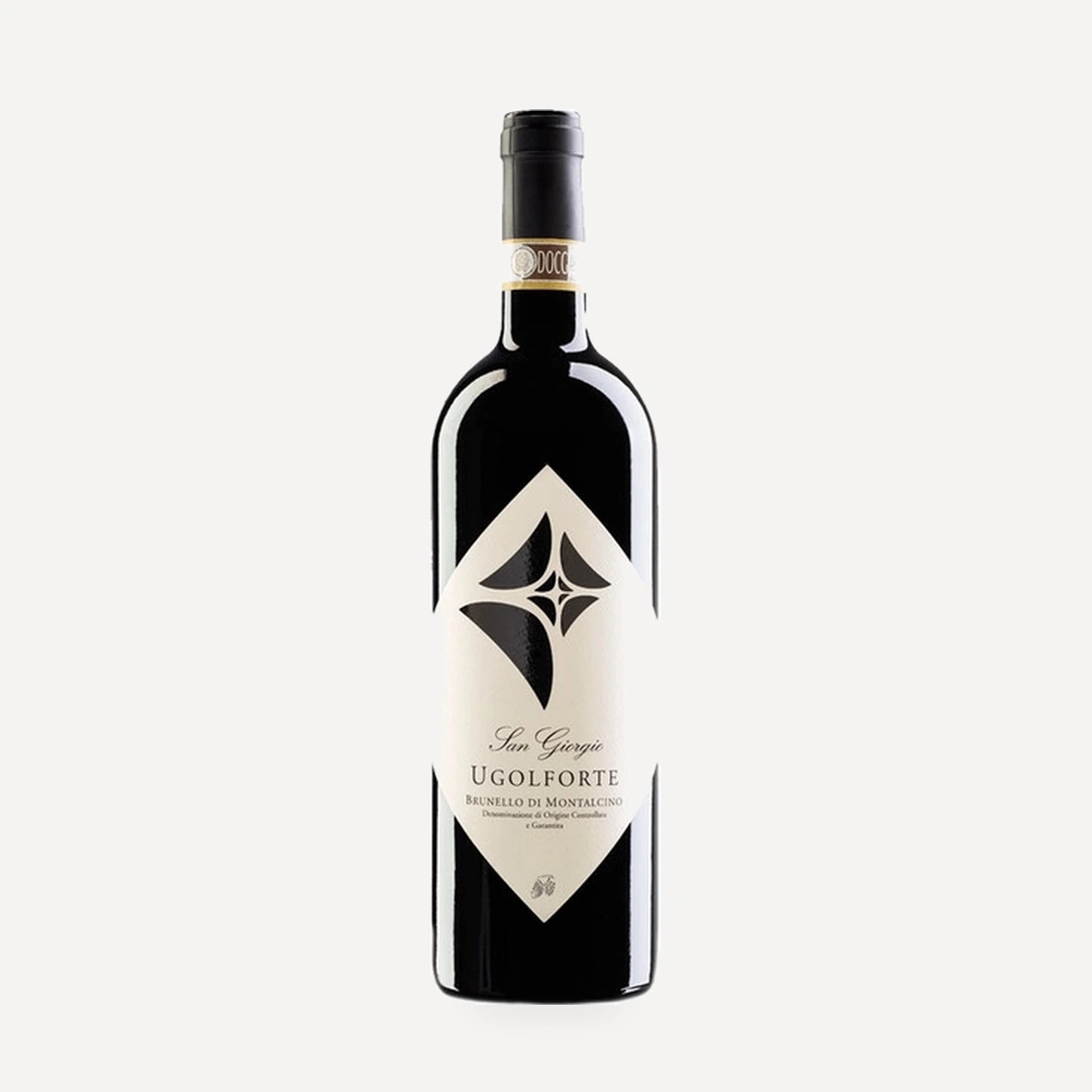
Ugolforte Brunello di Montalcino DOCG