Storia
Foundation and early development
Podere Sapaio was founded in 1999 as a new winegrowing project in the Bolgheri territory. The agricultural estate comprised 40 hectares divided between the municipalities of Castagneto Carducci and Bibbona. Its vineyards were planted principally with varieties of Bordeaux origin—Cabernet Sauvignon, Cabernet Franc and Merlot—supplemented by smaller quantities of other grapes. Several hectares were devoted to Frantoio, Moraiolo and Leccino olive trees.
The company operated as Podere Sapaio sas, società agricola di M. Piccin & C., with Massimo Piccin becoming the central figure in the estate’s development. The project adopted experimentation and innovation as guiding principles, seeking new interpretations of Bordeaux varieties in Bolgheri while aiming to reconcile power, elegance and longevity.
Establishment of the wine identity
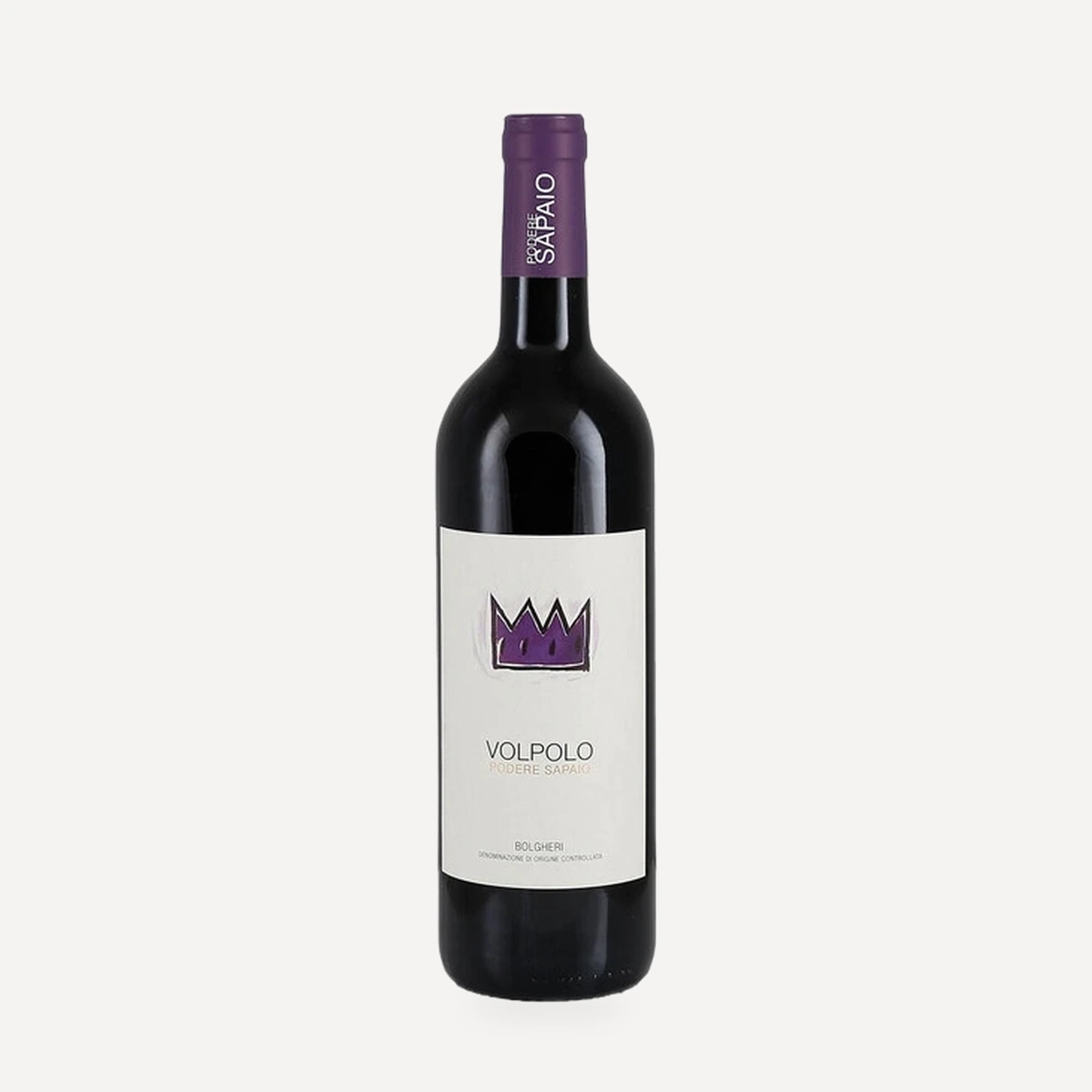
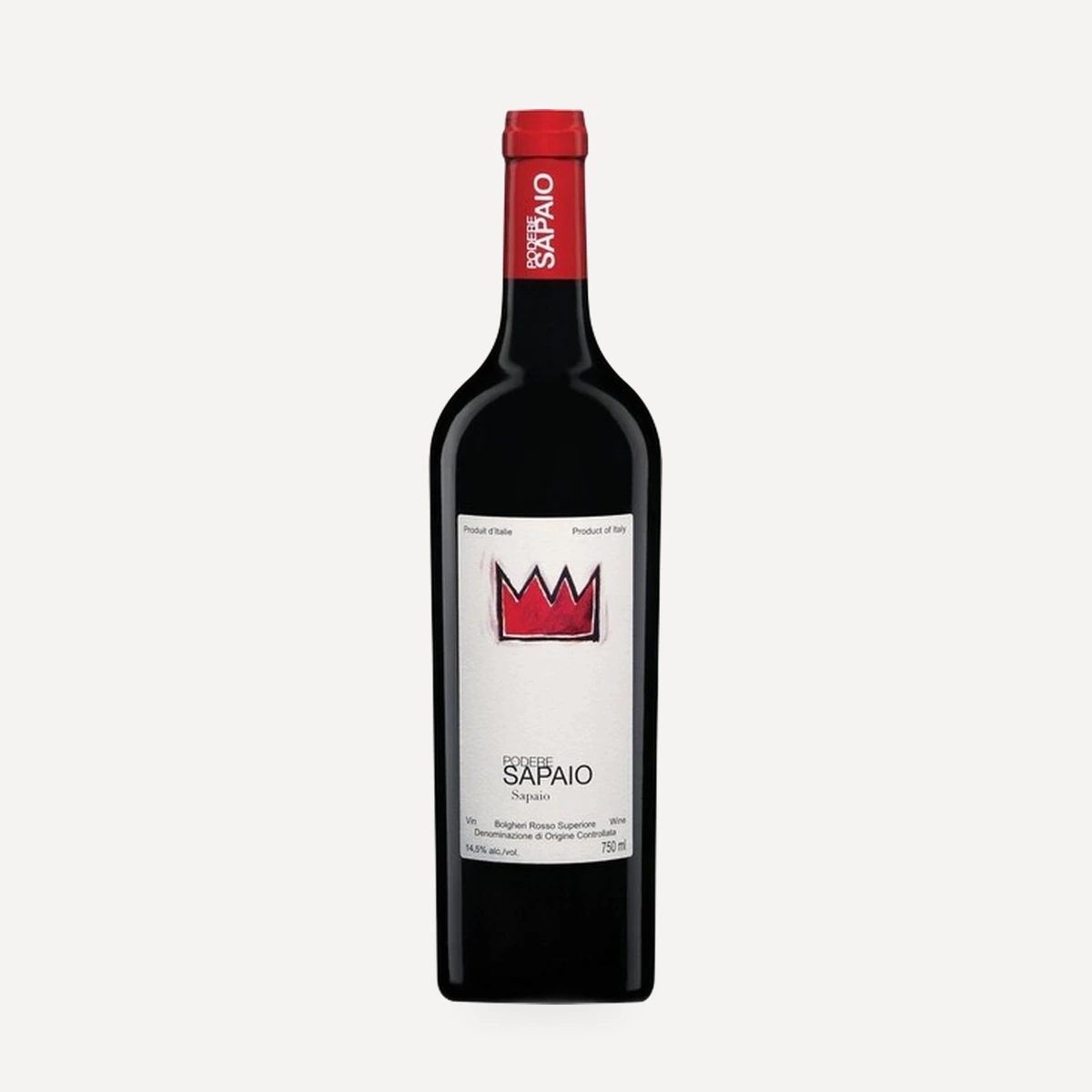
Volpolo was released as an IGT Toscana wine in 2003. From the 2004 vintage it became Bolgheri Rosso DOC. The earliest Sapaio vintage represented in the estate’s historical catalogue is 2004, classified at that time as Bolgheri DOC Superiore.
The names of the two wines were drawn from Sapaia and Volpola, the names of two old Tuscan grape varieties. This choice was intended to give the wines an explicitly local identity despite their predominantly Bordeaux-derived varietal composition. A crown became the estate’s visual emblem, conceived as a tribute to the perceived nobility of wine and the Bolgheri territory.
Technical records show the vineyard surface growing from 22 hectares for the 2005–2006 vintages to 25 hectares by the 2007 and 2009 vintages. These vineyards were trained to double spur-pruned cordon at a spacing of 0.75 × 1.80 metres, equivalent to approximately 7,500 vines per hectare. Harvesting was manual and included grape selection.
Organic conversion and diversification
In August 2016, Massimo Piccin met distiller Priscilla Occhipinti, owner of the Nannoni distillery. Their shared emphasis on precision and close control led to Podere Sapaio’s first grappa project. Carménère was selected as the sole variety. Unpressed, wine-soaked pomace was delivered to the distillery and processed separately through an artisanal steam system on the same day that the wine was devatted. The first production comprised 632 half-litre bottles from the 2016 harvest, released in April 2017.
The 2017 vintage marked the beginning of officially certified organic production after several years of organic farming. The change was presented as an ethical and environmental commitment intended to produce wholesome agricultural products while respecting nature.
Recent winemaking and cultural projects
By 2019, Alessandro Nannelli was identified as Podere Sapaio’s oenologist. He described the estate’s work as an attempt to balance the gentleness and elegance of its French-origin grape varieties with the strength and expressiveness of the Maremma landscape. He also emphasized that oak had been integrated in a measured way from the beginning of the project rather than dominating the wines.
The 2019 growing season began with a mild winter and a cool early spring. Frequent spring rain and well-timed summer rainfall supported even ripening, healthy vegetative growth, high must acidity and strong phenolic quality. Harvest ran from 5 September to 8 October, returning to the mid-September-to-mid-October schedule regarded as customary approximately 15 years earlier.
In 2020, Nannelli documented the season and harvest as a sequence of vineyard and cellar reflections. His account placed grape quality at the centre of winemaking and described wine as the result of nature providing the fruit and people interpreting the vineyard and transforming the grapes. The harvest was presented as the culmination of a year encompassing fertilization, pruning, plant-protection treatments and close vineyard observation.
During 2020, artist Emanuele Kabu was commissioned to create an animated project expressing an “eco-techno-zen” interpretation of Podere Sapaio. In 2021, the estate developed Crowns in Ferment, an art and communication project centred on its crown emblem. Artist Katya Scarpulla, known as Donna Katya, translated themes of nature, Bolgheri, history, the sea, music and cultural support into brightly coloured pop graphics. The project also introduced a red-and-purple digital crown and framed the emblem as a reminder that each person has a crown of their own and can pursue their own dream.
Terroir
Podere Sapaio’s 40 hectares are divided between Castagneto Carducci and Bibbona in Tuscany’s Bolgheri territory. The land lies on Quaternary deposits. Its soils range from loose, coarse sandy sediments to alluvial deposits with calcareous, free-draining profiles.
The estate’s oenological interpretation sets the elegance and gentleness of its French-origin varieties against the toughness and expressive force of the Maremma landscape, historically described as former marshland. This contrast is considered central to the combination of varietal refinement, complexity, power and structure sought in the wines.
Vinificazione
Podere Sapaio practised organic agriculture for several years before obtaining official certification beginning with the 2017 vintage. Organic farming is treated as an ethical and sustainable approach intended to respect nature while producing healthy agricultural products.
Plant protection is based on close observation, prevention and alternatives compatible with organic farming. Natural plant-strengthening and care preparations include extracts of brown seaweed and laminaria, orange essential oil and propolis. The approach seeks to reinforce the vines and reduce dependence on more invasive interventions.
The vineyards are followed throughout the year through fertilization, pruning, treatments and close monitoring. The harvest is manual, with selection of the fruit. Vineyard thinning includes a green harvest around véraison: immature bunches are removed to reduce the crop across the cultivated surface and concentrate work on the remaining grapes.
Alessandro Nannelli’s harvest accounts place listening, observation and manual care above mechanization. Each vintage is treated as distinct; the objective is to recognize its particular variation rather than impose an abstract model of perfection. In 2019, spring and summer rainfall sustained regular ripening, must acidity and phenolic development. Harvest began on 5 September and ended on 8 October.
Winemaking begins with manually harvested, selected grapes. Alcoholic fermentation takes place at controlled temperature in stainless-steel tanks, accompanied by extended maceration on the skins. Malolactic fermentation is carried out in barriques. French-oak barriques are used for maturation, followed by further refinement in bottle.
Oak is intended to be integrated into the wine rather than dominate it. Alessandro Nannelli characterizes the approach as one that has sought balanced wood influence from the project’s early years, allowing the different varieties to retain aromatic expression and complexity.
The production philosophy gives priority to grape quality and to carrying the work of the vineyard into the cellar with minimal loss. During harvest, fruit is handled with care, and cellar work aims to reveal the grapes’ best qualities. Nature supplies the vintage and the fruit; the winemaking team interprets those conditions and transforms the grapes, accepting the small differences that make each year distinct.
Filosofia
Podere Sapaio defines its approach through experimentation and innovation. Its central objective is to explore new expressions of Bordeaux-origin grape varieties in Bolgheri and to create wines that unite power, elegance and longevity.
The estate’s agricultural philosophy treats ethical, sustainable viticulture as the only viable path. Prevention and plant strength come before remedial intervention, with natural preparations used to support the vines while extending organic practice beyond minimum compliance.
In the cellar, the guiding principle is that wine begins in the vineyard. High-quality grapes are indispensable, and technology cannot replace observation, experience, manual effort and sensitivity. Nature determines the fruit and the conditions of each vintage; people interpret the vineyard and transform the grapes. Because every season differs, the goal is continual improvement and attention to nuance rather than a fixed idea of a perfect harvest.
The estate also treats art, music and communication as extensions of its identity. Its crown emblem honours wine and territory while expressing the idea that individuals can pursue and give form to their own aspirations. Nature, Bolgheri, history, the sea, music and support for cultural activity recur throughout its visual projects.
Vini
Sapaio