Storia
Della Gherardesca origins
The estate’s viticultural history reaches back to the second half of the 17th century, when the noble Della Gherardesca family began working with wine on its lands at Bolgheri.
Guido Alberto della Gherardesca
The decisive early figure was Guido Alberto della Gherardesca (1780–1854), a committed viticulturist who brought a more purposeful focus to winegrowing on the family’s Maremma holdings. In 1833 he became maggiordomo maggiore to Grand Duke Leopold II, while continuing to devote himself to enology on the family estate.
Inheritance in the 1930s
During the 1930s, the land passed to Carlotta della Gherardesca Antinori, mother of Piero Antinori, and to Carlotta’s sister. The latter was married to Mario Incisa della Rocchetta and received the neighboring Tenuta San Guido as her dowry. This inheritance brought the Guado al Tasso property into the Antinori family line.
Development of the estate range
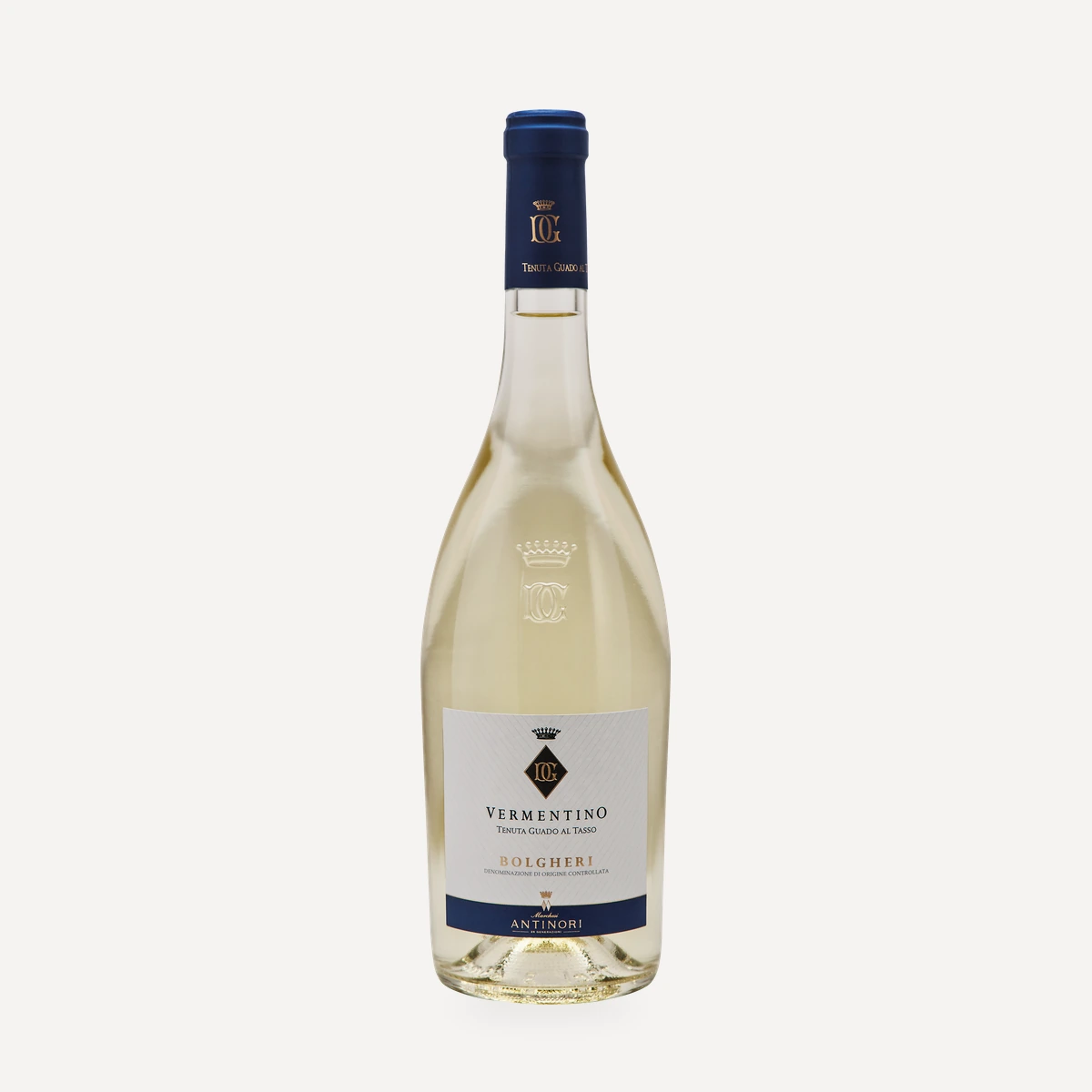
The first vintage of Guado al Tasso was produced in 1990. Vermentino followed with its first estate vintage in 1996, created to reintroduce a variety native to this part of the Tyrrhenian coast and valued for its aromatic character.
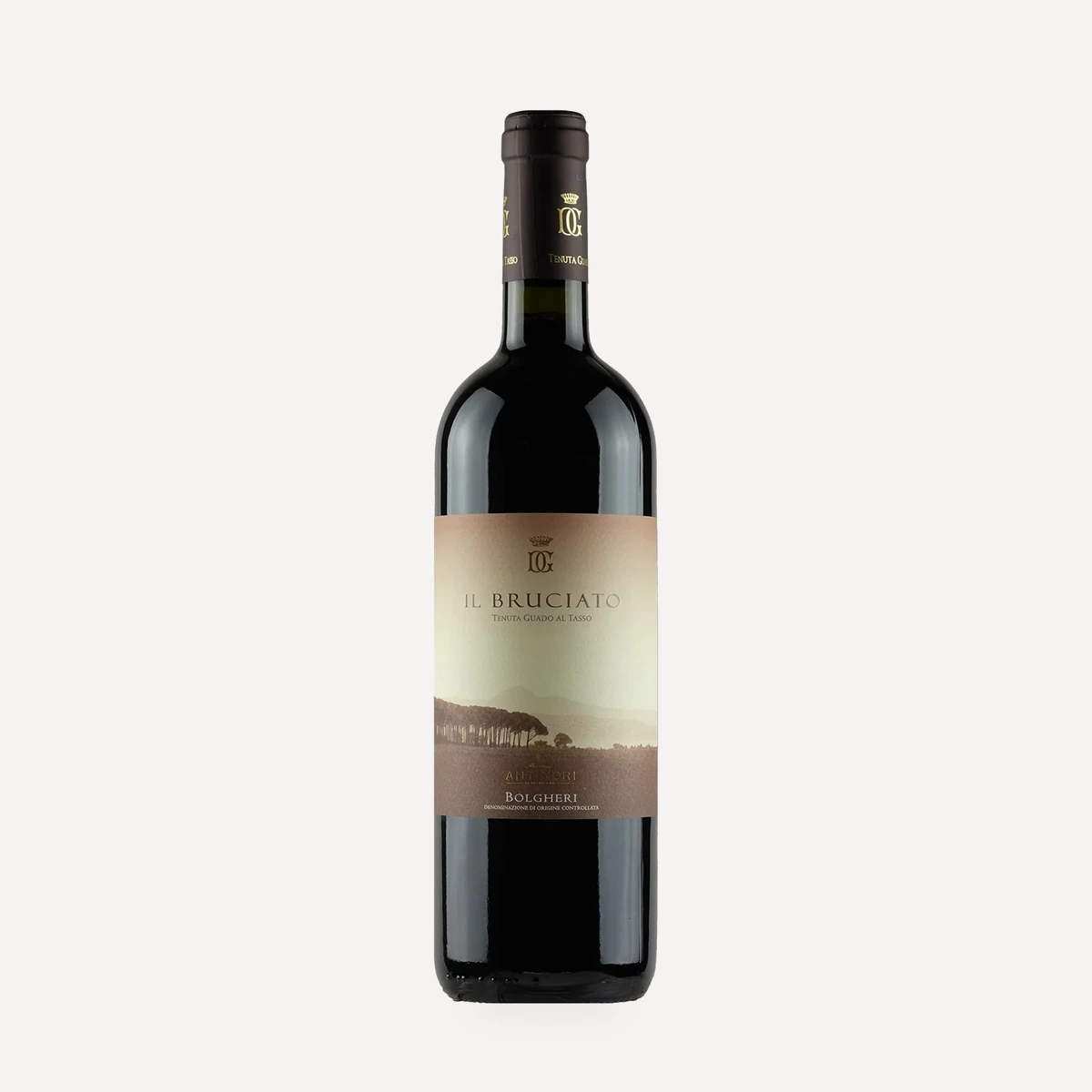
Il Bruciato originated in the difficult 2002 harvest as a modern interpretation intended to make Bolgheri’s character more widely known. Its initial blend followed that of Guado al Tasso; in later years the varietal composition changed and a dedicated group of vineyards was selected. Il Bruciato was not produced in 2003.
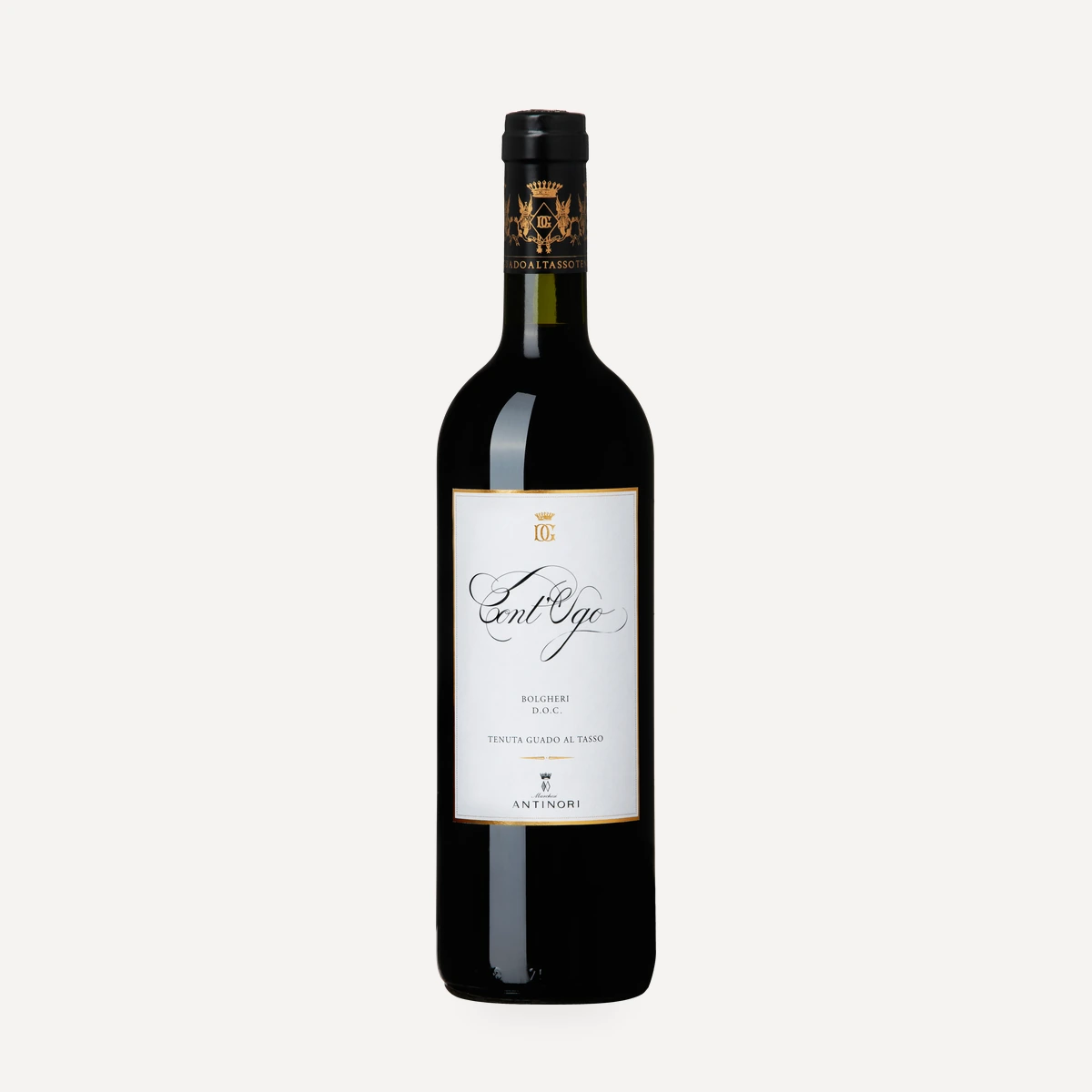
Matarocchio emerged from the search for the fullest expression of one grape variety and one vineyard parcel. Its first cited vintage is 2007, a year considered sufficiently distinguished for the project. The range subsequently expanded to include Cont’Ugo, an interpretation of the estate’s Merlot sites, alongside Scalabrone rosé and the estate’s Vermentino.
Terroir
Tenuta Guado al Tasso lies within Bolgheri DOC on the Upper Maremma coast, approximately 100 km southwest of Florence. Its vineyards occupy a plain encircled by rolling hills and open toward the Tyrrhenian Sea. This landform is known as the Bolgheri Amphitheatre.
The principal vineyards lie at the foot of the amphitheatre, generally around 50 m above sea level; certain Merlot sites used for Cont’Ugo stand between 45 and 60 m. The amphitheatre’s shape creates marked temperature shifts between day and night. After sunset, cold air descends from the surrounding hills and cools the vine rows, conditions associated with aromatic development and complete berry ripening.
The nearby sea moderates the climate. Persistent breezes temper summer heat and winter cold, clear the sky and sustain high solar exposure. The combination of marine influence, the enclosing hills and nocturnal downslope air gives the estate a distinct set of mesoclimatic conditions.
The soils are alluvial in origin and vary considerably across the property. Textures range from sandy clay to silty clay; other sites are described as silty-sand or sand, while the Cont’Ugo Merlot vineyards have clay-loam soils. Some areas contain a significant proportion of very fine gravel or rocky material locally identified as scheletro or agglomerato bolgherese. This variability shapes the character of the different varieties and parcels.
Vinificazione
The estate manages approximately 320 ha of vineyards as separate parcels whose fruit can be harvested according to its individual stage of ripeness. The vineyards benefit from continual marine breezes, high sunlight exposure and cooling nocturnal air descending from the Bolgheri Amphitheatre.
Harvesting is carried out by hand, with grapes collected in 15 kg crates. Parcel-by-parcel selection allows the estate to respond to differences in soil, exposure and seasonal development. Dedicated vineyard groups have also been identified for specific interpretations, including Il Bruciato, while Matarocchio was conceived around one variety and one parcel.
The winery is structured to preserve differences among vineyard parcels. Lots may be harvested and vinified separately according to ripeness and berry character, then evaluated individually before blending. Estate visits encompass the working winery and its architectural, enological and viticultural spaces, including areas devoted to vinification and maturation.
Filosofia
The estate’s guiding idea is to express Bolgheri through the interaction of variety, parcel and vintage. Its range explores both blended interpretations and focused expressions of a single variety or site. Matarocchio was conceived as the maximum expression of one grape and one vineyard parcel, while Cont’Ugo offers a distinct perspective on Merlot; Il Bruciato was created to communicate Bolgheri in a modern, accessible form.
Across these projects, the stated ambition is a territorial identity combining elegance, depth and complexity. Experimentation is presented alongside the estate’s long continuity of viticulture, with parcel selection and varietal adaptation used to clarify the differences within the property.
Vini

Guado al Tasso
Il Bruciato

Scalabrone
Vermentino
San Walfredo Bolgheri Superiore DOC

Matarocchio