Storia
Education and the idea of returning
In 2013, Sergio Genuardi began studying Viticulture and Oenology in Palermo, initially out of curiosity. His subsequent education and work took him progressively farther from Sicily, while strengthening his attachment to his native land.
In 2016, the desire to return began to take concrete form. He conceived a personal, unconventional wine that would express both his character and the territory around Casteltermini. He chose a high-elevation vineyard in the Monti Sicani, rooted in poor gypsum-and-limestone soil.
2021: the first harvest at home
The 2021 season was Genuardi’s first harvest at home and his first conducted there independently. He describes it as a year of conversion. One of the old rural buildings, or robbe, on the property was rapidly transformed into a small winery, while work began to correct earlier mistakes in the vineyard.
The vineyard had been planted a rittochino, with the rows running down very steep slopes. Because earlier erosion had already caused substantial soil loss, Genuardi stopped cultivating the soil. At budbreak, he observed that the gradient produced marked differences in phenological development. Vines of the same variety and age therefore could not be expected to ripen uniformly.
The 1.3-hectare vineyard was divided into seven blocks. As the season progressed, Genuardi concluded that their differences could produce distinct wines and decided to harvest the blocks at seven separate moments. Fruit from the same variety and even the same row—whose longest example is approximately 40 metres—arrived with clearly different ripeness levels and characteristics. This became the Le Sette Vendemmie project.
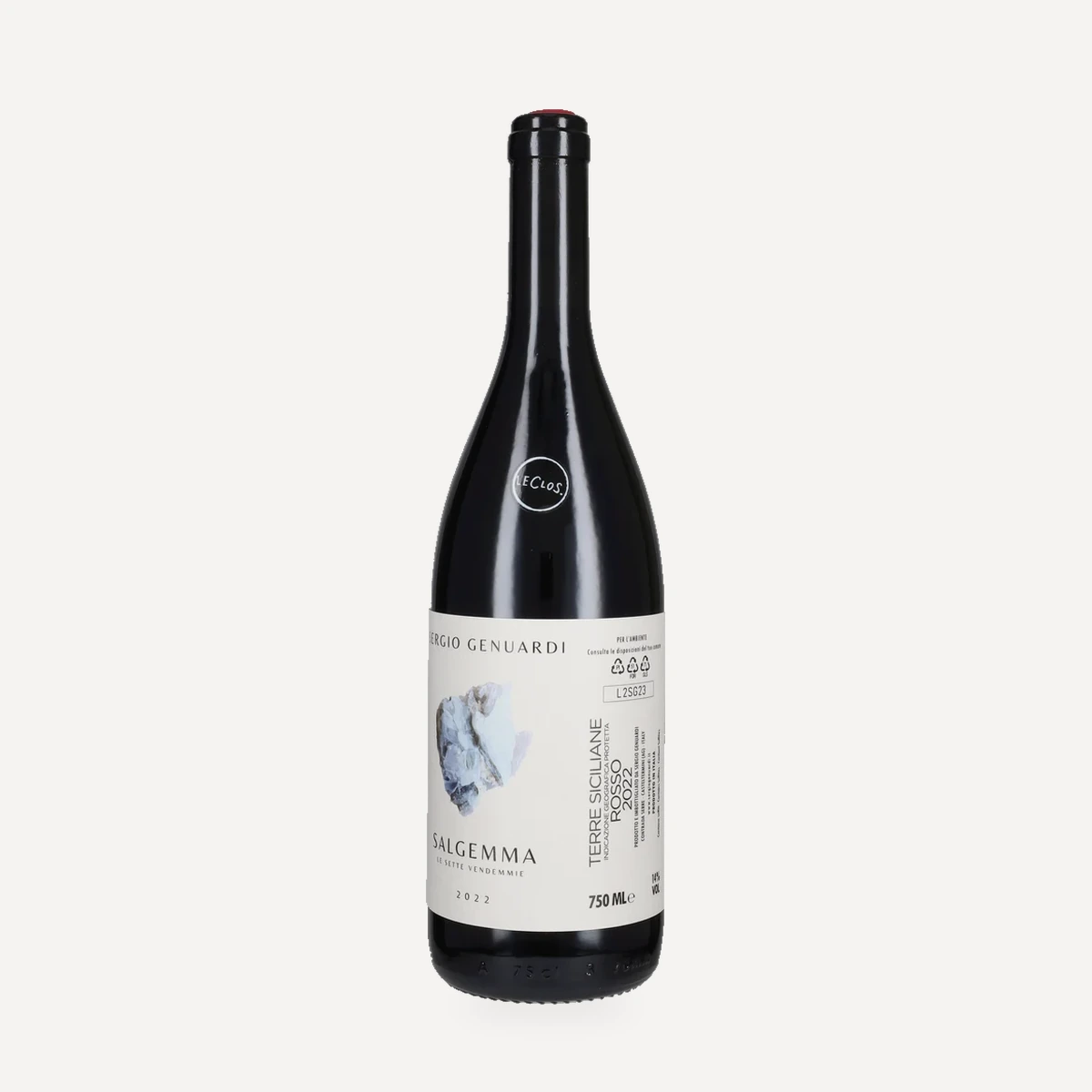
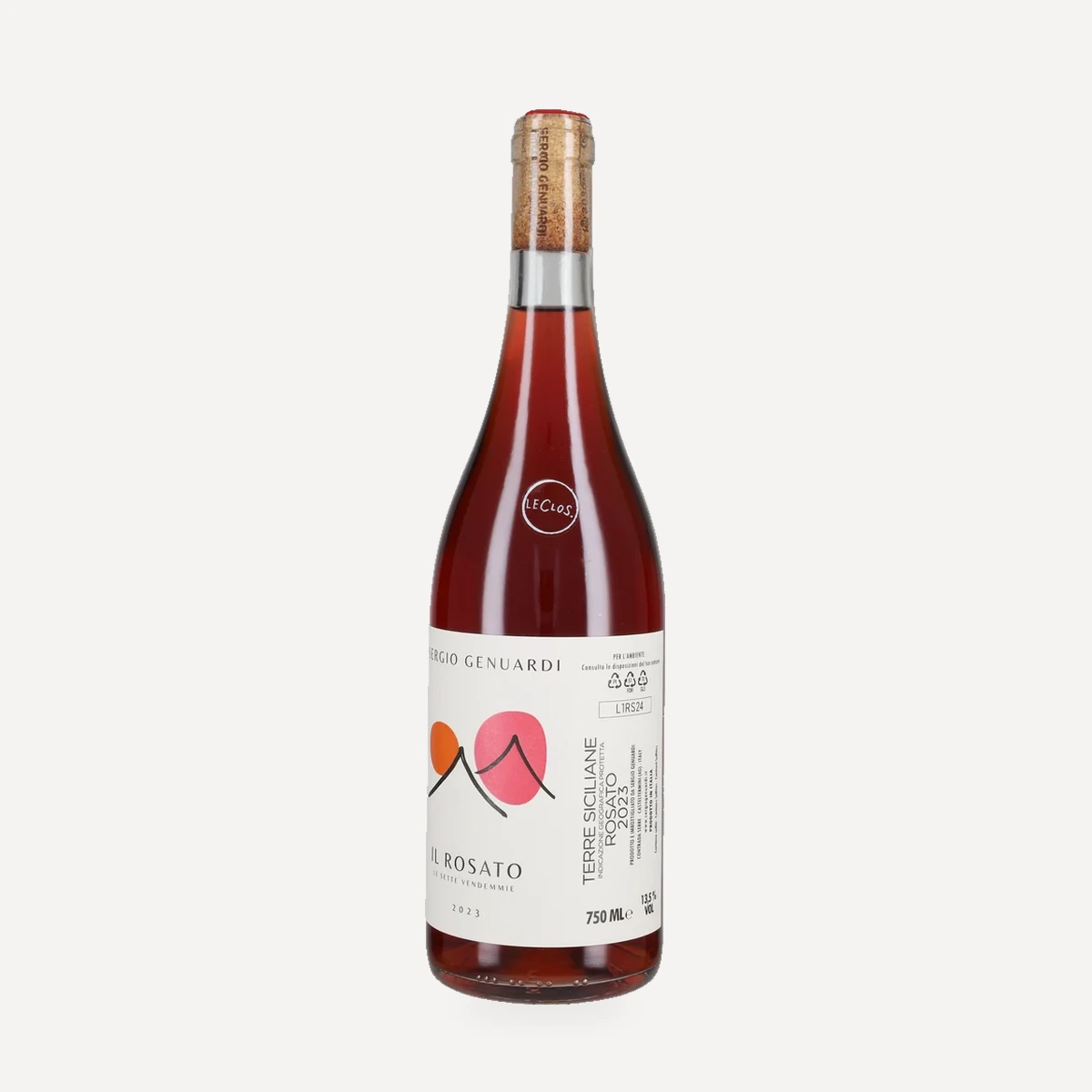
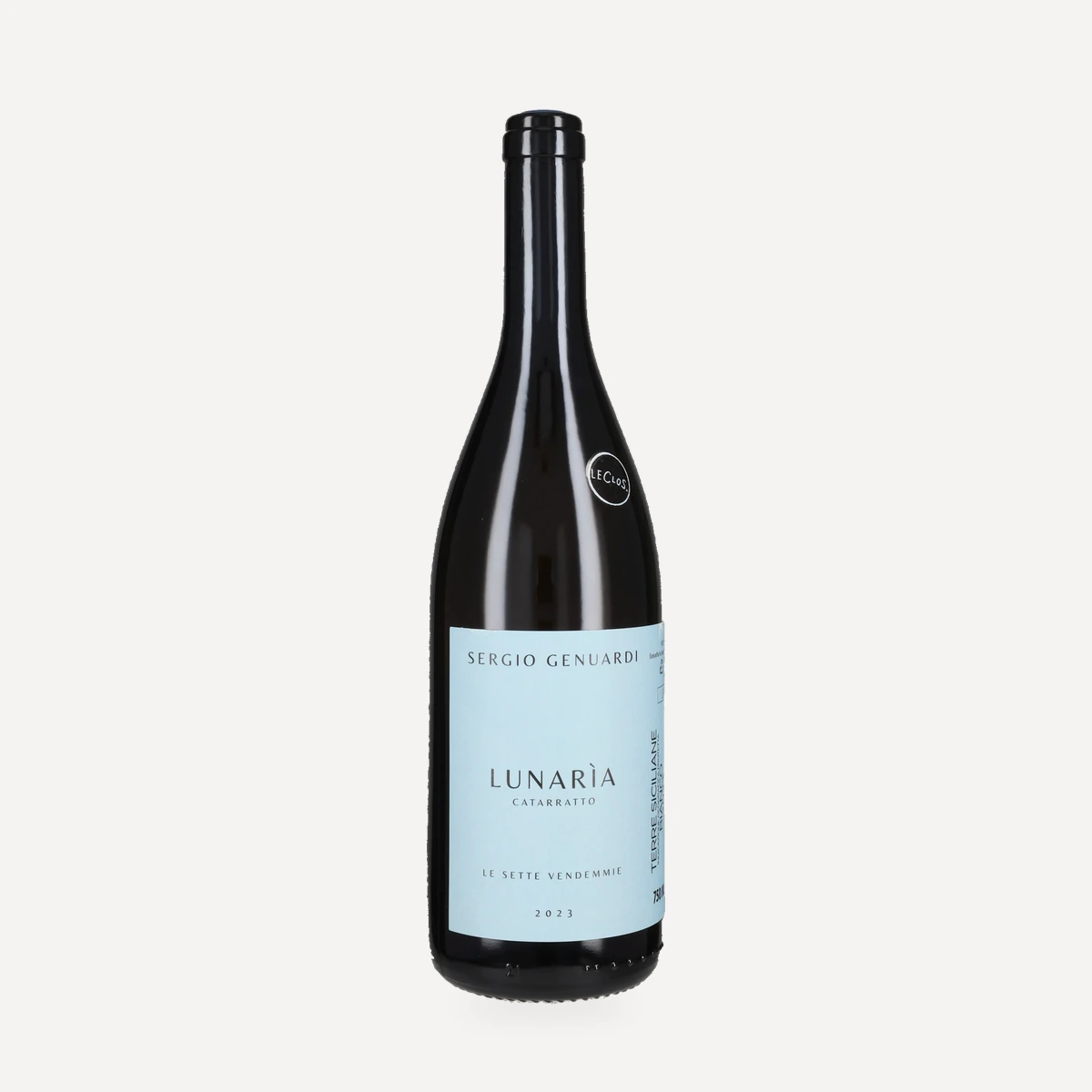
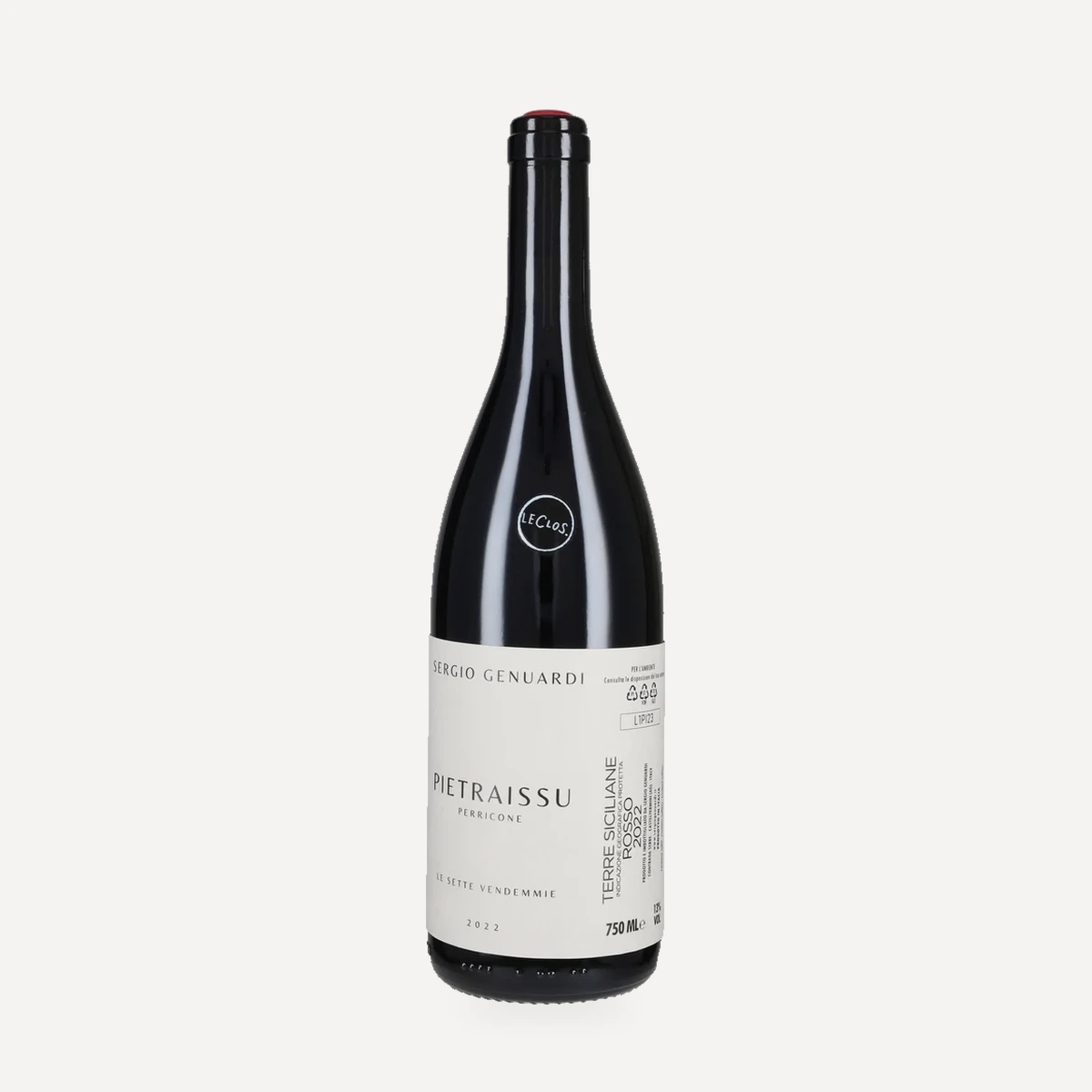
Four labels emerged from that first home harvest: Lunarìa, Il Rosato, Salgemma and Pietraissu. They were conceived as related interpretations of a territory marked by gypsum, sulfur, salt and limestone. Salgemma was the first label and the wine Genuardi considered most representative of himself.
2022: drought and compressed harvest dates
The 2022 growing season was dry, drought-stricken and difficult. No rain fell from May until the end of August, when intense precipitation arrived over only a few days and placed the crop under further pressure. Heat and water stress depleted nitrogen compounds in the vines, contributing to slow, difficult fermentations. Compared with 2021, the intervals between the seven harvests became much shorter, acidity declined and sugar levels rose.
Harvest began on 2 September with Catarratto from block 1. Nero d’Avola from blocks 3, 4 and 5 was collected on three different days beginning on 10 September so that the resulting lots would have comparable analytical values. Perricone from blocks 2 and 7 was picked in mid-September, notably earlier than its customary early-October harvest. The season concluded at the end of September with Nero d’Avola from block 6.
2023: severe downy-mildew pressure
By the 2023 harvest, Genuardi had completed eleven vintages across different European growing areas, yet regarded this as the most uncertain and complicated season he had encountered. He compared it with 2018: there was less rot, but substantially greater downy-mildew pressure. The disease scorched inflorescences and destroyed some of the least resilient vines.
Conditions had remained satisfactory until early May, with only one treatment applied. Three consecutive days of rain then kept the flowers wet before fruit set and initiated the first downy-mildew infection. After the fifth treatment, Genuardi ceased further applications. Vineyard work shifted to opening the canopy, carefully removing necrotic bunches, green pruning and extensive leaf removal.
The crop ultimately declined by 35%. Cellar work brought additional difficulties: the press failed while Il Rosato was being pressed, and pumps stopped working during transfers. Despite the reduced volume, Genuardi considered the surviving grapes and wines to be of high quality, attributing their condition to three years of vineyard restoration, corrected pruning, greater biodiversity and soil care. Fewer bottles were released to reflect the smaller crop.
2024: drought, hail and prolonged fermentations
The 2024 campaign was defined by drought. Very limited annual rainfall and high temperatures placed the vines under severe stress and interrupted photosynthesis. Phenolic, technological and aromatic ripeness did not reach equilibrium simultaneously, making the harvest date difficult to determine.
Three hailstorms arrived at the end of August and threatened the entire crop. The decision not to remove leaves—taken to protect the grapes from sunburn—also sheltered the bunches from the hail. Only one preventive sulfur-and-copper treatment was applied. Low rainfall and humidity allowed grapes to reach the winery in sound sanitary condition, but vine stress left them with very little nitrogen. Fermentations were consequently long and demanding. The resulting wines showed freshness, readiness and slightly lower alcohol than Genuardi had expected from such a hot, dry season.
Terroir
The vineyards are located at Casteltermini in the province of Agrigento, within the Monti Sicani. The original selected parcel overlooks the Valle del Platani and lies at approximately 550–600 metres above sea level.
The terrain is steep and descends toward the plain. Rows planted a rittochino run down pronounced gradients, and rain has eroded the ridges and caused significant soil wash. Slope position creates marked differences in phenological development and ripening, even among vines of the same variety and age and within individual rows.
The soil is poor and has a gypsum-and-limestone matrix. Gypsum is visually prominent, whitening the dry summer landscape and crumbling into powder when handled. Sulfur, limestone and outcrops or spires of rock salt are also central to Genuardi’s description of the place.
The recent campaigns illustrate strong vintage variability. The 2022 season brought no rain from May until violent rainfall at the end of August. Persistent rain during flowering drove severe downy-mildew pressure in 2023. In 2024, scant annual rainfall and high temperatures caused vine stress and interrupted photosynthesis, followed by three late-August hailstorms.
Vinificazione
Daily observation and low yields
Genuardi’s approach is to accompany each vine through its natural growth cycle. He follows the vineyard daily through every phenological stage. Yields are kept low, and pruning is adapted to the vigour of individual vines and to the substantial variation created by the slopes.
Soil and biodiversity
Soil cultivation was discontinued in 2021 to avoid worsening the erosion and soil wash already present on the steep, downhill-planted site. Spontaneous vegetation is retained as vineyard cover. In autumn, this cover is dominated by wild sainfoin, locally called Sulla. Its natural presence underpins the decision not to fertilize or sow additional legumes.
The grass cover is cut manually, as is under-row cultivation. Harvesting is also carried out by hand, and mechanical operations are kept to a minimum.
The farming programme follows sustainable principles and excludes pesticides, herbicides and substances considered harmful to the environment or living organisms.
Multiple harvests
The seven vineyard blocks are monitored and harvested separately because slope-driven phenological differences prevent uniform ripening. Harvest dates can be separated by as much as one month. The system can distinguish different maturity levels even within the same variety and row.
Responses to difficult seasons
During the severe 2023 downy-mildew campaign, five treatments were made before further applications were stopped. Canopies were opened to improve aeration, necrotic bunches were removed carefully, and green pruning was followed by substantial leaf removal. The disease nevertheless reduced production by 35%.
In 2024, leaves were deliberately retained to protect grapes from sunburn; the canopy subsequently helped shelter bunches during three hailstorms. Only one preventive sulfur-and-copper treatment was applied that season. Dry conditions and low humidity kept the grapes healthy through harvest, although drought stress substantially reduced their nitrogen content.
The winery occupies one of the old rural robbe on the property, converted into a small production space for the 2021 harvest.
Cellar work is artisanal and begins with fruit intended to arrive healthy from the vineyard. Musts ferment spontaneously, relying on indigenous yeasts, and fermentation temperature is not controlled. The approach accepts the consequences of each agricultural year rather than imposing a standardized vintage profile.
The exceptionally low nitrogen content of drought-stressed grapes made fermentations slow and difficult in 2022 and prolonged them again in 2024. In 2023, cellar work was further complicated when the press failed during pressing and transfer pumps stopped operating.
Filosofia
Genuardi regards waiting as an essential agricultural skill: observation is a means of understanding each vine rather than forcing it into a predetermined pattern. Every plant has its own characteristics and history, and every planted variety must have a reason for being in the vineyard.
His central maxim is that wine is made in the field. Most of his effort is therefore directed toward bringing sound, high-quality grapes into the cellar, where spontaneous fermentation and artisanal handling continue the work begun in the vineyard.
The wines are intended to connect the grower with his environment and to convey a difficult, sometimes ungenerous but often generous landscape of earth, gypsum, sulfur, limestone and salt. Tradition is combined with modern means rather than treated as their opposite.
Genuardi rejects the idea that wines can be ranked outside their context. Each vintage should be understood within the conditions that shaped it. His decision to use his own name reflects an undertaking to act as custodian of the land, honour it and present the largely overlooked territory around Casteltermini on its own terms.
Biodiversity is treated as variety, beauty and harmony. Spontaneous vegetation, reduced mechanical work, the exclusion of pesticides and herbicides, and respect for the soil are practical expressions of that principle.
Vini
Il Rosato
Lunarìa
Pietraissu